Shark Cage Diving Tours in Cape Town - Great White Shark Diving
Dive with sharks without losing a day of your Cape Town trip. From Simon's Town the boat is 45 minutes from the city, with wetsuits, masks and crew briefings all included. Book the earliest day of your stay so sea conditions never cost you the slot.
Shark cage diving tours in Cape Town - pick your day
times confirmed only the day before
Two kinds of trip leave Cape Town: short boat launches from Simon's Town, about 45 minutes from the city, and full-day tours that drive you to Gansbaai, about 2.5 hours away. Boat time at the dive site is nearly the same either way. The choice comes down to how much of your day you want on the road.
CertificationNo scuba certification or diving experience is needed for a surface cage.
SwimmingBeginners can enter the cage, but some comfort in choppy water helps when the swell pulls at you.
AgesCage rules vary by operator, and children under 6 cannot board one Gansbaai tour because of its length at sea.
TimingExact departure and pickup times are confirmed the day before, around 4 pm, so keep your whole day free.
WeatherThe skipper decides on launch day whether the sea is safe, and a cancelled trip gets you a refund or another date.
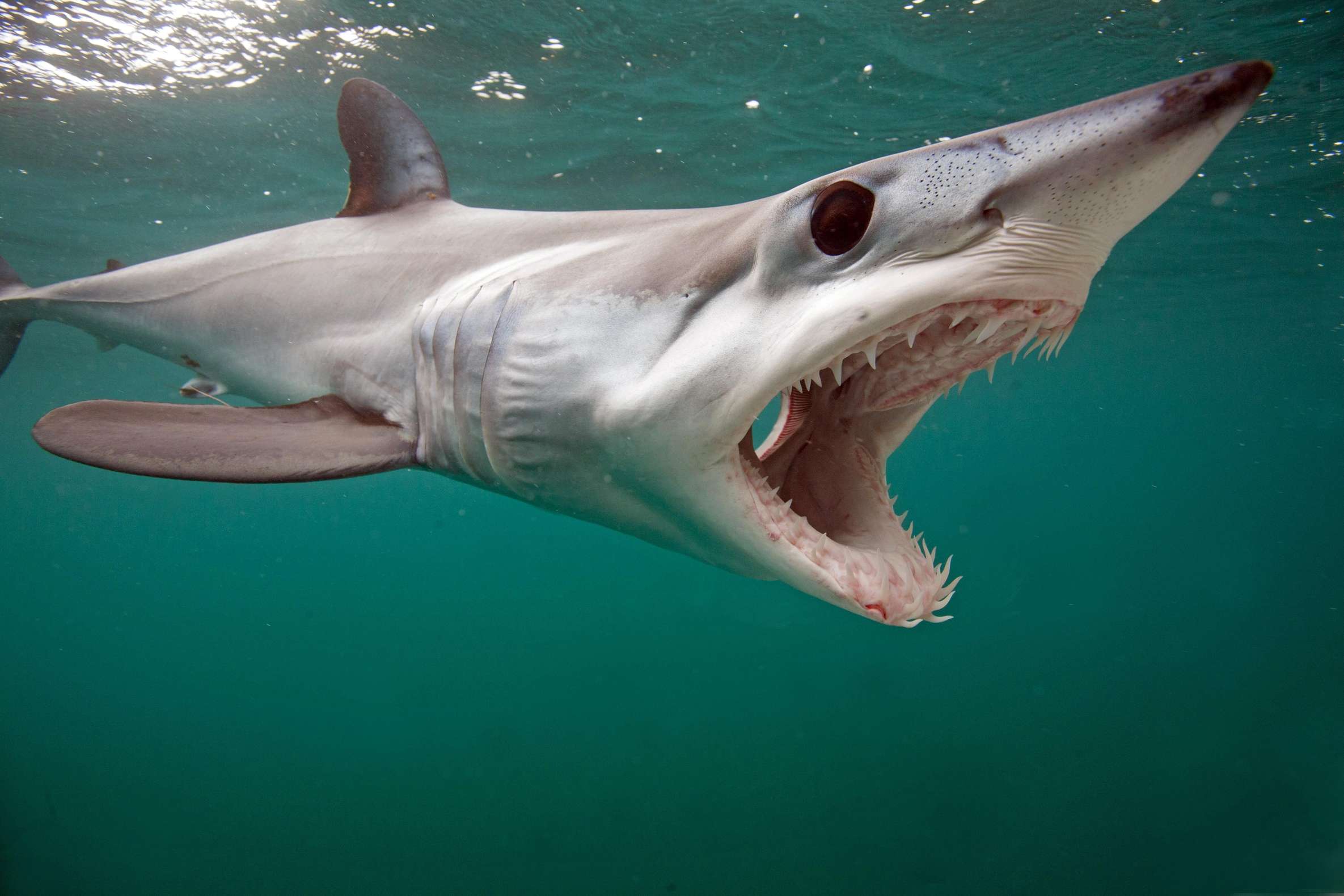
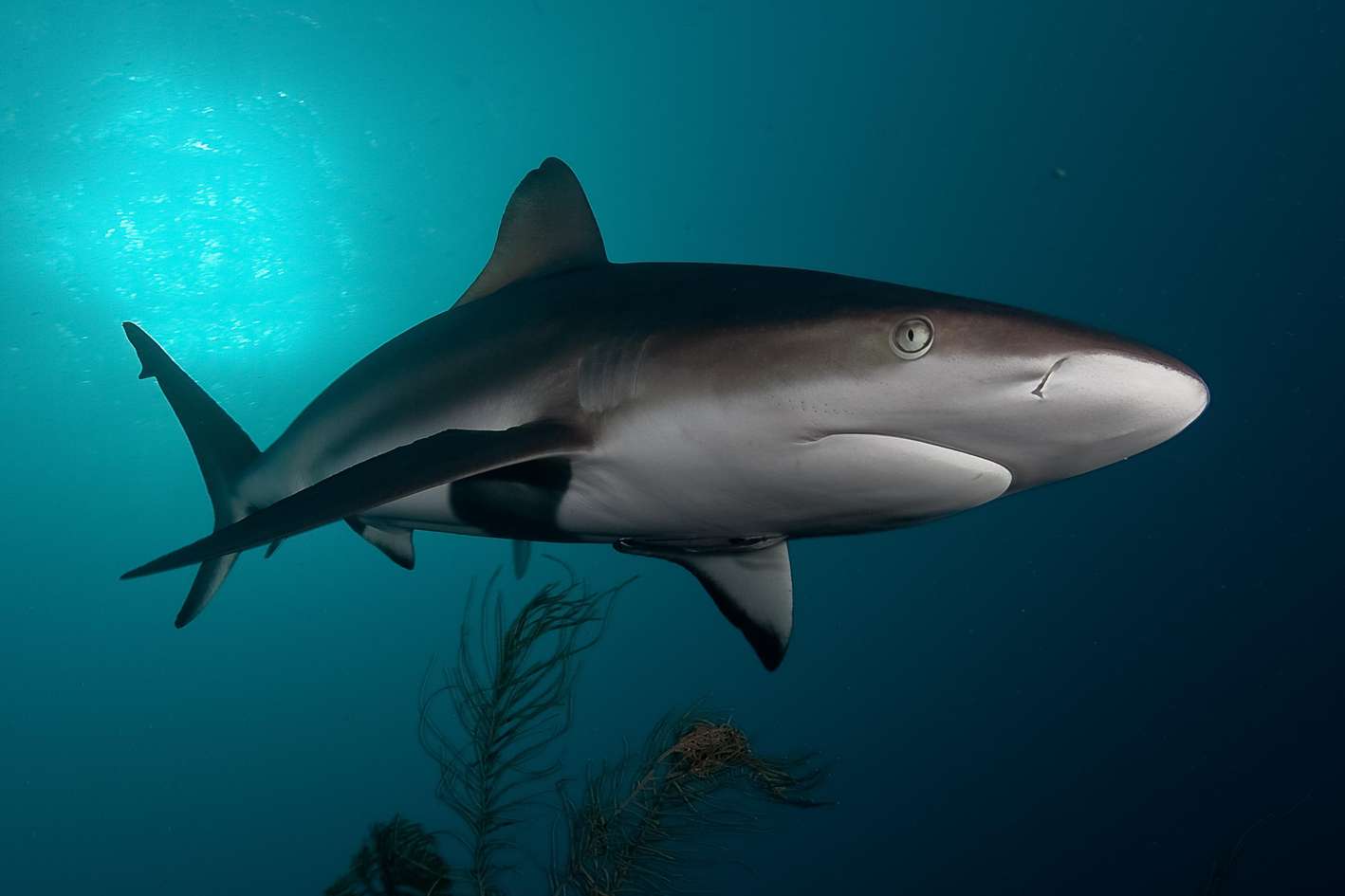
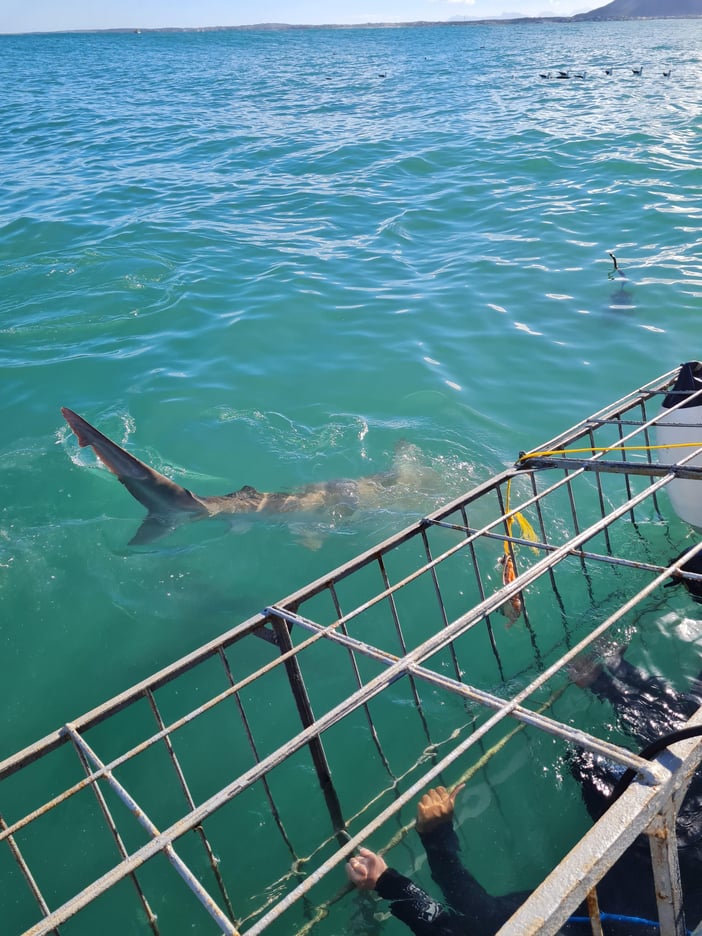
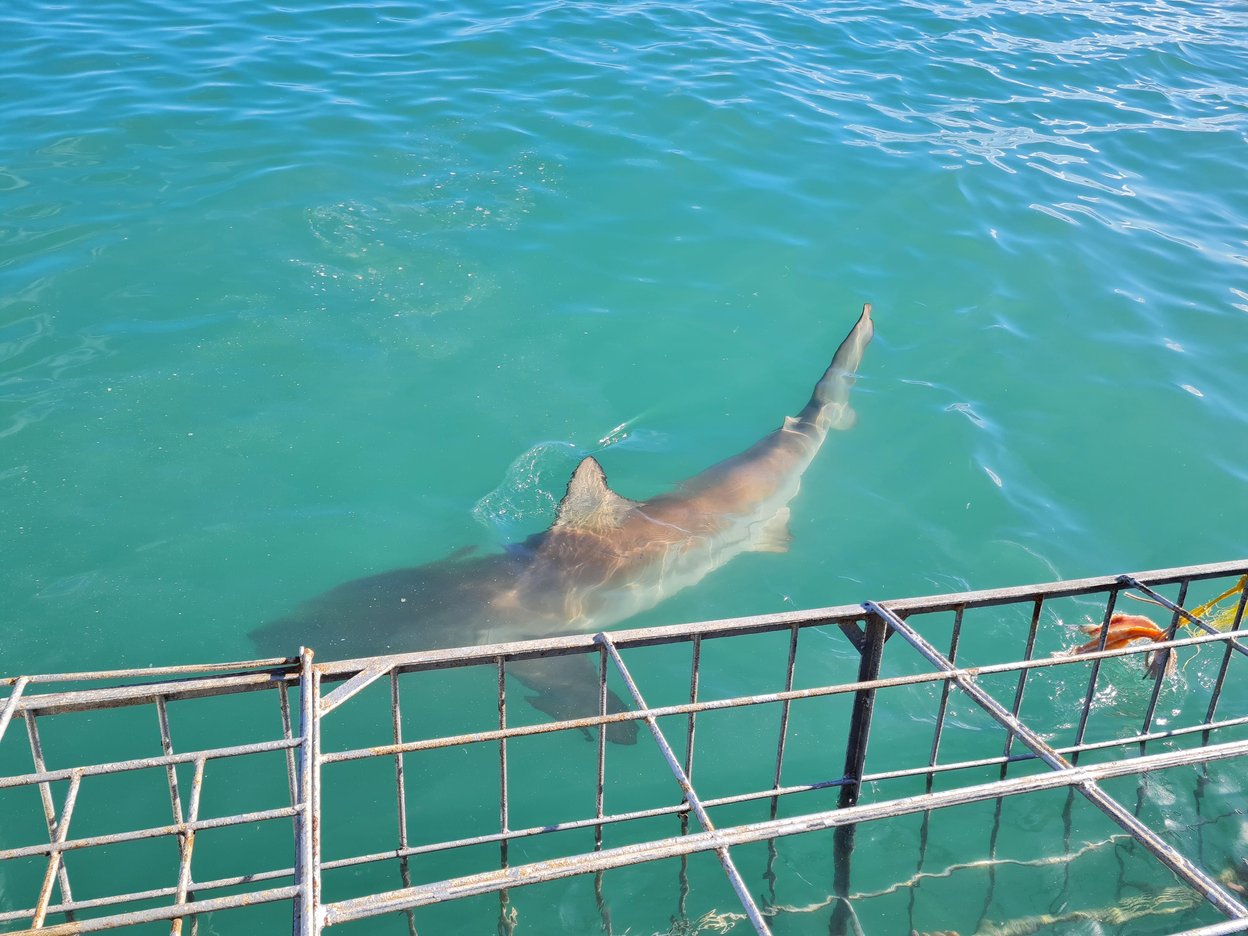
SpeciesBronze whaler and sevengill sharks appear most often, and great white sightings have grown irregular in False Bay and Gansbaai.
WeatherSeason: trips run year-round, with the busiest months from October to March and the clearest winter water.
ClothingBring a swimsuit and a warm jacket or windbreaker for the deck, since wetsuits, masks, and booties come with the tour.
SeasicknessTake motion sickness tablets before boarding, the night before and again in the morning, rather than after you feel ill.
importantHeavy Atlantic swell or strong wind can cancel a False Bay shark cage dive even under sunny skies, and the skipper makes the call at 2 pm the afternoon before your trip.
Book your Cape Town shark cage dive for the earliest day in your stay so there is room to reschedule, keep the whole day open until times are confirmed the day before, and expect a full refund or a new date if sea conditions stop the launch.
Which shark cage diving tours in Cape Town fit your day
book the earliest day of your stay, weather moves trips
Most popular in False Bay
4 hours·English
5.0(40)
Cape Town: Award-Winning Shark Cage Diving in Simon’s Town
A perfect 5 rating from recent guests, run by the owner crew, with bronze whaler and sevengill sharks just 45 minutes from the city.
What you see on shark cage diving tours from Cape Town
sevengills date back 195m years
3 stopsabout 3 h12 places
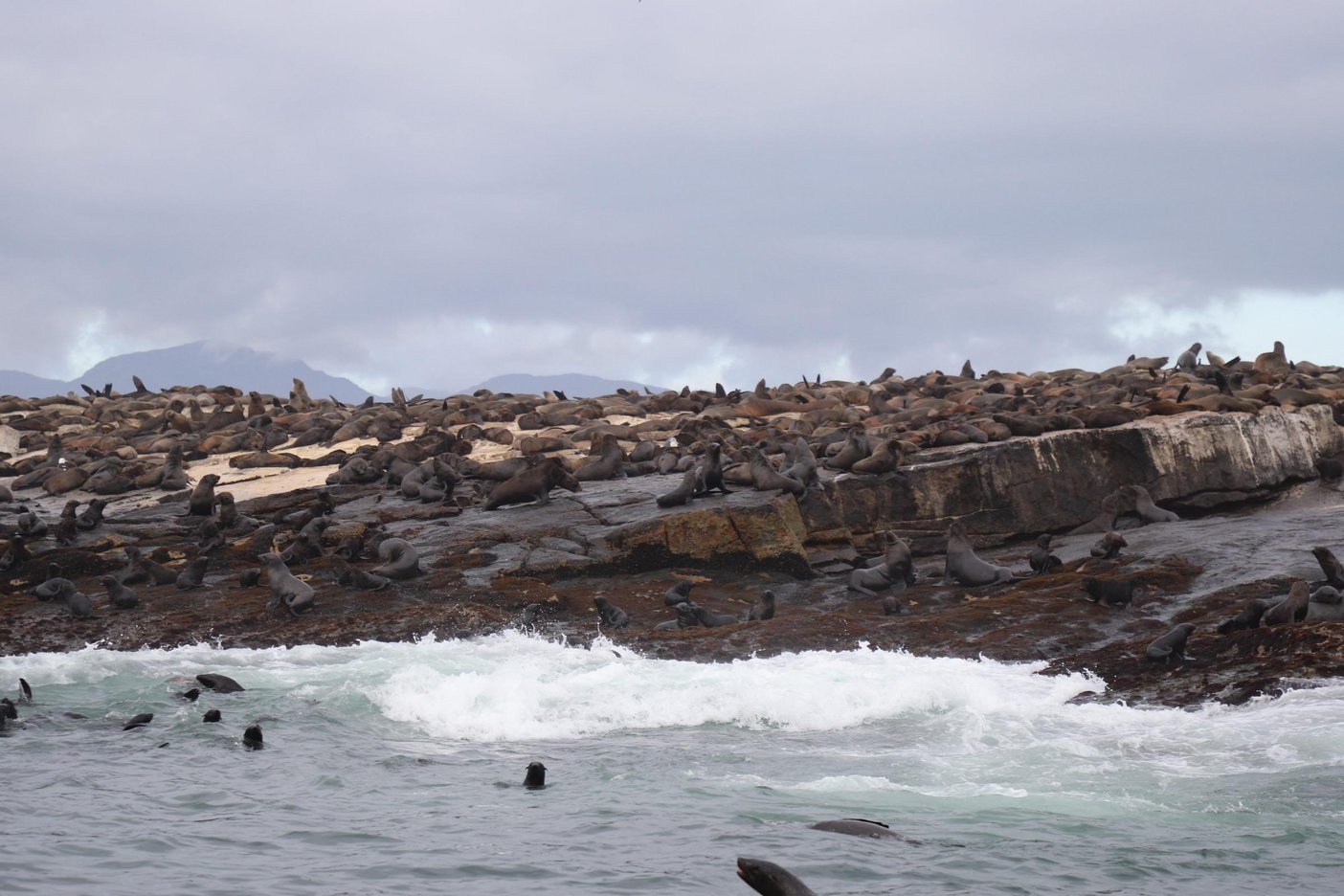
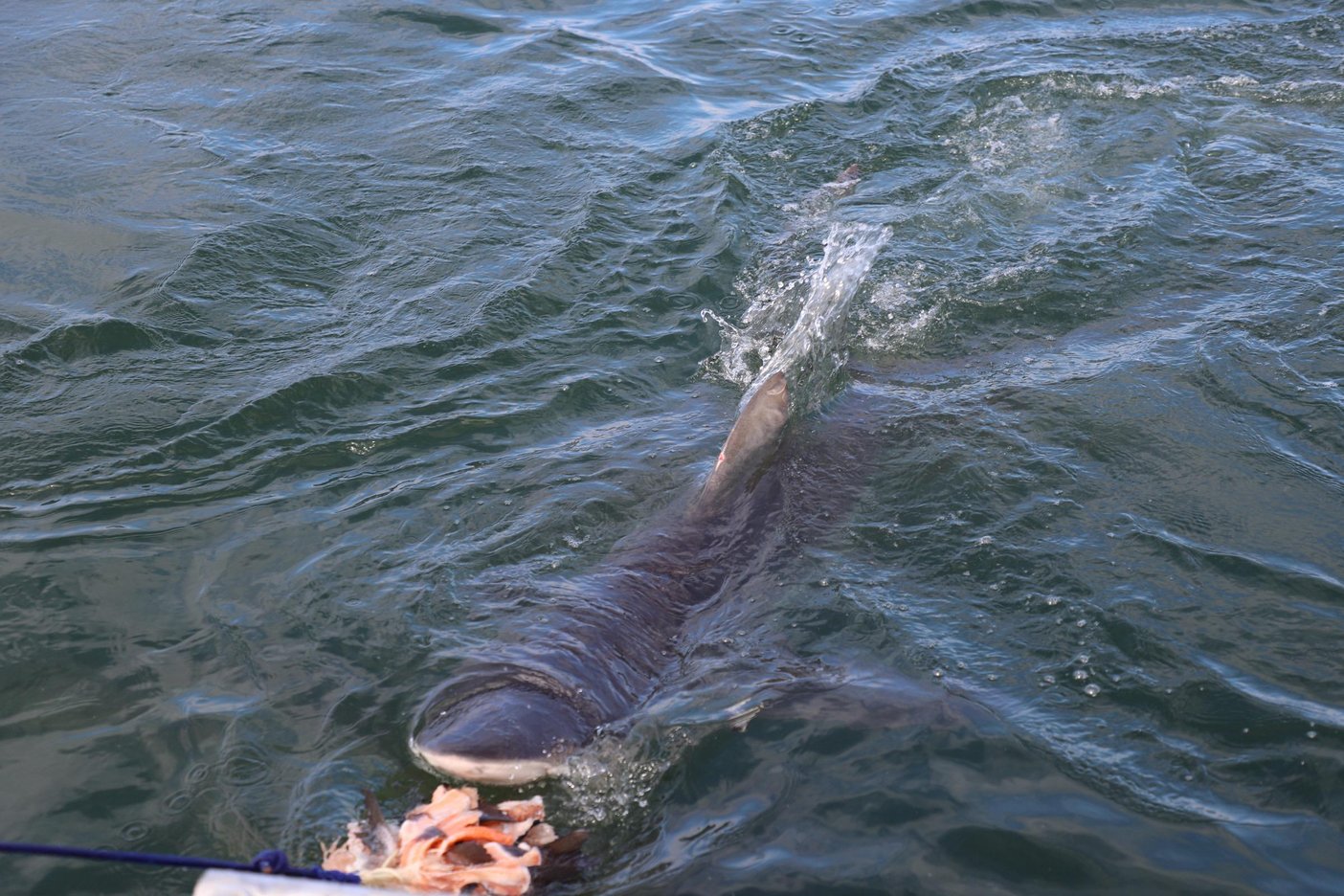
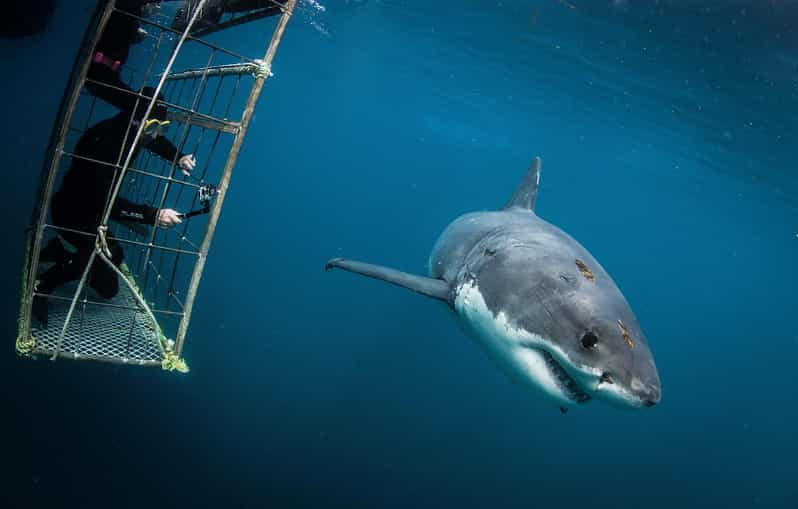
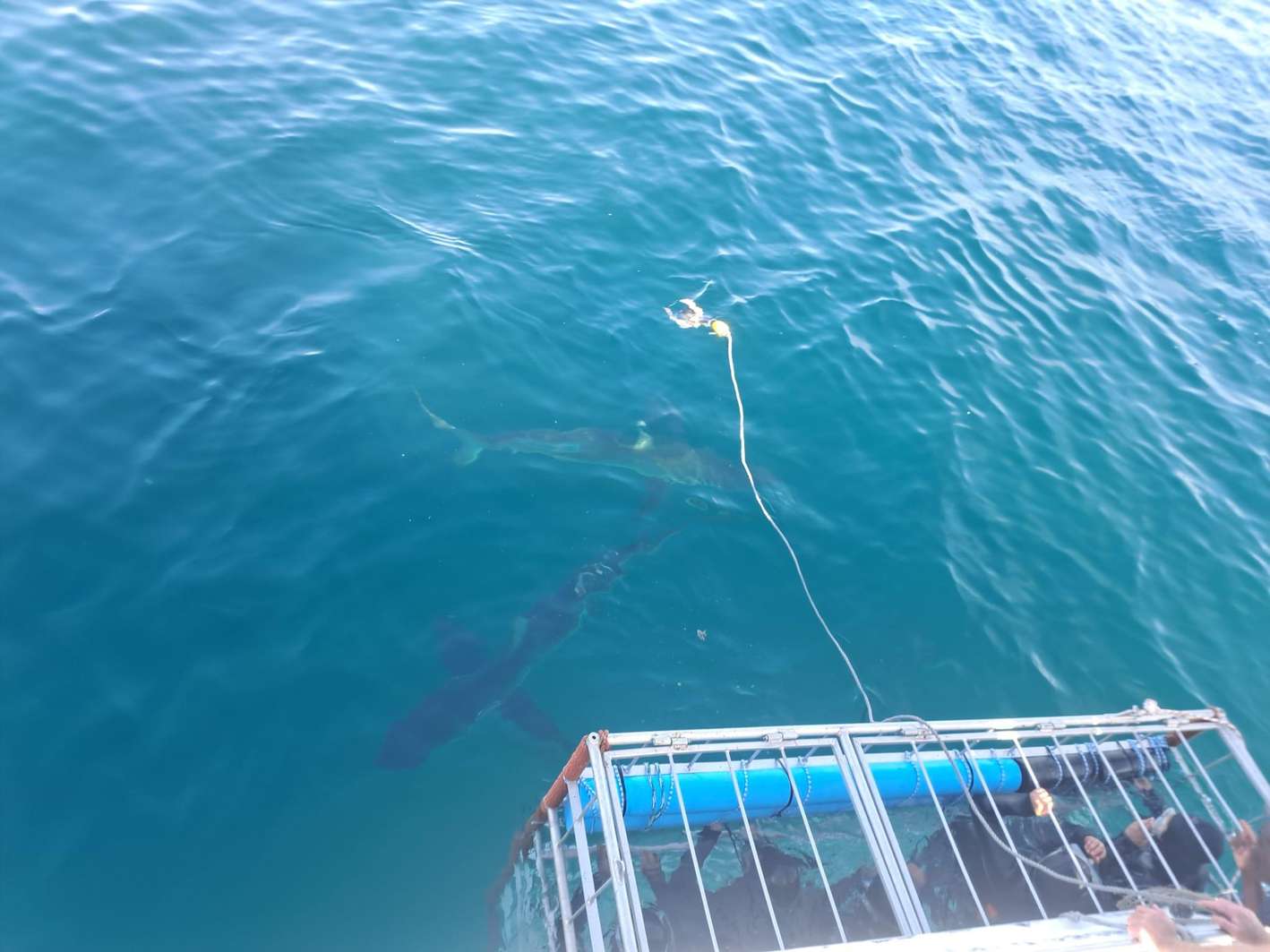
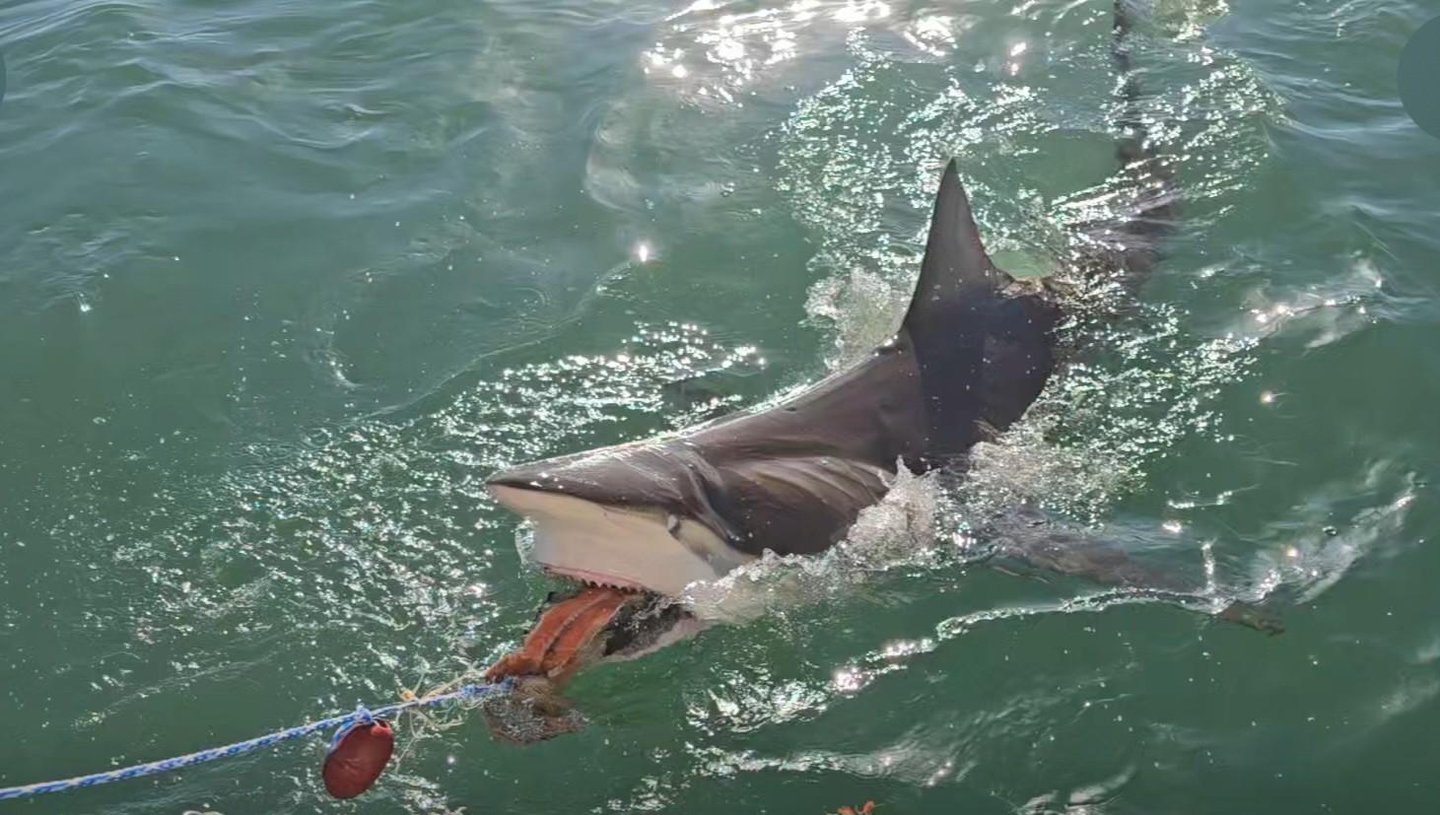
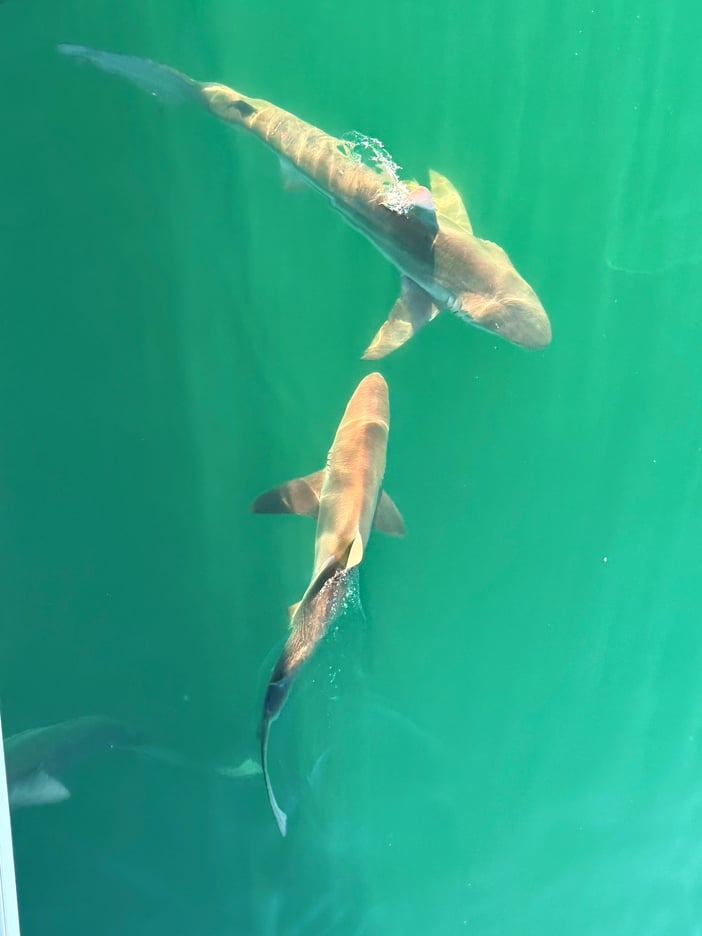
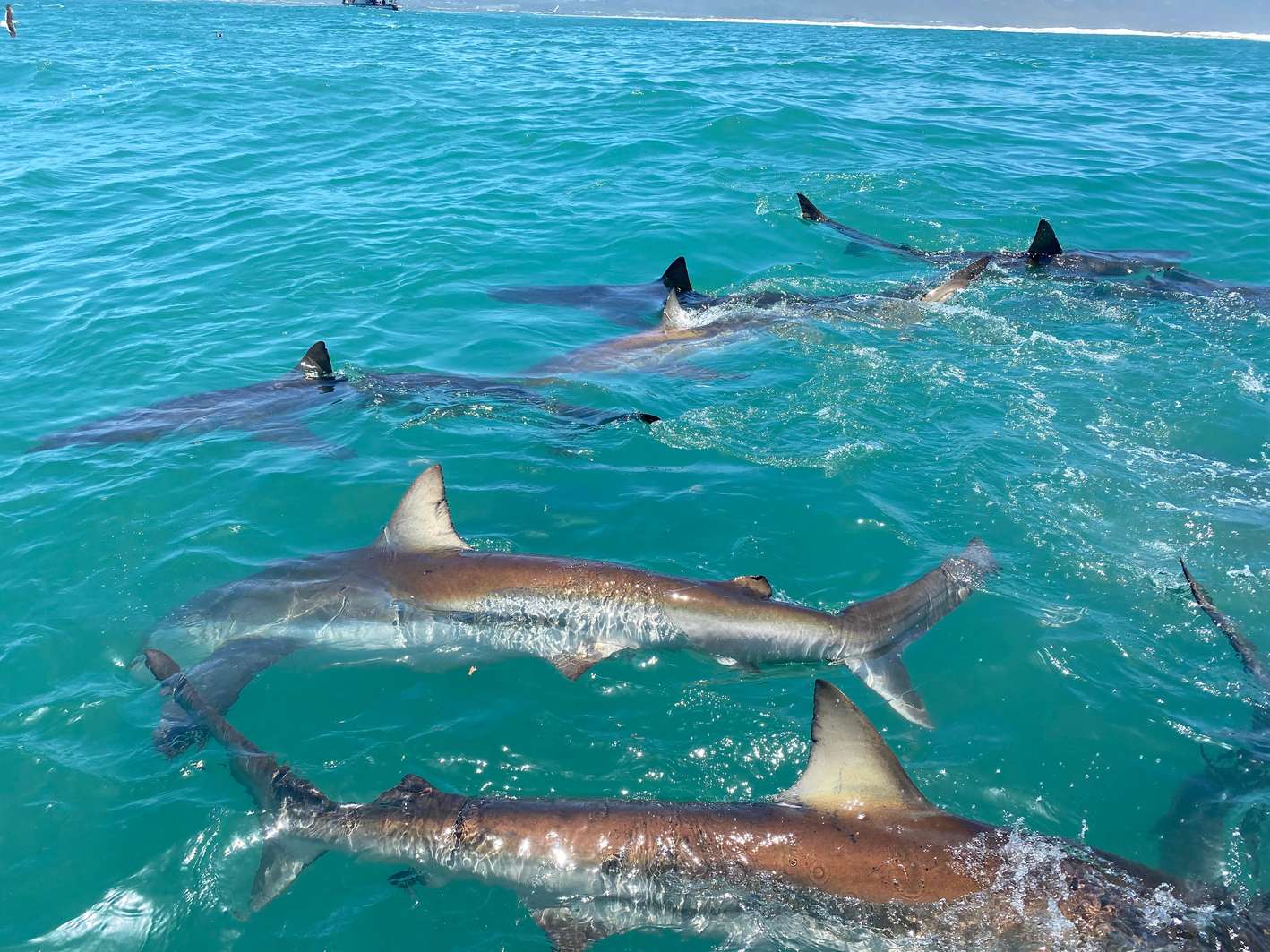
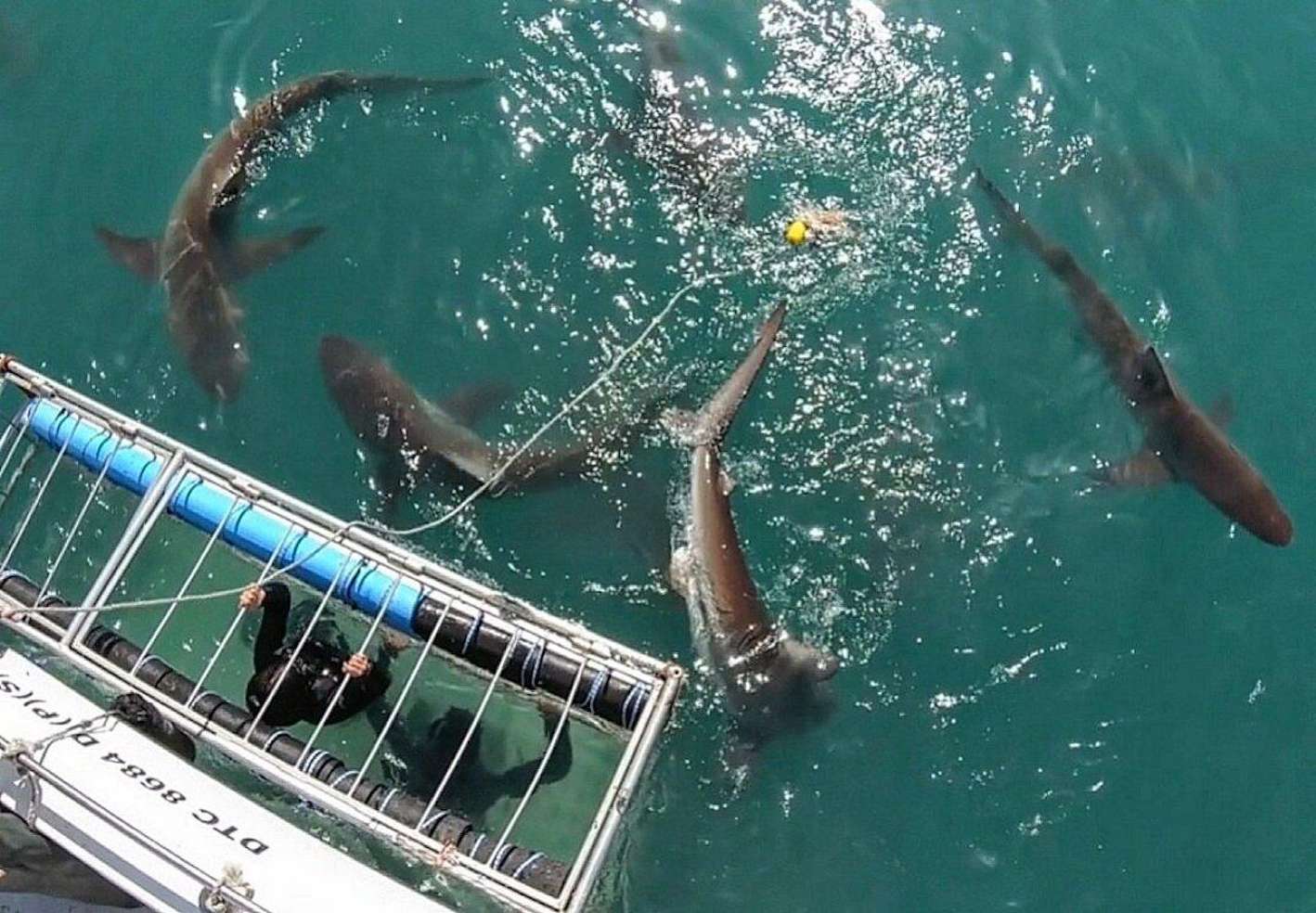
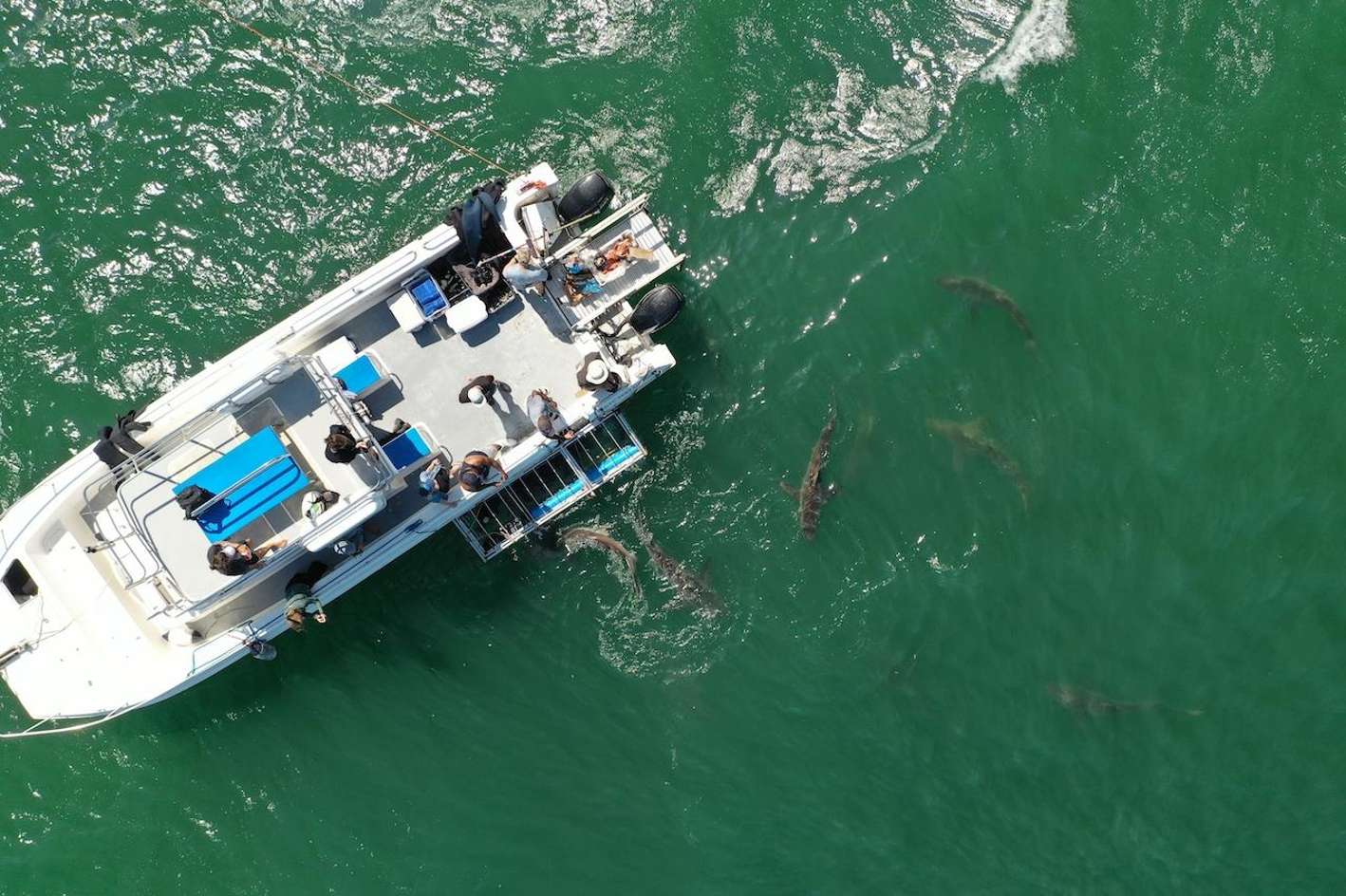
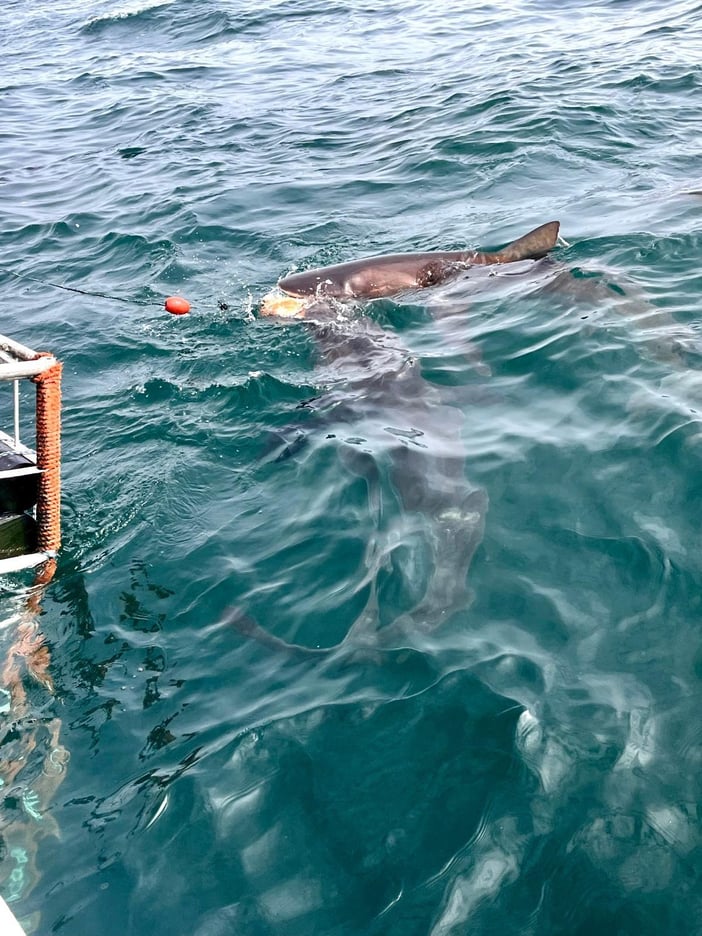
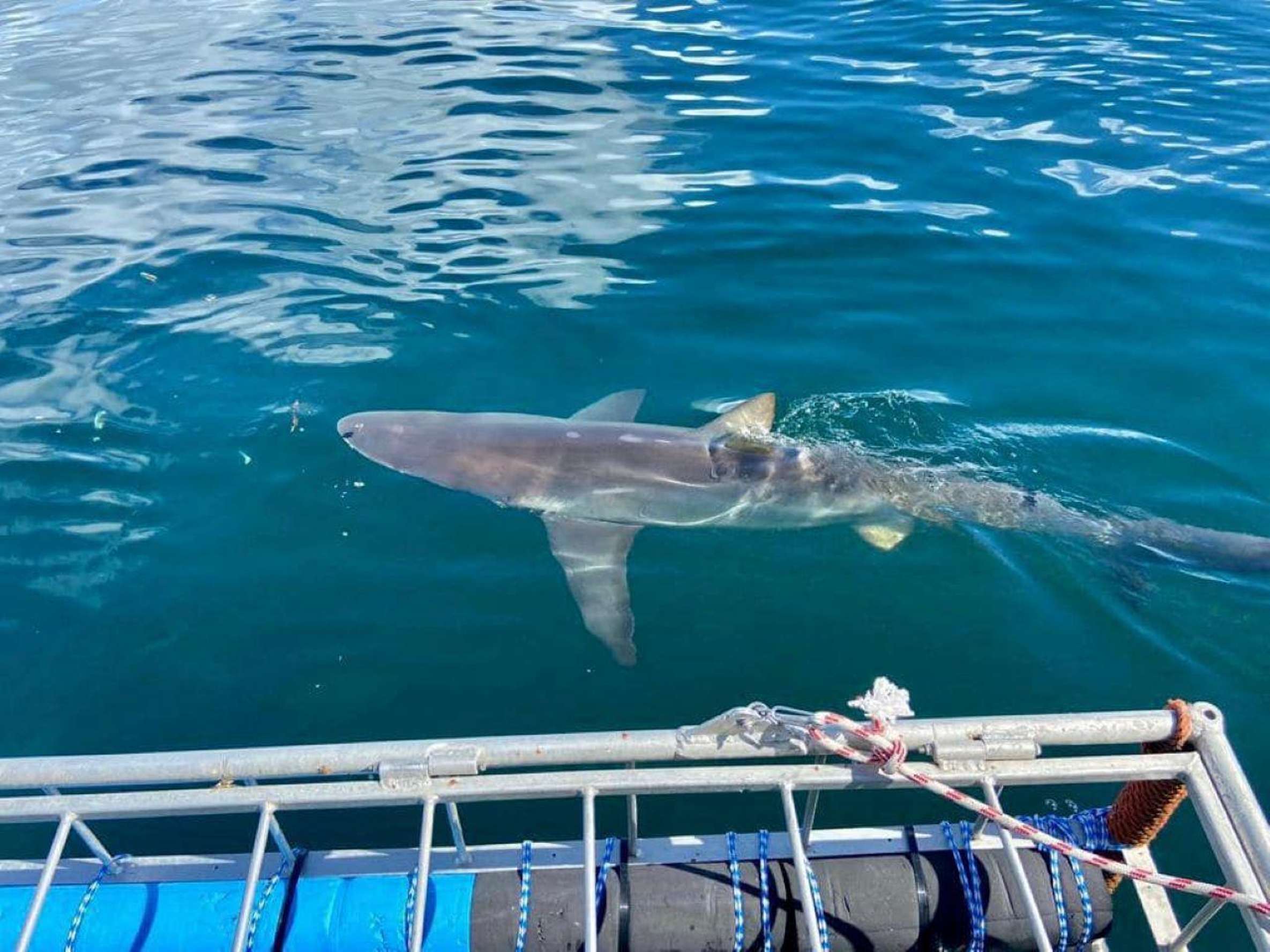
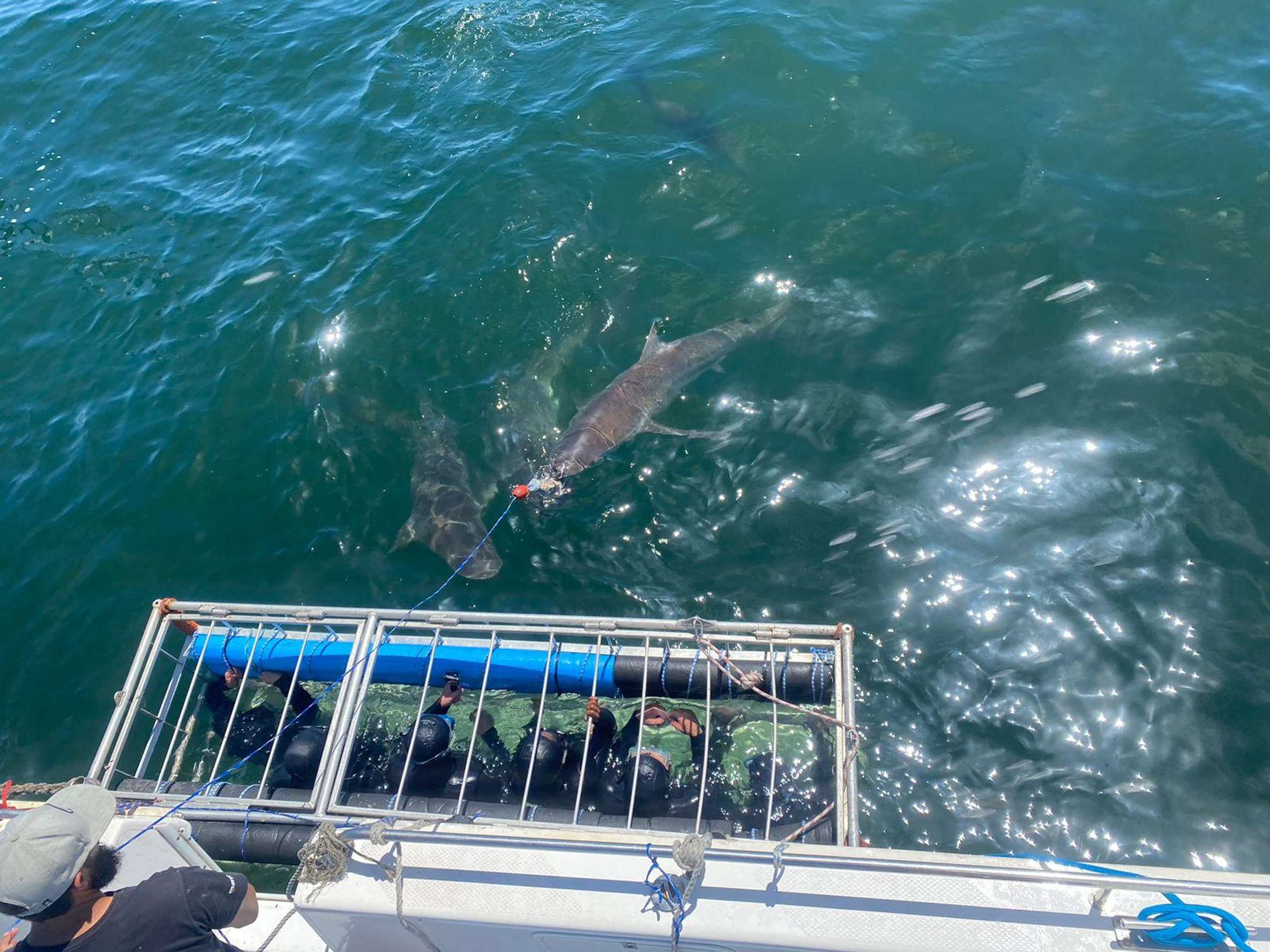
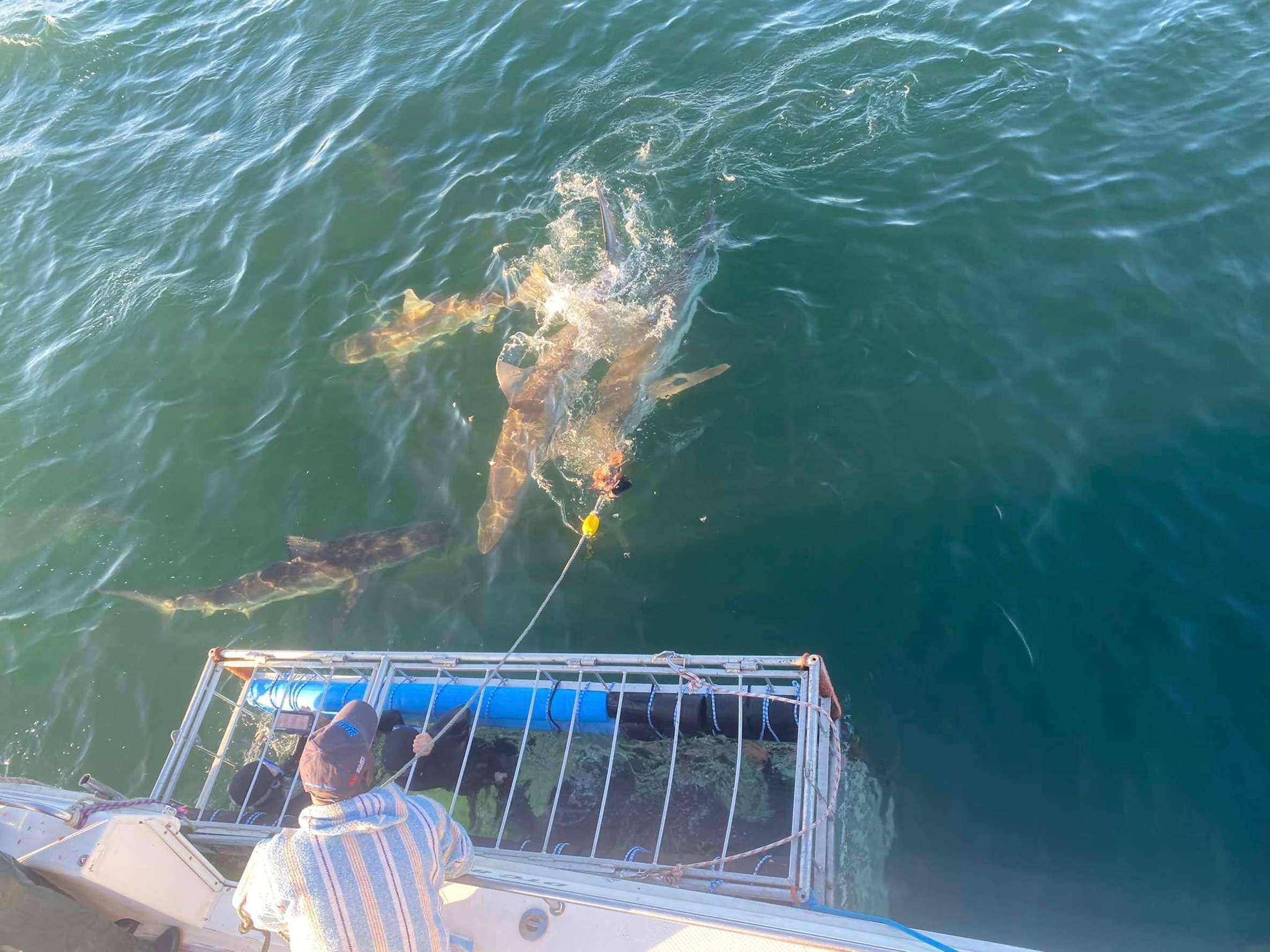
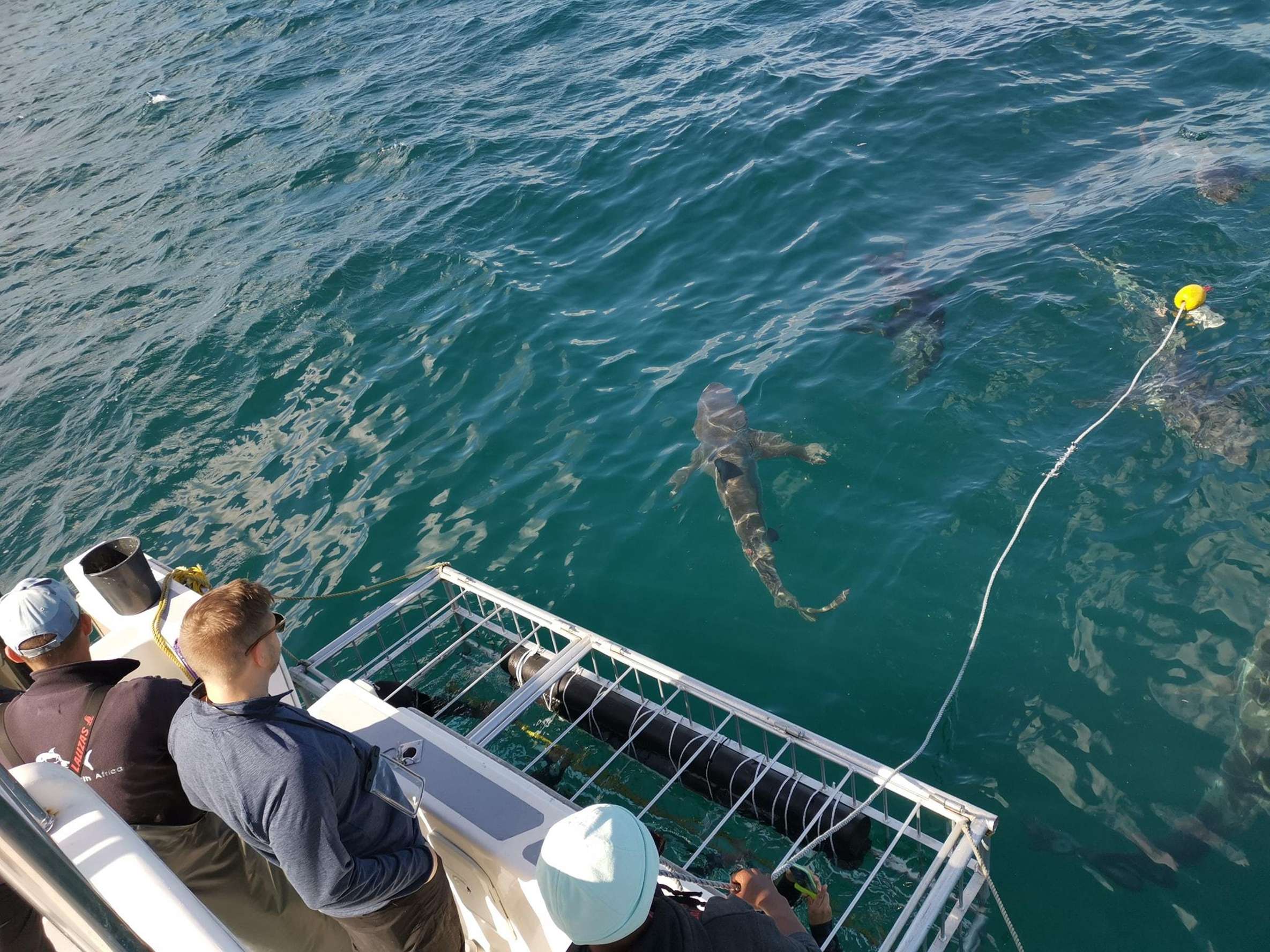
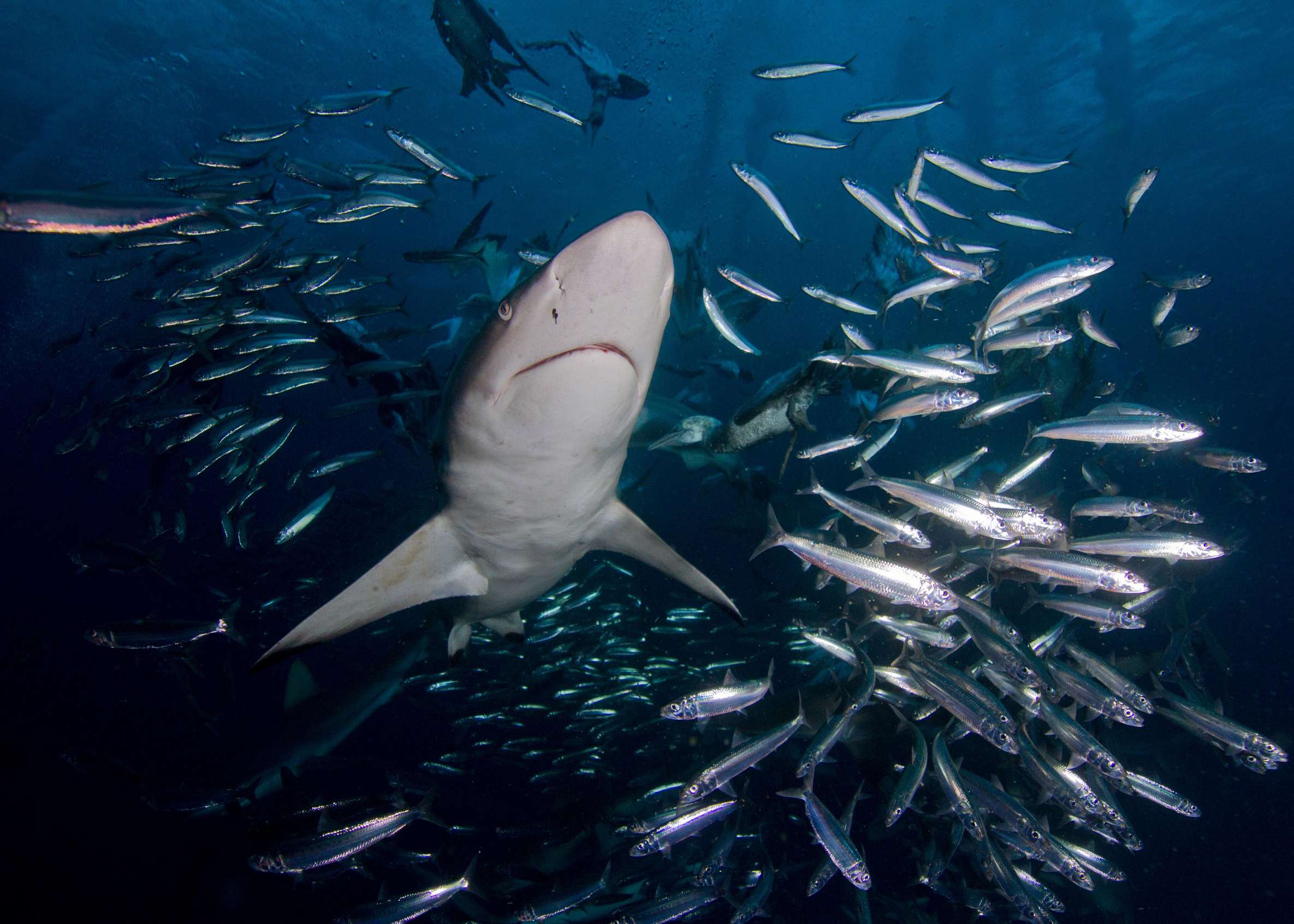
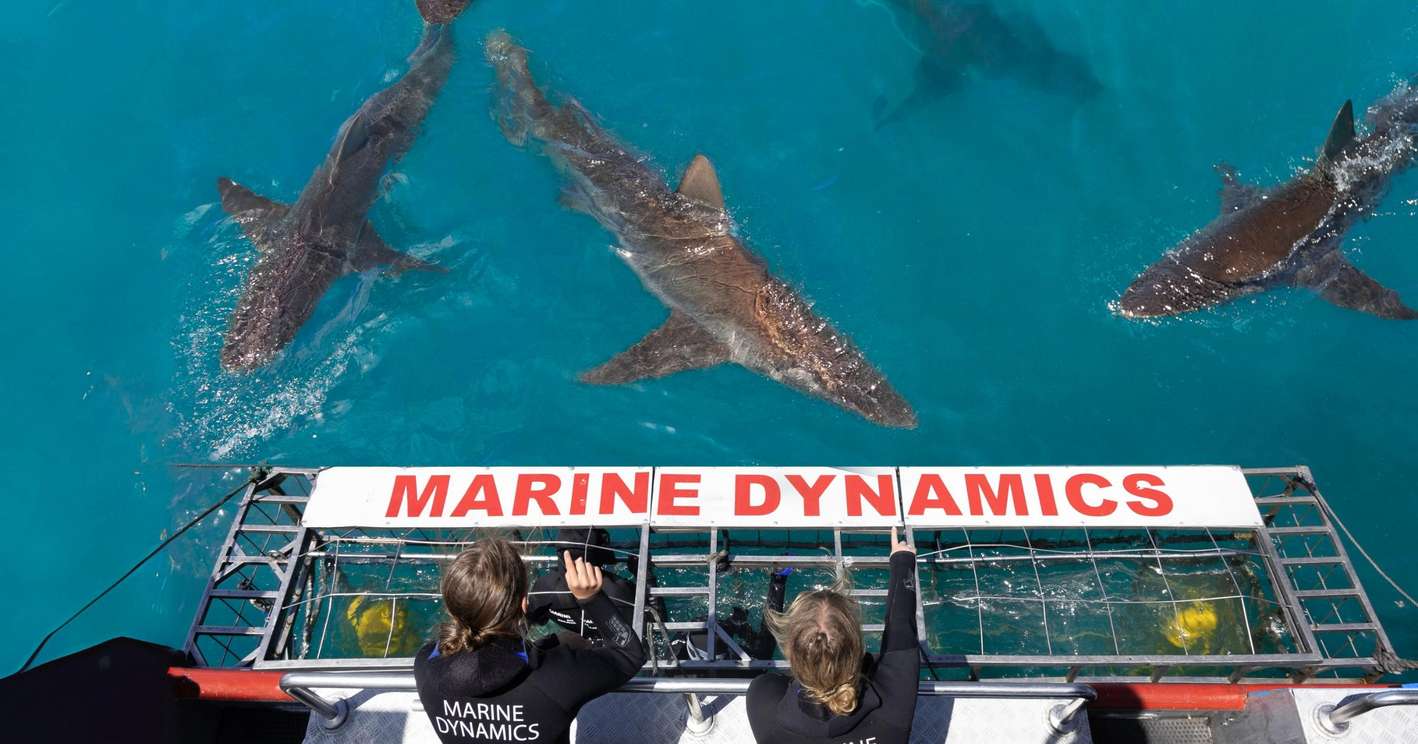
Bronze whaler sharks usually show up first, and they tend to stay near the boat. Your morning runs from Simon's Town out to Seal Island, where a colony of some 65,000 Cape fur seals draws the sharks in close.
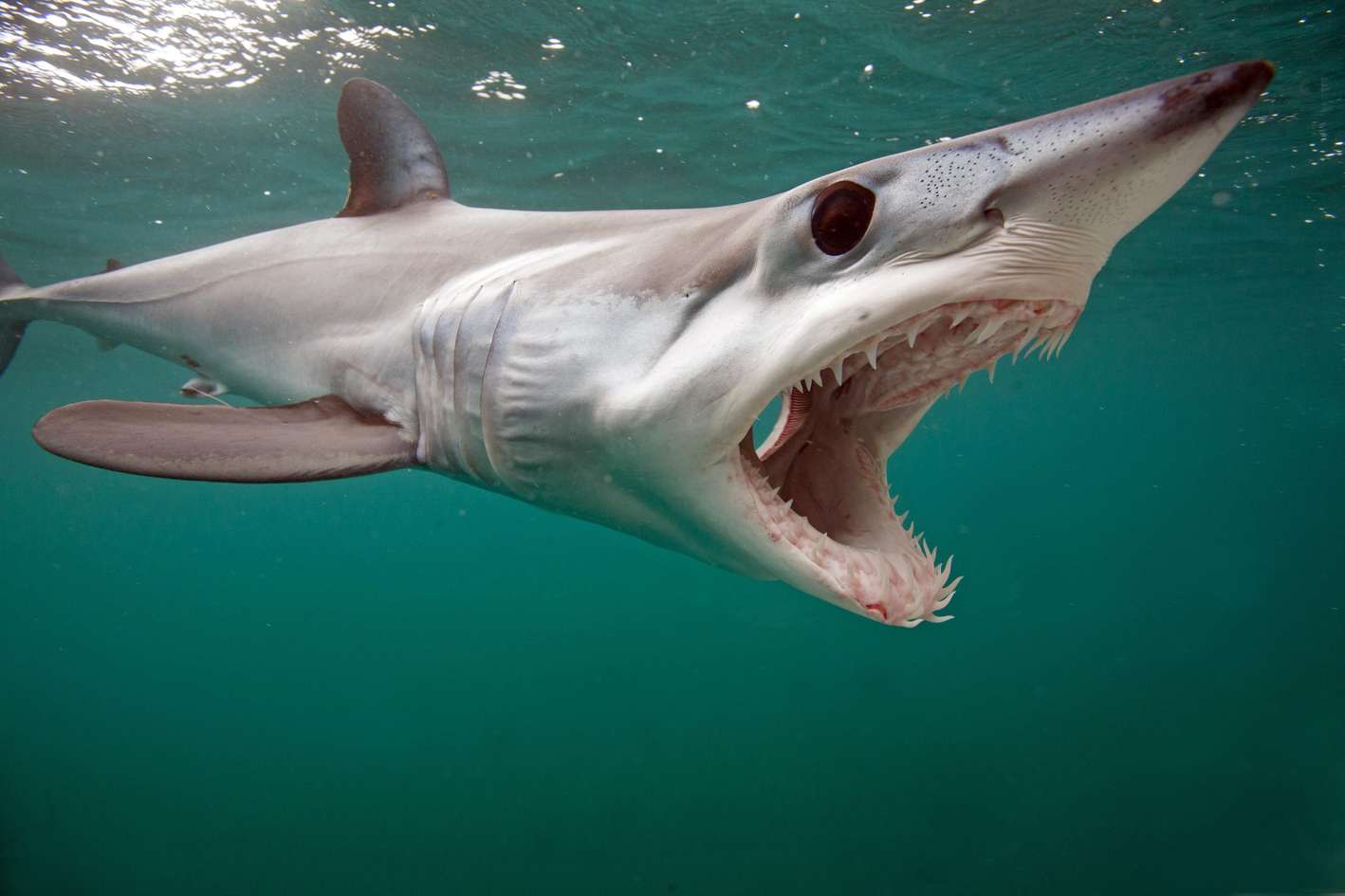
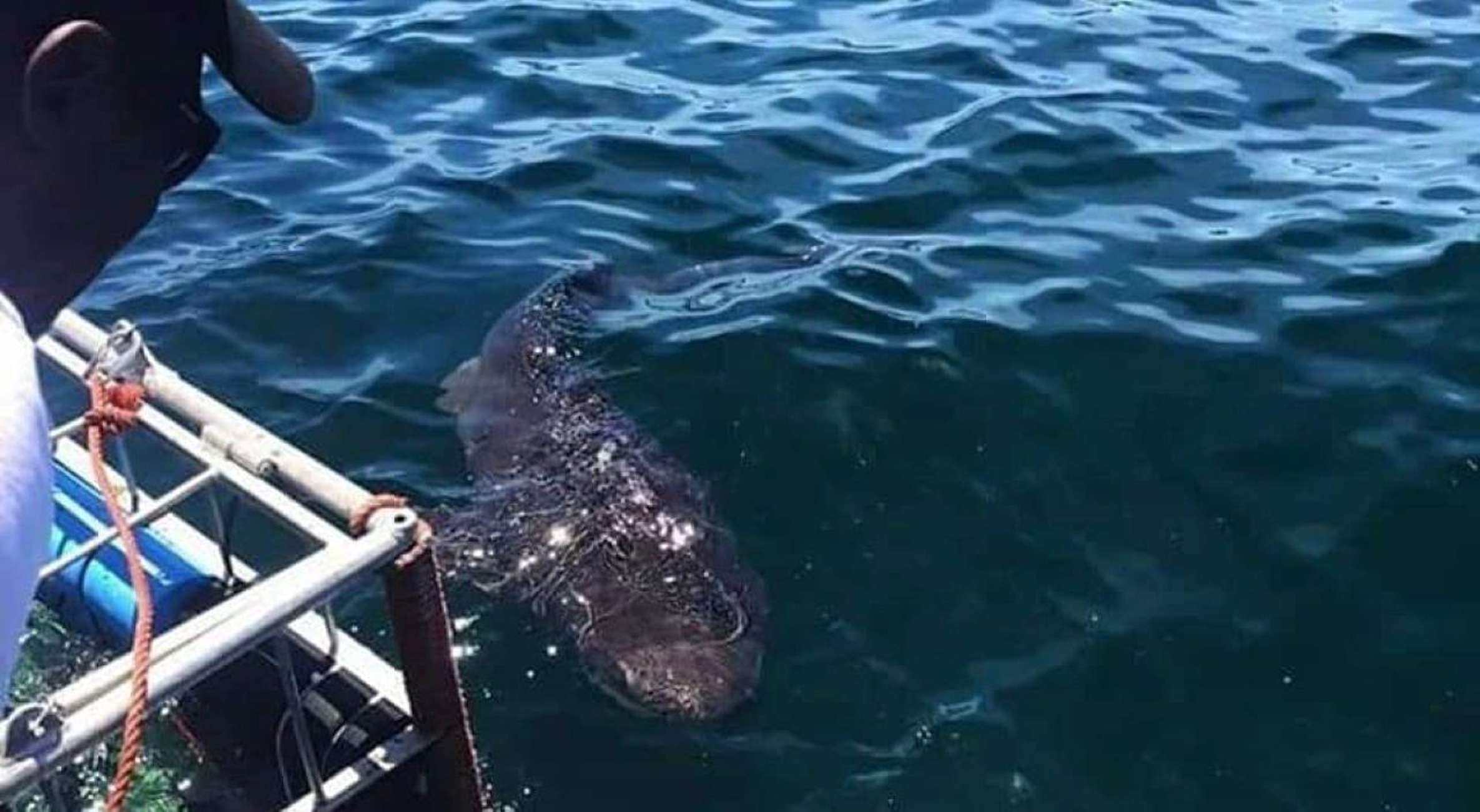
False Bay also holds sevengill cow sharks, an ancient lineage with seven gill slits and comb-shaped teeth that go back 195 million years in the fossil record.
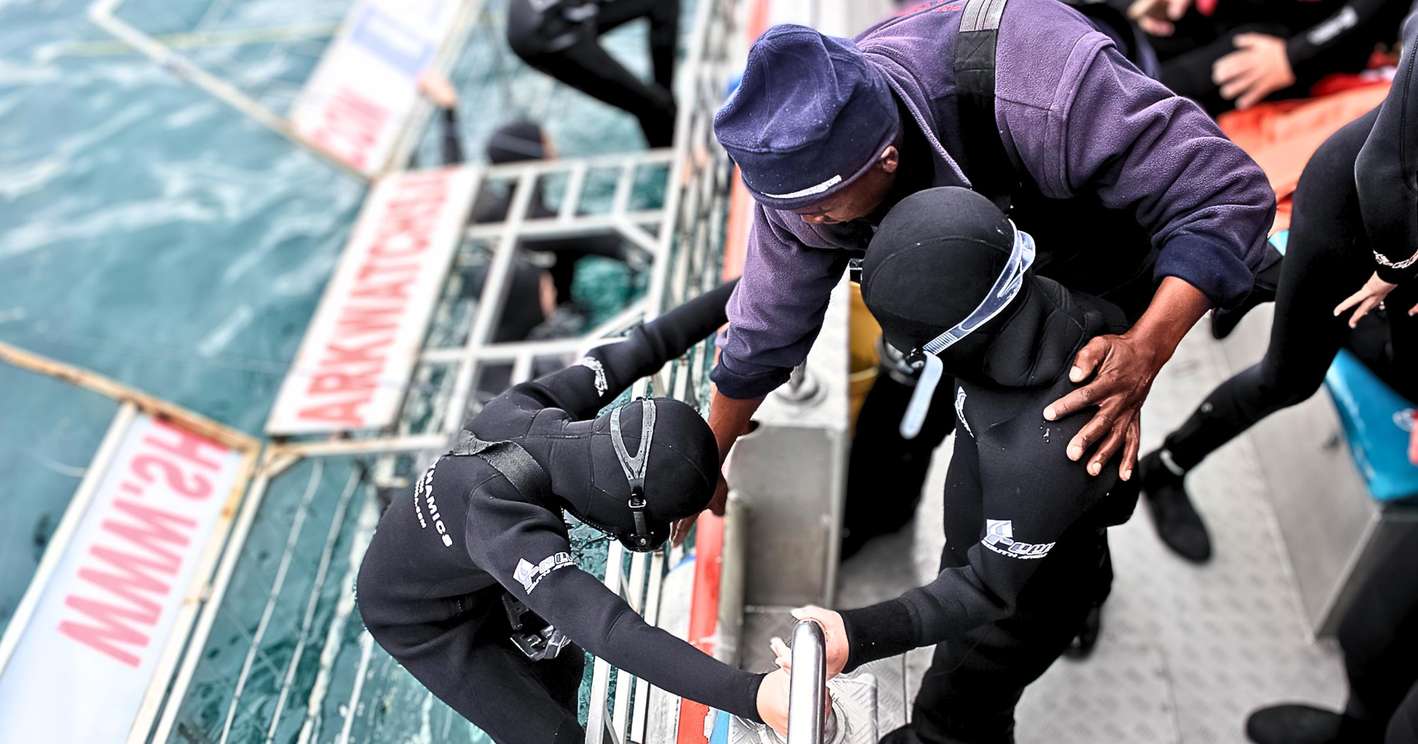
The crew runs a full safety briefing before anyone reaches the cage, and the wetsuit, mask and booties are all supplied. Tea, coffee and biscuits wait on arrival, with snacks and fresh fruit on board. If you would rather stay dry, the deck view of the sharks is just as clear.
Meeting pointSimon's Town Boardwalk CentreThe boat returns to the same harbour in Simon's Town, where your trip ends and the rest of the day stays yours.Street ViewStop 2False Bay· 184 minA 25 to 30 minute ride takes you to Seal Island and its 65,000-strong Cape fur seal colony. Sharks are lured to the boat with scent trails, and you rotate into the cage in small groups with your head above water.Drop-offSimon's Town Boardwalk CentreThe boat returns to the same harbour in Simon's Town, where your trip ends and the rest of the day stays yours.Street View
Included
Tea/coffee/biscuits/rusks on arrival.Dive gear including mask, snorkel, weight belt 5 mm wetsuit - we have wetsuits to fit all sizesLight snacks, fresh fruit, chocolates and refreshments on boardA passionate and knowledgeable crew
Not included
Transfers
Where the other tours go
Gans BayStony Point Penguin Colony
Exhilarating Shark Cage Diving Experience in Cape Town
pickup times land by 4 pm the day before, watch your whatsapp
1. Pick your date
Choose the earliest free day of your trip when you book. The skipper confirms departure times the day before and can move you to another slot if the sea turns rough, so a spare day in the middle of your stay keeps that easy.
Pro tipSea conditions run calmest in the morning, with wind and swell building through the day, so an early slot also gives you clearer water.
RecommendedTours from Simon's Town take 25 to 30 minutes by boat to reach Seal Island, so a morning dive still leaves most of your day for the peninsula.
2. Choose your option
Decide how you get to the boat. A few tours launch from Simon's Town, about 45 minutes from central Cape Town, and ask you to meet at the harbour. Others run from Gansbaai with hotel pickup bundled in, a drive of 2 to 2.5 hours each way.
Common mistakeFirst-timers often assume every Cape Town listing includes transfers. Some options are meeting-point only, so check before you book.
Pro tipIf you hate early logistics, the Gansbaai full-day packages span 9 to 10 hours door to door with breakfast and lunch included.
3. Wait for your pickup time
After payment your voucher arrives, but the exact start time comes later. Operators confirm times the day before, around 4 pm, by email or WhatsApp, because tides and collection schedules set the departure.
ImportantKeep your phone reachable the evening before your trip. A missed confirmation message can mean missing the boat.
Common mistakeExpecting a fixed time at booking. Every one of these trips is weather and tide dependent, and times shift until the day before.
4. Morning of the dive
Gansbaai pickups usually collect you between 5:00 and 5:30 am, or as early as 3:30 am in December. False Bay pickups run between 5:00 and 6 am. Have your swimwear on under your clothes before the vehicle arrives.
RecommendedPack a towel, sunscreen, a warm jacket and your own seasickness tablets, taken the night before and again in the morning.
5. Know the fallback
If weather cancels the trip, you get a full refund or a rescheduled date. If the boat goes out and no sharks appear, some operators hand out a return voucher or a free trip on another day, so keep your booking details handy.
ImportantCancellation up to 24 hours before departure qualifies for a full refund on these tours. After that, the weather policy applies instead.
What to know before you book shark cage diving in Cape Town
wetsuit and mask included, bring just a swimsuit
Can stop the dayGood to knowGood news
01
ChoosingWhat it is, who it suits, when to go
5
Pickup times
Most tours cannot confirm your start time until the afternoon before, since tides and sea conditions set the schedule. Treat the day as reserved and keep it open; some operators email or message you the pickup time after 6 pm the evening before.
Transfers
Several tours include door-to-door hotel pickup and drop-off in an air-conditioned vehicle. That spares you an early-morning drive on unfamiliar roads, though full-day trips with transfers run about 9 to 10 hours start to finish.
Morning trips
Take the earliest slot you can. Winds and swell build through the day along this coast, so morning water is calmer and clearer. Boats run two to three departures daily from Simon's Town, all weather dependent.
Food on board
Nobody goes hungry on these boats. Depending on the tour you get breakfast on arrival, plus snacks, sandwiches, fruit, bottled water and hot drinks during the trip. On full-day Gansbaai packages lunch is included after the dive.
Group size
Simon's Town boats run smaller than Gansbaai vessels, with fewer divers per cage rotation. Guests enter the water in timed groups while the rest watch from the deck, and deck viewing is genuinely good, so staying dry costs you little.
02
BookingHow far ahead, and what happens if plans change
1
Cancellations
Sea state, not rain, decides whether boats launch. If the skipper cancels for weather, you get a full refund or a new date, and every tour here allows free cancellation up to 24 hours before. Book your earliest possible day so a reschedule still fits your stay.
03
Before you goPapers, health, what to bring
3
Gear
Boats supply the wetsuit, mask, boots and often a hood and weight belt, so pack only a swimsuit and warm layers for the deck. Expect 5 mm suits as standard, with some operators stocking 7 mm. Bring your own towel on tours that do not list one.
Seasickness
Take motion sickness medication before you board, not once you feel ill; most tablets need an hour or more to work. Eat a light, low-fat breakfast and skip greasy food. If you still feel bad at the anchor, the crew can seat you elsewhere or you can skip the dive.
Age limitsCan stop the day
Children under 5 are not accepted on most of these tours, and the cage typically has its own minimum age set by each operator. If you are pregnant or have back, vertigo or respiratory problems, at least one tour rules you out of the cage.
04
On the dayWhere to be, when, and how you get there
1
Meeting point
Tours without transfers ask you to drive yourself. A Simon's Town launch sits about 45 minutes from central Cape Town, and one operator starts pickups at the Cullinan Hotel foyer at 6 am for guests staying outside its collection radius.
05
During the tourWhat is expected of you
2
Certification
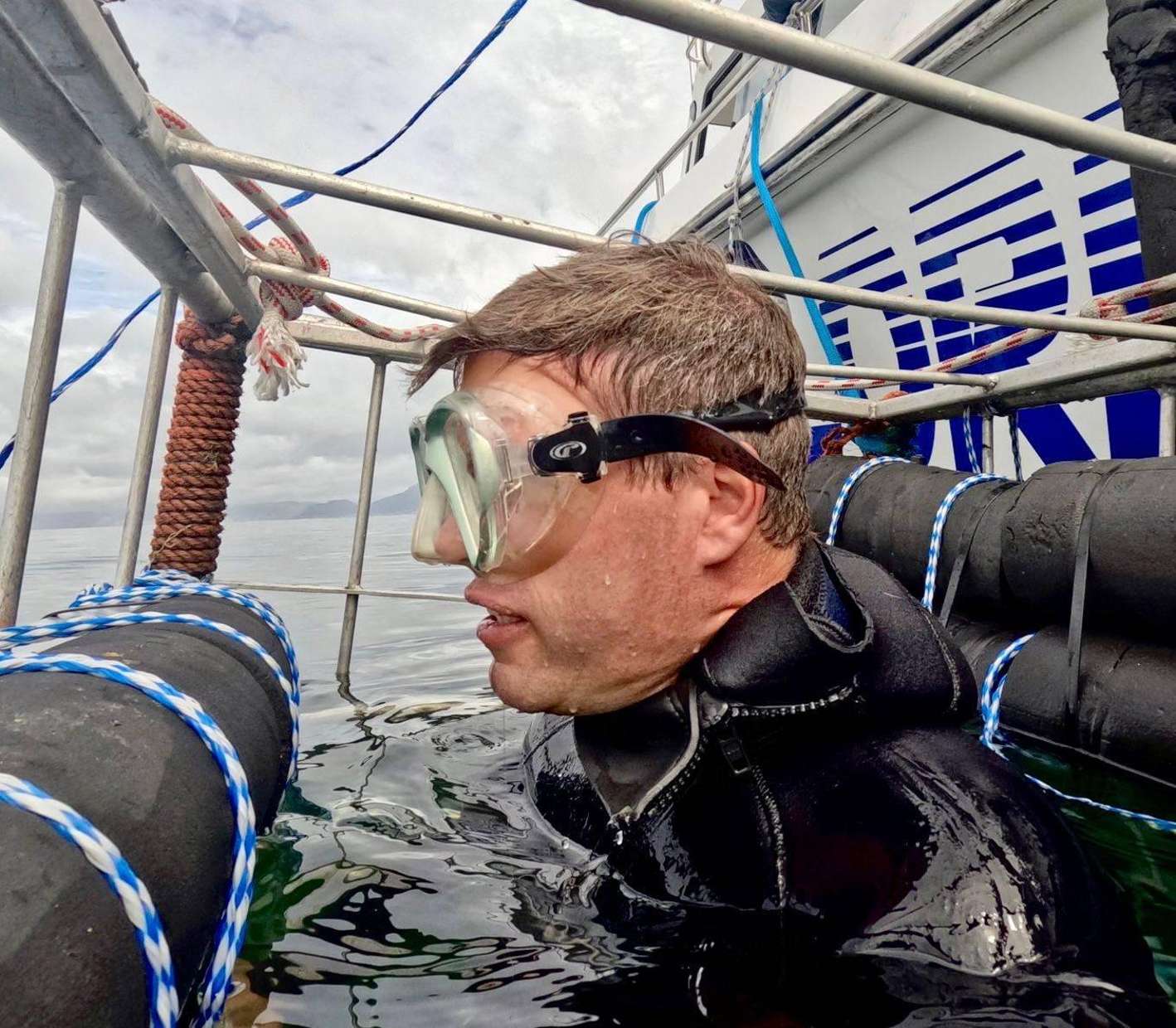
You do not need scuba certification or dive experience to enter the cage. These are surface cages, so you float at the waterline and duck your head under on cue, holding your breath, using a snorkel or, on some boats, breathing from a surface-supplied air line.
Photos
Photos and video are a paid extra on most tours, so bring a waterproof camera if you want your own shots. Use a wrist lanyard or float grip, and keep hands and cameras inside the cage bars at all times when a shark comes past.
Shark cage diving in Cape Town - a field guide
wetsuits and hoods provided, just bring a swimsuit
The pier at Simon's Town sits 45 minutes from the city, the closest shark cage diving near Cape Town. What no one tells you before booking: the great whites have mostly gone, and the water has plenty else to show.
Cape Town· 34.19° S, 18.43° E
If you only remember three things
1
No scuba certification is needed: surface cages run on breath-holds, snorkels or a hookah line.
2
Book the first morning of your stay, because trip times are only confirmed the day before.
3
Take seasickness tablets the night before and again about an hour before boarding.
Is a Cape Town shark dive worth it now the great whites have moved on
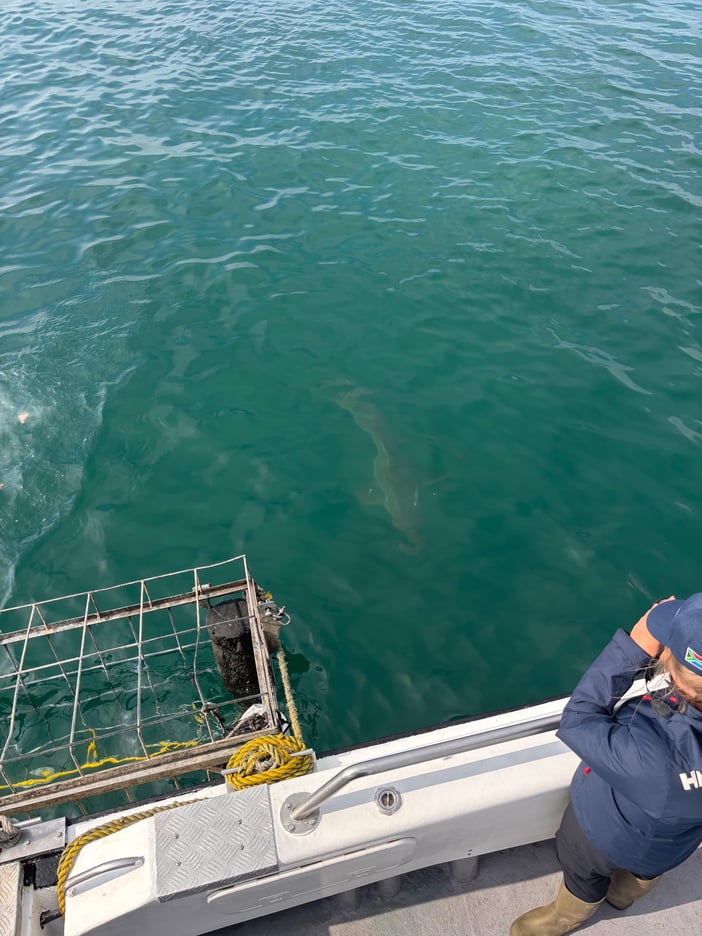
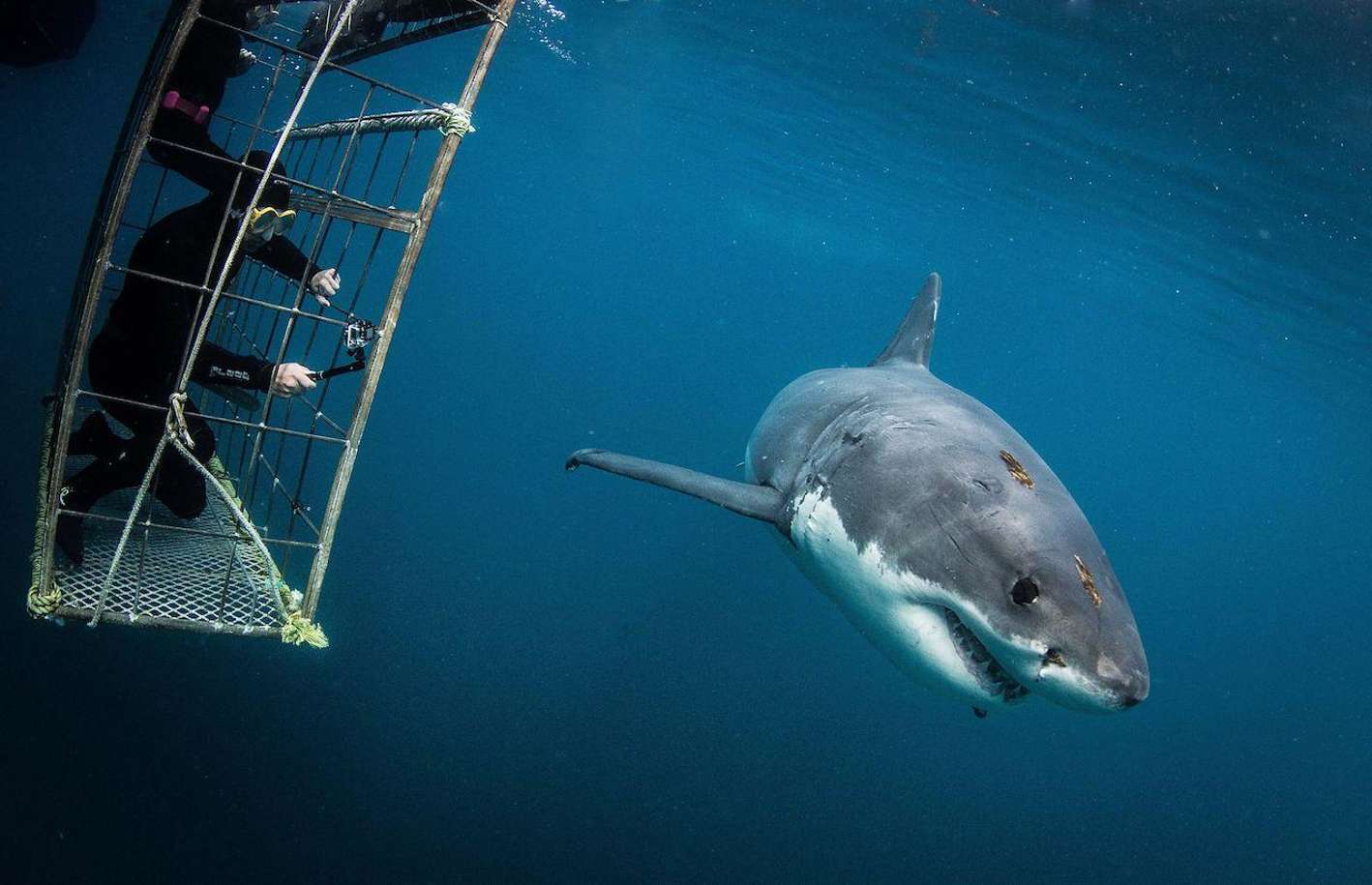
Grey water, a slick of fish oil drifting off the stern, and a shadow the length of a small car sliding up the chum line. That is the moment people book this for, and it still happens most mornings. The animal making it happen is usually a bronze whaler.
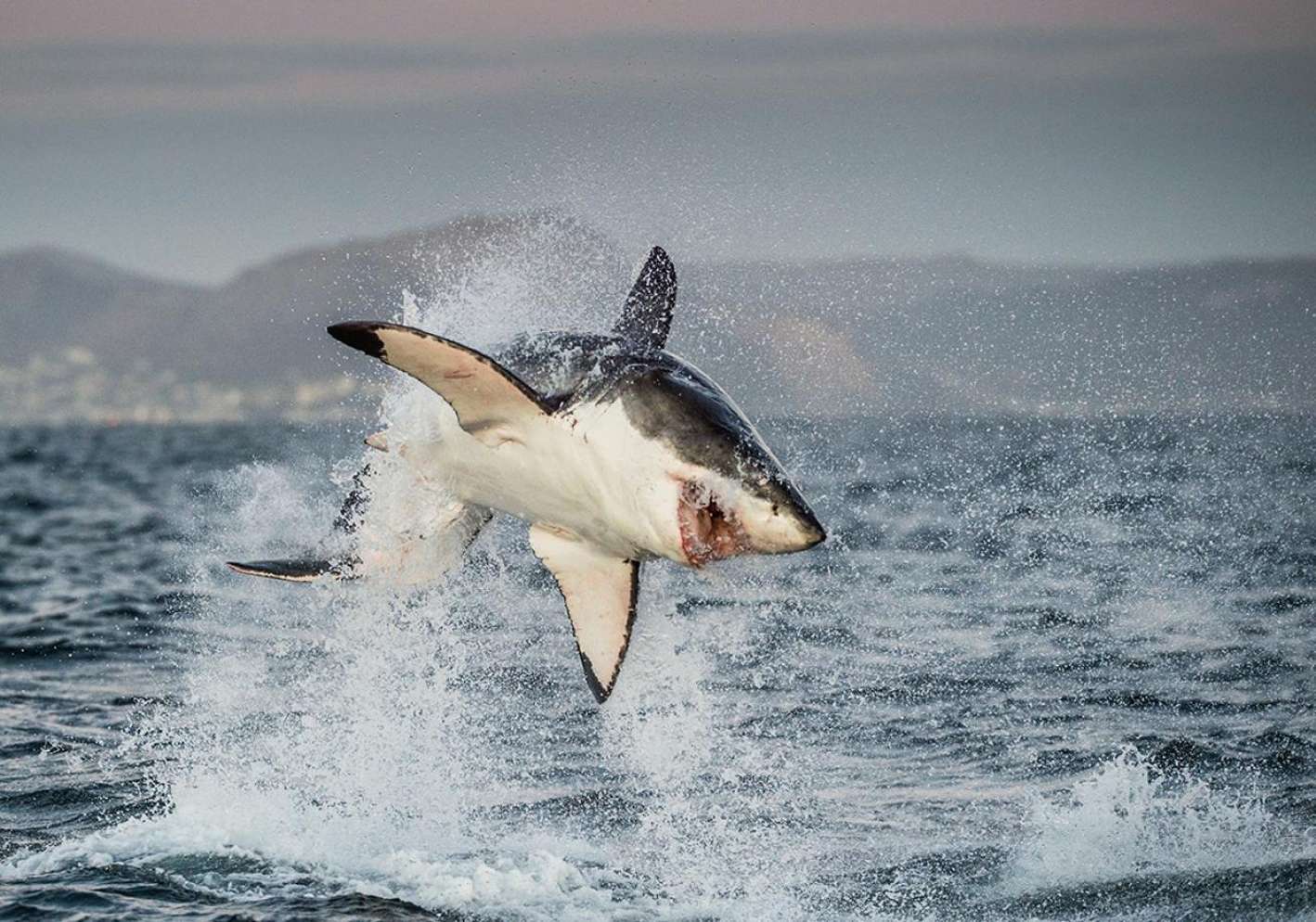
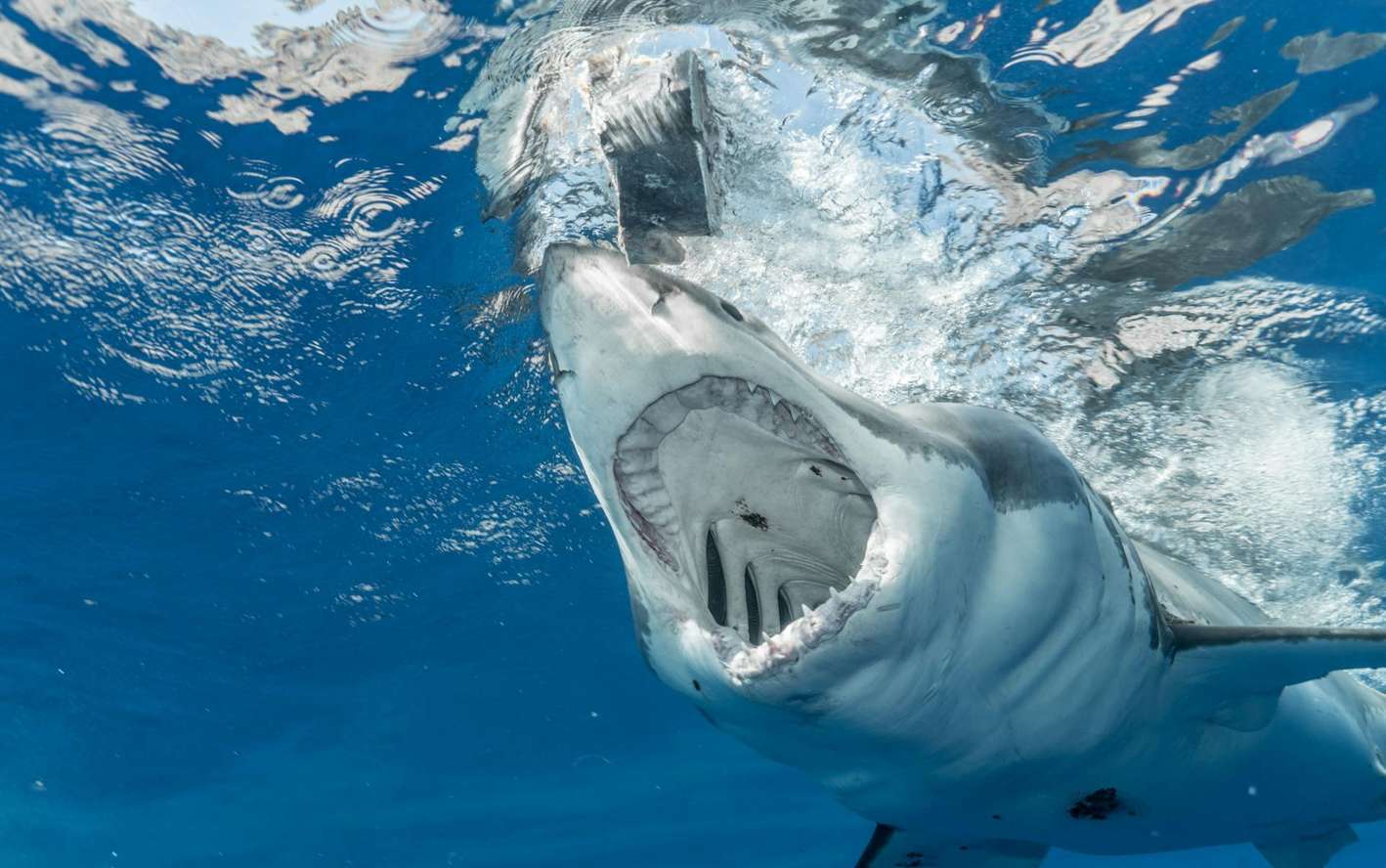
Honesty first: no operator in South Africa can confidently offer great white trips anymore. Sightings around False Bay and Seal Island have grown irregular since orcas began preying on the whites, and travelers who booked expecting Air Jaws often say they wish they had known.
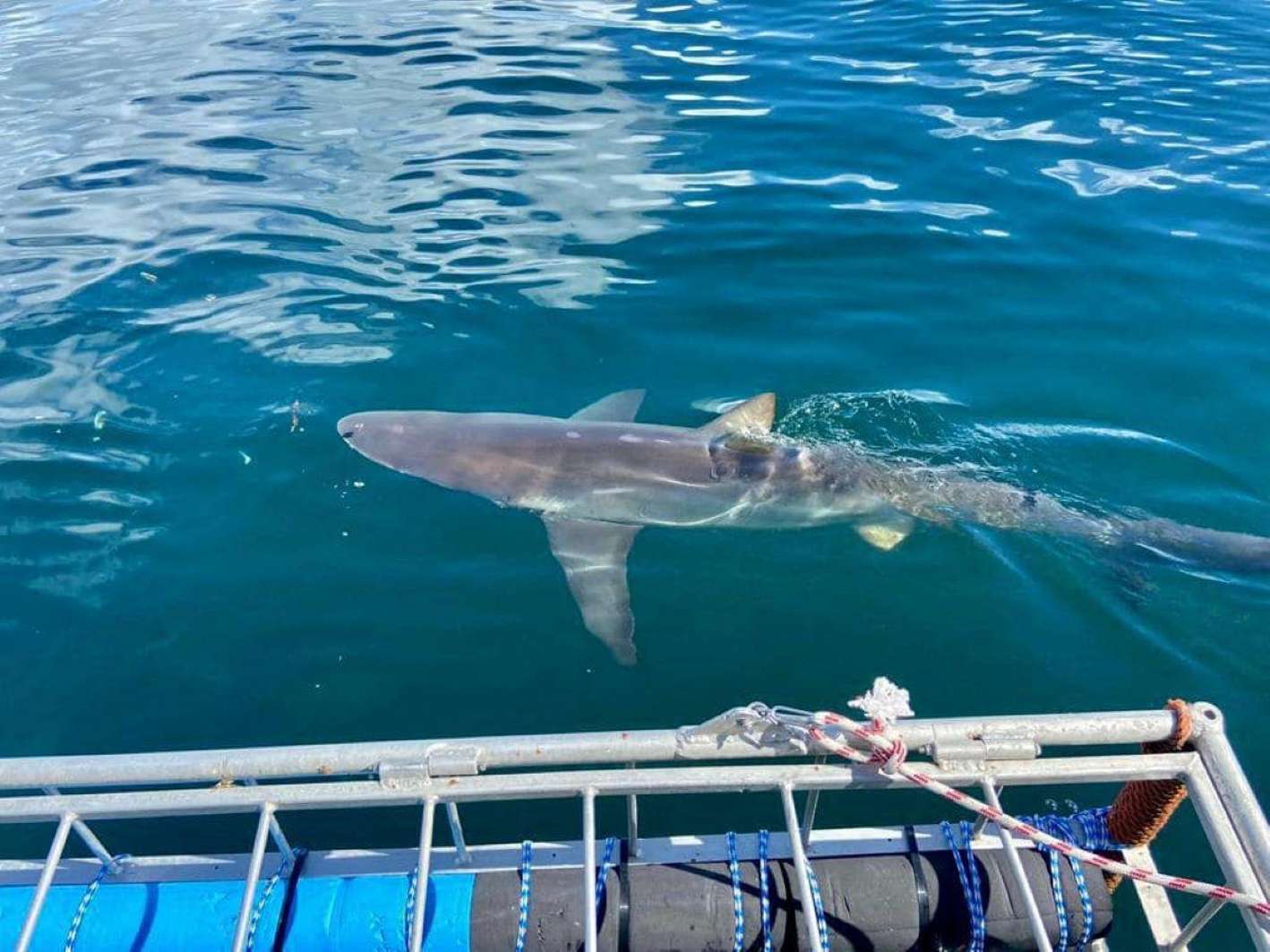
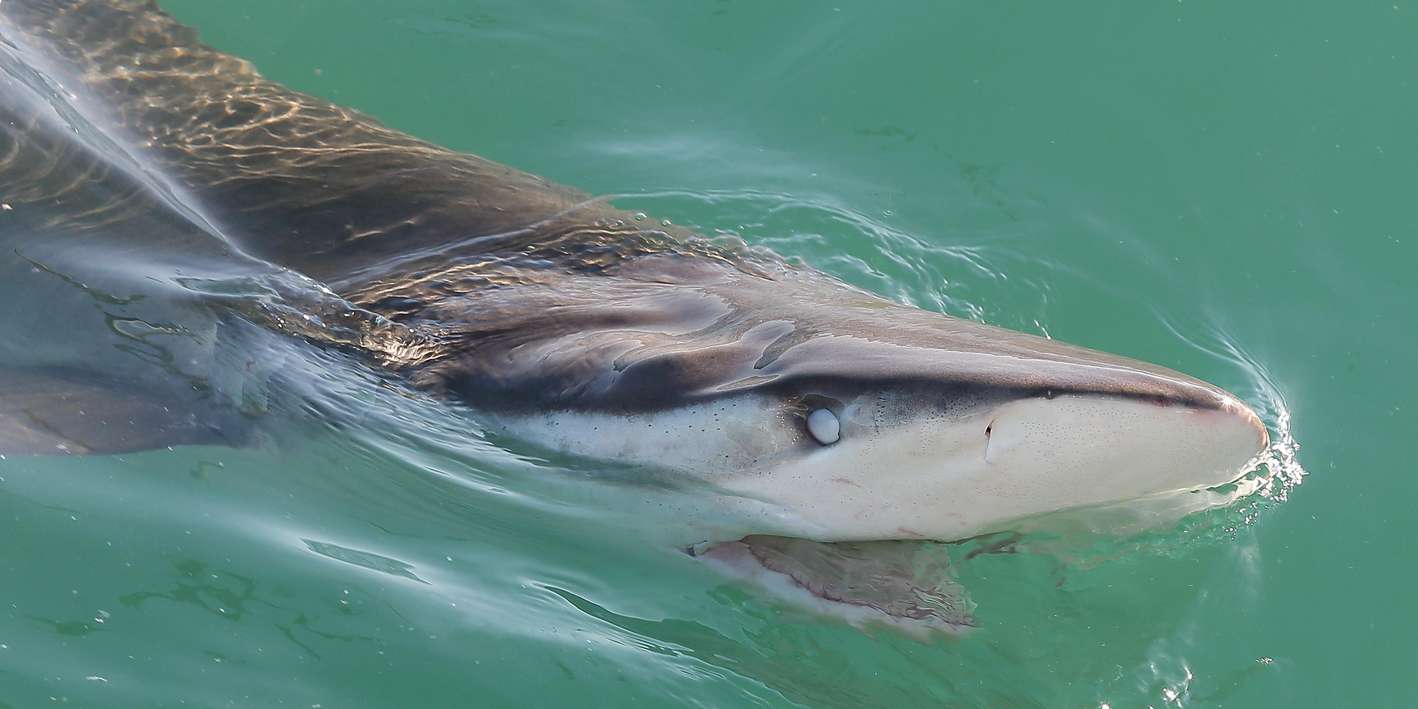
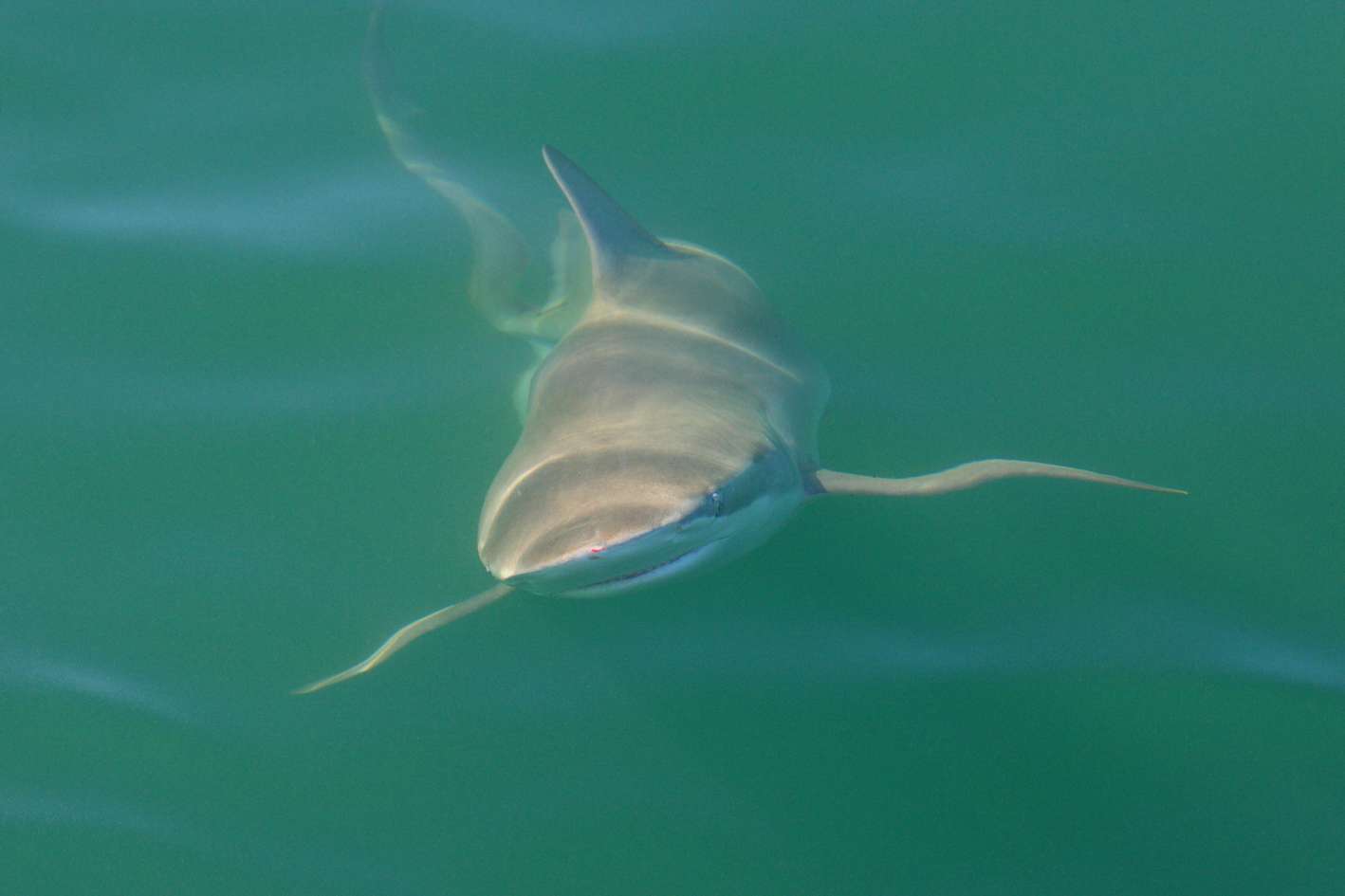
Bronze whalers are the reliable show now, running 2.5 to 3.3 meters and curious about boats.
The sevengills add their own pull. They swim slowly, look prehistoric, and Cape Town counts among the top places on earth to see them. If a large wild shark at arm's length is the point, the morning delivers. If only a great white will do, skip it.
A traveler's note
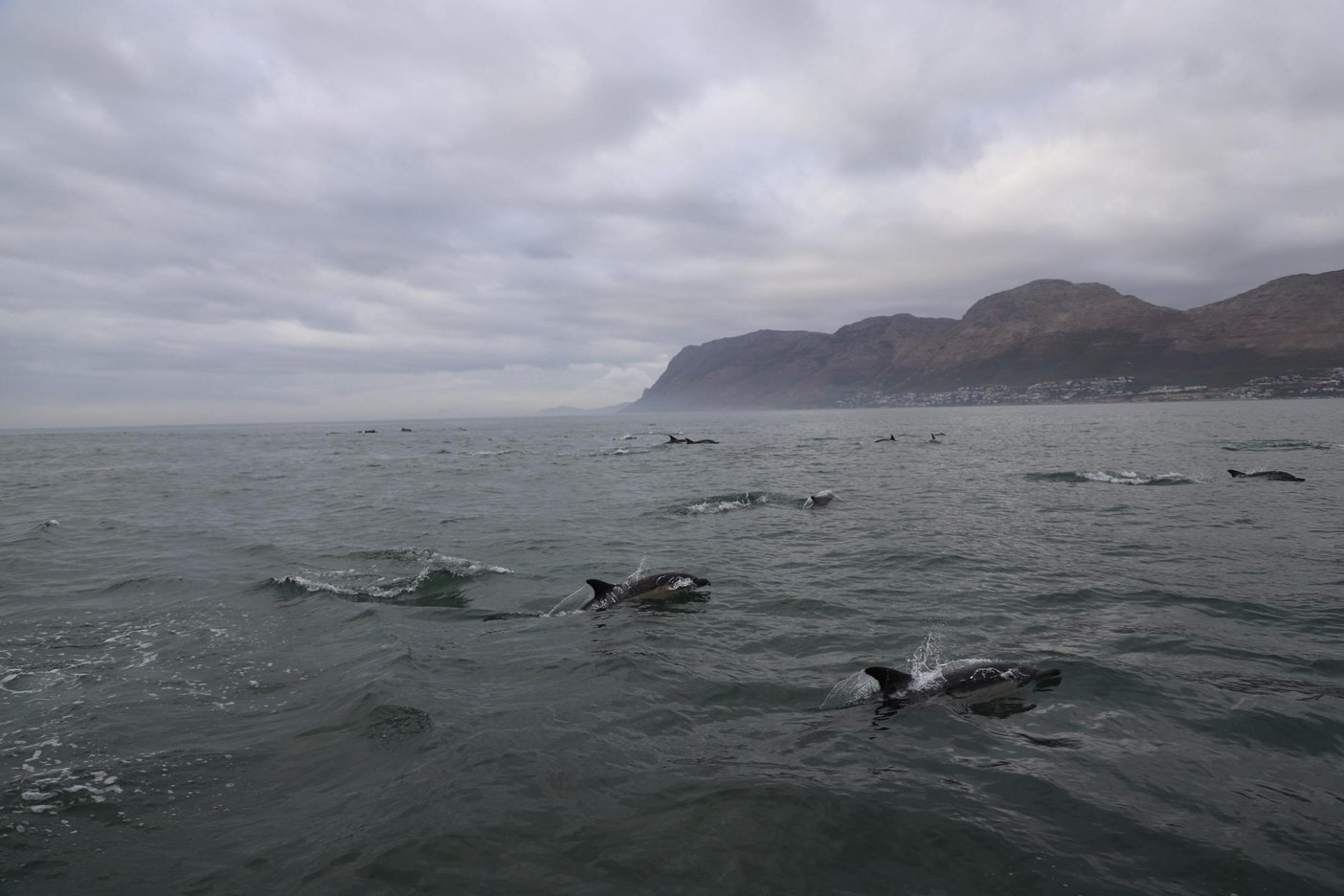
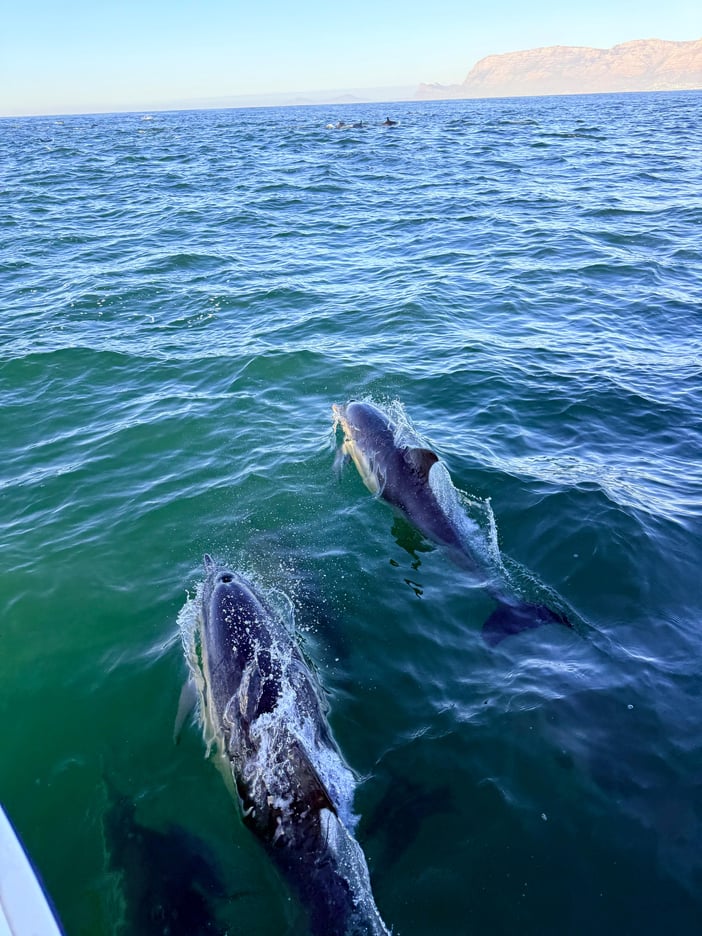
The staff's relaxed, confident manner made it feel like a family outing. We followed a dolphin pod en route to the dive site, which made it extra special. Can't wait to do it again!
That is the trade in one sentence, and it is a good one. Large sharks, reliably, on a city schedule beats a lottery ticket for an animal that may not show.
Tour for this
From Cape Town: Shark Cage Diving and Viewing5.0★ (1) · 8 hours · Free cancellation
Simon's Town launch or Cape Town hotel pickup, which route to the sharks
Two routes carry a Cape Town shark cage dive, and they suit different days. One leaves from Simon's Town, 45 minutes from the city, and has you back by early afternoon. The other collects you from your hotel before dawn and drives two and a half hours to Gansbaai.
Here is the detail that changes the maths: the boat rides are nearly identical. Simon's Town boats need 25 to 30 minutes to reach Seal Island, Kleinbaai boats 10 to 25 minutes to reach Shark Alley. The real difference sits on land, about 45 km against roughly 163 km of highway.
So the choice is really about the rest of your day. A local False Bay launch leaves hours free for the penguins or the peninsula. A door-to-door Gansbaai trip costs the whole day but removes every logistics decision, pickup through drop-off.
The two routes side by side
Simon's Town departure
Gansbaai with Cape Town pickup
Land transfer each way
45 to 53 minutes
2 to 2.5 hours
Launch harbour
Simon's Town pier in False Bay
Kleinbaai Harbour
Boat ride out
25 to 30 minutes to Seal Island
10 to 25 minutes to Shark Alley
Sharks on most days
bronze whalers and sevengills
bronze whalers, seasonal great whites
Door to door
half a day
9 to 10 hours
Simon's Town departure
Land transfer each way
45 to 53 minutes
Launch harbour
Simon's Town pier in False Bay
Boat ride out
25 to 30 minutes to Seal Island
Sharks on most days
bronze whalers and sevengills
Door to door
half a day
Gansbaai with Cape Town pickup
Land transfer each way
2 to 2.5 hours
Launch harbour
Kleinbaai Harbour
Boat ride out
10 to 25 minutes to Shark Alley
Sharks on most days
bronze whalers, seasonal great whites
Door to door
9 to 10 hours
Read it against your calendar. A short trip earns its keep on a packed itinerary, and the full-day transfer suits travelers who want the ride handled for them.
Seal Island holds a Cape fur seal colony of roughly 60,000 to 75,000 animals, swelling past 70,000 at pupping time. The noise carries across the water before the island comes into view, and the seals themselves are half the show.
A sudden 25-meter drop-off beside the island once made it the stage for great white breaches, the ones the Air Jaws films made famous.
Today the cage usually holds bronze whalers, copper-coloured and unhurried, and broadnose sevengills cruising the Simon's Town coast.
The sevengill is the stranger sight: seven gill slits where modern sharks have five, a trait that runs back to sharks of the early Jurassic, some 195 million years ago. Broad head, blunt snout, one dorsal fin set far back near the tail.
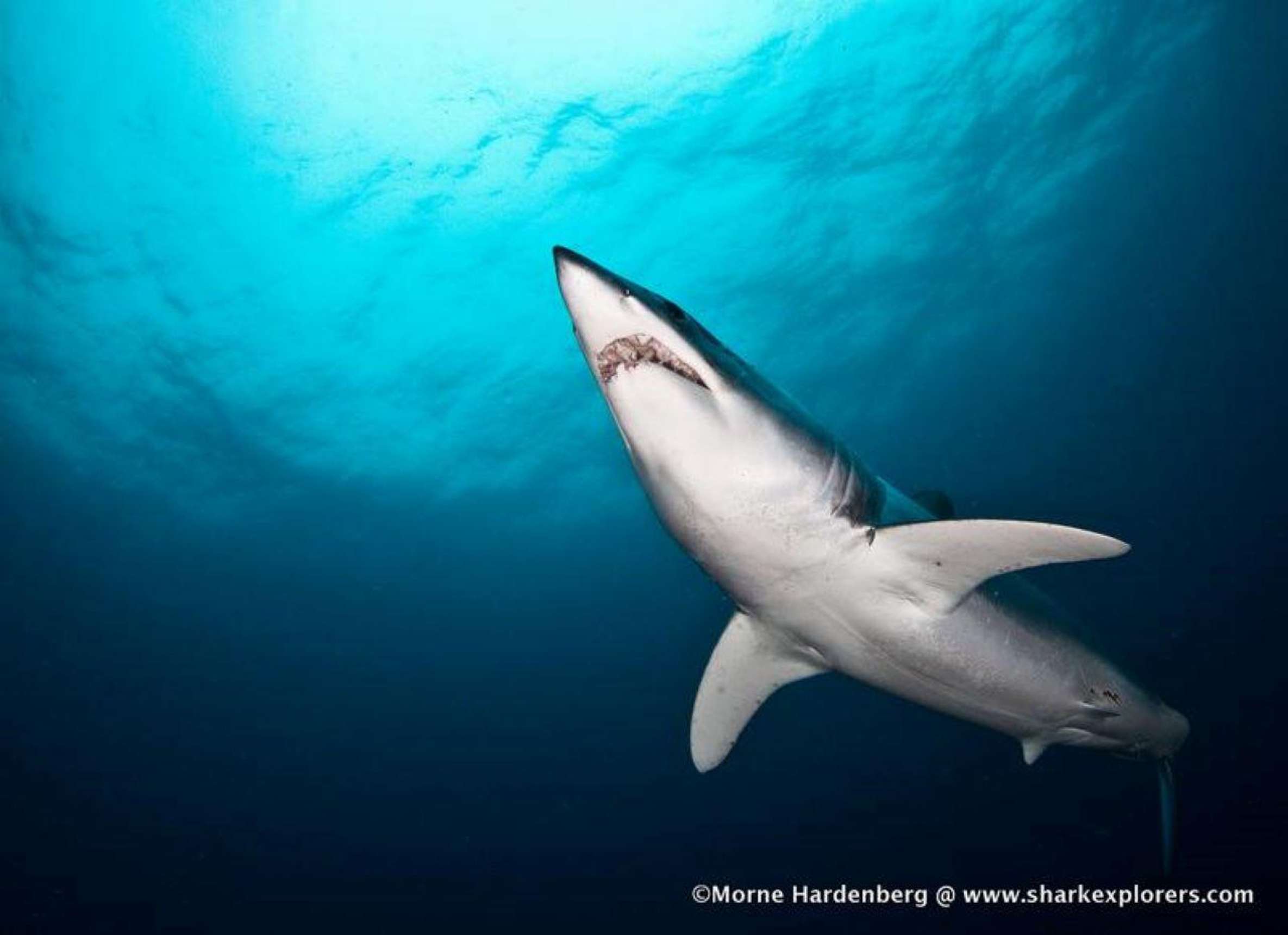
Makos and blue sharks turn up offshore now and then, less often than the whalers. Murky water is normal in these bays, so trust the crew's eyes at the surface as much as your own underwater.
Tour for this
From Hermanus or Cape Town: Shark Cage Diving Experience4.7★ (903) · 4.5 - 8 hours · Hotel pickup · Free cancellation
How safe the cage really is on Cape Town shark trips
The straight answer: commercial cage diving has kept a perfect human safety record against shark attacks, and South African law keeps it that way.
Every vessel and cage used for white shark diving must be certified safe and suitable by the South African Maritime Safety Authority, built by a registered engineer from aluminium, stainless steel or galvanized steel, with no sharp edges and an access door at the top.
Two famous incidents get retold in every hostel conversation. In 2005 a great white broke through cage bars off South Africa, and in 2013 an eight-foot shark pushed its head into a Gansbaai cage.
Both happened with open-top cages and non-regulation setups, and nobody died in either. Sharks do not deliberately ram steel cages to attack the people inside.
The real physical demand is small: stepping from deck to cage in a swell and holding the interior bars. Accidents that have happened on these trips came from boats, never from sharks.
Tour for this
From Cape Town: Gans Bay Great White Shark Cage Diving5.0★ (3) · 4 hours · Hotel pickup · Free cancellation
No licence, no course, no scuba card. Surface cages sit at the waterline, and you breathe by holding your breath, through a snorkel, or off a hookah line running from the boat, depending on the operator.
Divers stay in one place and can usually stand or kneel on the cage floor, so strong swimming is not the issue. Comfort in choppy water is: the swell pulls at you at the surface, and panic is the thing to avoid.
Children are a different question per boat, because maritime law sets no statutory minimum and skippers set their own.
Most operators welcome kids on deck from age 5 or 6, and cage entry generally runs from 7 to 12 years old, sometimes younger with a parent alongside. Ask the operator directly about your youngest before booking, since this rule can stop a visit.
Anyone prone to vertigo or respiratory trouble should also flag it when booking, as some boats list both.
Tour for this
Cape Town: Shark Cage Diving Tour (with Breakfast & Lunch)4.4★ (11) · 8 hours · Hotel pickup · Free cancellation
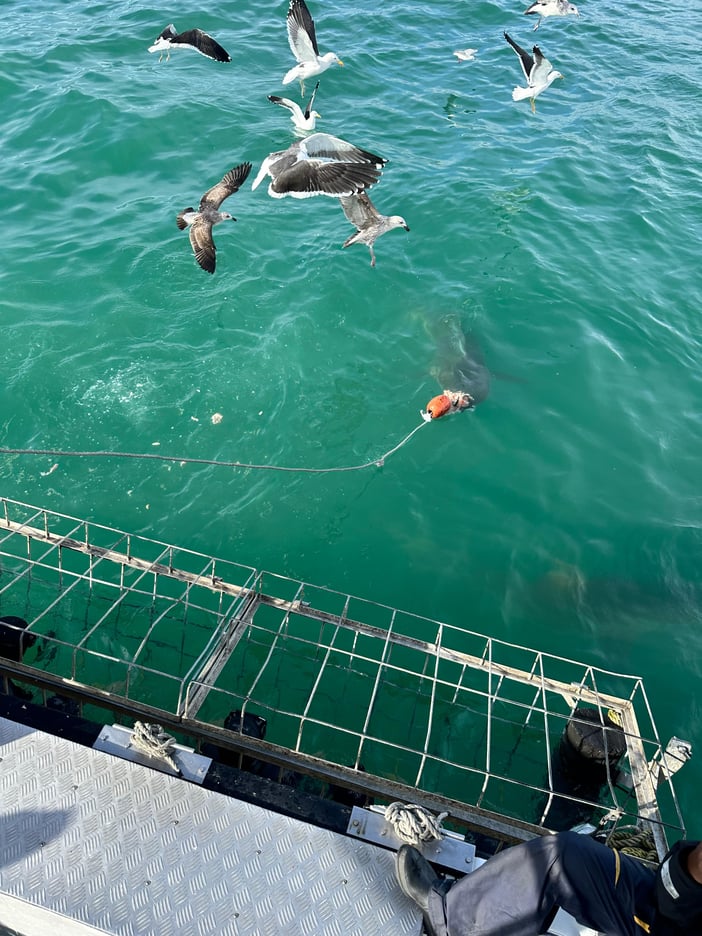
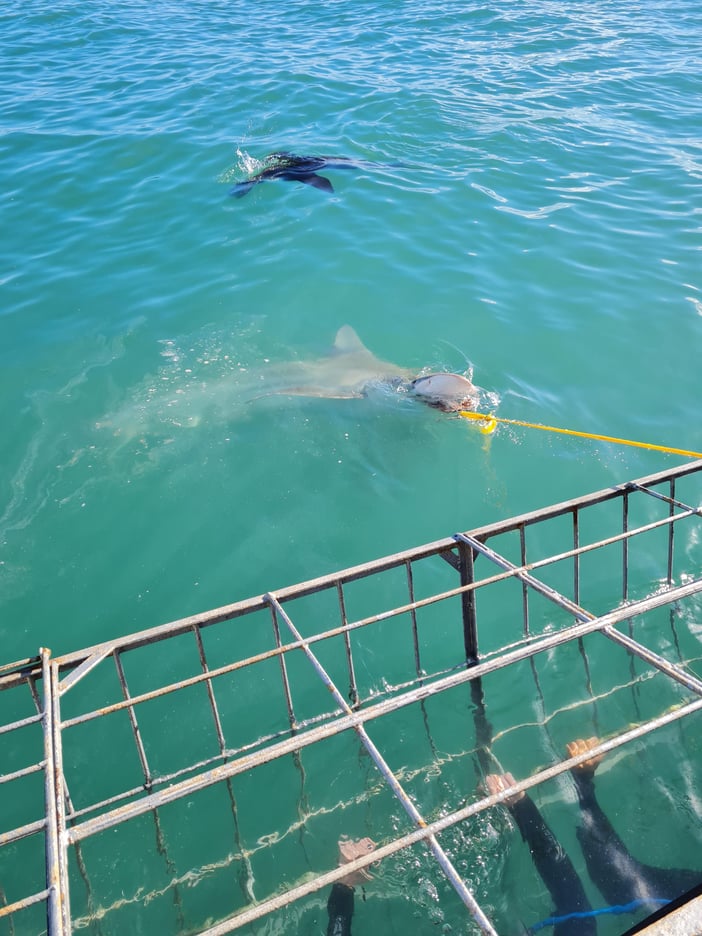
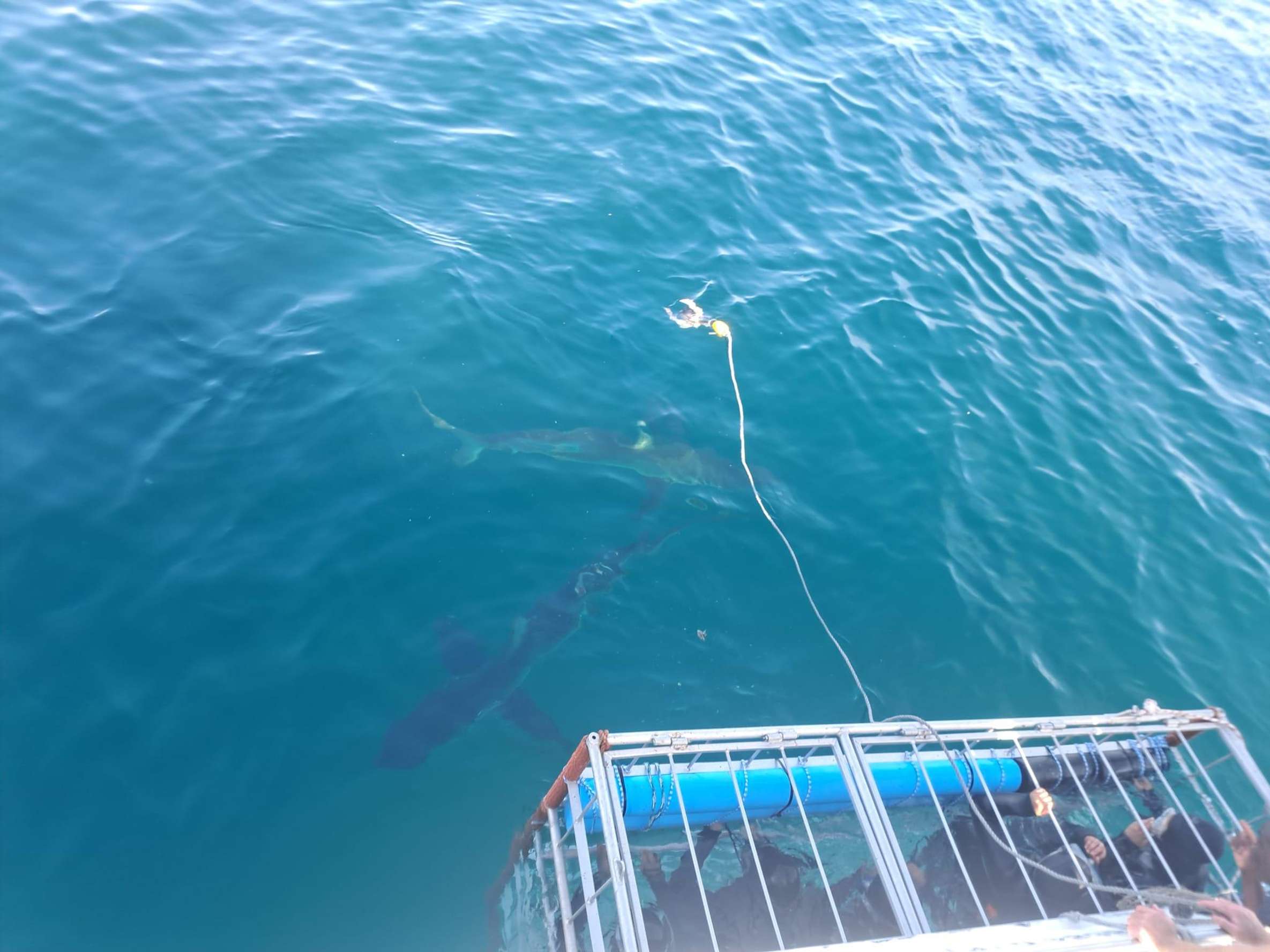
The chum slick that draws sharks to the boat smells like a fish market, and that is the whole point: scent, never food. South African permits ban deliberately feeding great whites, cap the number of operators in each designated area, and restrict diving to seal islands where chumming happens naturally anyway.
The science has run long enough to be convincing. A 14-year study in Gansbaai found cage diving does not alter white shark behaviour or pin them to one site, and researchers found no evidence tying cage diving to greater risk for swimmers in Cape Town's inshore waters.
When operators follow the rules and sharks never get a food reward, the sharks lose interest in the boats.
Touching, tagging or interfering with any shark is illegal, and bait stays away from approaching animals. The industry also funds research and builds public support against shark culling. The animals stay completely wild, in open water, on their own terms.
What people get wrong about the chum slick
MythChumming feeds the sharks
Reality
Feeding is banned by permit; operators trail fish oil and scent only
MythThe sharks learn to follow the boats
Reality
Without food rewards the sharks lose interest, and studies find no conditioning
MythThe dive changes shark behaviour
Reality
A 14-year Gansbaai study found no lasting effect on movement or habits
So you can book with a clear conscience. The permits, the no-feeding rule and the studies all point the same way: a well-run cage dive leaves the sharks as it found them.
Tour for this
From Cape Town: Great White or Bronze Whaler Shark Cage Dive5.0★ (2) · 6 - 8 hours · Free cancellation
The best time of year for shark diving in Cape Town
False Bay runs trips all year, and the seasons trade one advantage for another. Summer, December through February, brings the best odds on bronze whalers, with operators regularly finding groups of 10 to 20 sharks in a day, in water warmed to 18 to 21 degrees.
The south-easterly wind churns the bay, though, and visibility drops to an unpredictable 2 to 5 meters.
Winter flips the trade. From May to August offshore winds flatten the water and clear it to 8 to 15 meters, the best of the year, while the sea sits at its coldest, around 14 to 17 degrees, and average peak waves build to around 3 meters. Sevengill sightings run strongest between September and February.
Rain never cancels a trip, since the boats have dry cabins. Swell and wind do, and the skipper decides at 2 pm the day before. Book the earliest day of your stay so a washed-out morning still has a second chance.
Shark sightings, sea conditions, and water temperature by month in False Bay
November: broadnose sevengill shark seen 433 times. Sea temperatures climb toward 20°C and bronze whaler sightings increase as peak visitor season gets underway.
HighestNov433 times seen
In betweenSep to Oct, Dec to Feb174 to 294 times seen
LowestMar to Aug44 to 121 times seen
Darker months: higher, from 44 to 433 times seen
Tap a month to read it.
February: bronze whaler seen 3 times. Mid-summer provides some of the highest shark numbers and warmest waters of the year alongside good diving conditions.
HighestApr, Aug to Oct, Dec to Feb2 to 3 times seen
In betweenMay, Nov1 times seen
LowestMar, Jun to Jul0 times seen
Darker months: higher, from 0 to 3 times seen
Tap a month to read it.
January: calm sea on 13% of days. Warm sea temperatures up to 20°C support peak bronze whaler sightings, though afternoon south-easterly winds can stir up the surface.
HighestJan, Mar to Apr10 to 13% of days
In betweenFeb, Oct to Nov6 to 8% of days
LowestMay to Sep, Dec0 to 4% of days
Darker months: higher, from 0 to 13% of days
Tap a month to read it.
July: waves up to 3.3 m on an average day. Mid-winter brings the year's highest average swells and cold water near 14°C, balanced by the clearest viewing conditions.
HighestJun to Aug3.1 to 3.3 m
In betweenMay, Sep2.8 to 2.9 m
LowestOct to Apr2.2 to 2.4 m
Darker months: higher, from 2.2 to 3.3 m
Tap a month to read it.
January: 5 out of 5 for water temperature. 16-20°C
HighestNov to Apr
In betweenOct
LowestMay to Sep
Darker: a higher water temperature score, out of 5
Tap a month to read it.
The winter rows show the trade plainly: clearest water against bigger seas, warmer water against more sharks. Wild animals keep their own calendar in every month.
Simon's Town sits about 45 km south of the city, a 45-to-53-minute run without traffic that can stretch to 90 minutes in peak season. Most people do not drive it themselves: tours run hotel pickups in False Bay between 5 and 6 am, roughly 40 minutes on the road.
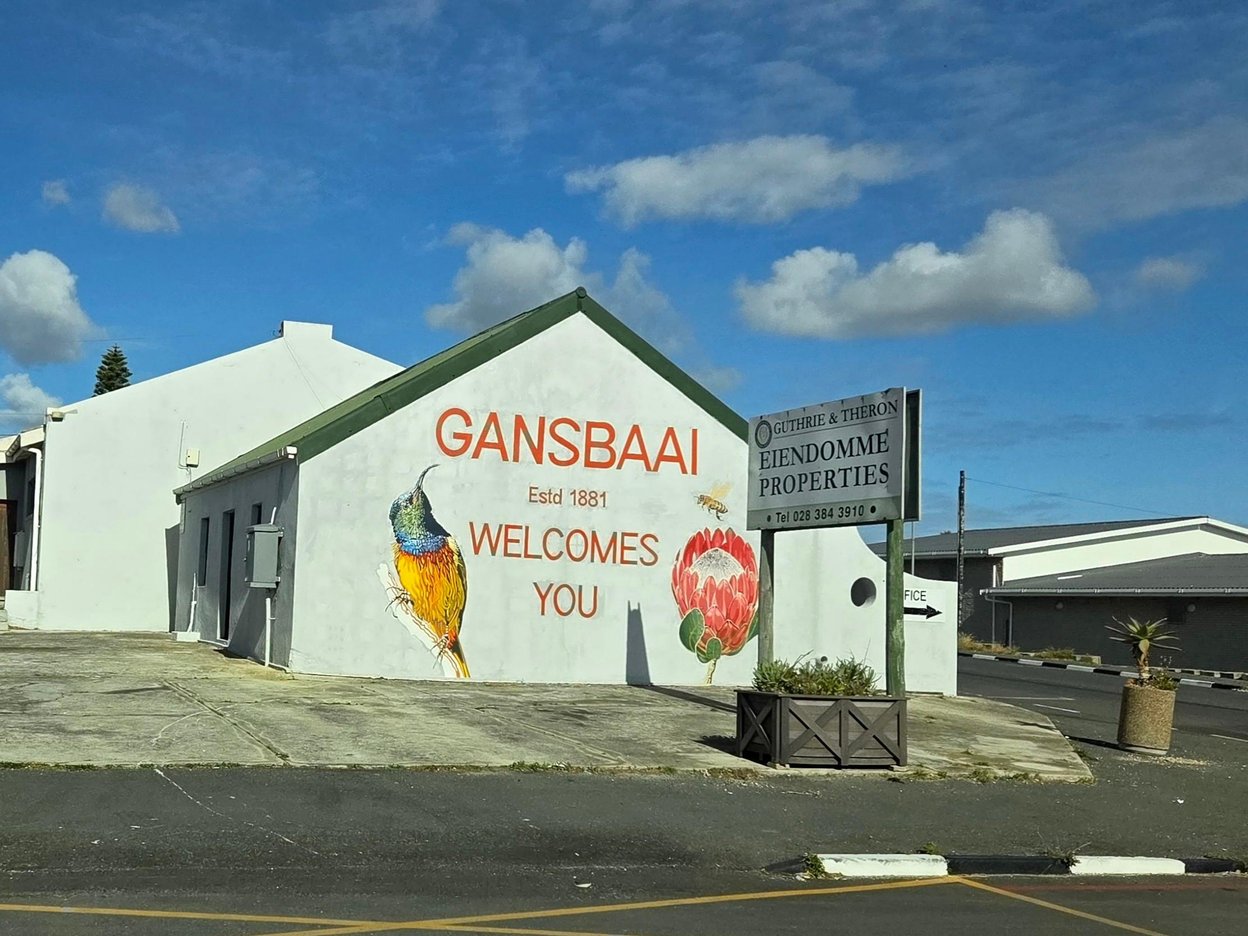
The Gansbaai run is a different animal. The route heads east on the N2 over Sir Lowry's Pass and Houwhoek Pass, then branches onto the R43 past Hermanus and Stanford, about 163 km in two and a half hours.
To make the early launches, vans leave central Cape Town between 3:30 and 4:30 am, and in busy December shared pickups can start at 3:30 am.
If you do self-drive to Gansbaai, Hermanus and Stanford make the easiest coffee and bathroom stops, and the roads are paved the whole way. Either way, exact pickup times arrive the day before, around 4 pm, because tides decide the launch.
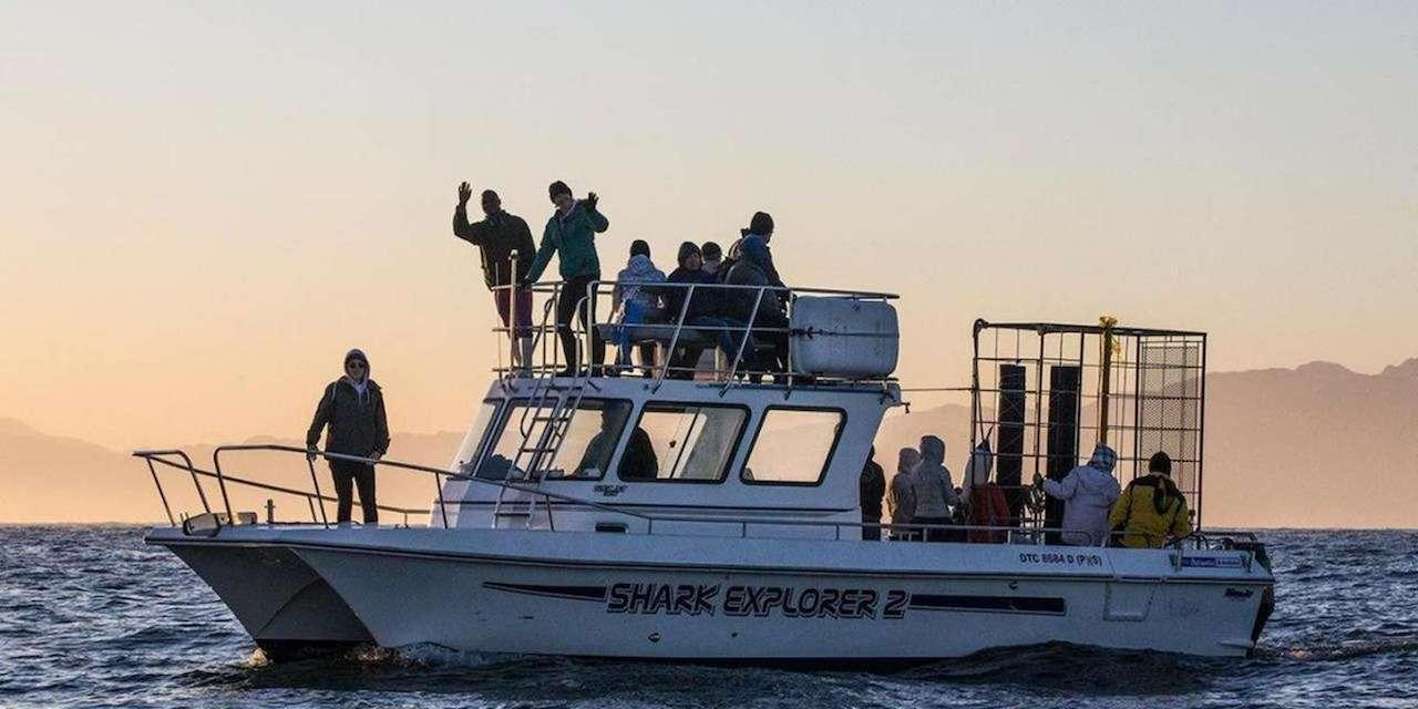
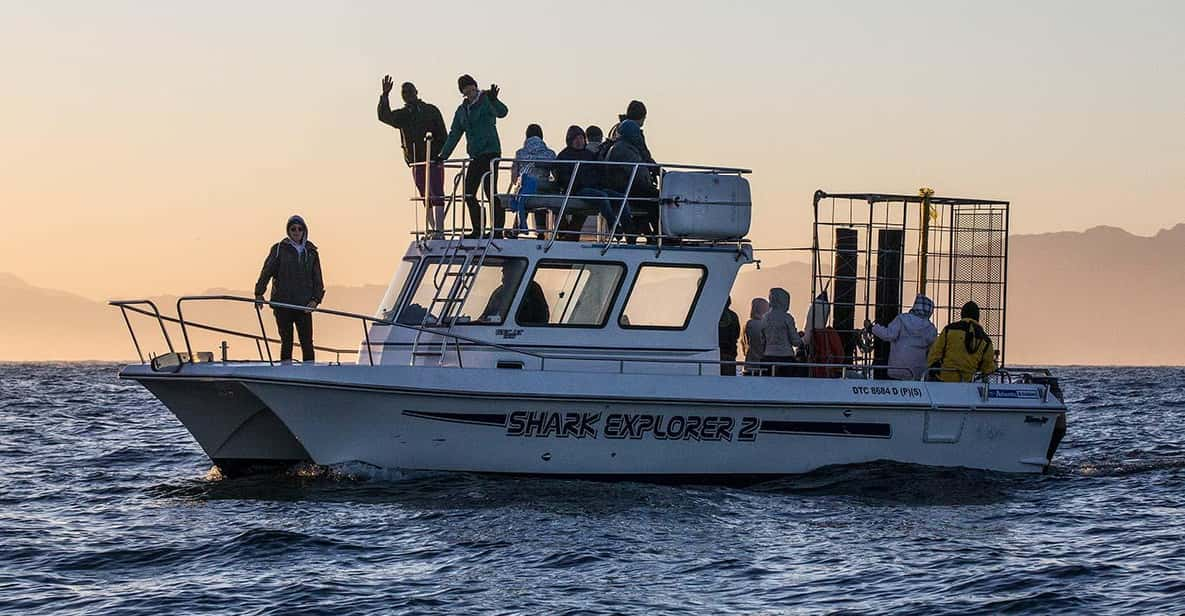
Boats differ more than brochures admit. Simon's Town operators tend to run smaller vessels with fewer divers in the cage at once, which means less jostling at the rail and a more personal hour.
Gansbaai boats are bigger, with larger breath-hold cages holding four or five people, and a wide catamaran gives the steadiest platform when the swell is up.
A crew with a marine biologist on board changes the day too. They read the water, explain what each shark is doing and track tagged animals, and travelers consistently say the briefing is half the experience. Gear should come standard: wetsuit, mask, boots, hood and weight belt, with no rental fuss.
Cape Town: Award-Winning Shark Cage Diving in Simon's Town answers all of it at once. It runs four hours from a harbour 45 minutes from the city, is owner-run and conservation-led, supplies wetsuits, mask and booties, and keeps the cage small and optional.
How to choose a Cape Town shark cage dive
Check
Why it matters
Our pick
Group size and boat
Smaller boats mean fewer divers per cage and clearer views
Small boat, small cage groups
A biologist or expert crew
Better sightings explained, better behaviour around the animals
Owner-run, conservation-led guides
Gear included
A missing wetsuit ends the day before it starts
Wetsuits, mask and booties supplied
Deck viewing option
Weather or nerves should not cost you the sharks
Stay aboard and view from the boat
Travel time from the city
A 45-minute drive saves half a holiday
45 minutes to Simon's Town
Run your own shortlist against those five rows. The trip that clears them all is usually the one worth the morning.
What to pack for a Cape Town shark dive, and the weather fine print
Pack light. The boat supplies everything that goes in the water: a full wetsuit, usually 5 mm and sometimes 7 mm neoprene, plus booties, mask, hood, snorkel and weight belt.
That suit matters, because False Bay sits between 14 and 17 degrees in winter and warms only to 18 to 21 in summer, and you will spend 20 to 30 minutes in it. Your part is a swimsuit worn underneath and warm layers for the deck.
Food mostly comes aboard too, breakfast on arrival, snacks, fruit and hot drinks through the trip.
The one thing to handle yourself is nausea: take seasickness tablets the night before and again an hour before boarding, since medication works only if it beats the swell to your stomach. Skip the greasy breakfast for the same reason.
Then the fine print. Cancel up to 24 hours ahead for a full refund, and weather cancellations bring a refund or a new date. If wind rises after launch and the boat turns back, no refund follows.
What happens when the sea has other plans
If this happens
What happens then
The weather cancels the launch
A full refund or a rescheduled date, whichever you prefer
Strong wind comes up after the boat is out
The boat returns early for safety and no refund is given
No sharks appear on your trip
Some operators hand out a non-transferable return voucher to rebook
You change your plans
Cancel up to 24 hours in advance for a full refund
Early, and darker than you expect. Pickup between 5 and 6 am, coffee and biscuits at the harbour, then a safety briefing that covers the cage, the swell and the life jackets. The skipper steers out, 25 to 30 minutes to Seal Island from Simon's Town, and drops anchor in the chum line.
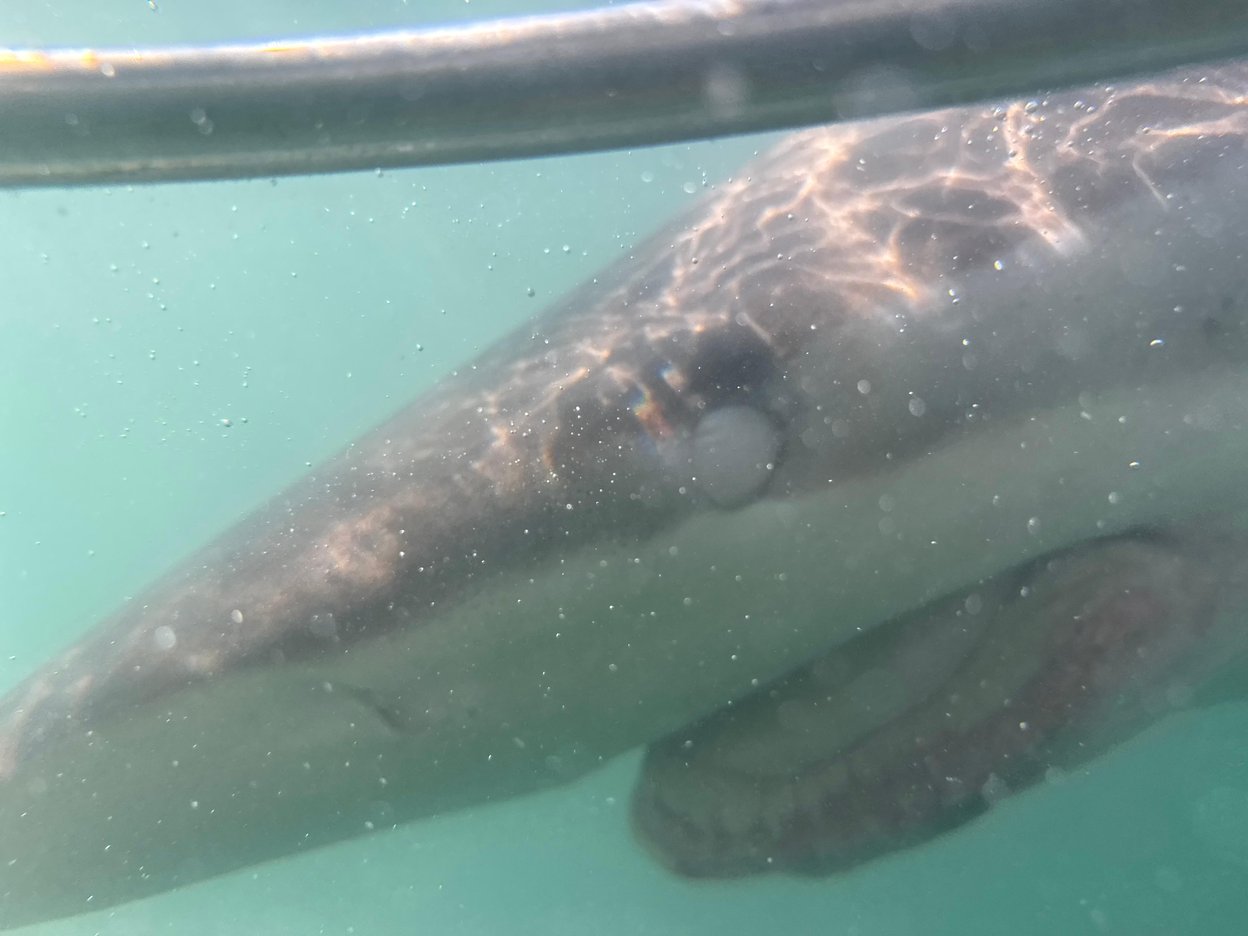
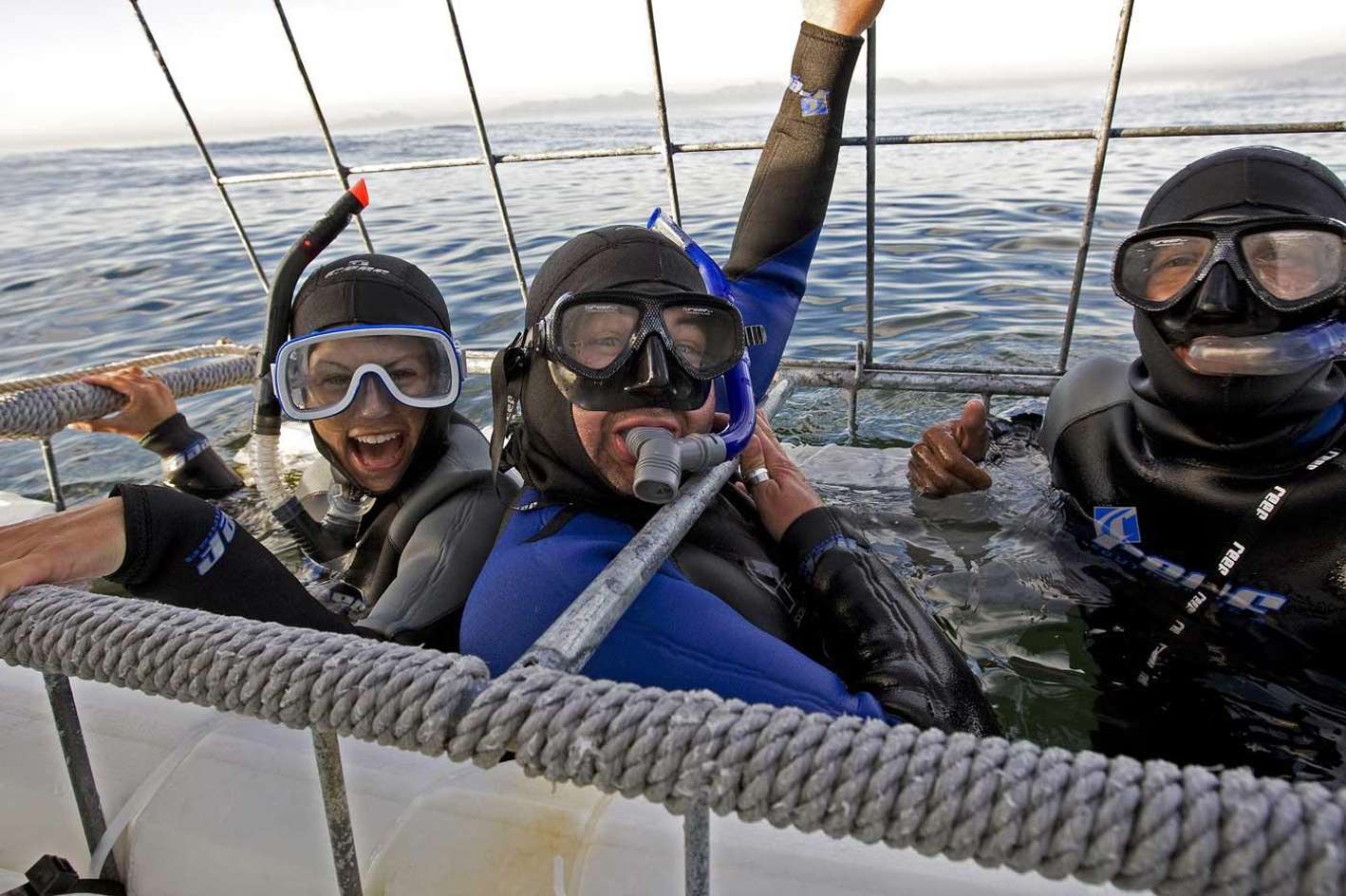
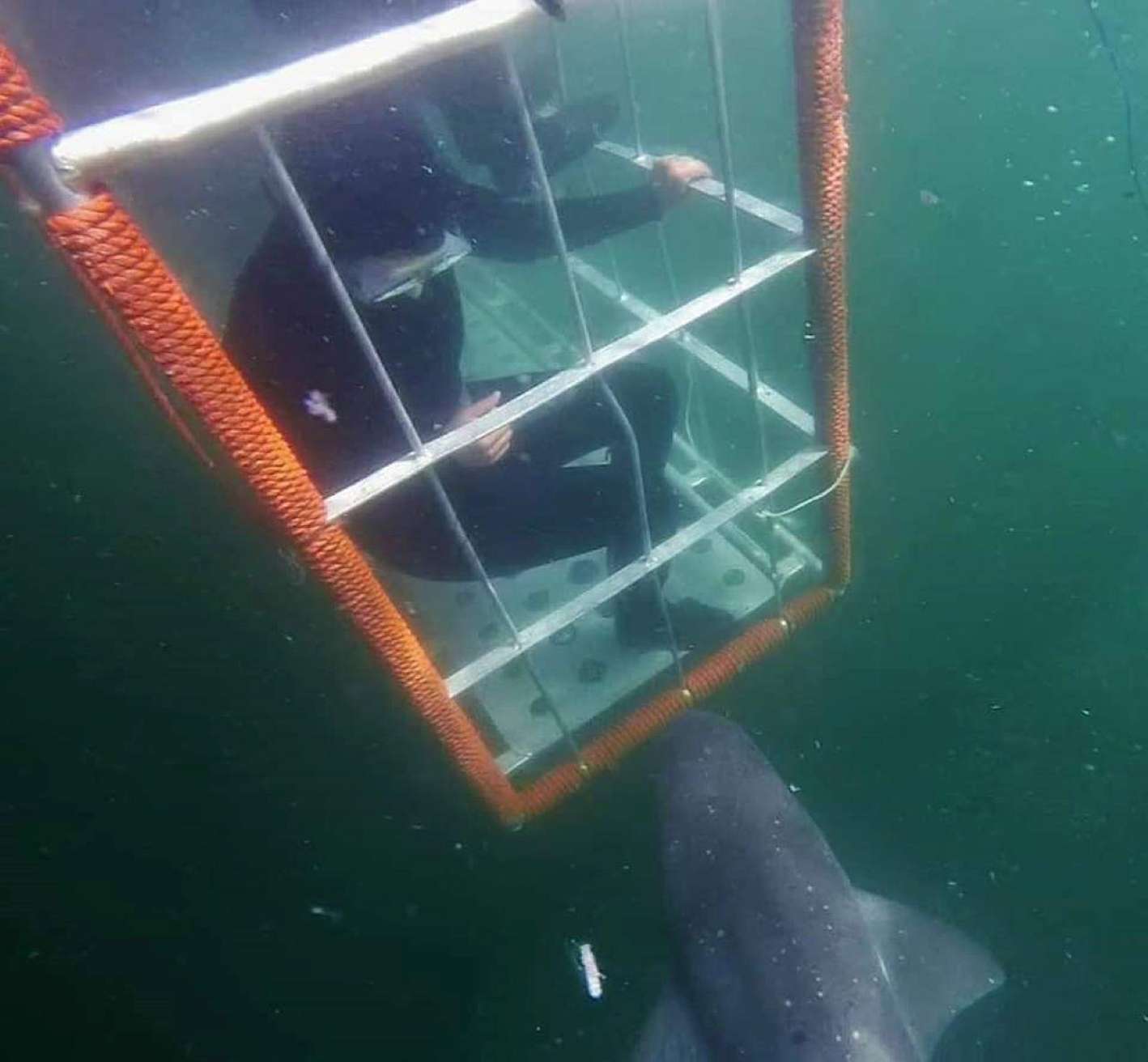
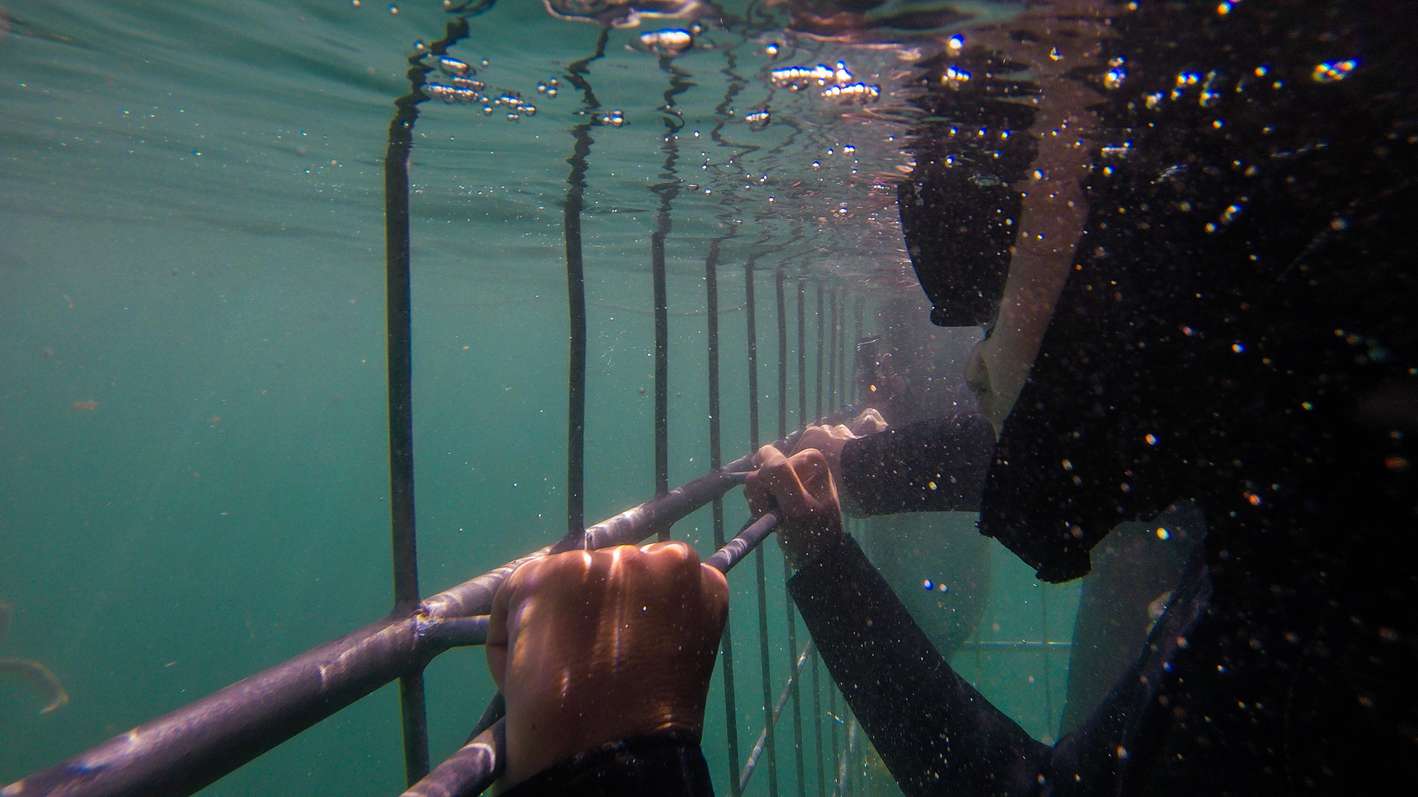
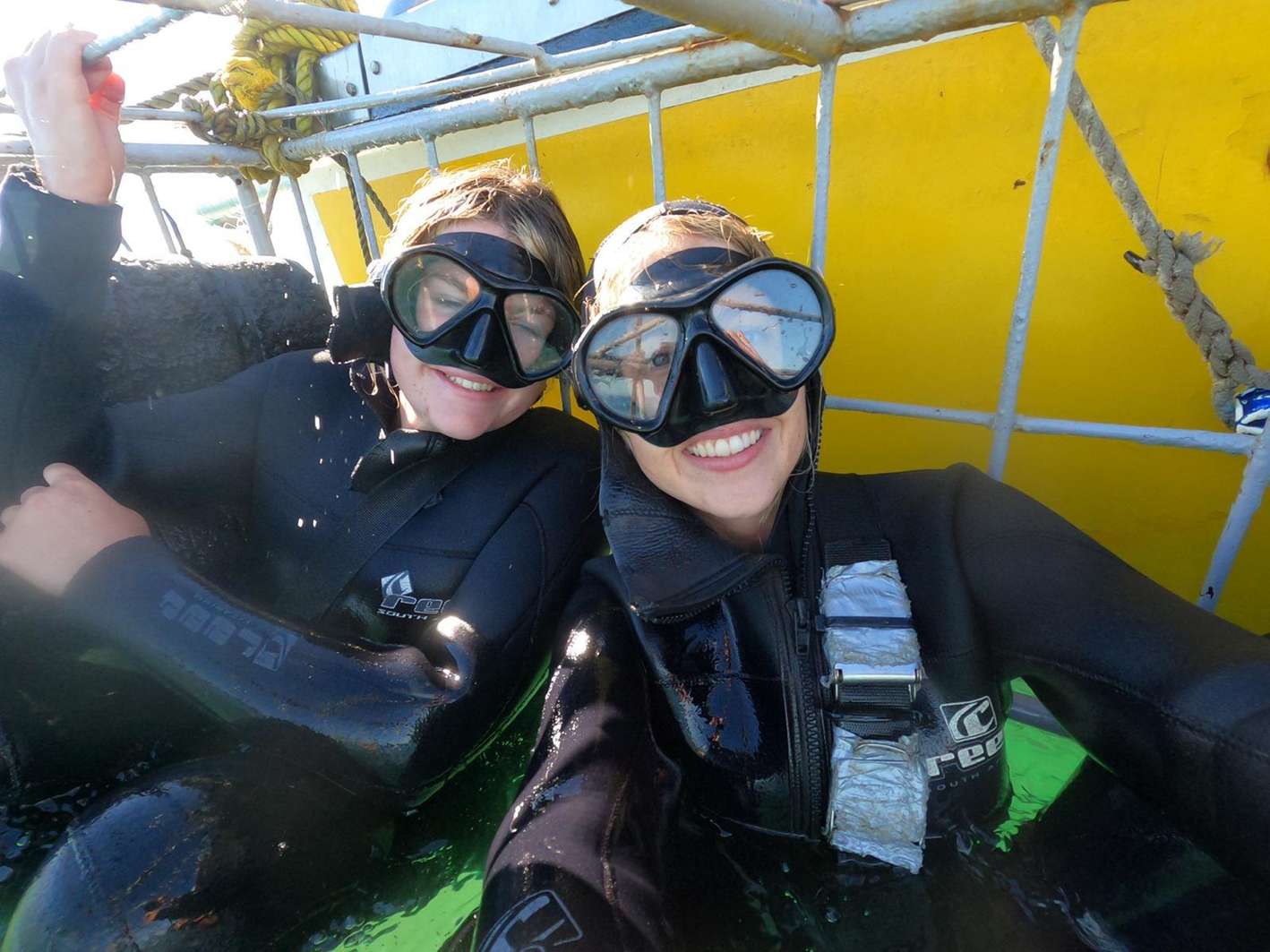
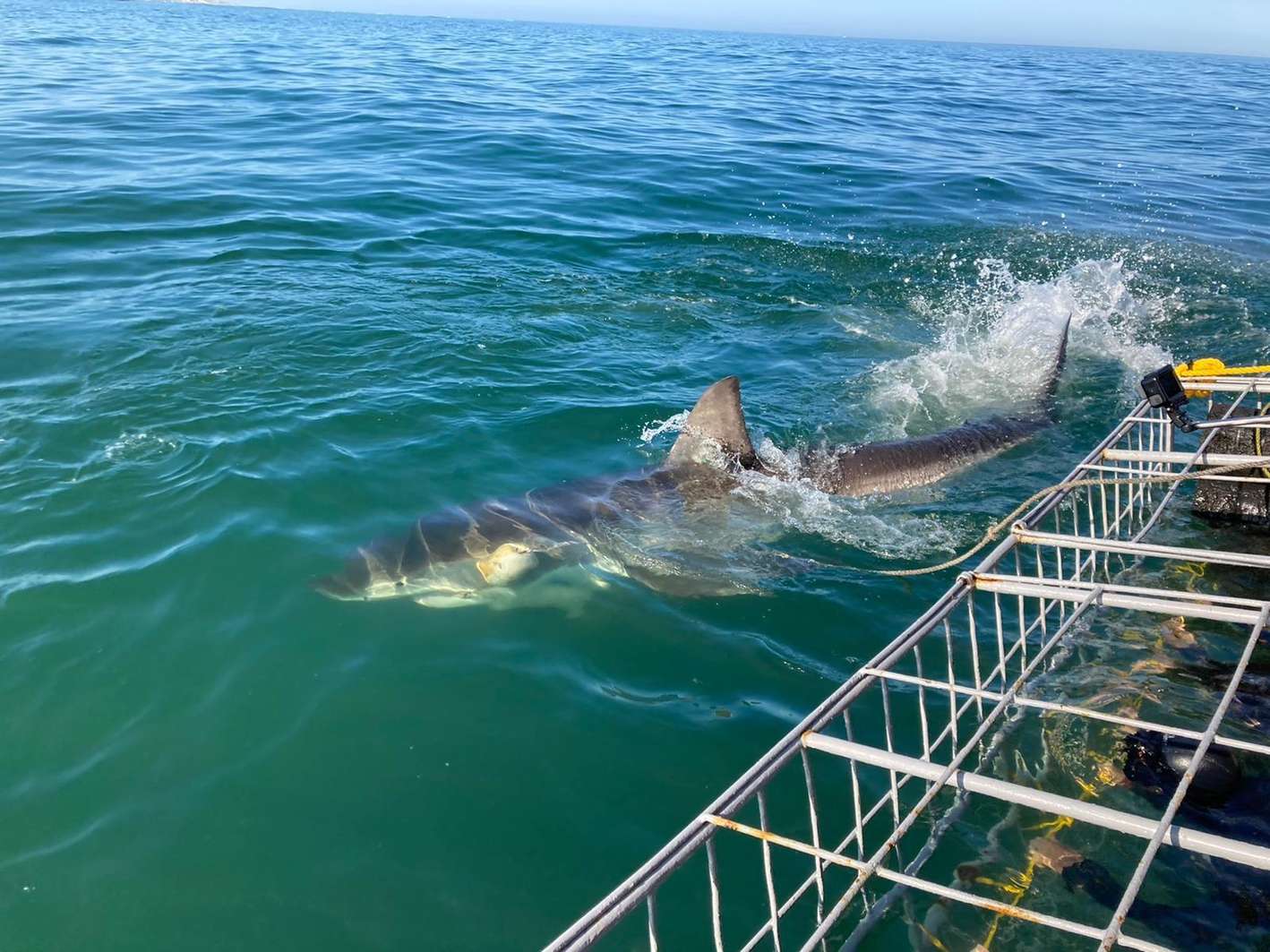
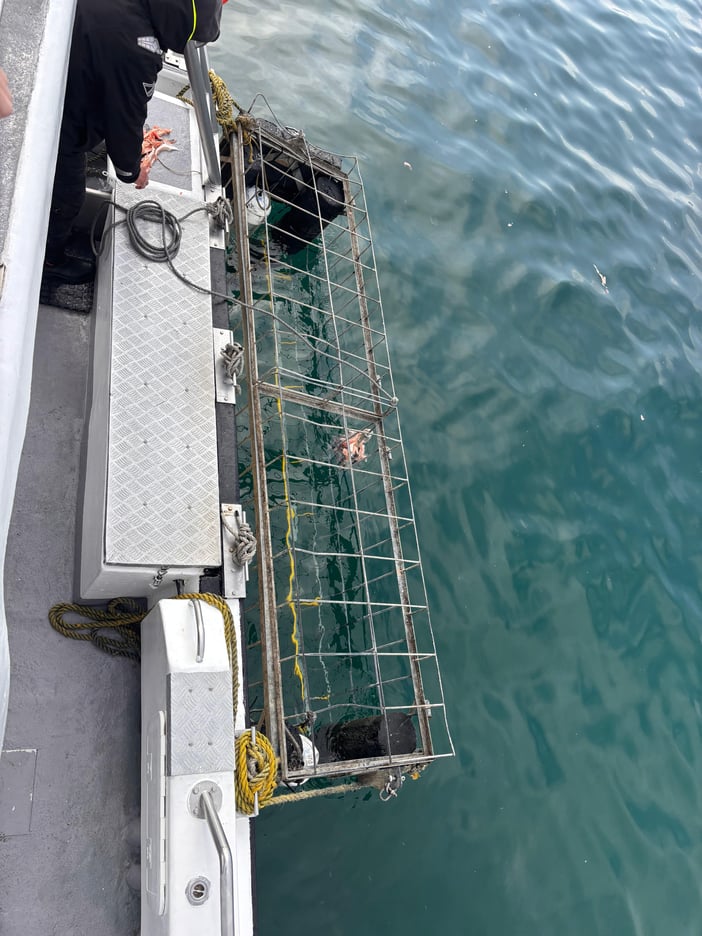
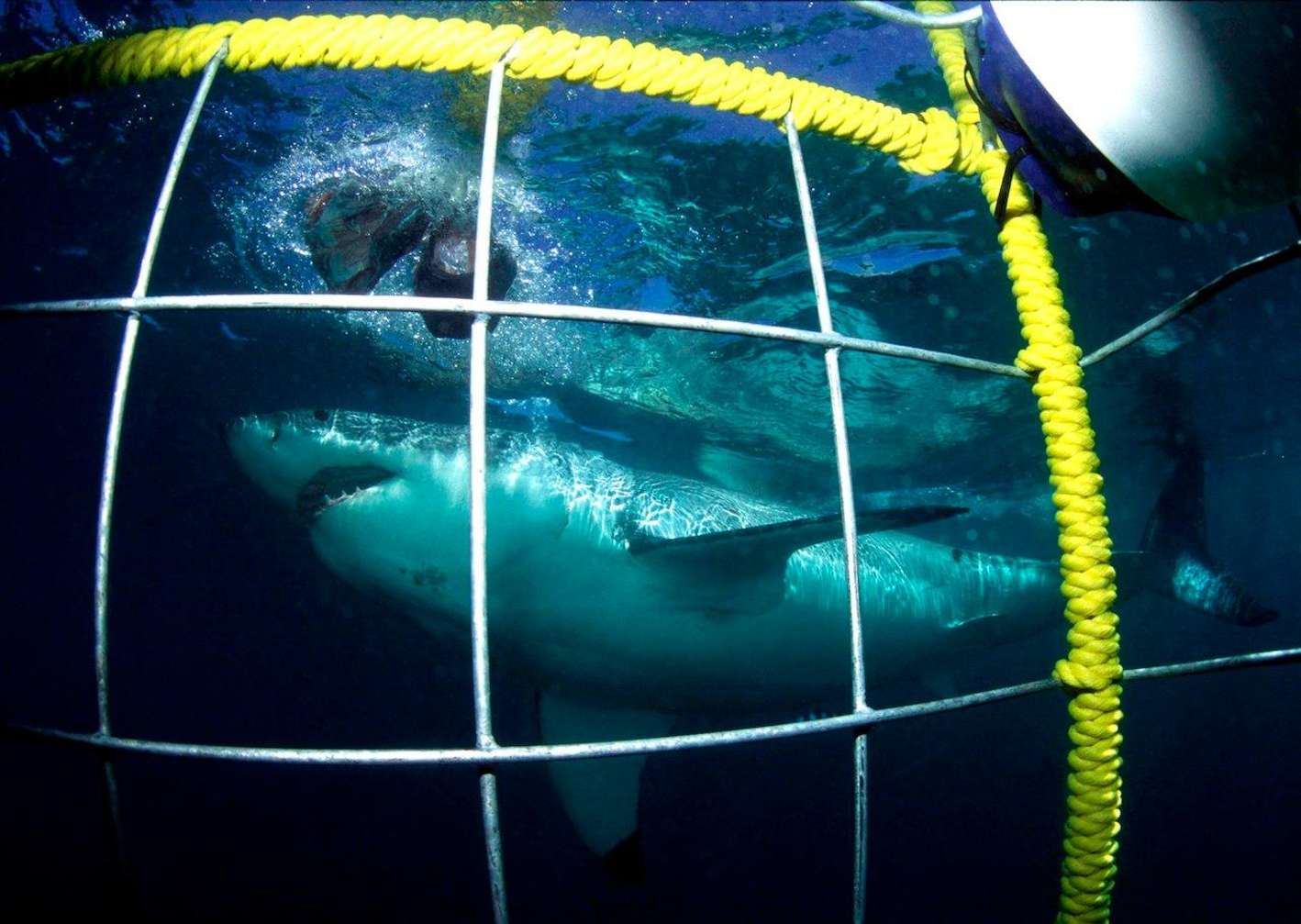
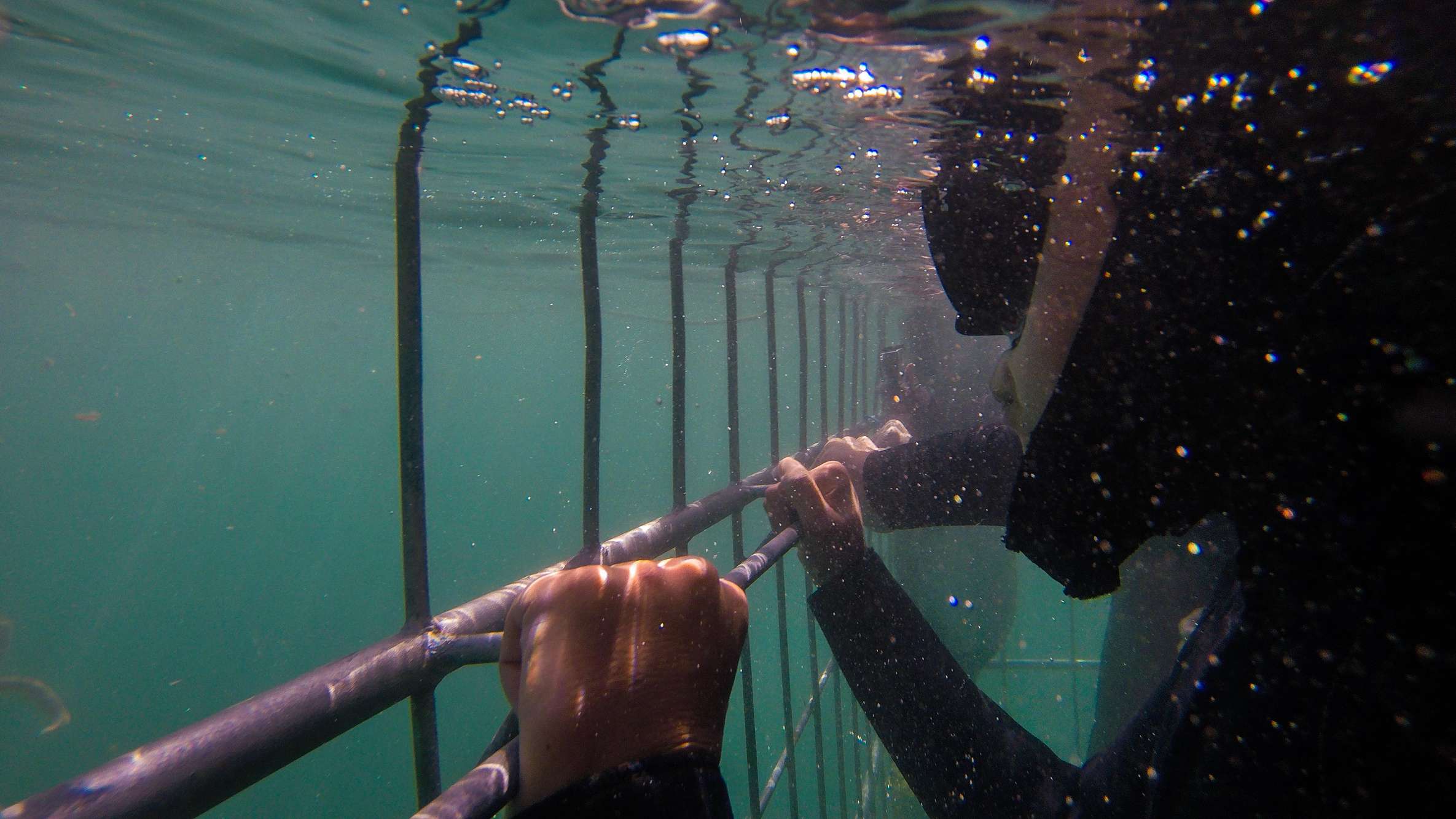
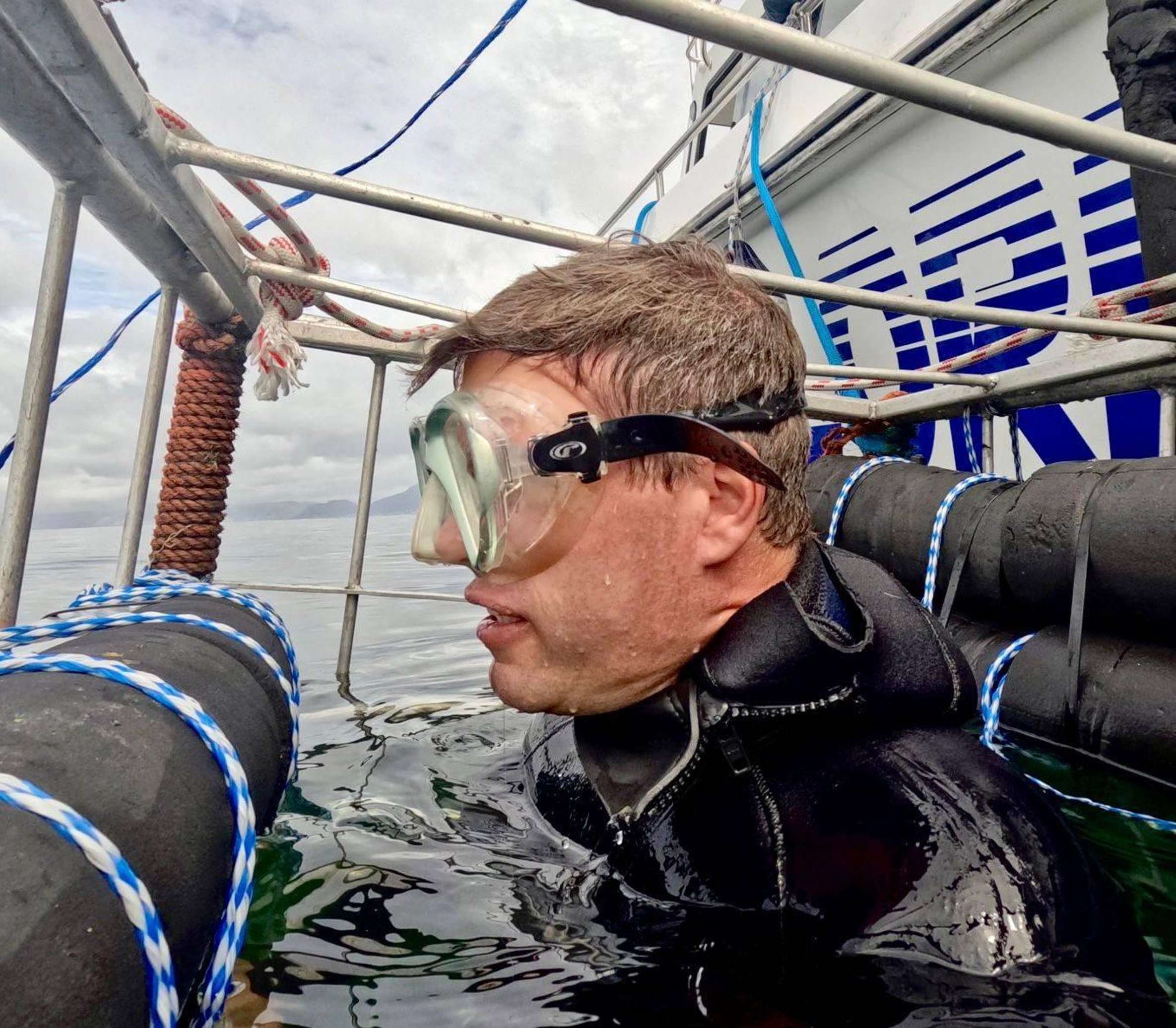
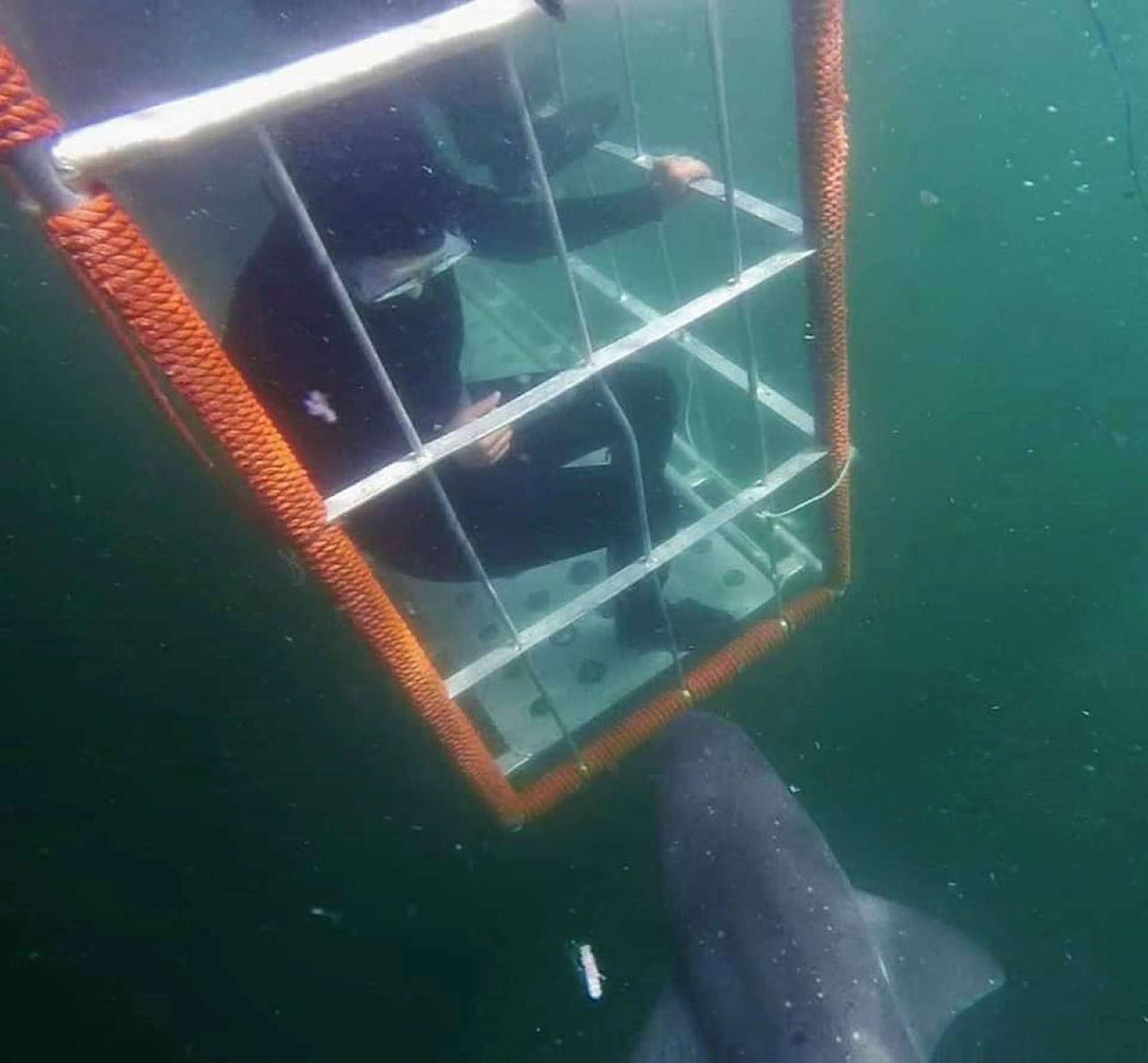
The cage hangs at the surface, tied to the boat. You slide in with four or five others, hold the interior bars, and wait.
Sharks appear suddenly, which is why the crew on deck shouts directions like port side or underneath, and every diver gets a rotation of roughly 20 to 30 minutes while the rest watch from the rail.
Breathing is simpler than most people fear: a held breath as a shark passes, or a snorkel or hookah line on some boats. Cold ends a turn early, and you can climb out at any point. Feeling seasick at anchor is common and the crew handles it often; nobody should feel pushed into the water.
How the day unfolds
1
Early pickup
Hotel collection in a van, or your own drive to the harbour
Times confirmed about 4 pm the day before
2
Arrival and briefing
Coffee, safety talk, wetsuits on
Check-in well before launch
3
Boat ride out
25 to 30 minutes from Simon's Town to Seal Island
Seals and seabirds on the way
4
Cage rotations
Groups of four or five, 20 to 30 minutes each
Others watch from the deck
5
Warm up and home
Hot drinks, snacks, back at the harbour by early afternoon
This is the quiet argument for a Simon's Town launch: back at the harbour by early afternoon, the day still breathing.
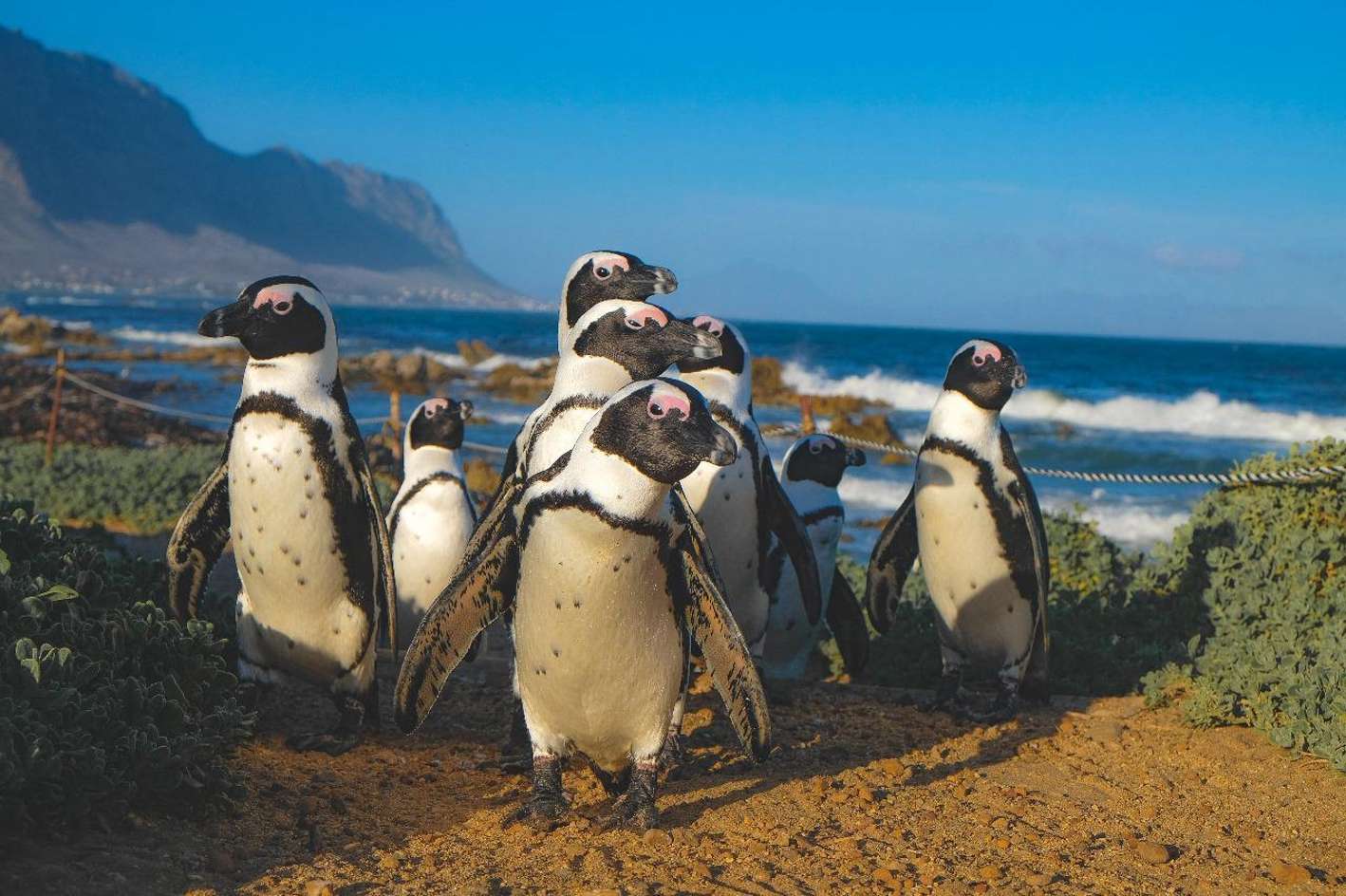
Walk the Boulders Beach boardwalk while the African penguins are most active, ten minutes from the dive pier, or rent a classic car and follow the coastal roads around the peninsula. Jubilee Square sits right at the harbour's edge, good for a late lunch while the salt dries.
Winter offers a bigger add-on. From mid-June to mid-November, southern right whales move along this coast, and combination tours pair a Gansbaai cage dive with boat-based whale watching in Hermanus, a 45-minute drive apart. August and September give the strongest overlap, whales peaking while the shark boats run quieter than the October and November crowds.
Whichever month you land in, the shape holds: one ocean morning, one afternoon on land. Few wildlife encounters anywhere fit a city break this neatly.
A Cape Town shark cage dive is worth it when you want large wild sharks up close and can live with bronze whalers and sevengills when no great white shows. The Simon's Town trips keep the day short and the water close. No scuba is needed, gear comes aboard, and the safety record holds.
Go ifYou want a real shark encounter without losing a full holiday day to a vanYou are happy meeting bronze whalers and sevengills when no great white is promisedYou have a flexible morning, since sea conditions are confirmed the day before
Skip ifOnly a great white shark will satisfy you, because no operator can promise oneYou cannot manage a ladder and a cold surface swim in a swellEveryone in your group is under the operator's minimum cage age
Quick answers to the questions readers ask before booking a dive from Cape Town.
Cape Town2026
Bronze whalers circling the cage this morning, seals everywhere. Book the earliest day of your stay so weather can reschedule you.
Can you go shark cage diving in Cape Town?
Yes. Tours launch from Simon's Town in False Bay, about 45 minutes from the city centre, with hotel pickup options and trips running most of the year.
Do you need scuba certification to enter the cage?
No. Surface cages in False Bay need no certification or diving experience. You float at the waterline, hold your breath or use a snorkel as sharks pass, and some boats supply surface air through a hose.
Will I see a great white shark?
No operator can promise one. Great white sightings around False Bay and Seal Island have been irregular since 2017 after orcas began preying on them. Expect bronze whaler sharks on most dives, with sevengill cow sharks, makos, and blue sharks also showing up.
Is shark cage diving in Cape Town safe?
Commercial operators have a perfect human safety record against shark attacks, and sharks do not ram or bite their way into steel cages. By law, every vessel and cage must be certified by the South African Maritime Safety Authority.
What sharks will I actually see in False Bay?
Bronze whaler (copper) sharks are the main encounter year-round, often staying close to the boat for long stretches. Sevengill cow sharks, an ancient species with seven gill slits, swim the bay regularly too, and Cape Town ranks among the best places on earth to see them.
When is the best time of year for sightings?
Summer, December through February, gives the highest odds of bronze whalers, with groups of 10 to 20 sharks on a single trip. Sevengill sightings peak September through February. Winter, May to August, brings rougher swell but the clearest water.
Can children join a Simon's Town shark boat?
Rules vary by operator, so check the one you book. One welcomes children of all ages on board, another starts at age 5, and another requires 9. For the cage, most operators ask that kids be at least 10, though some allow younger children with a parent.
Can I stay on the boat instead of getting in the cage?
Yes, and it is worth considering. Viewing from the deck can be just as clear, and you see how sharks appear and vanish around the boat. Several tours treat the cage as optional.
Is chumming the water harmful to sharks?
Feeding sharks is illegal, so operators draw them in with scent trails of fish oil and offcuts. Research has found no evidence that these baited trips change shark migration or foraging habits, and no link to increased risk for swimmers near Cape Town.
Is it worth it if I never see a great white?
Bronze whalers grow to 2.5 or 3.3 metres and often approach out of curiosity, so the encounters are close and frequent. If seeing a great white is the only outcome you will accept, a dive may disappoint; if you are happy to meet big sharks of any kind, it usually is worth the morning.
What happens if no sharks show up?
Sightings are never guaranteed, but some False Bay operators issue a non-transferable two-year voucher so you can come back and try again. Ask the operator about their policy before you book.
Can a dive trip be cancelled by the weather?
Rain does not stop trips, but heavy swell and wind do. The skipper checks the marine forecast the afternoon before and confirms or cancels. When a trip is called off, you can reschedule for another date or take a full refund.
Shark cage diving from Cape Town - where to go next