Shark Cage Diving and Whale Watching - Cape Town and Hermanus Trips
See sharks and whales in one coastal trip, without booking two separate days. Gansbaai and Hermanus sit 50 minutes apart, so you can dive the cage at Shark Alley in the morning and watch southern right whales in Walker Bay the same afternoon. Prefer to stay dry? The boat deck gives you just as clear a view of the sharks, with bronze whalers, seals, dolphins and penguins filling in the rest of the day. Pick a tour and lock in your date.
Whale watching and shark diving - which trip fits you
deck views beat the cage on murky days
Two wildlife days sit side by side here: a shark cage dive out of Gansbaai with whales and seals often passing the boat, and a two-day run that adds a Big 5 safari. The one difference that decides is time. Most trips take a full day, and one stretches over two.
Diving experienceNo scuba certification or prior diving experience is needed to enter the cage on any tour here.
Child agesSouth African law sets no minimum age for cage diving or whale watching; each tour operator sets its own, typically 8 to 12 to enter the cage, and younger children ride along on deck.
Whale seasonAugust, September and October give the best odds of whales and sharks in the same window, with southern right whales peaking in Walker Bay through October.
Weather callsSkippers assess wind and swell the day before, and a cancelled trip gets you a new date or a full refund.
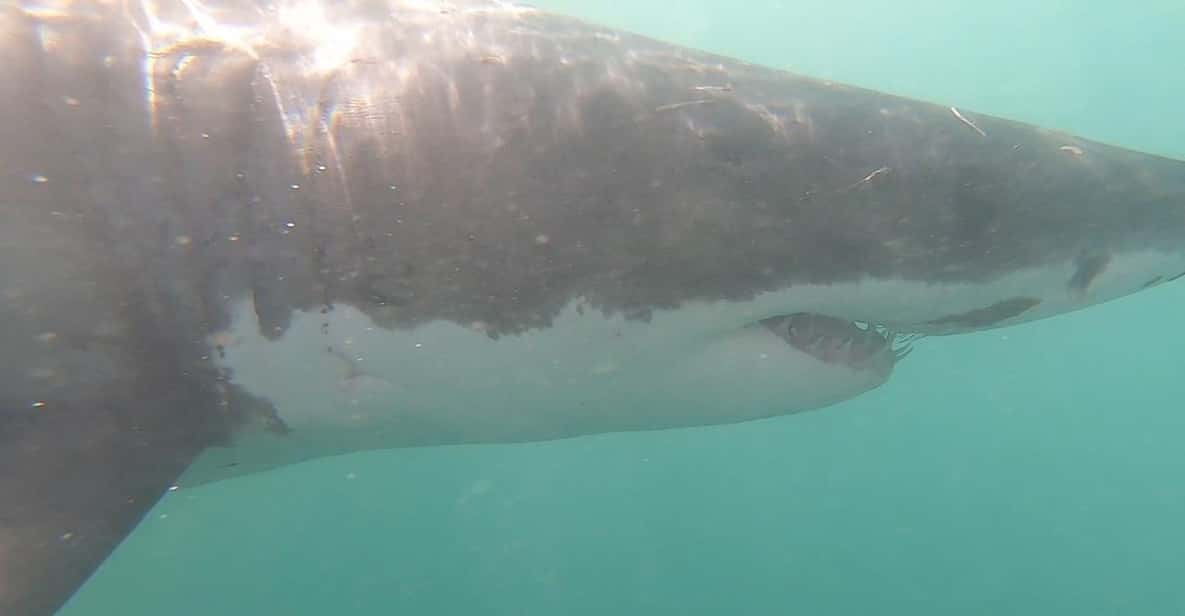
Sighting oddsGreat whites are no longer seen regularly in Gansbaai waters; bronze whaler and sevengill sharks now dominate, and no operator can guarantee a sighting, though some offer a return voucher if none appear.
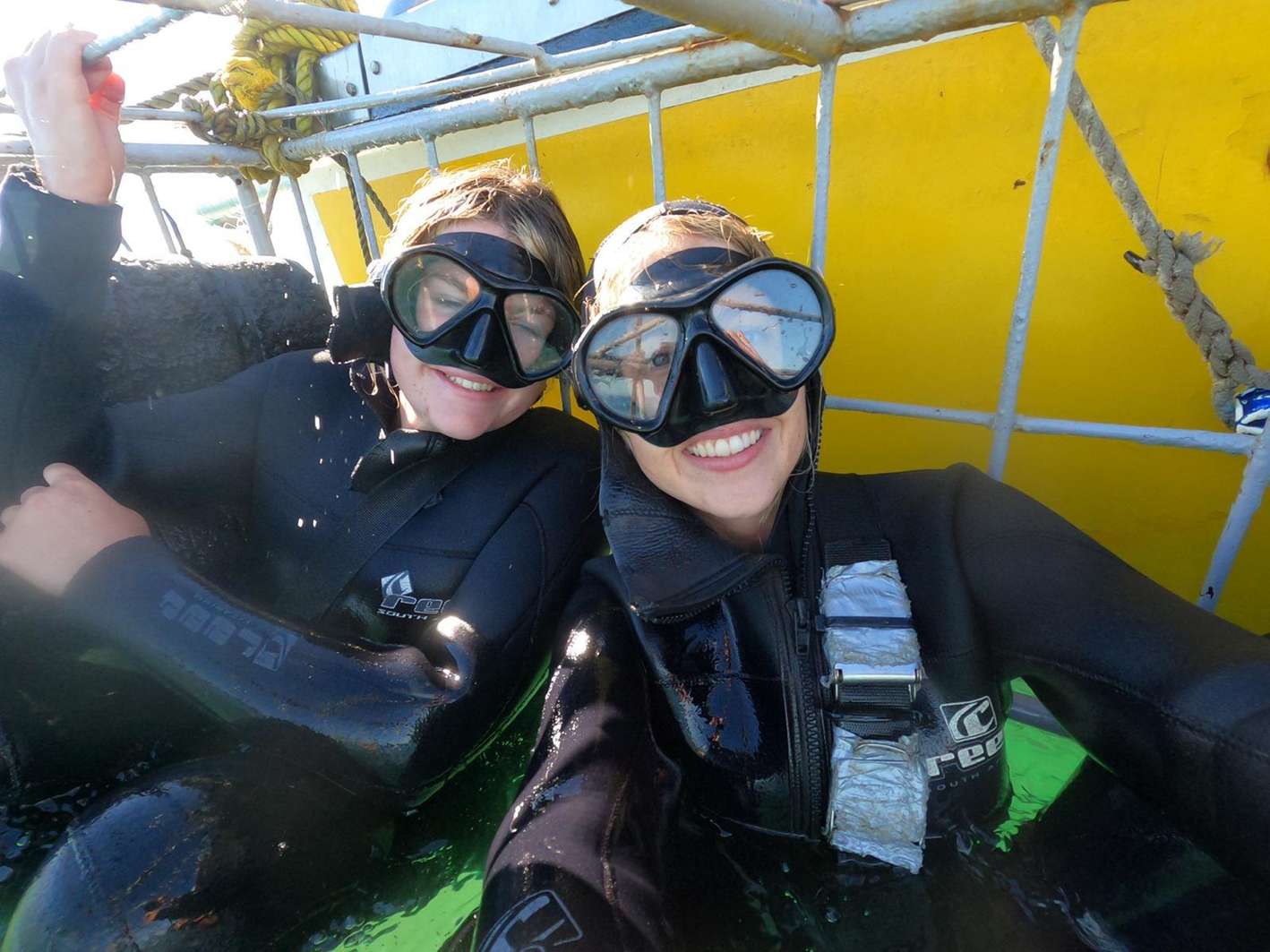
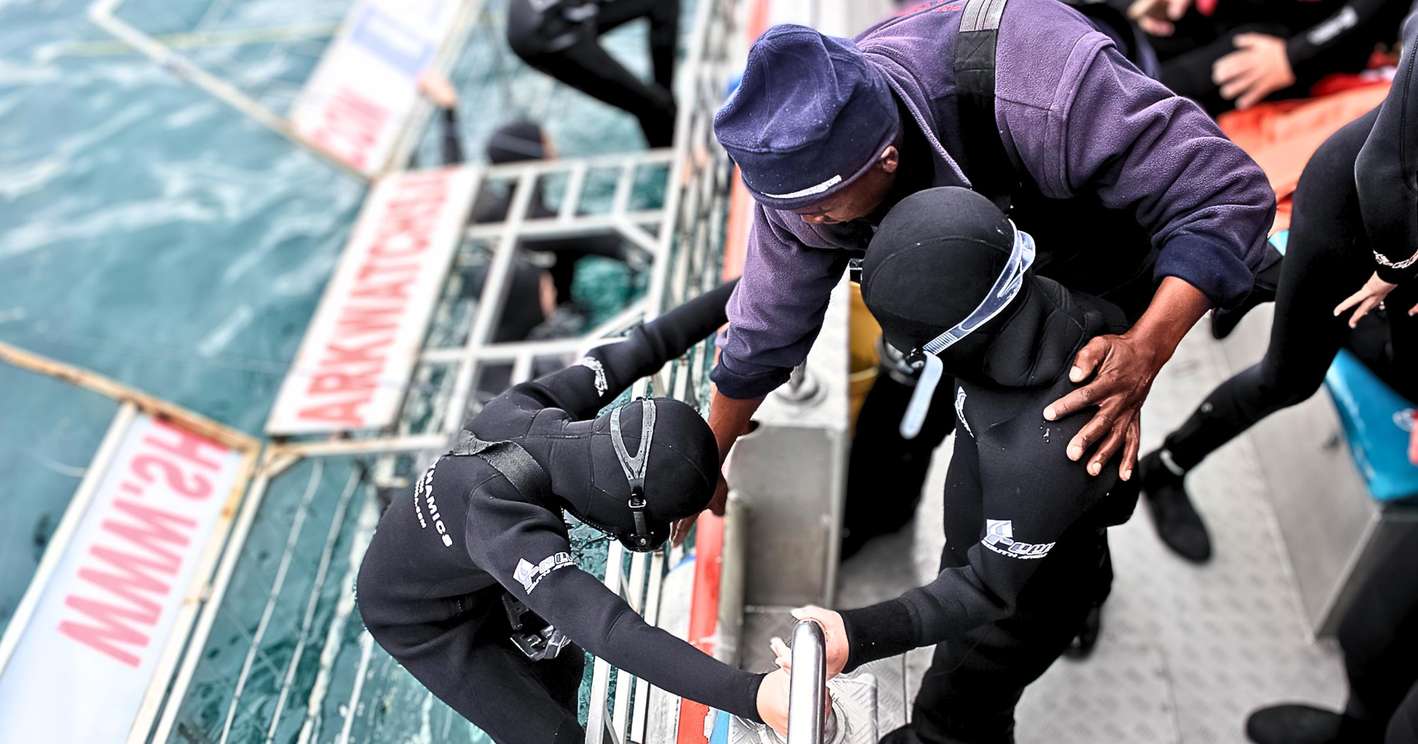
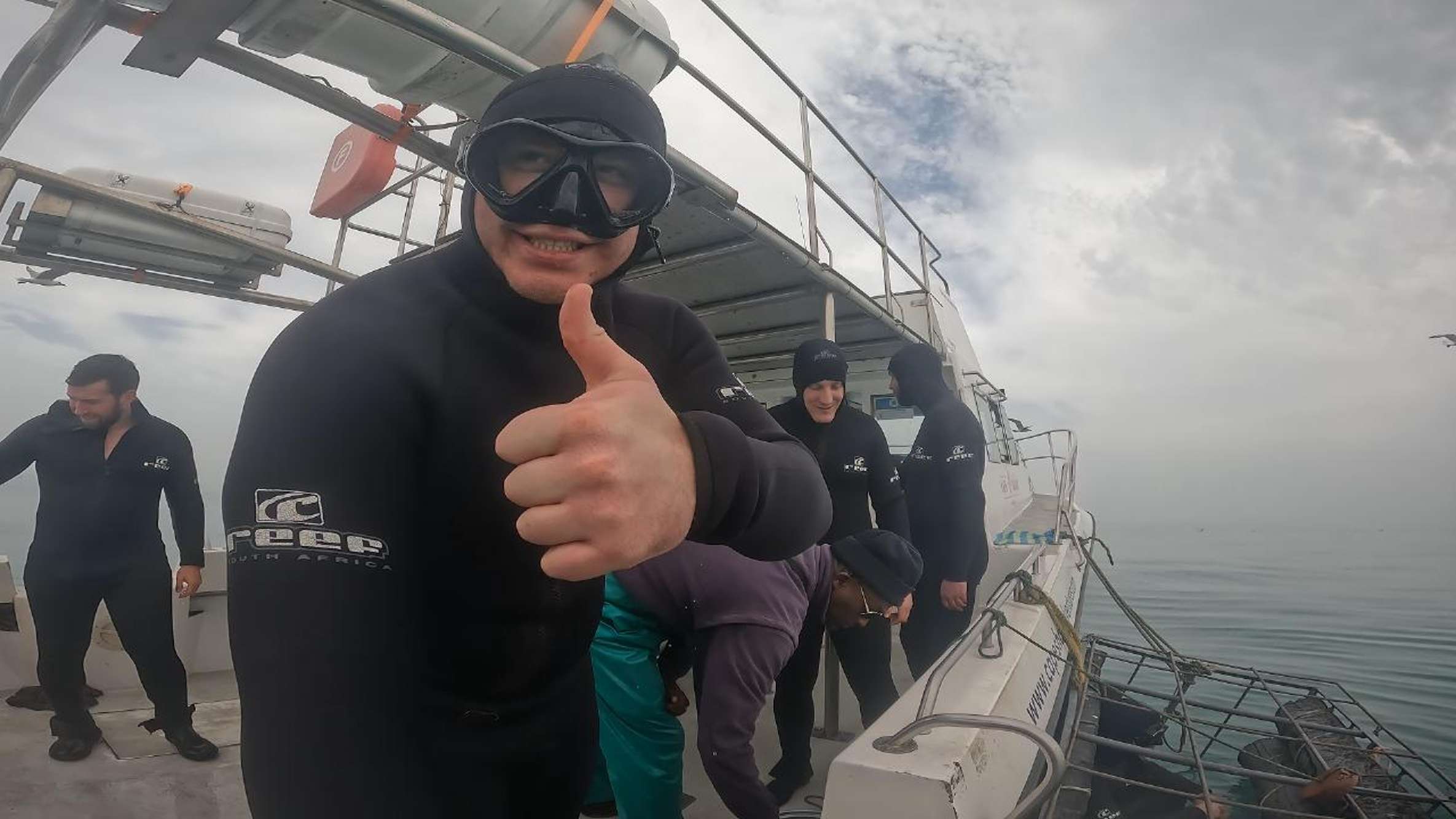
What to wearPack a swimsuit under your clothes, a warm jacket, a beanie and closed shoes; wetsuits, booties and masks are supplied.
SeasicknessTake motion sickness tablets before you board, since the open water off the coast can get choppy.
Pickup timesOn some tours the exact collection time is only confirmed the afternoon before, so keep your evening free to check.
Indemnity formOne tour sends a digital form every guest must sign before departure.
sell-outShark cage diving and whale watching boats both sell out first in August and September, when southern right whales fill Walker Bay in their largest numbers and shark viewing is active off Gansbaai.
Book both activities several weeks ahead for a peak-season date, and pick a departure with free cancellation up to 24 hours before, so a weather call or a change of plans costs you nothing.
Whale watching and shark cage diving - tours to compare
august and september give the best whale and shark overlap
Cheapest way in
4.5 - 8 hours·English, Afrikaans
4.7(903)
From Hermanus or Cape Town: Shark Cage Diving Experience
The lowest entry price on this page, with pickup from Hermanus in just 45 minutes and a 4.7 rating from 903 travelers.
Whale watching and shark diving - what you'll see out here
aug to oct: whales and sharks overlap
3 stopsabout 3 h11 places
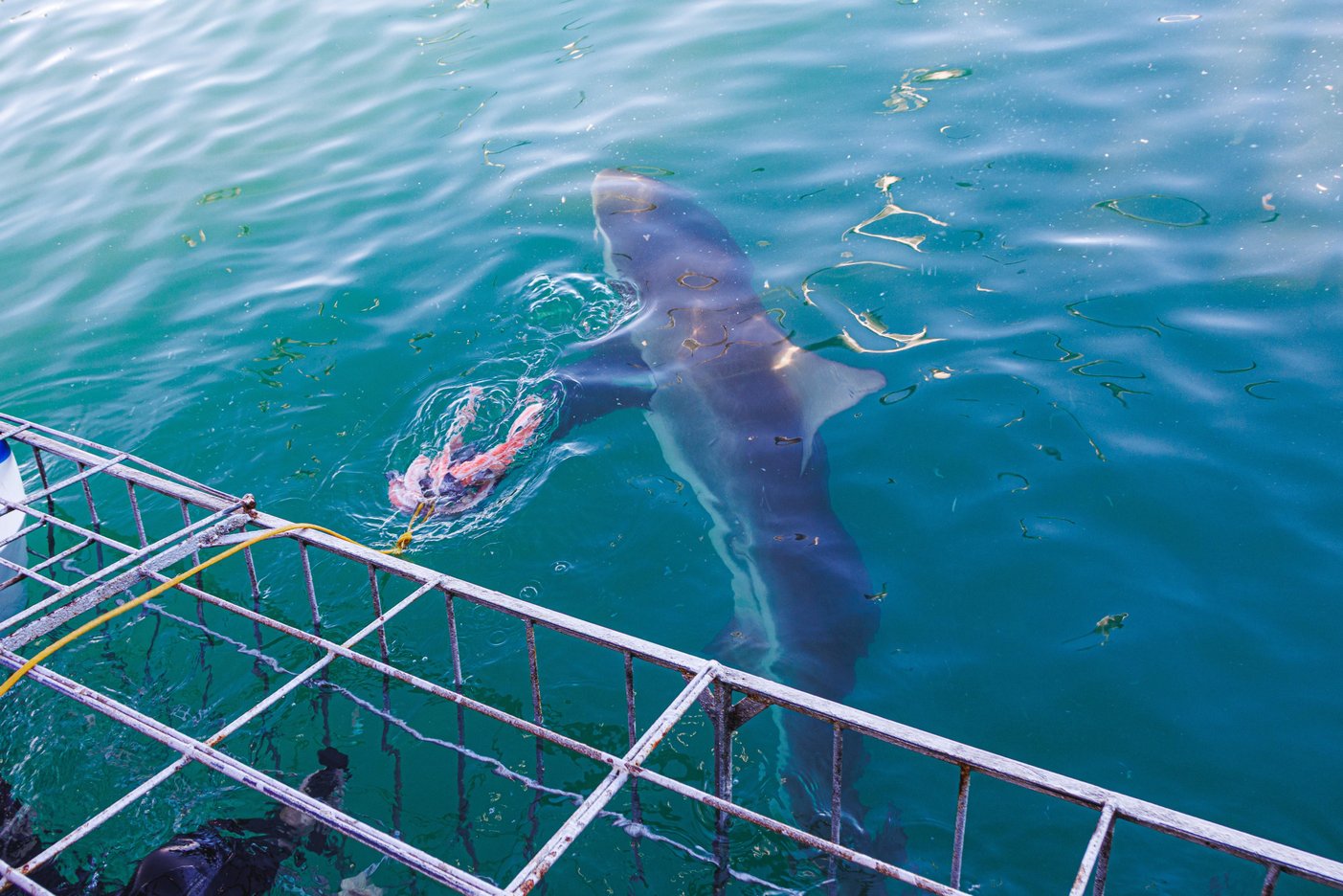
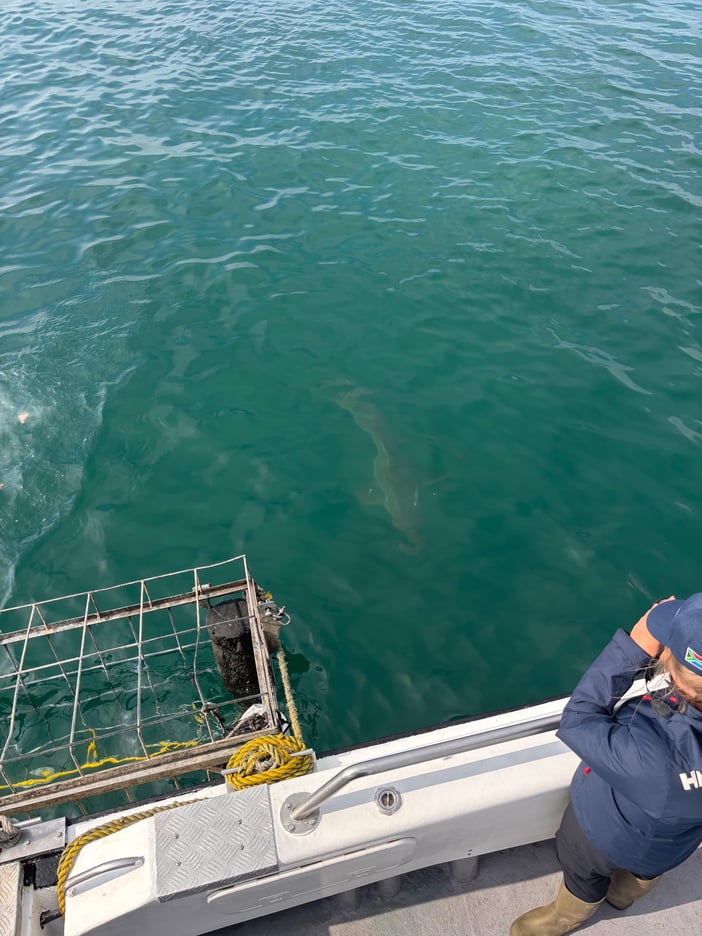
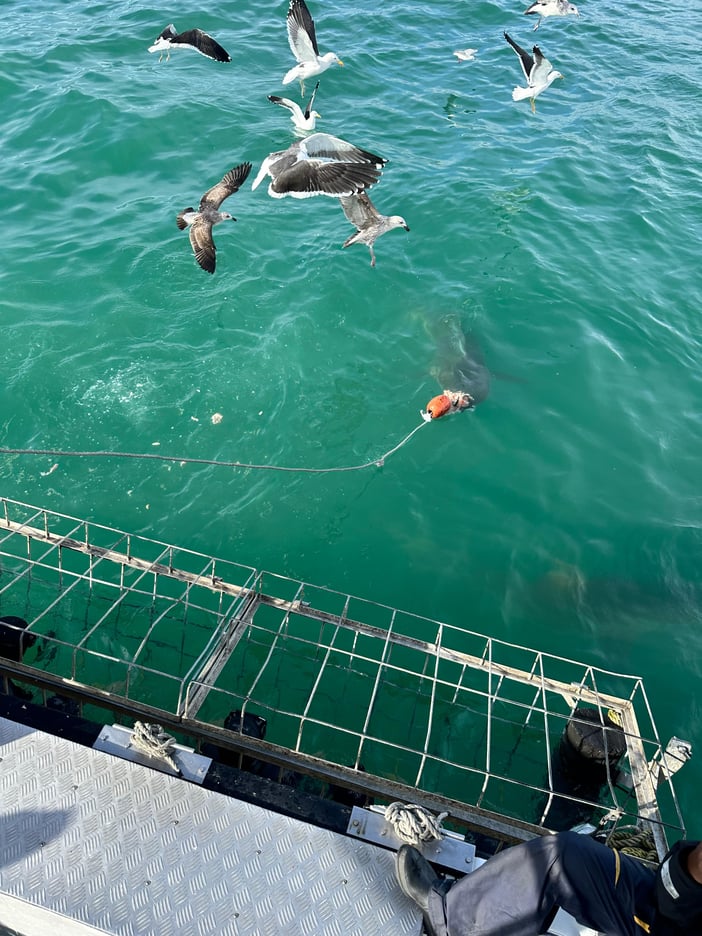
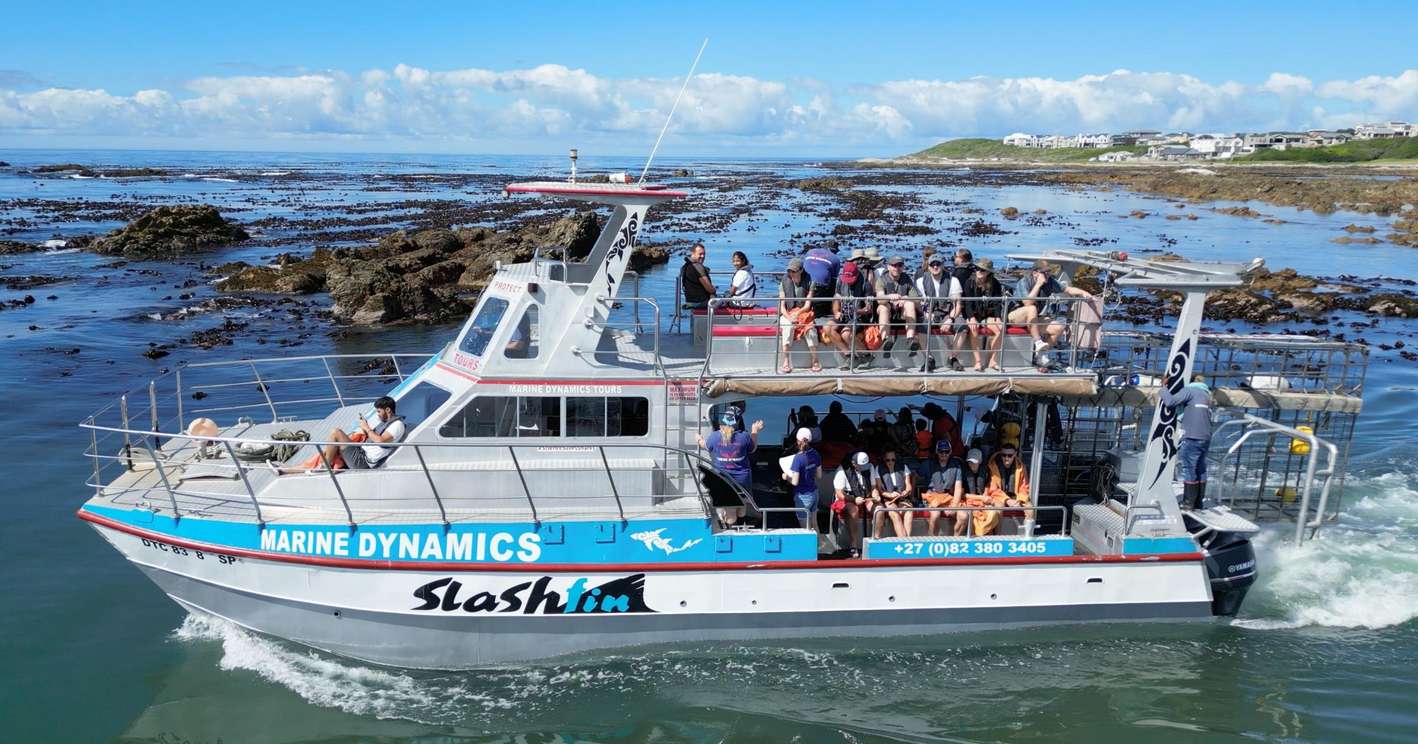
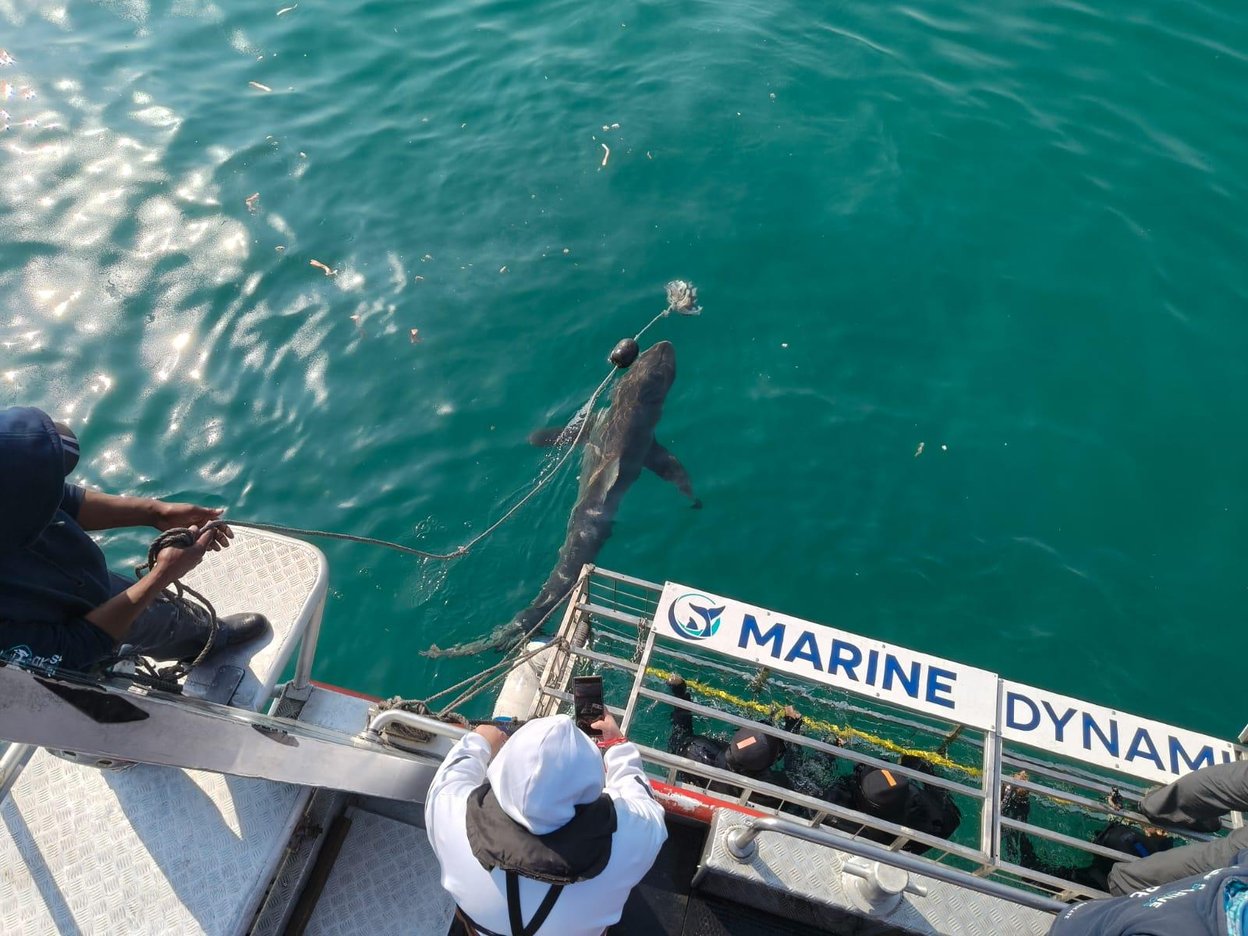
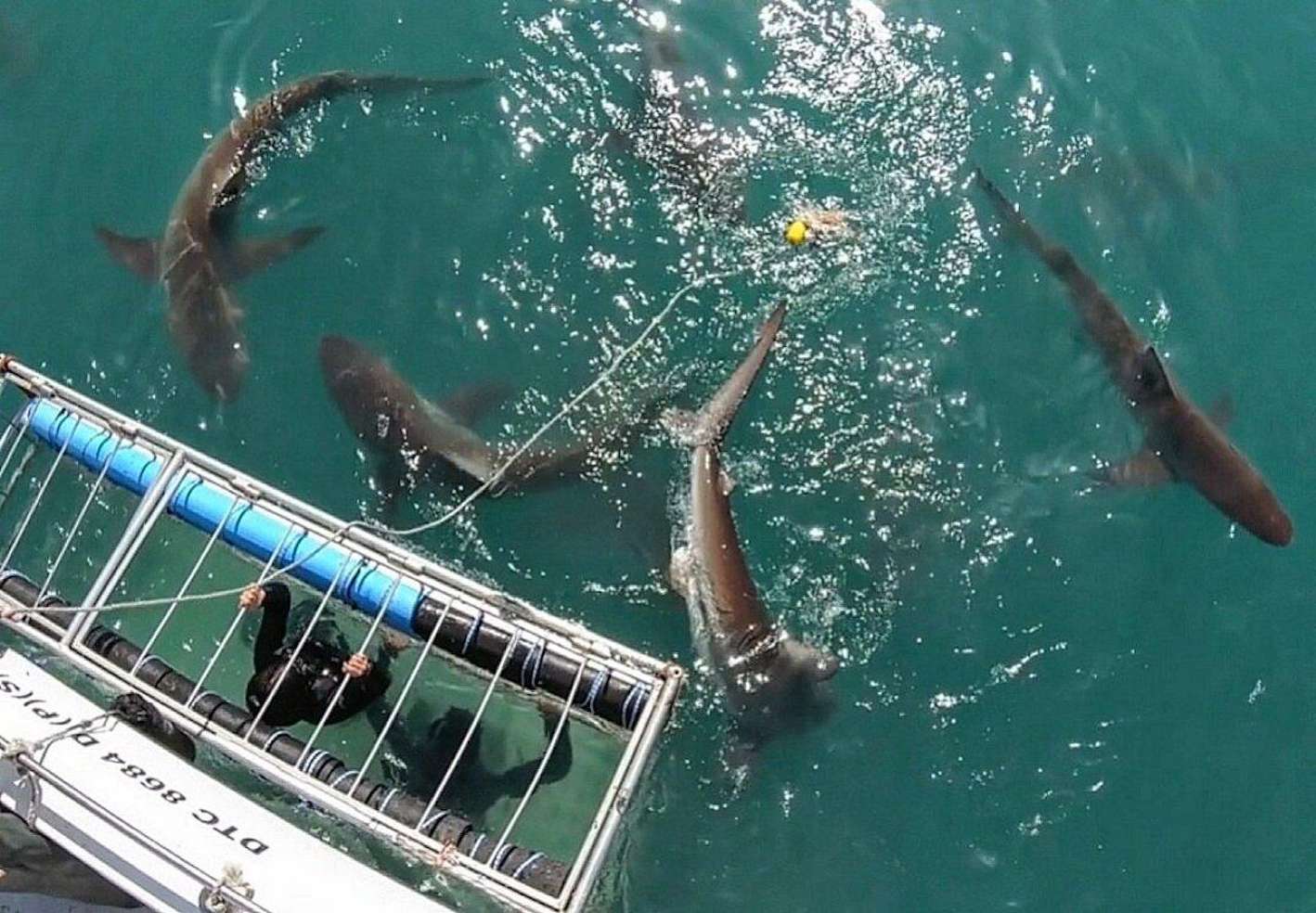
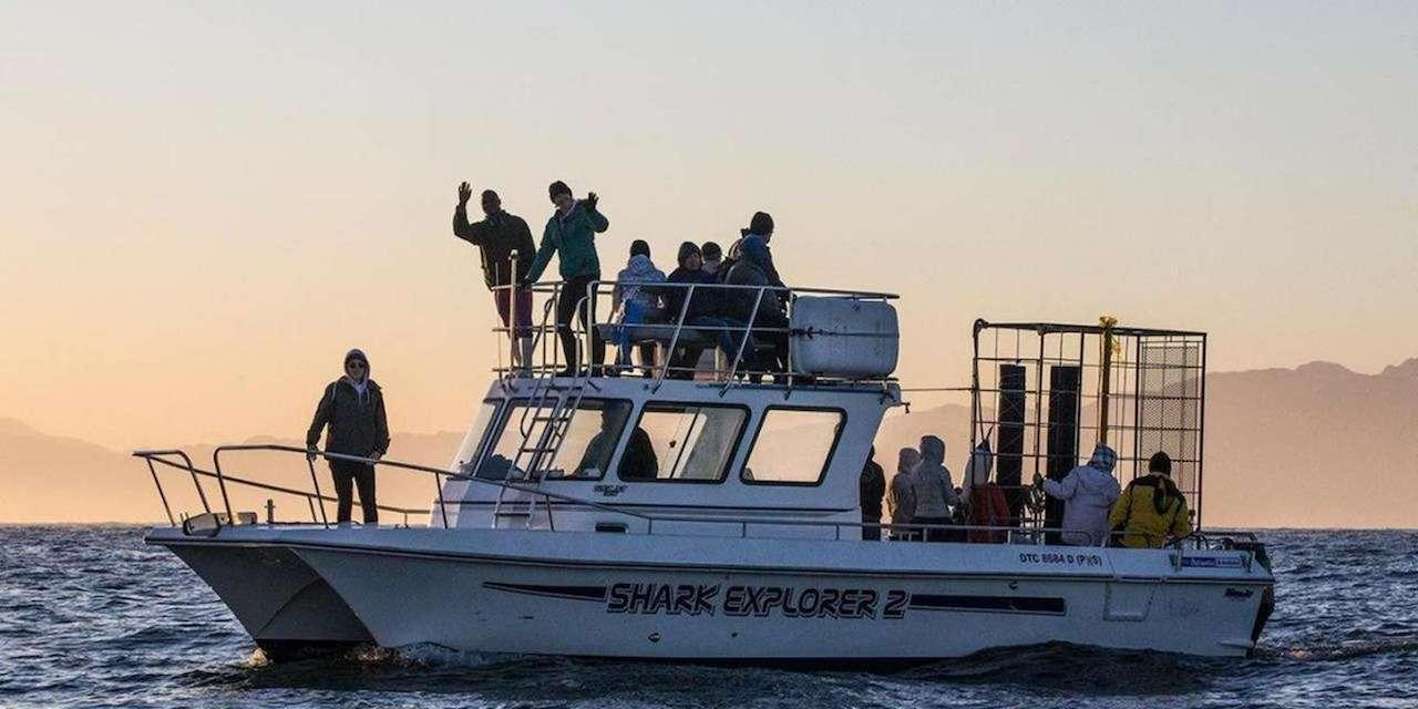
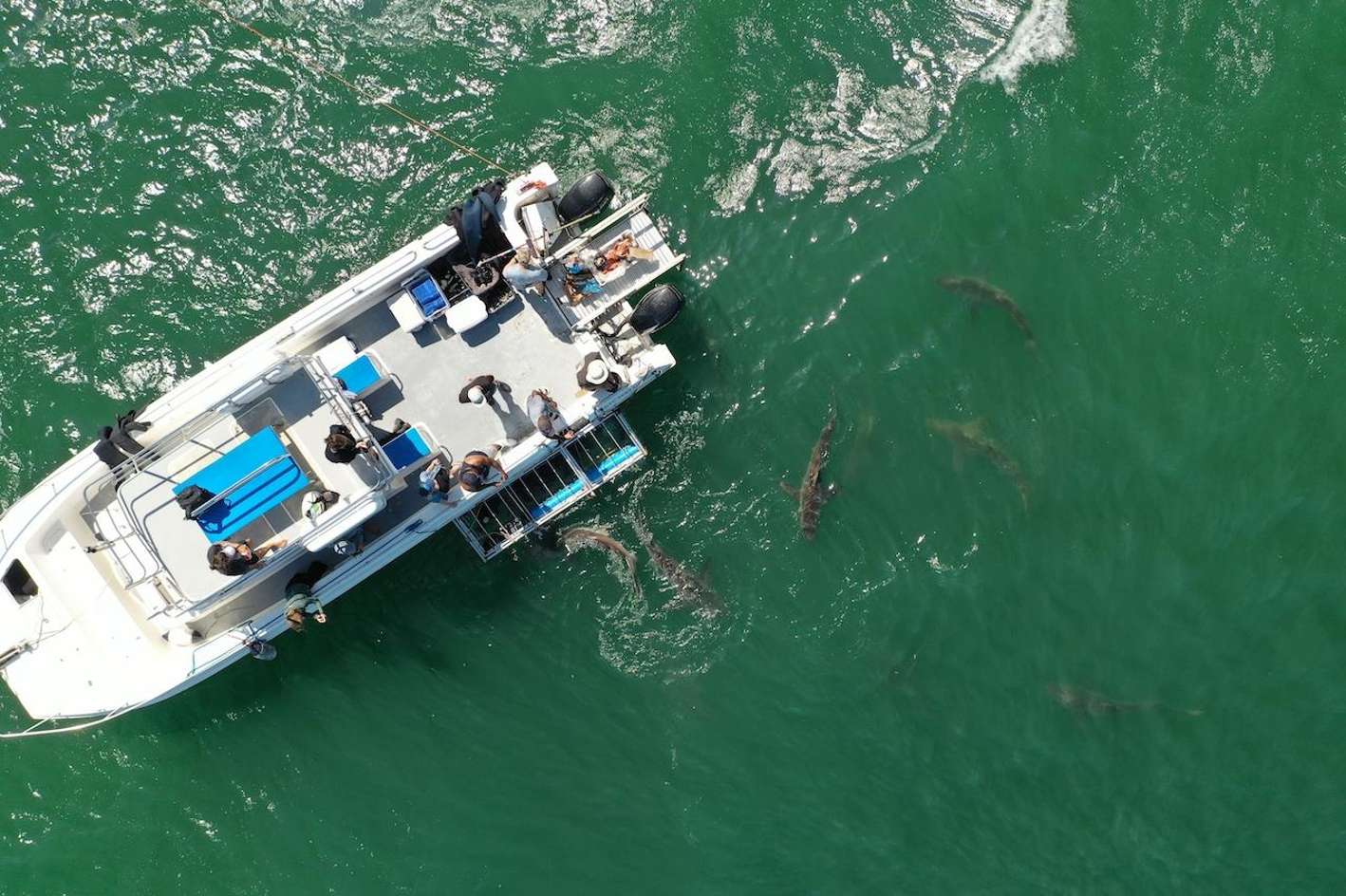
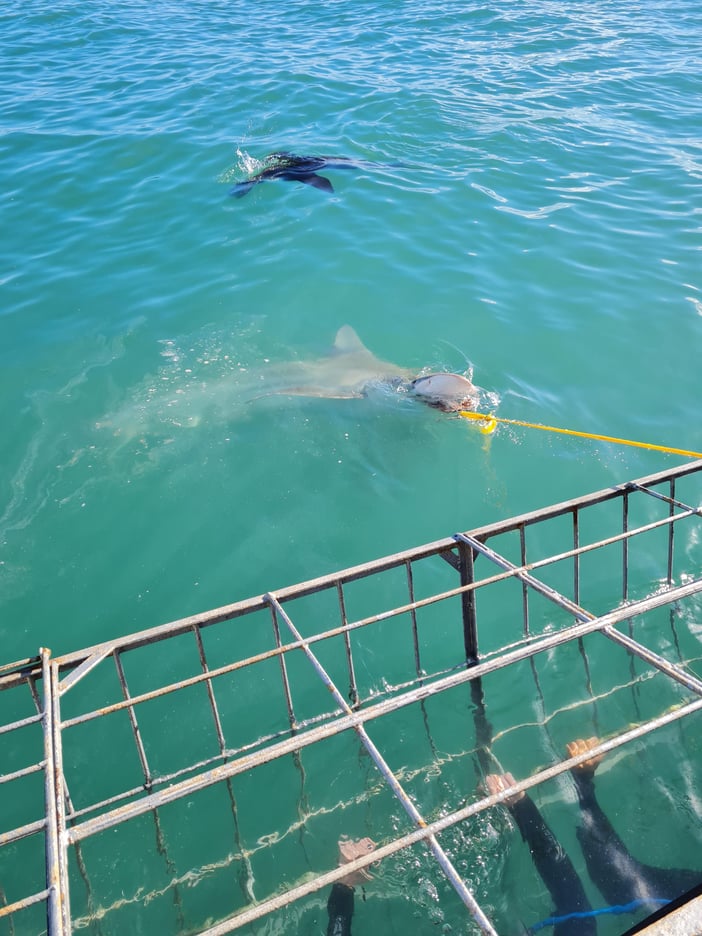
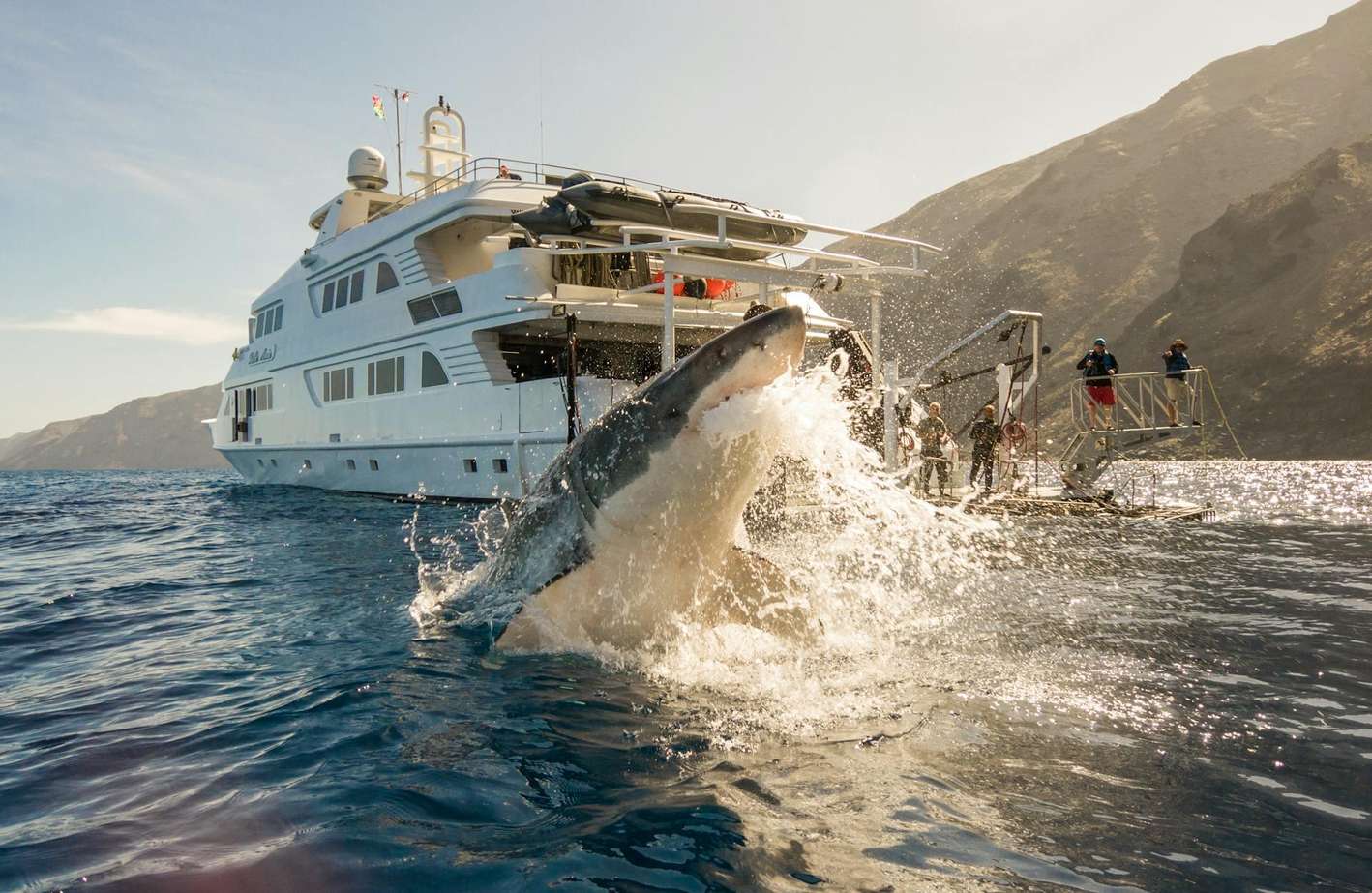
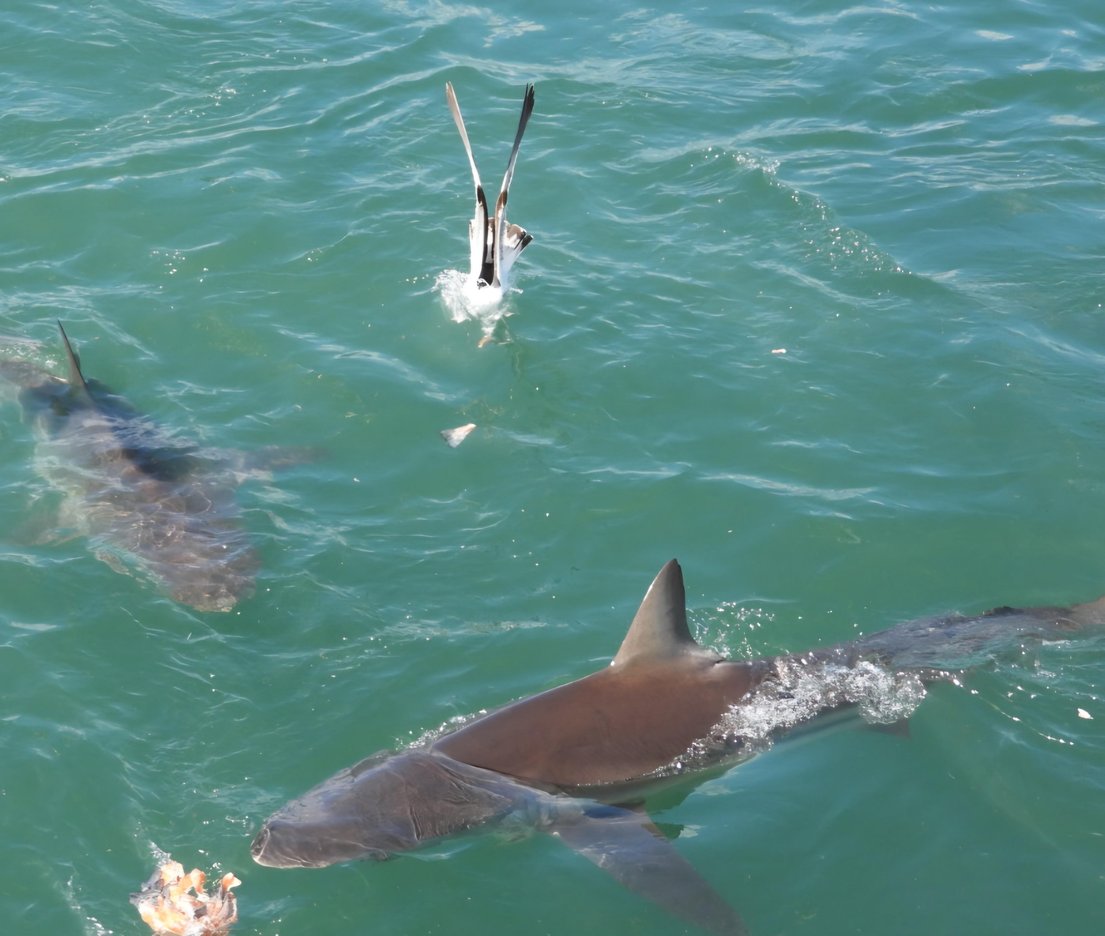
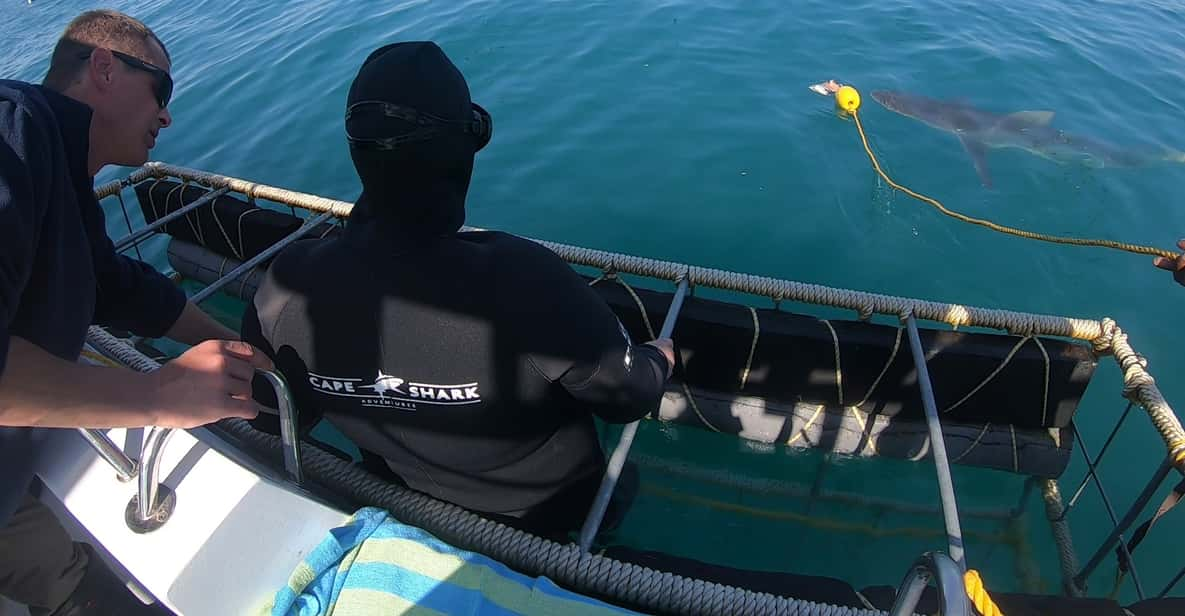
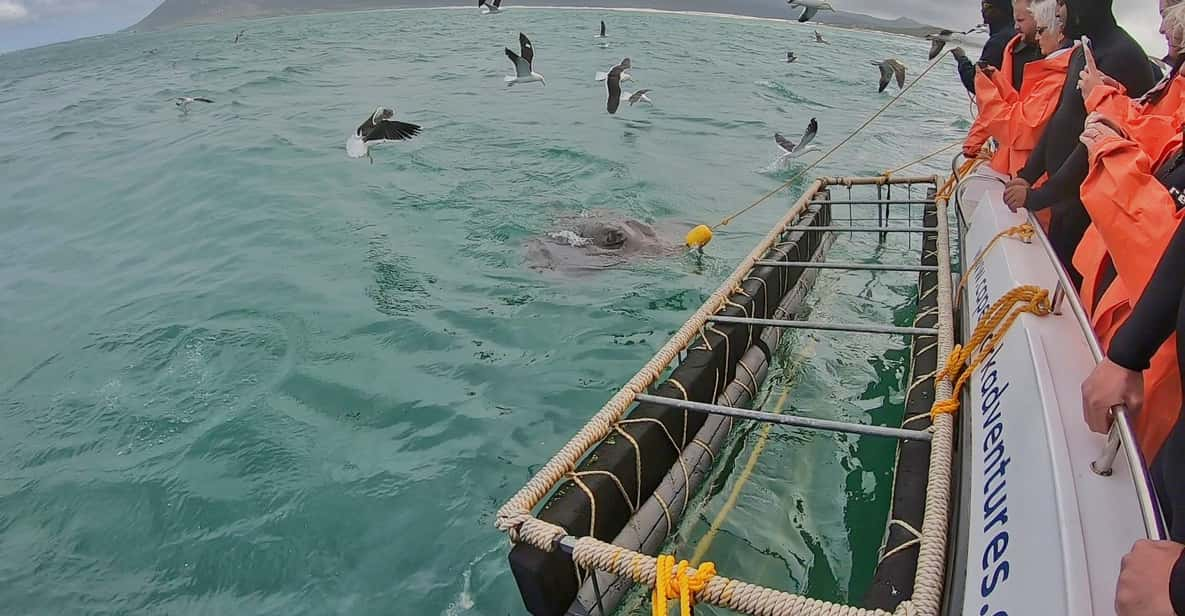
Shark Alley comes first. The boat drops anchor in the channel between Dyer Island and Geyser Rock, where some 60,000 Cape fur seals draw the sharks, and you watch bronze whalers, seals, dolphins and African penguins from the deck or from the cage if you take the dive.
The crew counts this as one of the Marine Big 5 trips, so a whale surfacing in season is part of the same outing. Breakfast is served before the briefing, snacks and drinks run on board, and hot soup waits back on shore. Anyone skipping the cage still sees the sharks clearly at the surface.
Meeting point1 Swart StThe boat returns to Kleinbaai and the trip ends where it began, with hot soup and bread served once you are back on shore.Street ViewStop 2Kleinbaai· 180 minAbout three hours at sea off Dyer Island and Geyser Rock. Sharks patrol Shark Alley beside the seal colony, with penguins, dolphins and, in season, southern right whales. Take the optional cage dive or watch from deck.Drop-off1 Swart StThe boat returns to Kleinbaai and the trip ends where it began, with hot soup and bread served once you are back on shore.Street View
Included
Pre-Trip Safety BriefingContinental Breakfast BuffetBeverages (hot and cold)Bottled WaterHot Soup and Bread (served on your return to shore)
Not included
Gratuities
Where the other tours go
Gans BayStony Point Penguin Colony
Exhilarating Shark Cage Diving Experience in Cape Town
Book your dive for one of the first days of your Cape Town stay. Skippers confirm or cancel the afternoon before, and a spare day or two in your plans makes rescheduling painless.
Pro tipBook it for the start of your Cape Town stay so a rough-sea day still leaves room to reschedule.
Common mistakeLeaving the trip to your last day, when a cancelled launch means no second chance.
2. Choose the right option
Compare the meeting point option with the hotel transfer option on the same tour. Transfers add hours to the day, since the drive from Cape Town to Kleinbaai runs about two and a half hours, and departures need to leave between 3:30 and 4:30 am.
Pro tipMeeting point options suit travelers already staying in Hermanus or Kleinbaai; the drive from Hermanus takes about 45 minutes.
3. Watch for the confirmation
After payment you get your voucher by email, then the operator follows up. One operator confirms exact pickup times only at 4 pm on the day before, because tides and collection schedules shift, so keep your phone on.
Common mistakeMaking dinner plans for the night before without expecting the pickup-time call or message.
4. Check the rules that gate the day
Read the age and fee notes on your voucher before you travel. Some tours charge a compulsory conservation fee on top, one operator keeps children under 6 off the boat, and a signed indemnity form must arrive before departure.
ImportantThe conservation fee applies to every guest, adults and children alike, and it is compulsory.
5. Plan the day itself
Arrive 30 to 60 minutes before launch for check-in, breakfast, and the safety briefing. Wear your swimsuit under your clothes, keep seasickness tablets for the night before and the morning, and pack a warm jacket for the boat.
RecommendedTake the earliest slot you can; Walker Bay seas stay calmest in the morning before the coastal wind picks up.
What to know before you book shark diving and whale watching
book the shark dive early in your stay
Can stop the dayGood to knowGood news
01
ChoosingWhat it is, who it suits, when to go
5
Best months
August, September, and October give the best odds of both animals in one trip. Southern right whales gather in Walker Bay in their biggest numbers then, and shark viewing off Gansbaai stays active through winter and spring.
Timing
Do both in a single day from Cape Town during whale season, June to November, and it takes the whole day: leave around 3:30 to 4:30 in the morning, allow about 2.5 hours to Gansbaai, roughly 4 hours on the water, then 50 minutes to Hermanus for the whale cruise.
Staying over
Spending a night in Hermanus beats a same-day round trip from Cape Town. You skip the pre-dawn highway drive, get a second chance at whale watching the next morning, and have room to wait out a rough-sea day.
Non-divers
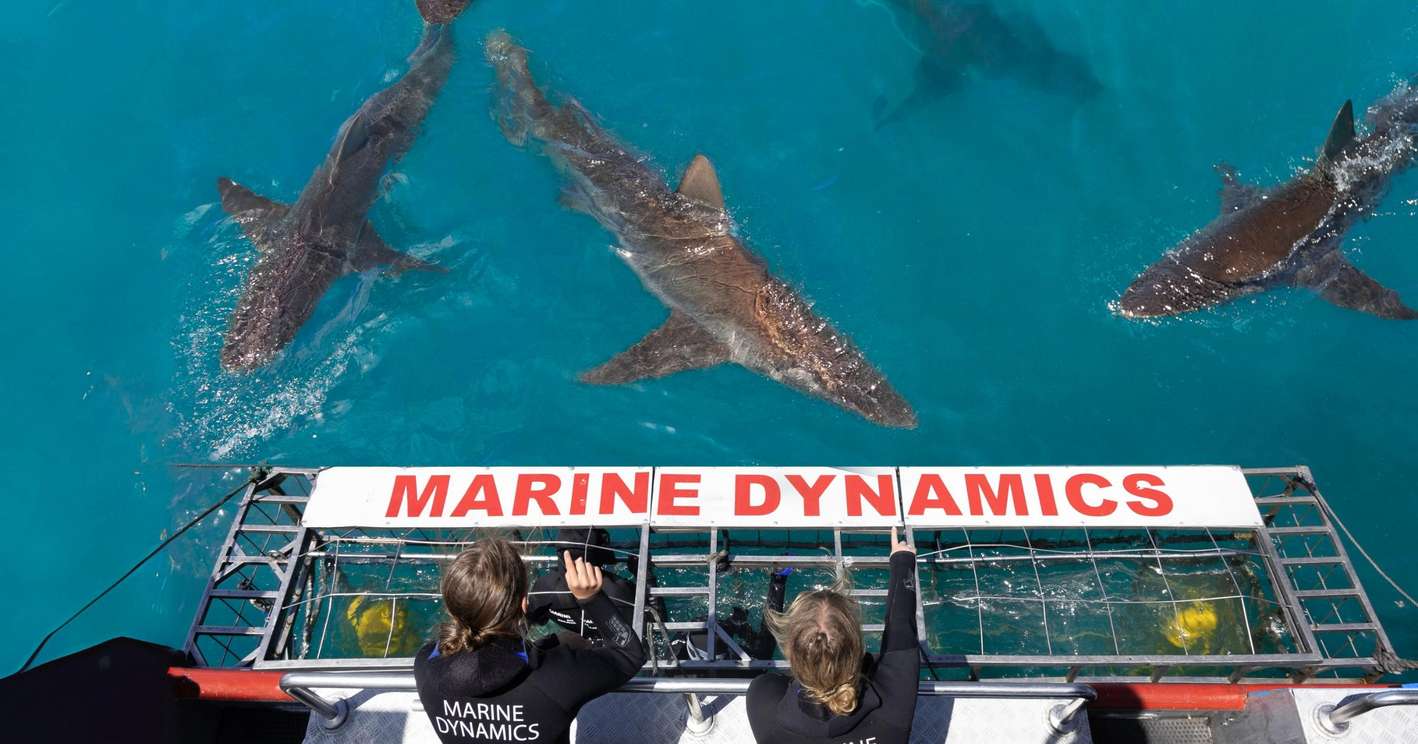
Companions who stay dry miss nothing. Sharks cruise at the surface, so the boat deck often gives a clearer view than the cage, and the same trips pass seals, dolphins, and whales in season.
Seasickness
Take motion sickness tablets the night before and again about an hour before boarding, not at the harbour. Boats anchor in open swell at the chum line, and medication works only if it is already absorbed.
02
BookingHow far ahead, and what happens if plans change
3
Sightings
No charter can promise a great white, and sightings around Gansbaai have grown irregular in recent years. Bronze whaler sharks, seals, dolphins, and stingrays show up reliably instead, and some operators hand out a return voucher or a free second dive when no sharks appear.
Booking early
Put the shark dive on the first day of your stay rather than the last. Wind and swell cancel departures, so an early slot leaves room to move the trip to another day instead of missing it.
Cancellation
Every tour here can be cancelled up to 24 hours in advance for a full refund. If the skipper calls off a launch over sea conditions, you get a full refund or a place on another day.
03
Before you goPapers, health, what to bring
3
Age limitsCan stop the day
Rules differ by operator. On one boat children under 12 stay on deck while the cage takes 12 and older; another welcomes younger children in the cage on request with a parent, and one private tour starts diving at age 7. Check the rule for the exact trip you book.
What to bring
Operators supply the wetsuit, booties, and mask, so your list stays short:
Swimsuit worn under your clothes
Fleece or hoodie plus a windproof jacket for ocean spray
Towel and a full change of dry clothes
Warm beanie and closed, non-slip shoes
Sunscreen, hat, and sunglasses
Food on board
Tours feed you at both ends: breakfast on arrival before the briefing, snacks and hot and cold drinks on the water, and soup with bread or a light lunch after the dive. Hermanus New Harbour and Kleinbaai both have restaurants for the hours in between.
04
During the tourWhat is expected of you
1
Cameras
A compact action camera with a small port and a wrist lanyard works best inside the cage, where bars sit close together and surge knocks gear loose. Save a telephoto lens for the deck, where it tracks breaching whales.
Whale watching and shark cage diving - the guide
whale boats leave hermanus about 10 am
Hermanus and Gansbaai sit 45 minutes apart, close enough that southern right whales and bronze whaler sharks can share one trip instead of costing you two separate days.
Kleinbaai· 34.61° S, 19.36° E
If you only remember three things
1
Book the shark dive for day one of your stay: from April through October, rough seas cancel about 18 of every 30 Gansbaai departures, so you want spare days to reschedule.
2
Aim for August or September, when Walker Bay's southern right whales and Gansbaai's shark season overlap at their peak.
3
Leave Cape Town by 4:30 am for a 7 am launch, or stay the night in Hermanus and skip the pre-dawn drive entirely.
Is a shark dive plus whale watching worth it
The chum slick drifts back along the hull, a bronze whaler cuts through it, and someone on deck who came for a great white stops caring about the list.
That is the honest state of play here: great white sightings cannot be promised anymore, not in Gansbaai and not in False Bay, where orcas have pushed them off the nearshore grounds. One showed up near Seal Island in September 2026 after eight blank years, and two passed Gansbaai in November. Irregular is the word.
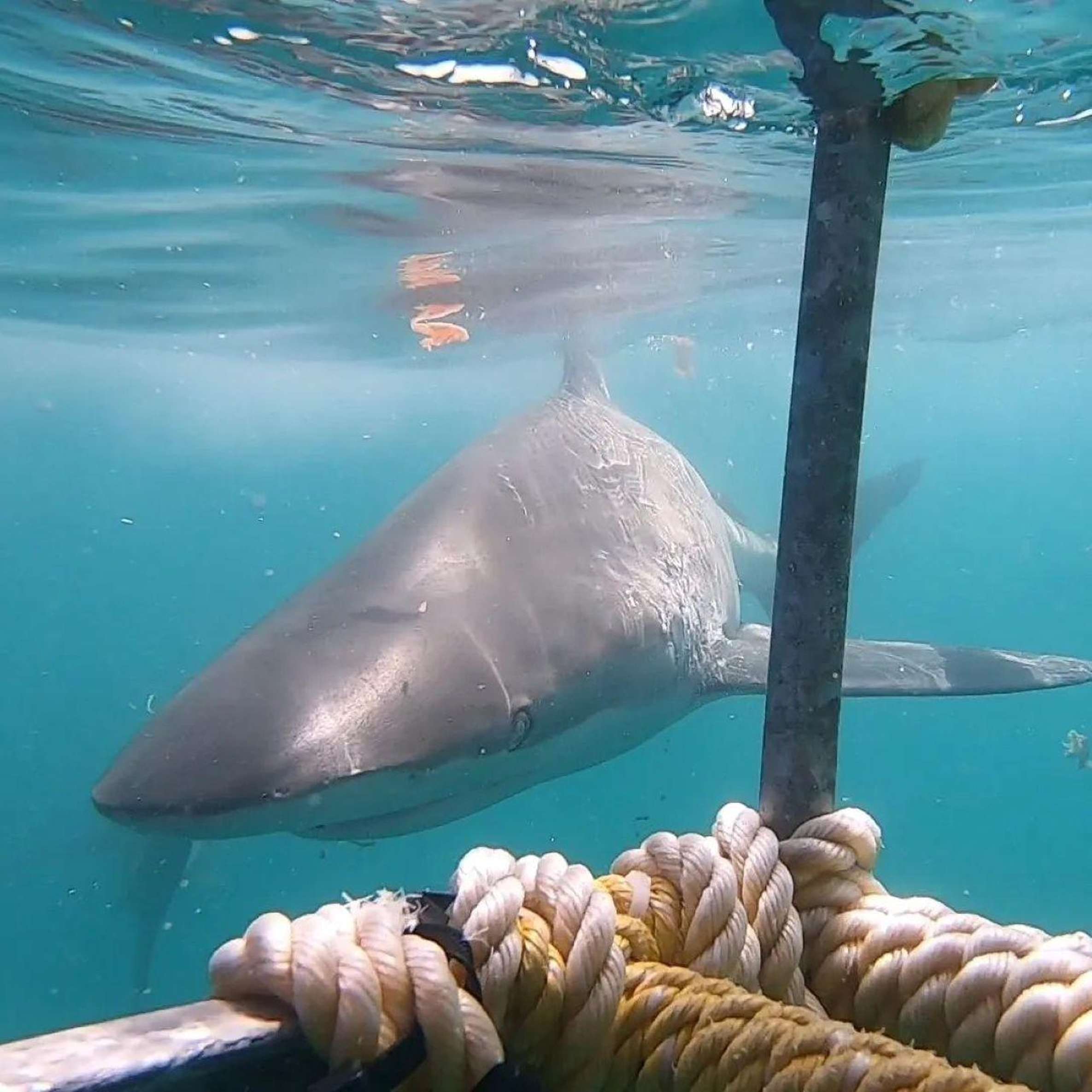
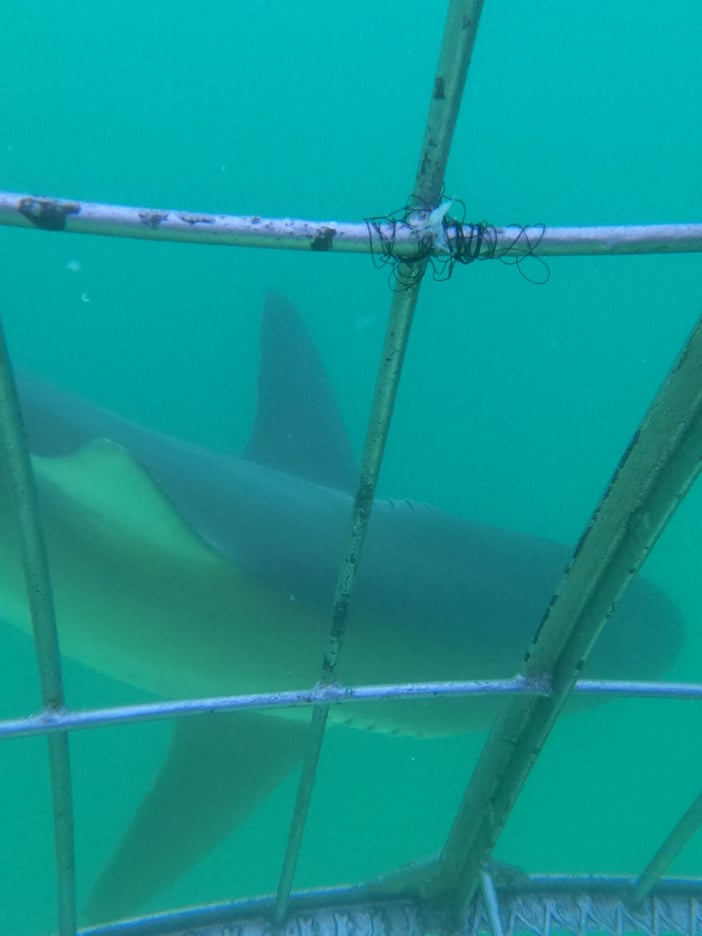
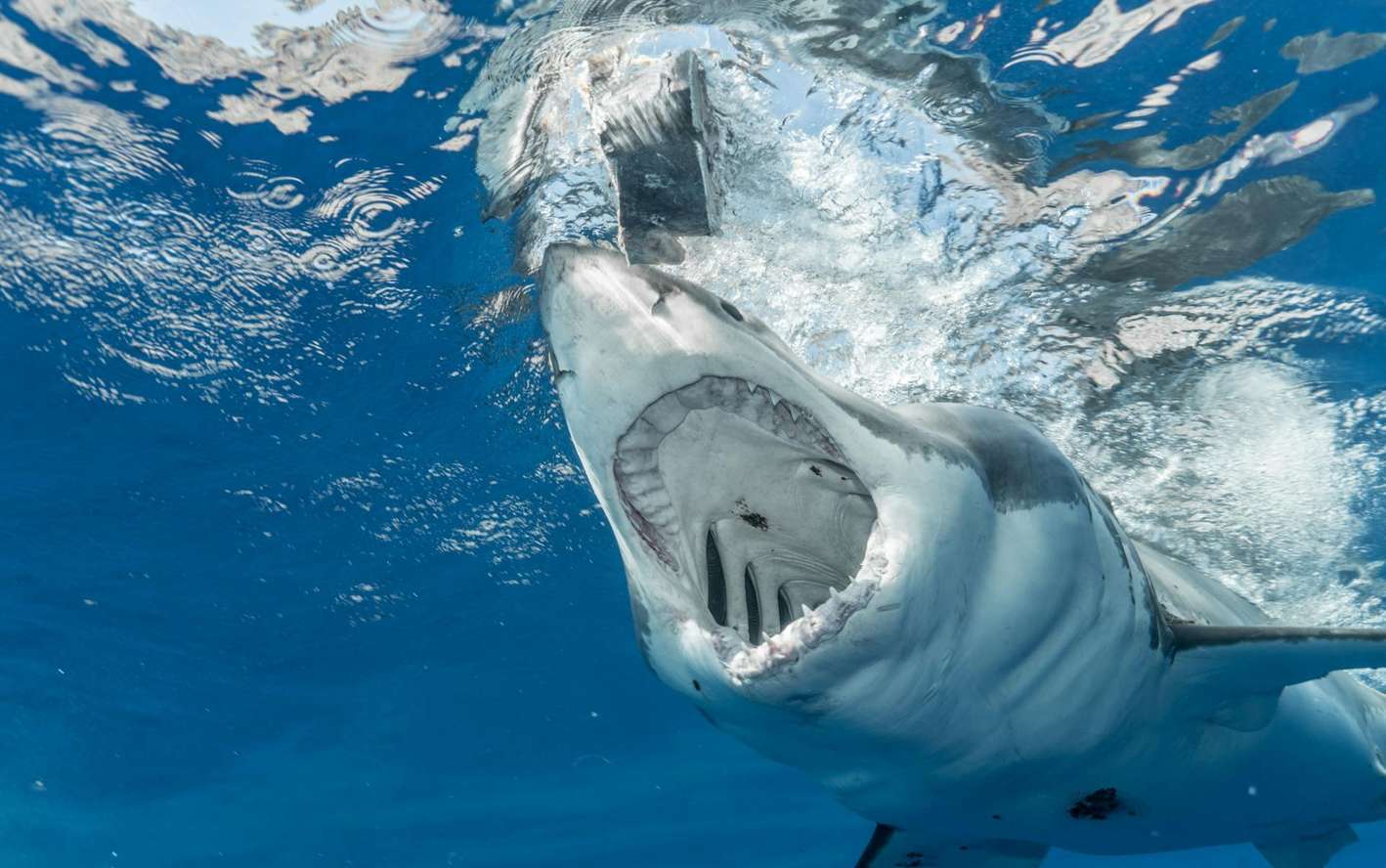
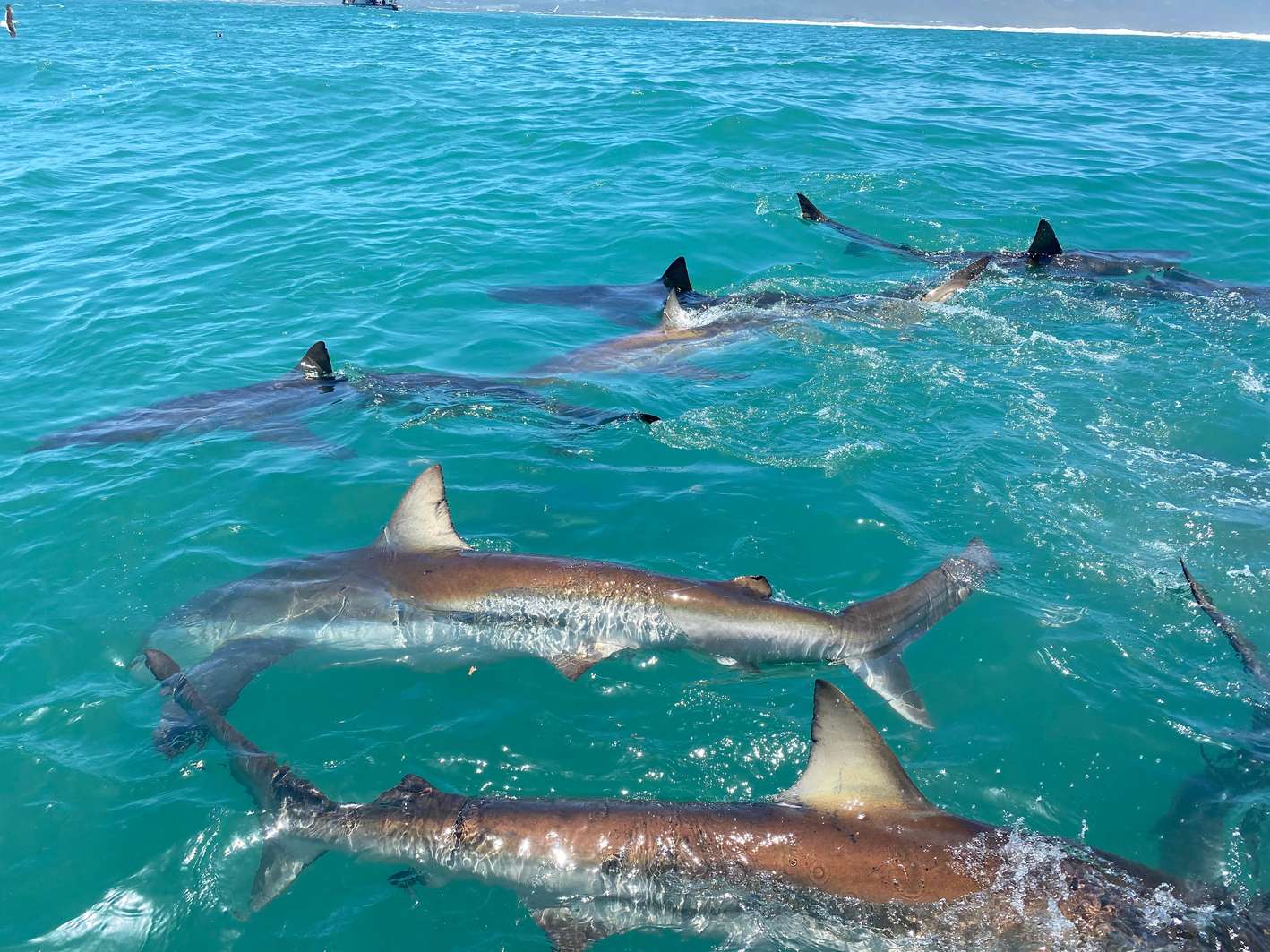
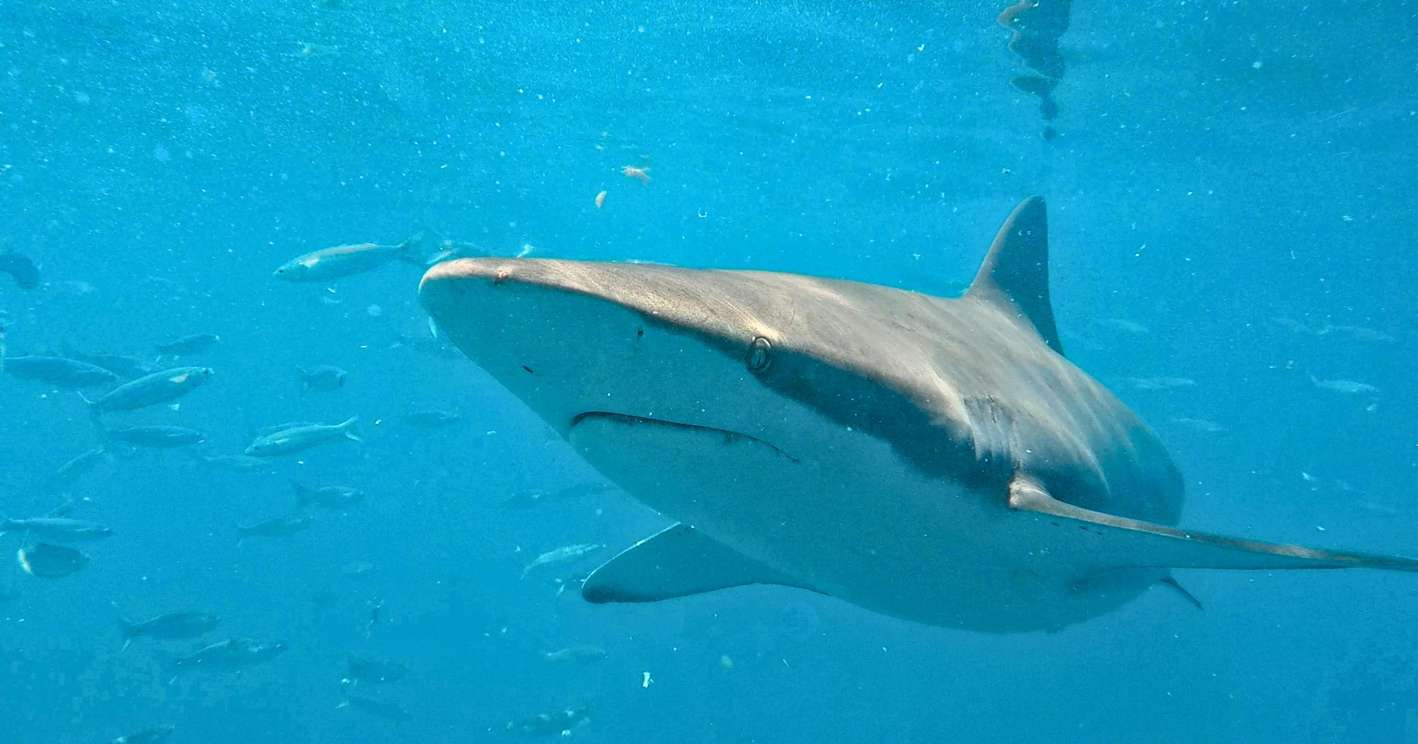
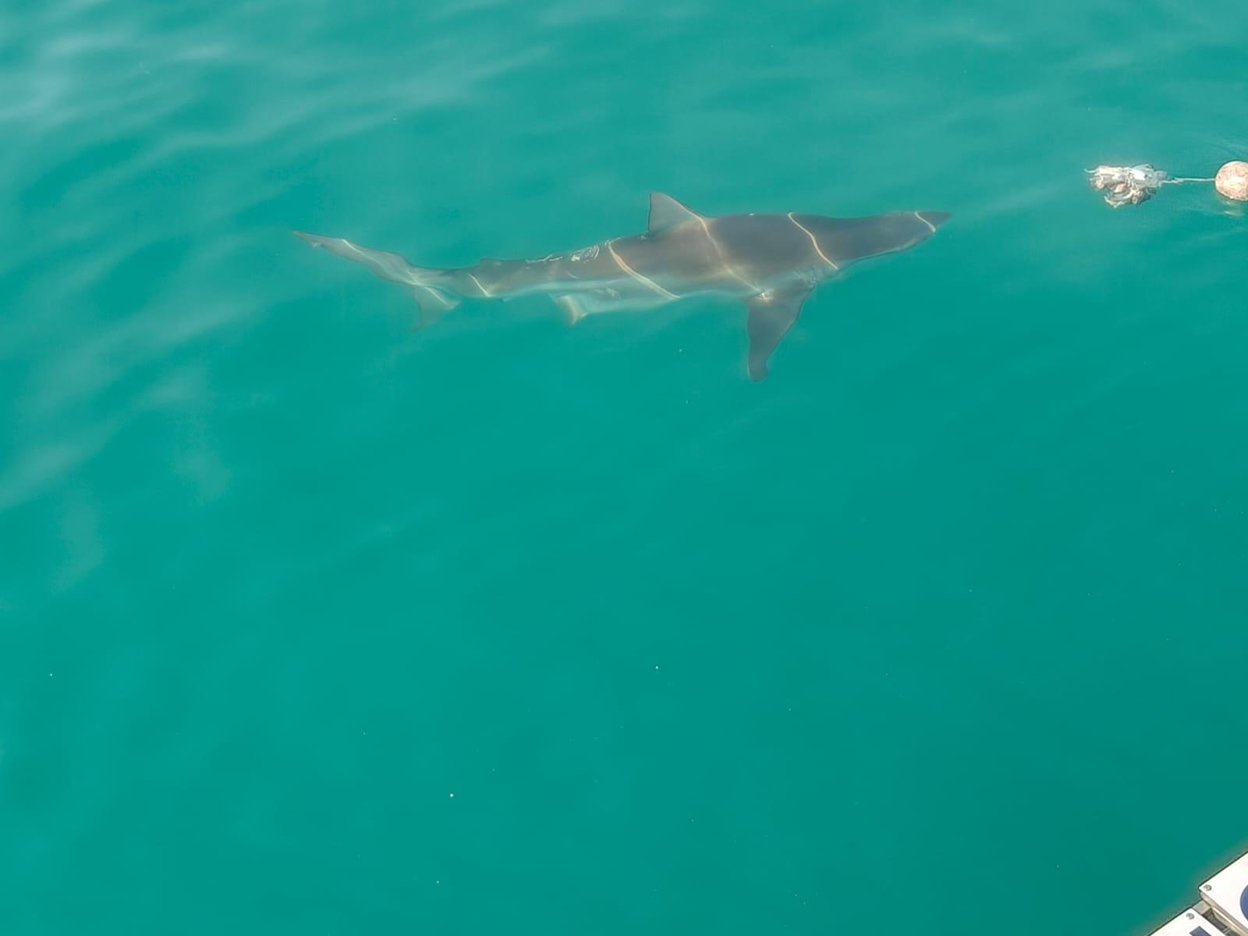
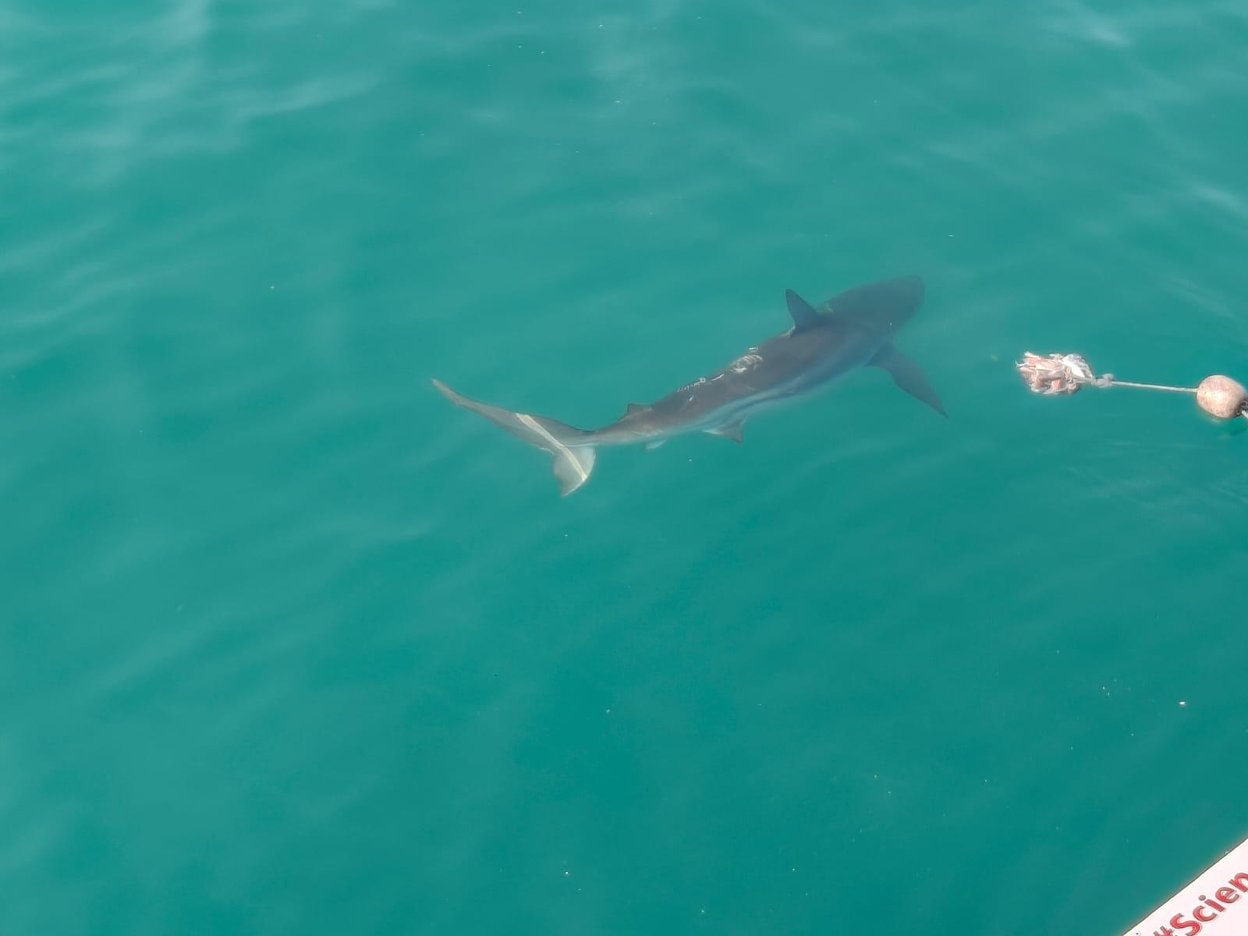
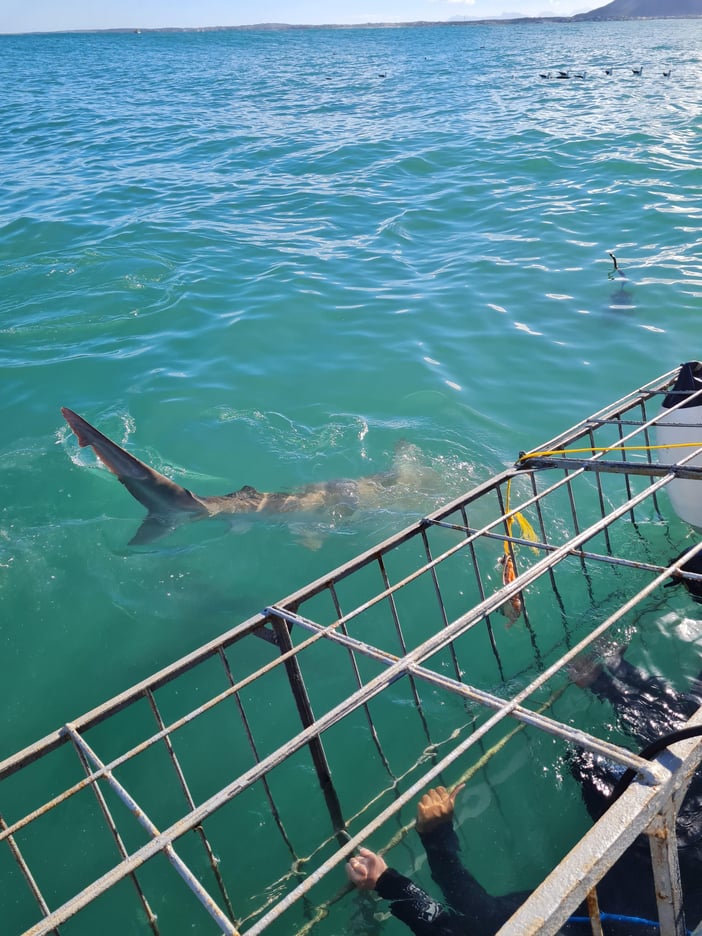
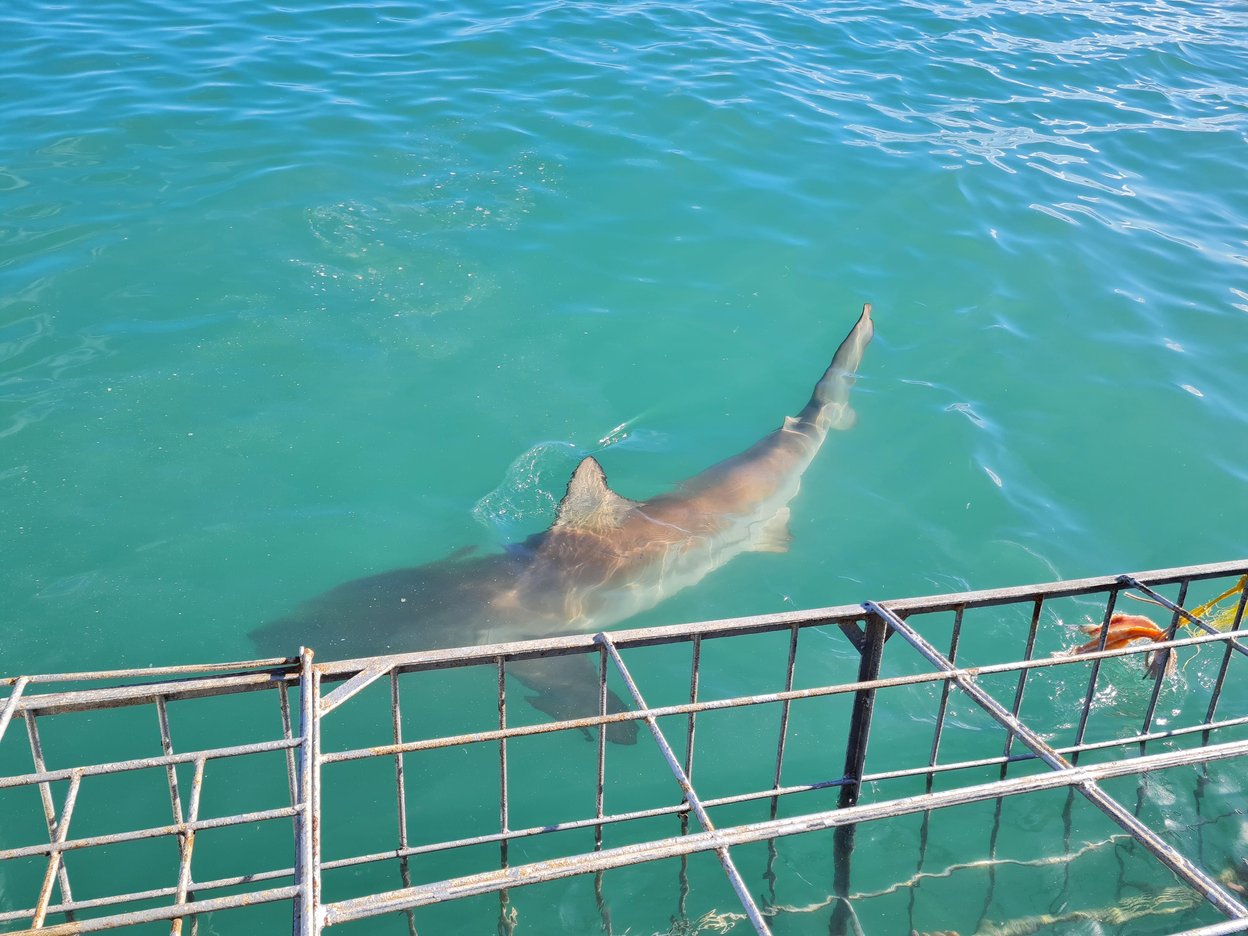
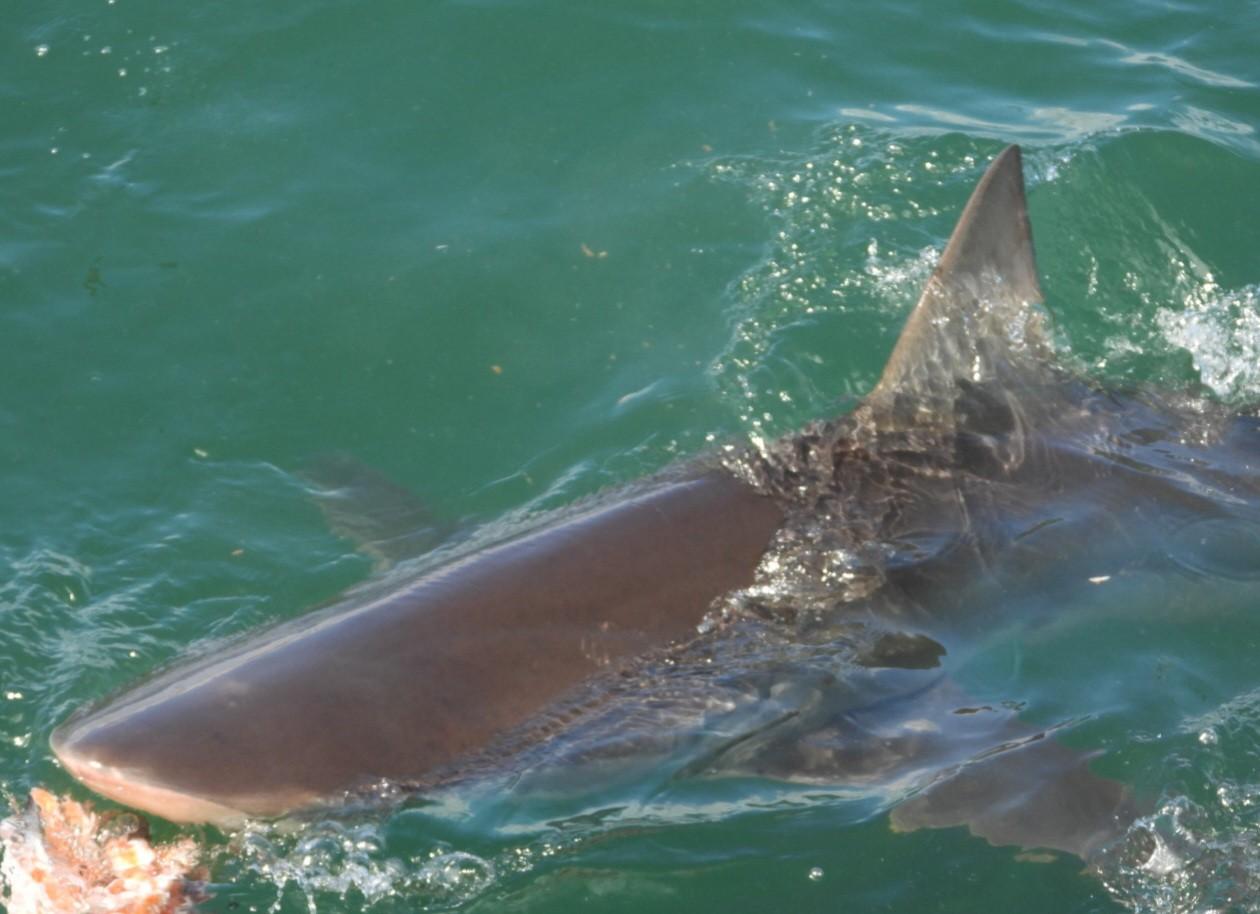
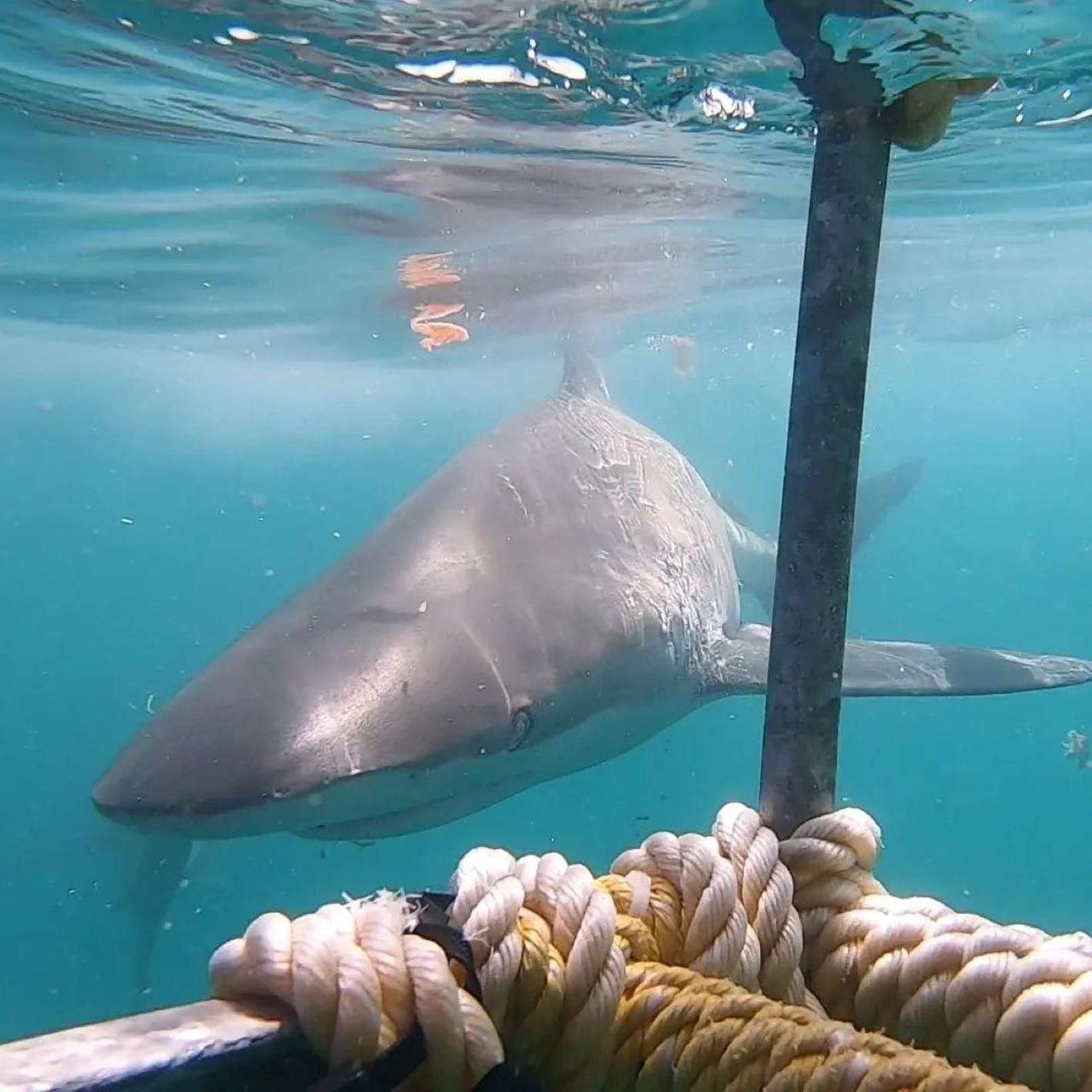
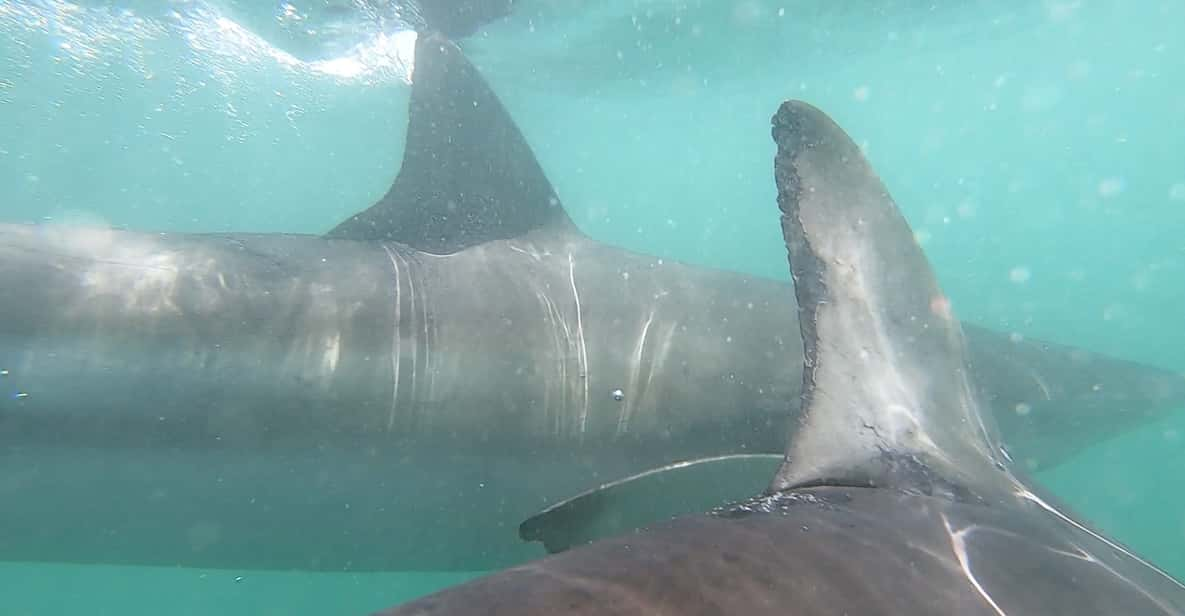
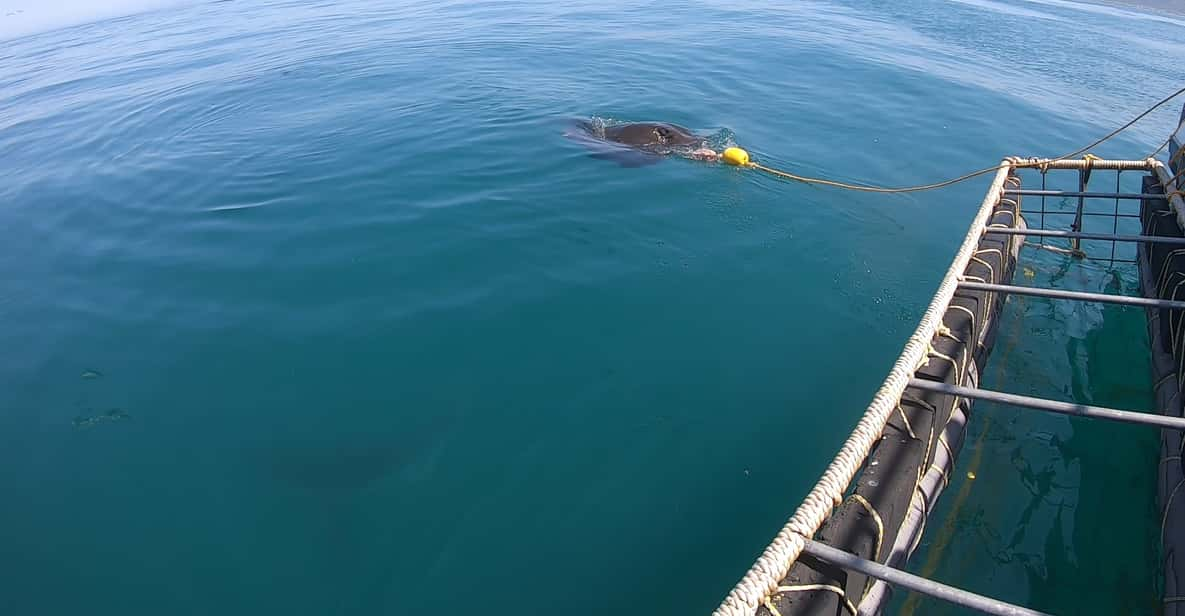
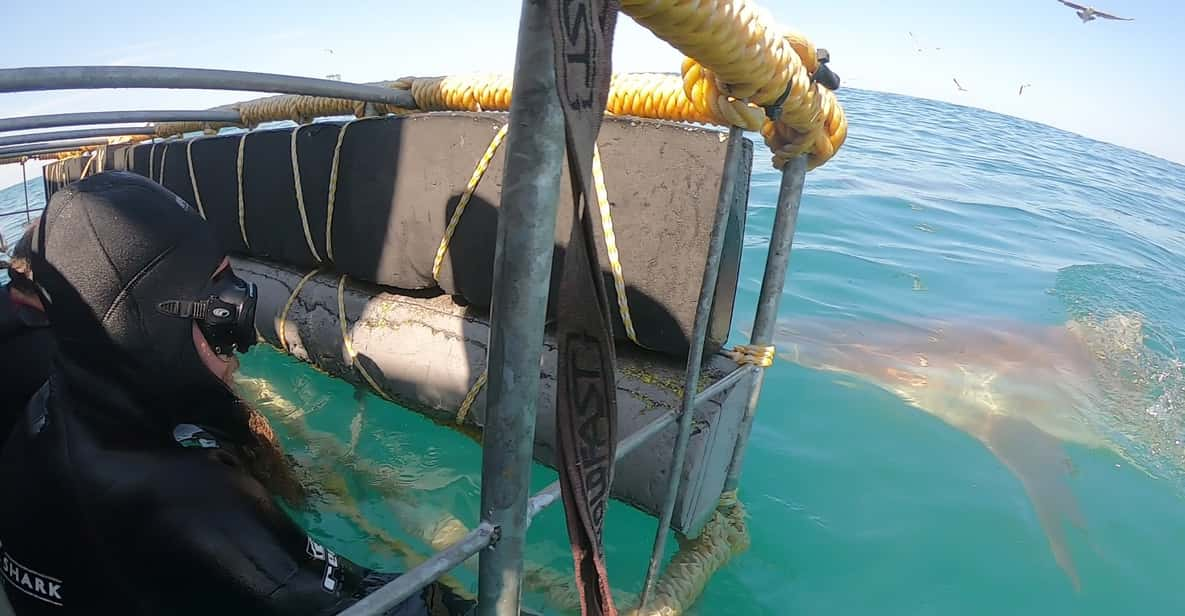
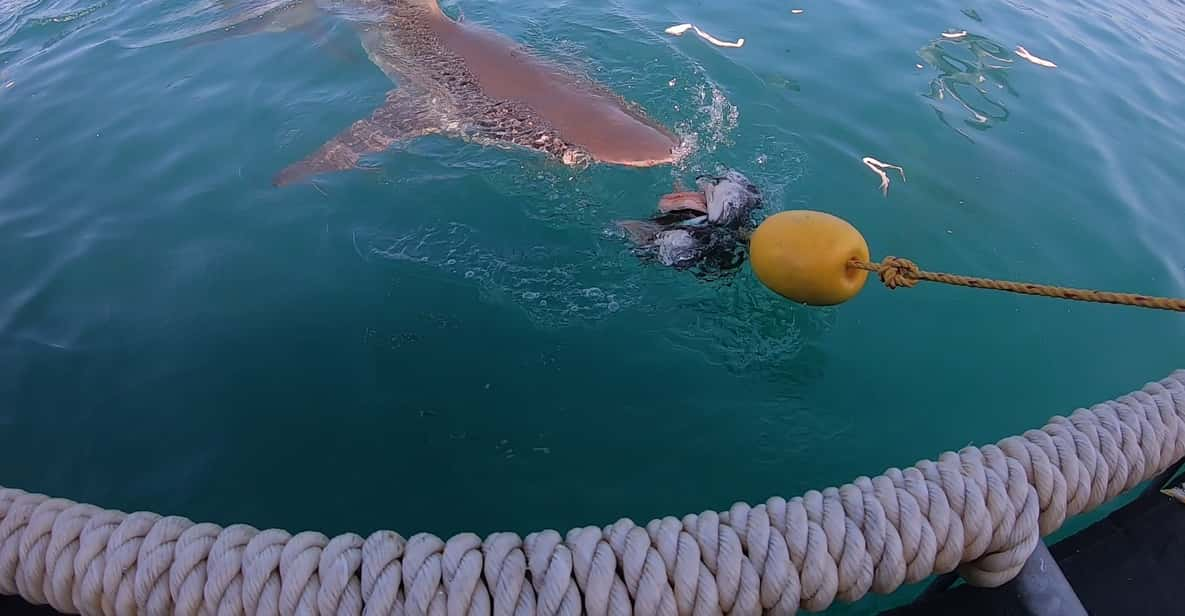
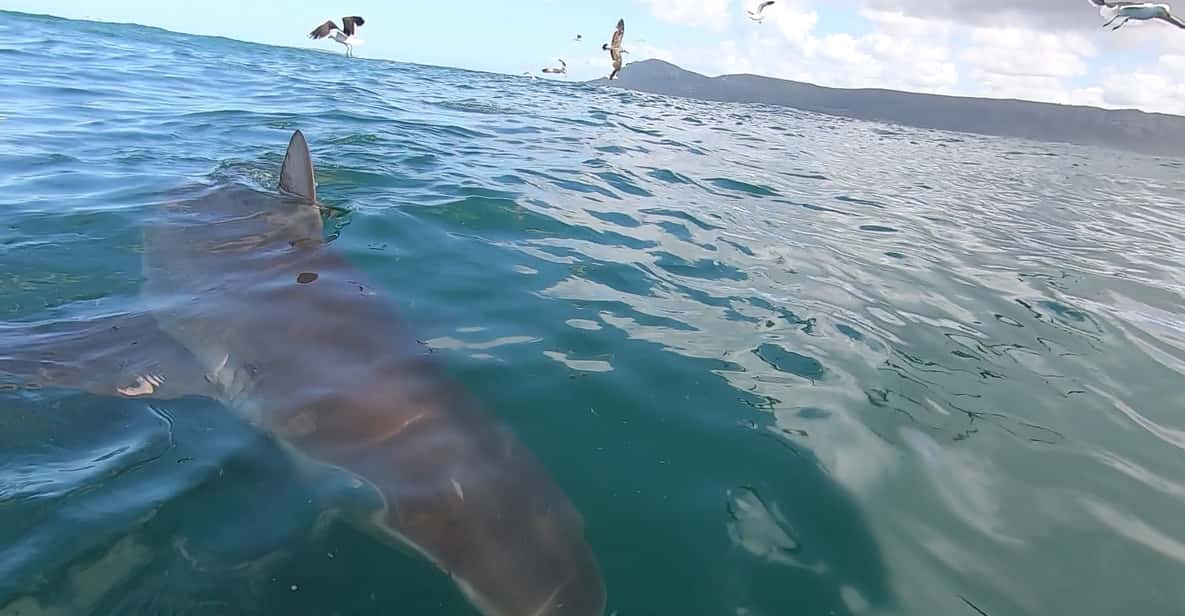
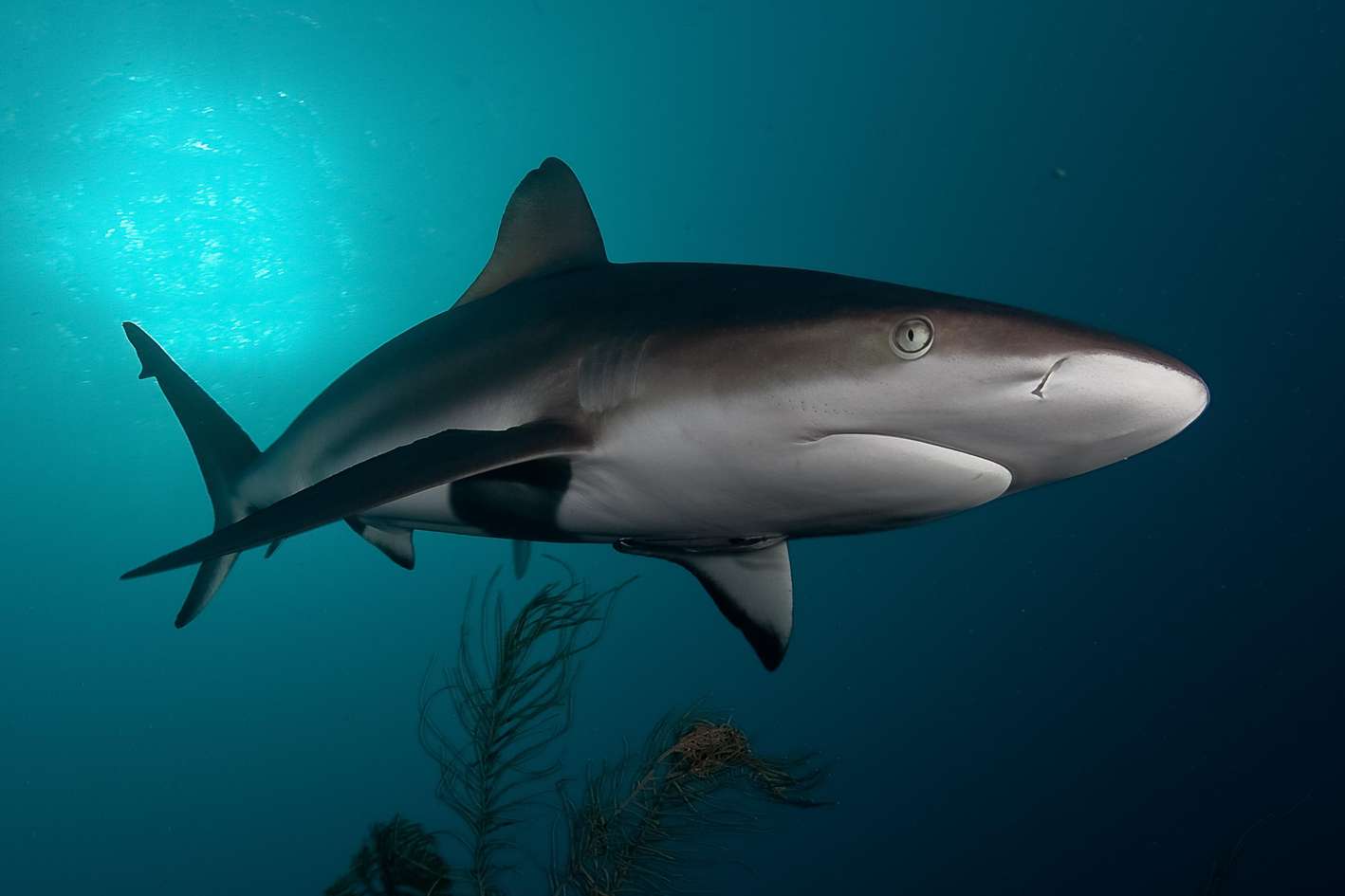
What the boats do deliver, trip after trip, is bronze whaler sharks, sevengills, stingrays, seals and dolphins, and in season southern right whales from the same rail. Bronze whaler sharks now star on most trips around Gansbaai and Hermanus.
People who go expecting a flexible menu of sea life leave happy. People who go for a guaranteed white shark alone are the ones who come back disappointed.
What people get wrong about cage diving
MythBooking a cage dive means seeing a great white
Reality
Sightings are irregular since the orcas moved in, and bronze whaler sharks now star on most trips around Gansbaai and Hermanus
MythChumming trains sharks to attack people
Reality
South African law bans feeding the sharks, so boats work with scent trails only, and research has found no link between cage diving and risk to swimmers in Cape Town's waters
Set your expectations that way at booking, and the day pays for itself even on a morning when no white shark shows.
Tour for this
Cape Town: Shark Cage Diving Tour (with Breakfast & Lunch)4.4★ (11) · 8 hours · Hotel pickup · Free cancellation
The day starts in the dark. From Cape Town it is a 163 km drive east, so vans roll out between 3:30 and 4:30 am to make a 7 to 8 am launch at Kleinbaai.
Breakfast and the safety briefing happen on shore first, then the boat heads for the channel between Dyer Island and Geyser Rock, better known as Shark Alley.
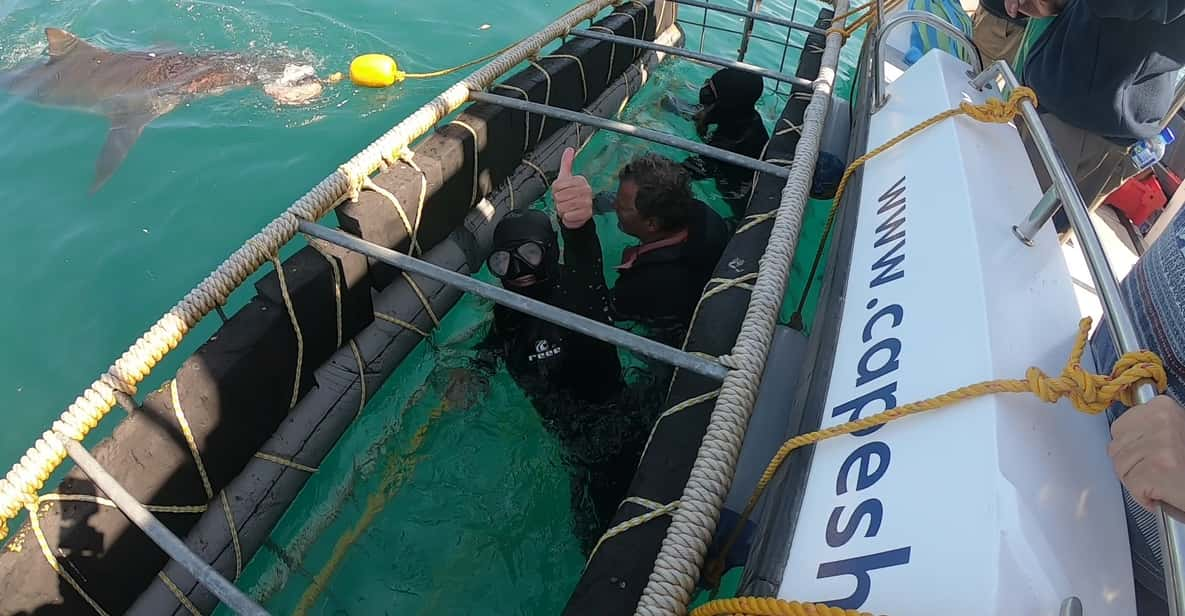
Two to three hours go by at sea. Guests rotate into the cage in small groups while the rest watch from the deck, where the whales, seals and seabirds put on their own show.
Back at the harbour there is hot soup and bread, and a light lunch before the drive on to Hermanus, about 50 minutes up the coast.
Whale boats leave Hermanus New Harbour around 10 am on their own schedule, so the natural fit is a shark morning and a whale watching afternoon. You are back in Cape Town by early evening, tired and smelling of salt.
How the combined day runs
1
3:30 to 4:30 am
Depart Cape Town
163 km along the N2 to reach Kleinbaai in time
2
7:30 to 8 am
Check-in, breakfast and safety briefing
The briefing covers the cage, the sea and the wildlife
3
Morning to midday
Out in Shark Alley
Two to three hours at sea, cage rotations in small groups
4
Early afternoon
Transfer to Hermanus
44 km, about 50 to 55 minutes, then the whale cruise
5
Early evening
Drive back to Cape Town
About 1 hour 50 minutes on the return leg
The 8-hour Cape Town: Shark Cage Diving Tour (with Breakfast & Lunch) runs this exact shape, with the transfer and both meals built in, so you never have to think about the clock. - Cape Town: Shark Cage Diving Tour (with Breakfast & Lunch)
Tour for this
Exhilarating Shark Cage Diving Experience in Cape Town4.7★ (3) · 9.5 hours · Hotel pickup · Free cancellation
Two calendars decide your dates. Southern right whales arrive in Walker Bay to calve from June, build to their biggest numbers in August through October, and thin out by December. Shark activity off Gansbaai runs strongest through the same winter-to-spring stretch. Where they cross is the window worth planning around.
August and September are the sweet spot: peak whale numbers in the bay, active sharks off Dyer Island, and cage diving boats still running quiet to moderate loads before the October and November crowds arrive.
Full-day combination tours run across the whole migration season from mid-June to mid-November, pairing the Gansbaai dive with whale watching in Hermanus.
One caution from people who have booked early: a boat trip in early winter, before mid-July, risks arriving before the whales have properly settled into the bays. Hold out for late winter and you get both animals at their best.
If your dates fall outside the overlap, June brings the first whales into the bay before their numbers build, and by December the whales have gone and only the sharks remain. Match the calendar to whichever animal matters more to your group.
Tour for this
From Hermanus or Cape Town: Shark Cage Diving Experience4.7★ (903) · 4.5 - 8 hours · Hotel pickup · Free cancellation
The two boats launch from two harbours. Shark boats go out of Kleinbaai, the small slipway outside Gansbaai, and work the waters around Dyer Island. Whale watching boats leave Hermanus New Harbour and work Walker Bay. No single vessel covers both, so the choice is about where you sleep and how you stitch the day.
Gansbaai is the shark capital, roughly 2.5 hours from Cape Town, with bronze whalers and sevengills on most days and great whites appearing seasonally. False Bay's Simon's Town launch sits only 45 minutes from the city but great whites have grown rare there too.
Mossel Bay, four hours east, currently gives the best odds of a great white. Durban runs warm-water dives with blacktips and tiger sharks, a different animal altogether.
A Gansbaai dive in the morning with a Hermanus whale cruise after is the pairing that works for one day. The Cape Town: Gansbaai Eco-Friendly Shark Cage Diving Cruise is the closest bookable fit, running out of Kleinbaai with a marine biologist aboard.
How to choose a combined shark and whale watching day
Check
Why it matters
Our pick
Operator ethics and permits
Feeding sharks is banned in South Africa, and permits cap who may run white shark cage diving
A marine biologist rides along and the tour includes a visit to an African penguin and seabird sanctuary
Group size and cage rotations
Crowded decks mean less cage time and jostled views
Guests rotate in small timed groups, with deck viewing while you wait
Deck comfort for non-divers
Your companions spend hours on the water too
A custom shark boat with viewing space above an enclosed cabin
Transfers and meals
The sites sit hours apart, and a missed connection sinks the day
Round-trip transport from Cape Town on the transfer option, breakfast or lunch on arrival, lunch after the dive
Whichever row you weigh heaviest, the deciding number is the drive: Gansbaai sits 2.5 hours from Cape Town, so base yourselves there the night before or pick a tour that collects you from your hotel.
The math is unforgiving: Kleinbaai Harbour sits 163 km from Cape Town, about 2 hours 43 minutes without traffic, and early launches mean leaving between 3:30 and 4:30 am.
The inland N2 over Sir Lowry's Pass is the fast way, around 90 minutes of it, past Hermanus and Stanford on the R43. Hermanus and Stanford make the natural stops for fuel and bathrooms.
If you drive yourself, Clarence Drive from Gordon's Bay is the road worth choosing once: ocean cliffs, False Bay viewpoints and the Stony Point penguin colony along roughly 130 km, two to three hours with stops.
Many drivers run it one way and return on the N2. From Hermanus the hop to Kleinbaai is short, about 45 minutes.
No public transit serves Gansbaai at all, so the real choice is a hired car or a tour with pickup. Most tours collect from Cape Town hotels, and some from Hermanus, which turns the pre-dawn drive into somebody else's problem.
Drivers with a morning to spare often take Clarence Drive out and the N2 back, and the cliff road doubles as free whale watching in season, with southern rights visible from the roadside.
Driving yourself
Rent a car for the driveCompare cars from the rental companies in one search, then pick yours.
The water decides the packing. Western Cape seas run from a summer high of 18 to 21 degrees down to winter lows of 14 to 16, which is cold enough to feel through anything thin.
The good news: the operator supplies the underwater gear, a thick 5 mm or 7 mm wetsuit, booties, hood and mask. You need only a swimsuit to wear underneath.
The deck is where people get caught out. Two or three hours in the Benguela current calls for a fleece, a windproof jacket against the spray, a beanie, closed non-slip shoes, a towel and a full change of dry clothes for after. Bring sunscreen too; the sun finds you on open water.
Then the tablets. Seaswell can flatten anyone at anchor, and the advice from regulars is blunt: take motion sickness medication the night before and again about an hour before boarding, so it has time to work long before the first swell hits.
A light, non-greasy breakfast helps as much as the pills, and crews are used to helping anyone who still goes green.
Tour for this
From Cape Town: 2-Day Garden Route Safari with Shark Diving5.0★ (3) · 2 days · Hotel pickup · Free cancellation
The safety record is the fact worth saying out loud: no one has been killed by a shark inside a commercial cage in South Africa.
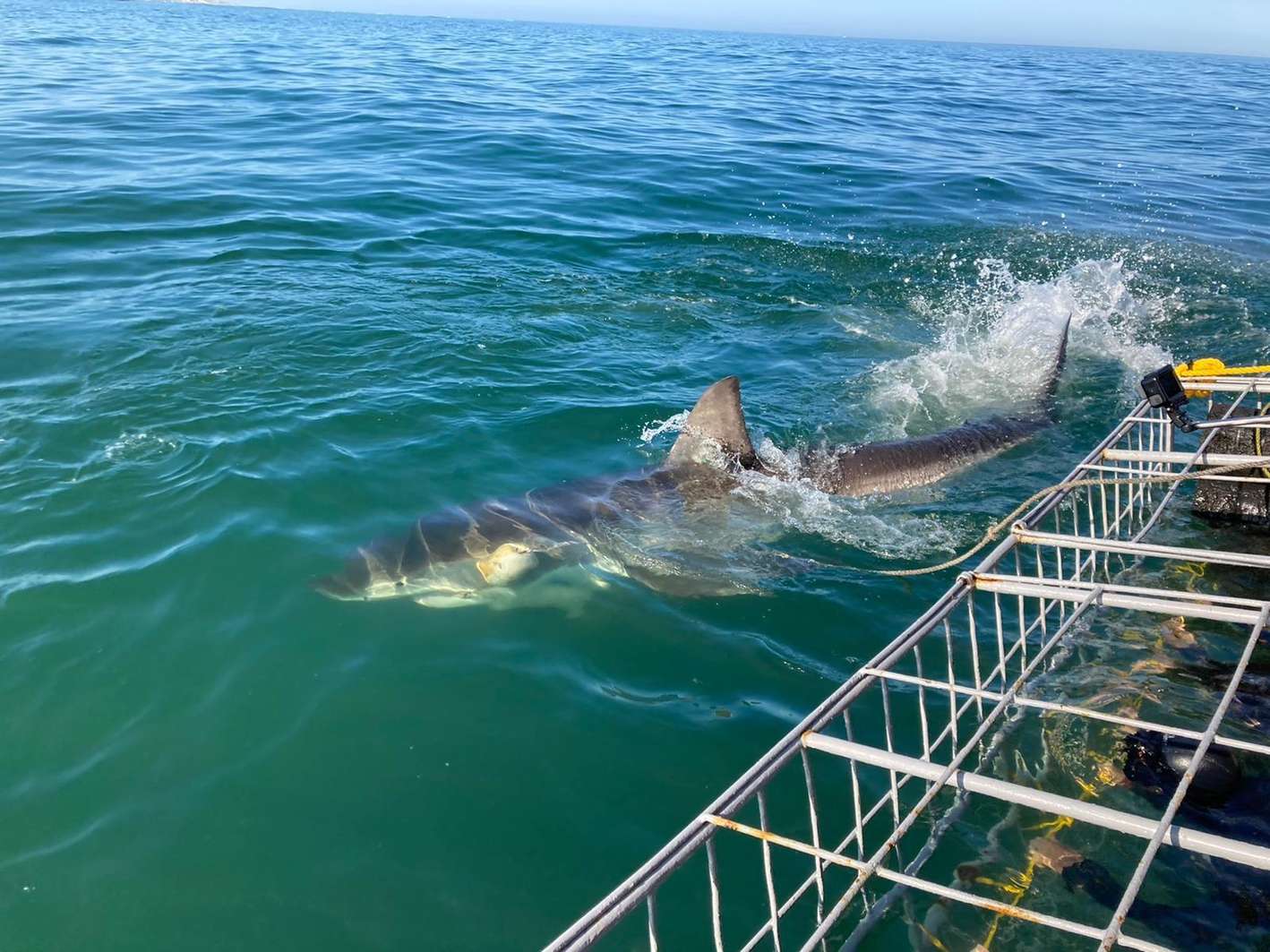
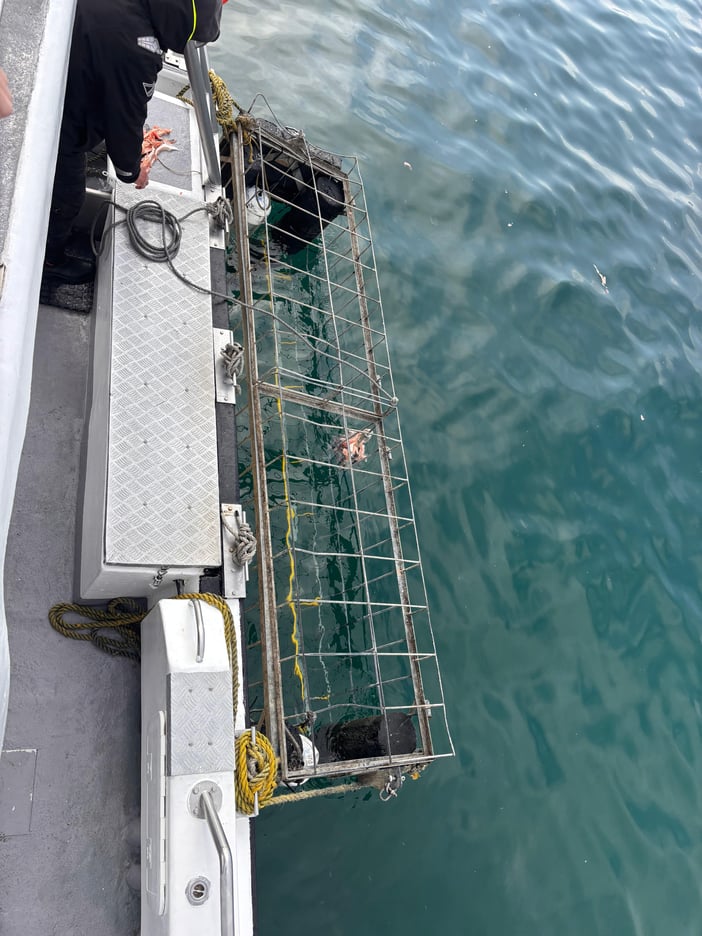
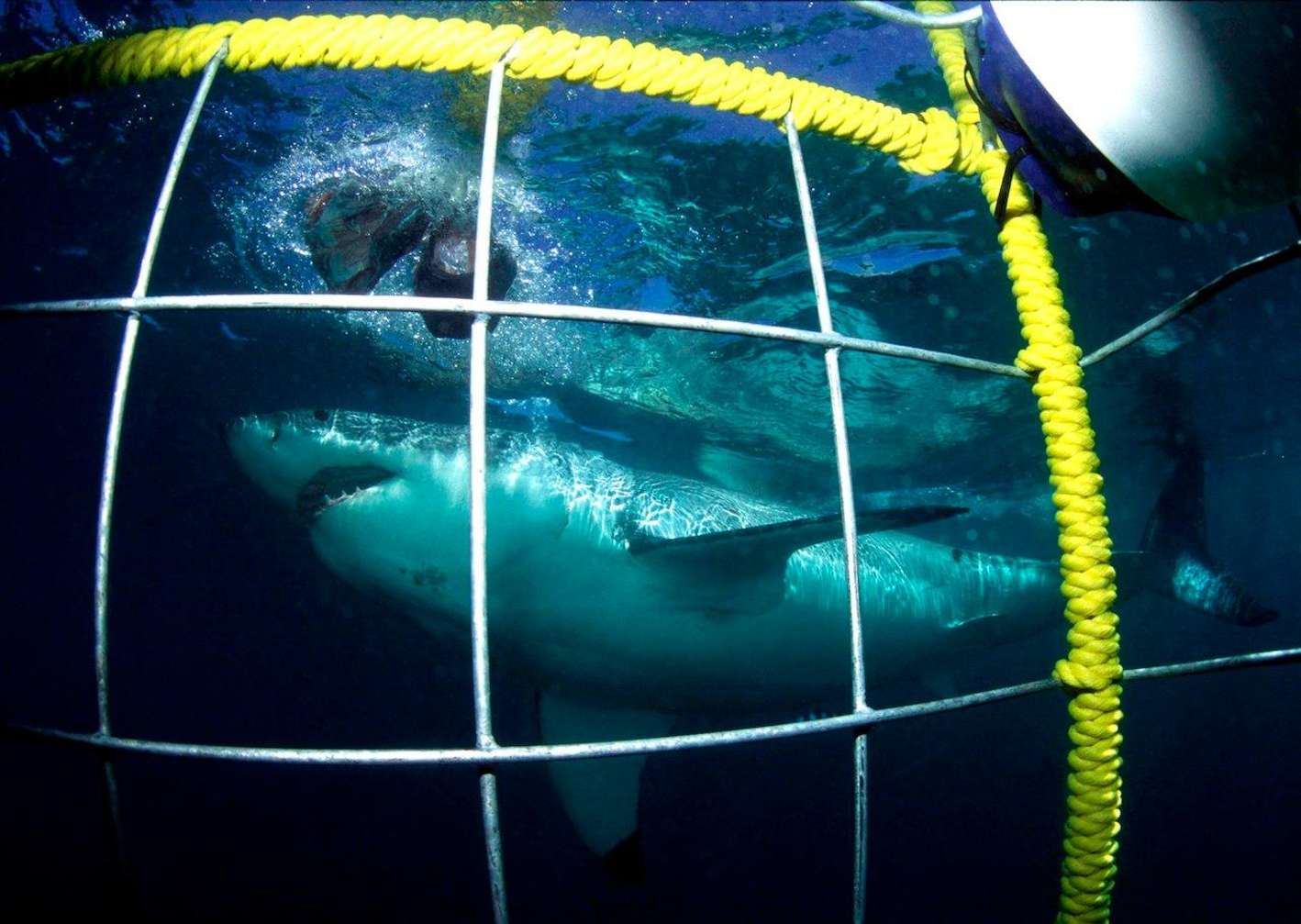
Every cage is certified by the maritime authority, built from steel or aluminium by a registered engineer, with an access door at the top and no sharp edges. One cage per boat, no exceptions.
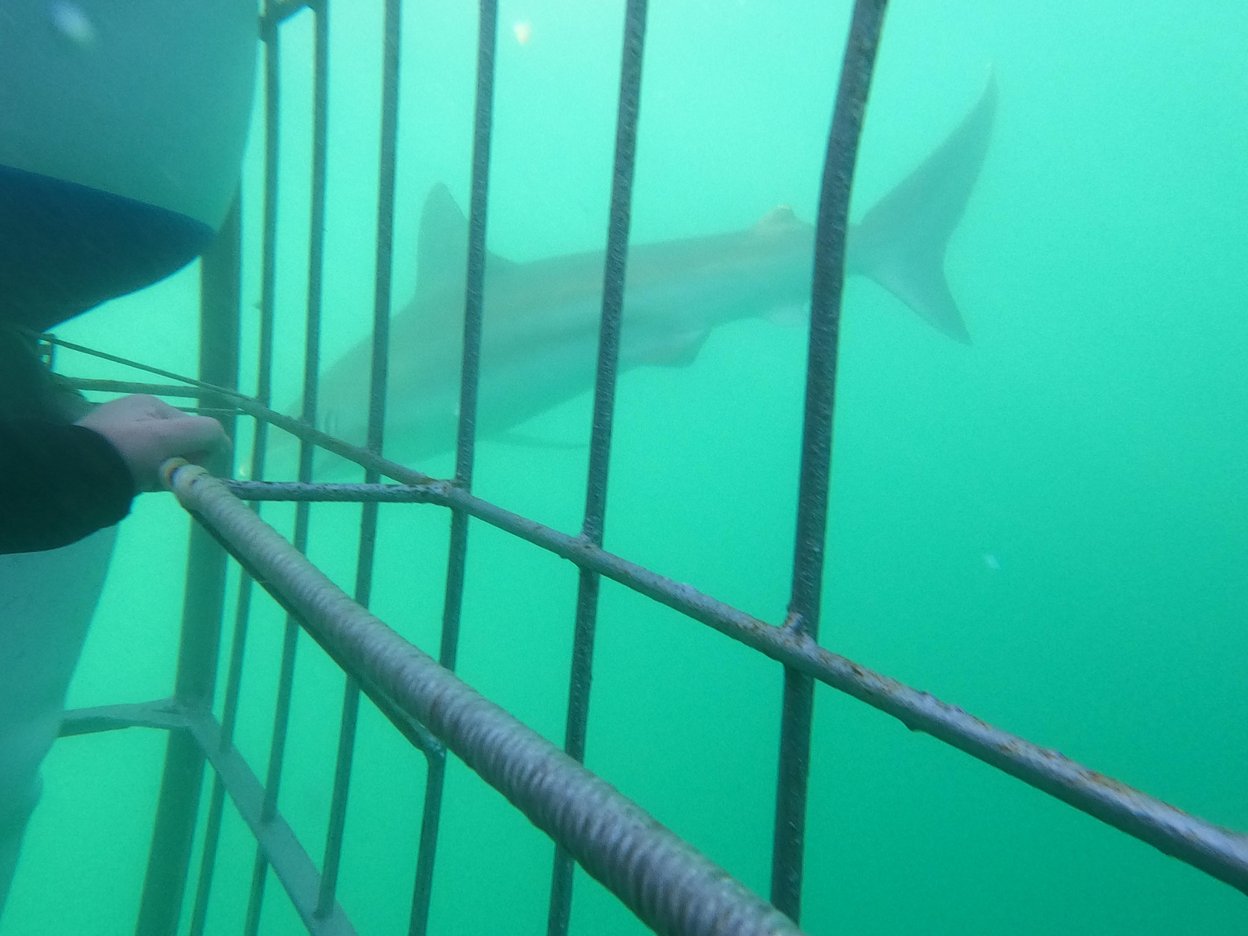
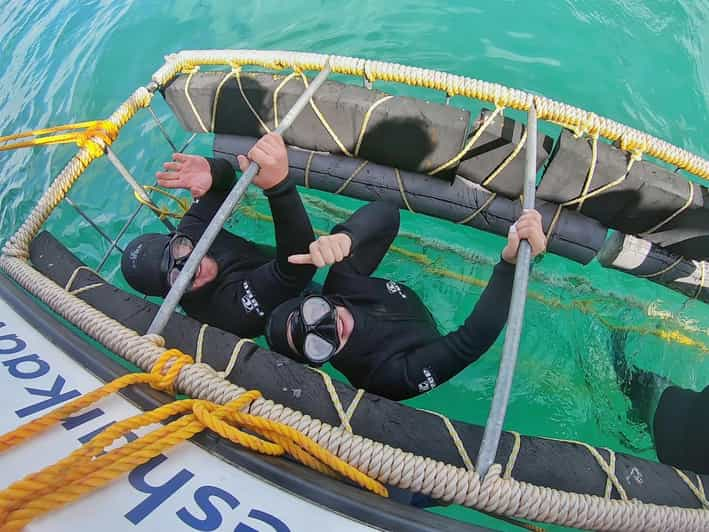
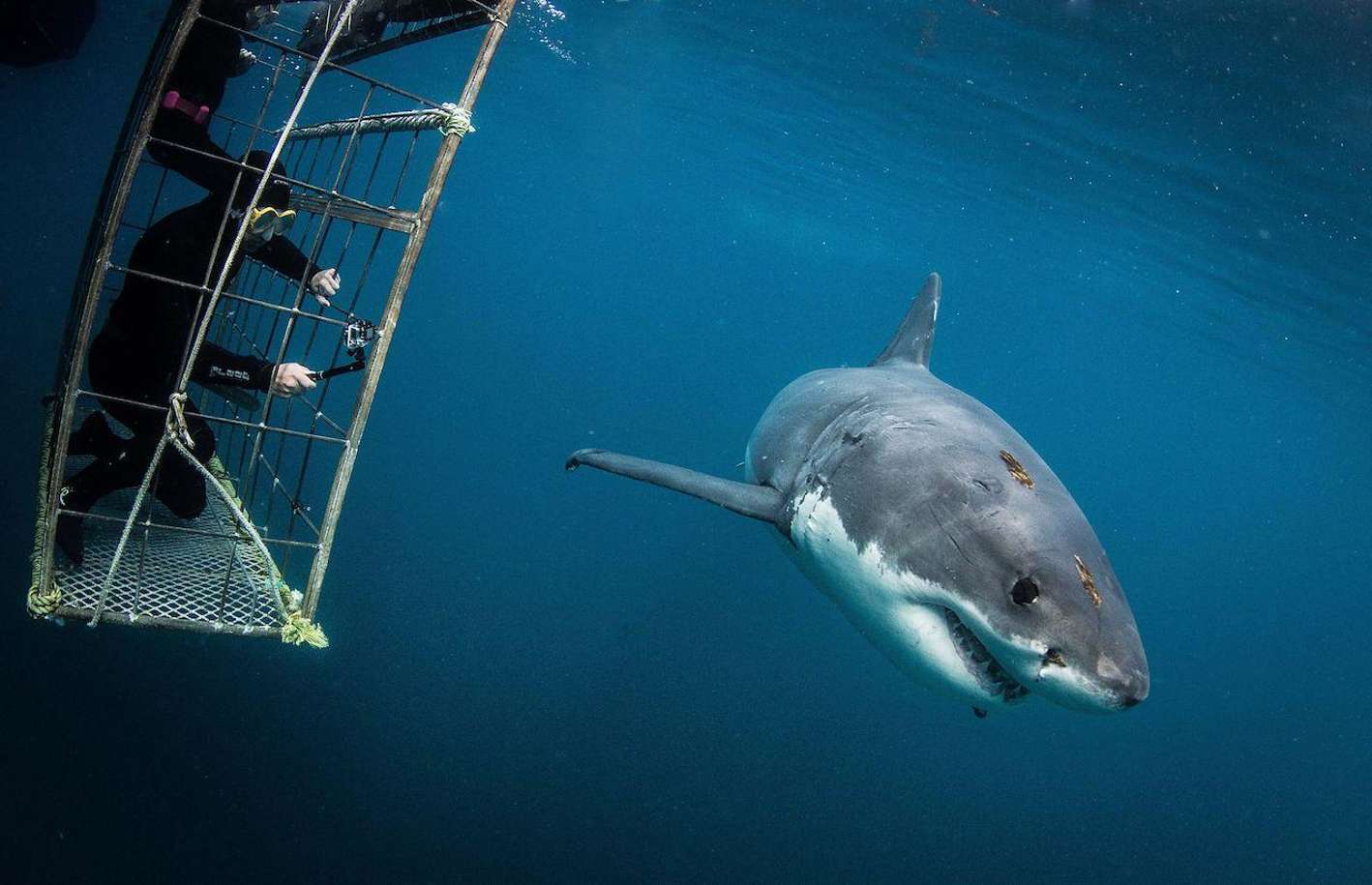
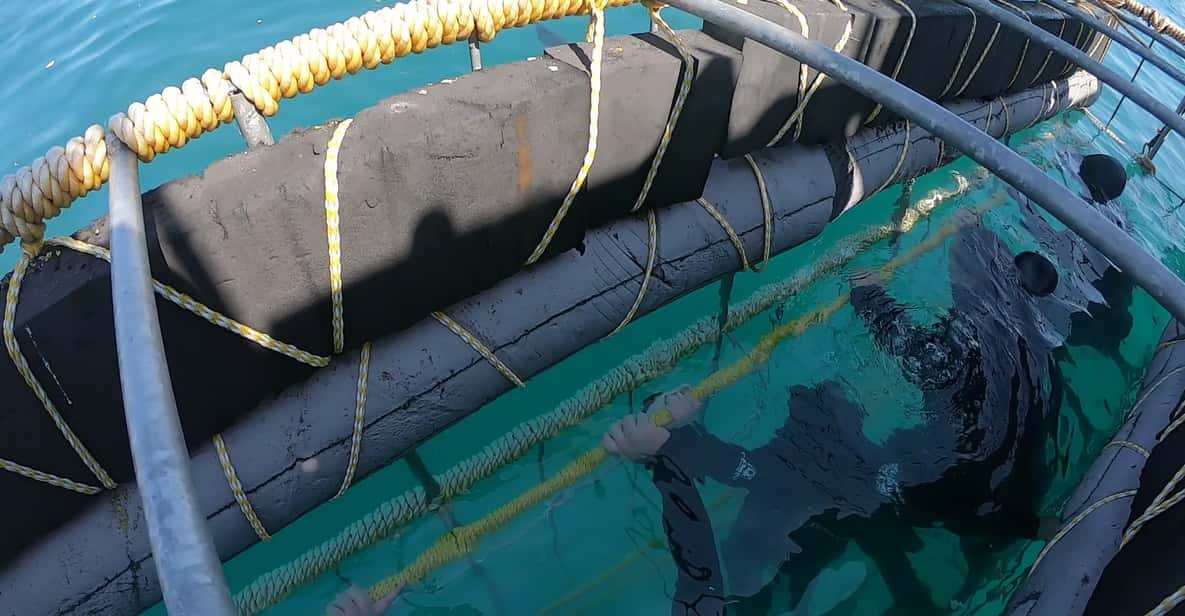
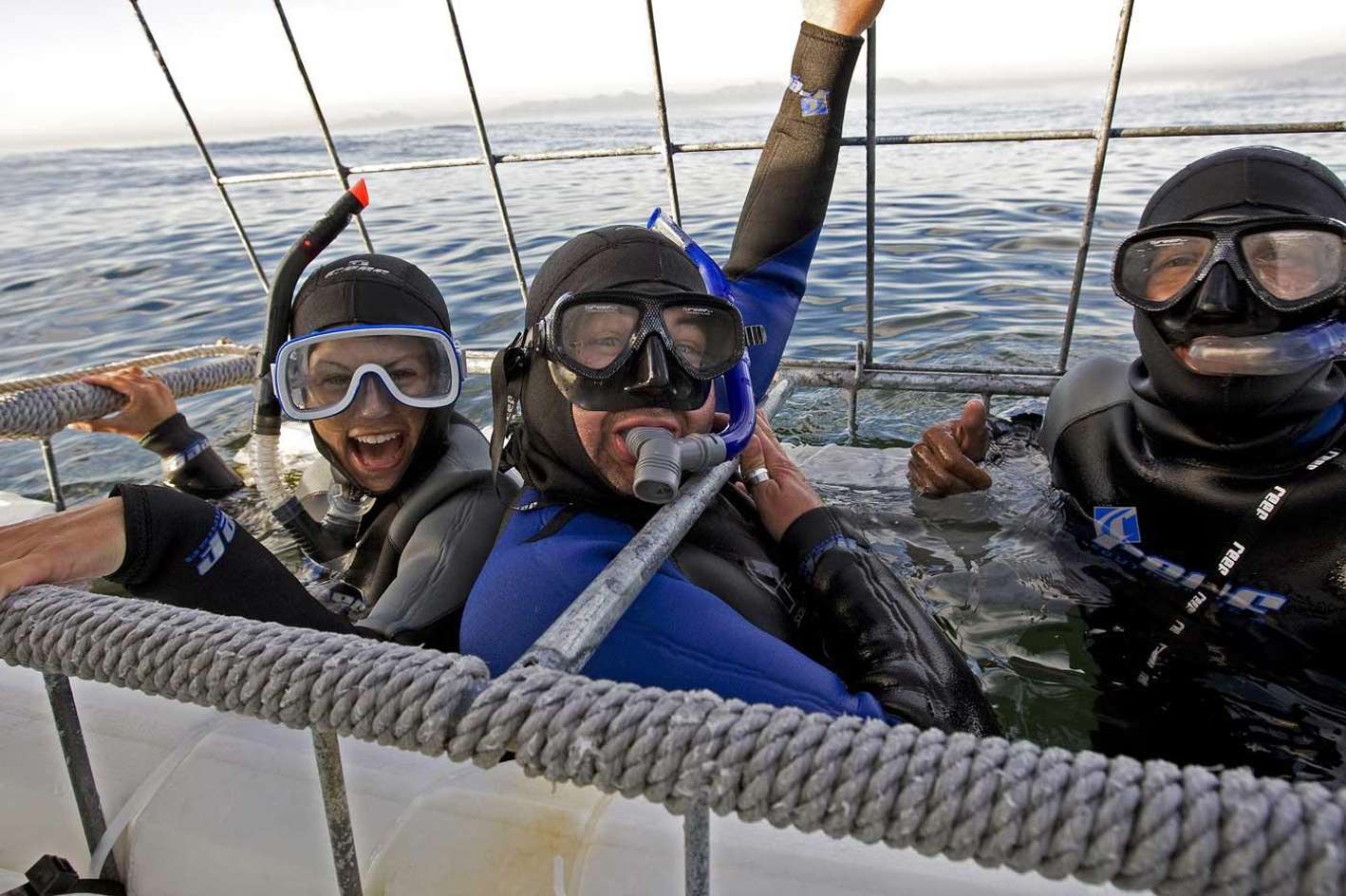
No scuba licence and no diving experience are needed. Surface cages mean you float at the waterline, holding your breath or using a snorkel as sharks pass, and you can stand or kneel on the cage floor.
Not a strong swimmer? You stay put in the cage while the water moves around you, though comfort in choppy water matters, because you can leave the cage whenever you want.
Age rules are set per operator, typically 7 to 12 years old for the cage, depending on the boat, with younger children welcome on deck. Whale watching has no minimum age at all, life jackets included for the small ones.
What nobody tells you
Hold the interior bars or rails
The boat rolls at anchor, and gripping inside the cage keeps you steady and your limbs inside
You can exit any time
Cold, nerves or seasickness are all accepted reasons, the crew pulls you straight out
No breathing gear in most cages
You hold your breath on cue or use a snorkel; some boats run a surface air line if you want longer down
Cage time comes in rotations
Groups of four or five go in for 20 to 30 minutes while the rest watch from the deck
What happens when the whale watching weather turns
Winter on this coast is not a maybe. From April through October, rough sea days cancel about 18 of every 30 departures from Gansbaai, leaving boats at sea on roughly 12 days a month. In summer the cancelled count drops to about 10 in 30. Rain cancels nothing; it is swell and wind that decide.
The skipper makes the call, usually checking the marine forecast the afternoon before, so you often know by 2 pm the day prior.
If the launch is cancelled, you get a full refund or a new date, your pick. Book your shark dive for the first day of your stay and a washout becomes a reshuffle instead of a lost highlight.
The rougher edges: if sudden winds force the boat back to shore after you have already put to sea, no refund follows, and if a launch is called off after you have arrived in Gansbaai, transport costs stay payable, though the ride is free when you reschedule.
No sharks, no automatic refund either, though some operators hand out a return voucher or a free place on another day.
If the day changes
If this happens
What happens then
Weather cancels the launch the day before
A full refund or a new date, whichever suits you
You cancel up to 24 hours ahead
A full refund
Strong winds force the boat back mid-trip
No refund, the trip already ran
No sharks show at all
Some operators offer a return voucher or a free trip on another day
Launch called off after you have travelled there
Transport costs remain payable, but the rescheduled transfer is free
Here is the sentence to say to the hesitant half of your group: you do not need to get wet.
Most sharks hunt at the surface, so from the deck you watch them come up the chum line in full view, and on murky days the deck actually beats the cage, where visibility underwater can drop to a couple of metres.
The same holds for the whale leg. Watching southern right whales at eye level from a boat, close enough to hear the exhale, is the whole reason people book. And whale watching boats in Hermanus carry passengers of any age, from infancy, which makes it the easy half of the day for families.
Toddlers are the one honest limit. A full offshore morning, swell and cold spray included, taxes children under two hard, and a fussy three hours at sea taxes everyone else with them. For that age group, the cliff path in Hermanus is the better seat in the house.
A traveler's note
Everything was excellent. Unforgettable savanna stay, friendly accommodation, impressive safari, and the cage dive was beyond imagination - saw hammerheads instead of a great white. Guide Rameez was great!
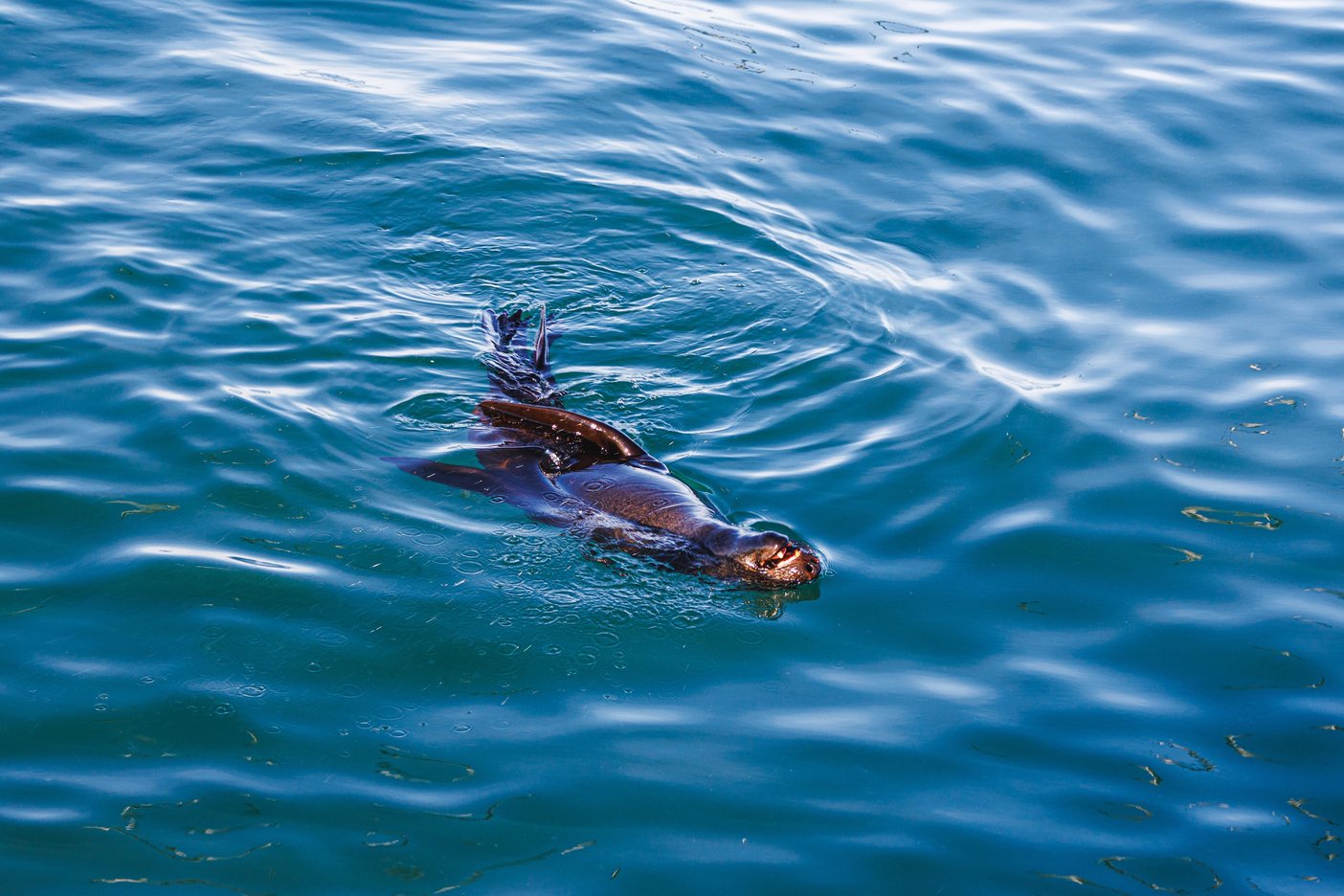
The channel between Dyer Island and Geyser Rock earned its name for a reason. Some 60,000 Cape fur seals breed on Geyser Rock, and sharks patrol the channel that separates it from the island, hunting seals through the winter months with short, fast ambushes that end with a seal pulled into mid-channel water.
The same waters stack up the rest of the Marine Big 5: whales, dolphins, Cape fur seals, African penguins and sharks, often inside one trip. Dyer Island itself carries breeding penguins and rare coastal birds, while Geyser Rock belongs to the seals.
And the whales? Southern right whales pick Walker Bay because its shallow, sandy, relatively warm water lets newborn calves rest and grow while staying hidden from orcas by the noise of the surf.
A mother and calf rolling in the swell, seen from a boat or a cliff, is the quiet half of a very loud day.
The marathon day trip from Cape Town works, but people who have done it twice will tell you to sleep over.
A night in Hermanus or De Kelders kills the 3:30 am drive, gives you two chances at the whales including the often calmer morning, and leaves room to wait out a washed-out sea day instead of watching it eat your only shot.
De Kelders sits just west of Gansbaai, minutes from the Kleinbaai launch, with elevated cliff-top whale spotting over Walker Bay thrown in for free. Hermanus brings restaurants, wine country in the Hemel-en-Aarde valley, and Clarence Drive spread across two days, with stops the day trip has to skip.
Between the harbours, eating sorts itself out. The restaurant above Hermanus New Harbour serves sushi and fish with sunset views, and there is legally farmed abalone to try at the harbour.
In Kleinbaai, the dive headquarters restaurant does seafood and South African classics, with a bar pouring Overberg wine and gin while you wait for your trip.
The Overberg rewards a second and third day. The Hermanus Cliff Path walks the cliffs above Walker Bay, high enough to watch several whales at once across the bay, and free of both the ticket and the seasickness. De Kelders' cliffs do the same closer to Gansbaai, with whales sometimes close enough to hear.
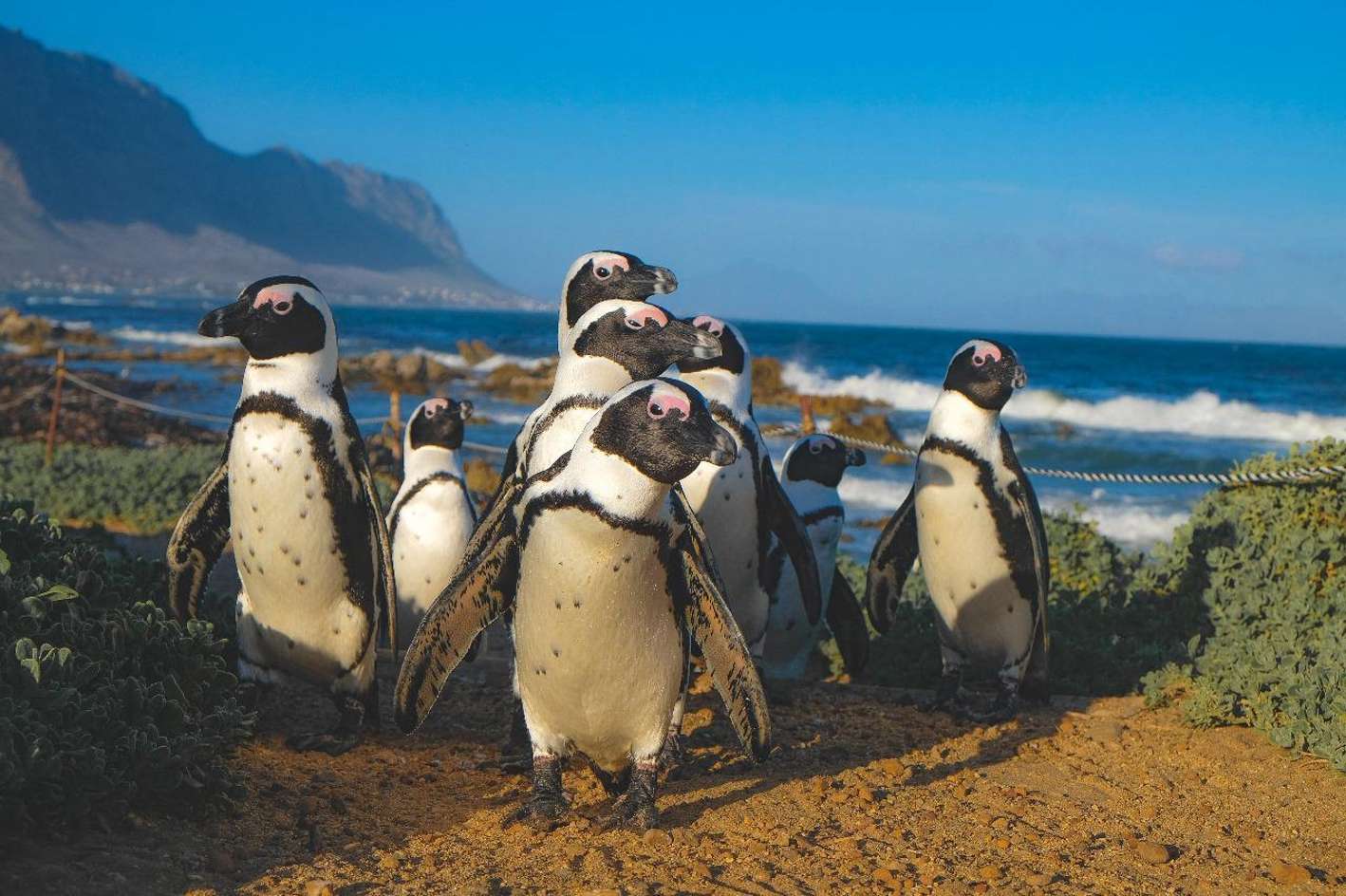
Penguins get their own outing. Stony Point in Betty's Bay holds a breeding colony viewable from a boardwalk, sharing the rocks with four cormorant species, and it sits right on the Clarence Drive route. In Gansbaai itself, the African Penguin and Seabird Sanctuary, included on some dive tours, rehabilitates oiled and injured marine birds.
Farther afield, De Hoop Nature Reserve guards a southern right whale calving ground, with whale watching from the dunes at Koppie Alleen, and Walker Bay Nature Reserve stretches the whole coast between the two towns. Two or three days here, one on the water and the rest on the cliffs, covers the coast properly.
One day can hold sharks and whales here, because the harbours are 45 minutes apart and the seasons overlap from June to November.
Go in August or September, book the dive for your first morning, and treat great whites as a bonus if they show up at all. Stay the night on the coast if you can spare it, and let anyone who wants stay dry on deck.
Go ifYou want sharks and whales in one trip between June and NovemberYour group includes people who would rather watch from the deckYou have spare days in your itinerary to absorb a weather cancellation
Skip ifYou will be satisfied by nothing but a guaranteed great whiteYou are travelling with children under two who would face a full offshore morningYou cannot tolerate early starts or choppy water and have only one possible day
The questions travelers ask before they book sharks and whales in one trip.
Kleinbaai2026
Morning in the cage off Dyer Island, afternoon with southern right whales in Walker Bay. Pack a warm jacket for the deck.
Can I do shark cage diving and whale watching in one day from Cape Town?
Yes, during whale season from June to November, but it takes a full day with an early start. The drive to Gansbaai runs about 2.5 hours, the shark trip lasts 4 to 4.5 hours, and Hermanus sits another 50 minutes back along the coast before the whale cruise and the drive home.
When do sharks and whales overlap in Hermanus and Gansbaai?
August, September, and October give you the best odds of both. Southern right whales gather in Walker Bay in their largest numbers from August through October, right alongside active shark viewing off Gansbaai. August and September are the peak overlap.
Which whale watching and shark cage diving trips run together?
Some Gansbaai boats anchor near Dyer Island, where cage divers and deck passengers share one trip, and the crossing often passes seals, dolphins, and seabirds. For dedicated whale watching, boats leave from Hermanus New Harbour, about 50 minutes from Kleinbaai, so you can pair a morning shark trip with an afternoon whale cruise.
Will I see a great white shark?
Great white sightings in Gansbaai have become irregular in recent years, and no operator can guarantee one. Bronze whaler sharks are now the species most often seen from the cage around Gansbaai and Hermanus, with broadnose sevengill sharks and stingrays also showing up. Whales, seals, and dolphins round out most trips.
Do I need scuba certification or diving experience?
No. Cages sit at the surface, so you hold your breath on cue or use a snorkel while sharks pass, and some boats supply air through a hose from the surface. No certification or prior diving experience is needed anywhere in South Africa.
Can my partner stay on deck instead of diving?
Yes, and the view is good from up there. Most sharks cruise at the surface, so non-divers see them, plus dolphins and seals, clearly from the deck. When the water is murky, watching from above can even beat looking from inside the cage.
What ages can dive, and can young children come along?
South African law sets no minimum age; each operator decides. Cage entry typically starts between 8 and 12 years old, and one Gansbaai operator keeps the cage for ages 12 and up while younger children watch from deck. Whale watching boats take passengers of all ages as long as small children wear life jackets.
Is the cage safe, and have there been accidents?
Commercial cage diving in South Africa has a perfect human safety record against shark attacks, and no one has been killed by a shark inside a commercial cage. Boats and cages must be certified by the maritime safety authority, divers stay inside the bars at all times, and touching sharks is illegal.
Is it suitable for non-swimmers?
Surface cage diving works for total beginners because you stay in one spot and can usually stand or kneel on the cage floor. You do need basic comfort in choppy water, since the swell pulls at you at the surface. If that sounds like too much, stay on deck instead.
How cold is the water, and what gear do I bring?
Gansbaai water runs between 12°C and 20°C through the year. Operators supply clean 5 mm to 7 mm full wetsuits, usually with hoods, plus booties, masks, weight belts, and towels. You bring a swimsuit to wear underneath, warm layers for the deck, and a dry change of clothes.
What happens if the weather turns or no sharks show up?
Skippers judge wind and swell the day before, and cancelled trips come with a full refund or a new date. If no sharks appear, some operators hand out a return voucher or a free dive on another day. One operator counts the trip a success if a shark is spotted from the boat.