Shark Cage Diving and Viewing with Transport from Cape Town
Hotel transfers, breakfast, cage or deck time
See the sharks without driving three hours before dawn. Door-to-door transport from your Cape Town hotel gets you to breakfast, the safety briefing, and the boat, where you can duck into the cage or stay dry and watch from the deck. Pick a date and confirm your seat.
The quick-start guide to cage diving and shark viewing, transport from Cape Town included
wear your swimsuit under your clothes
Shark cage diving from Cape Town comes in two shapes: a full day out to Gansbaai with hotel pickup, breakfast and two to three hours at sea, or a half-day trip that keeps the outing shorter. The choice comes down to sea time, and whether everyone in your party takes the cage or watches from the deck.
Pickup timesLaunches follow the tides and the sea forecast, so operators confirm exact collection times the afternoon before, by 4 pm with one of them.
Experience neededNo scuba certification or prior diving experience is required to enter the cage.
ChildrenAge rules differ by operator, and one keeps children under six off the boat because of the hours spent at sea.
WeatherHeavy swell or strong wind cancels trips, and you get another date or a full refund when that happens.
SeasicknessTake motion sickness tablets the night before and again about an hour before boarding.
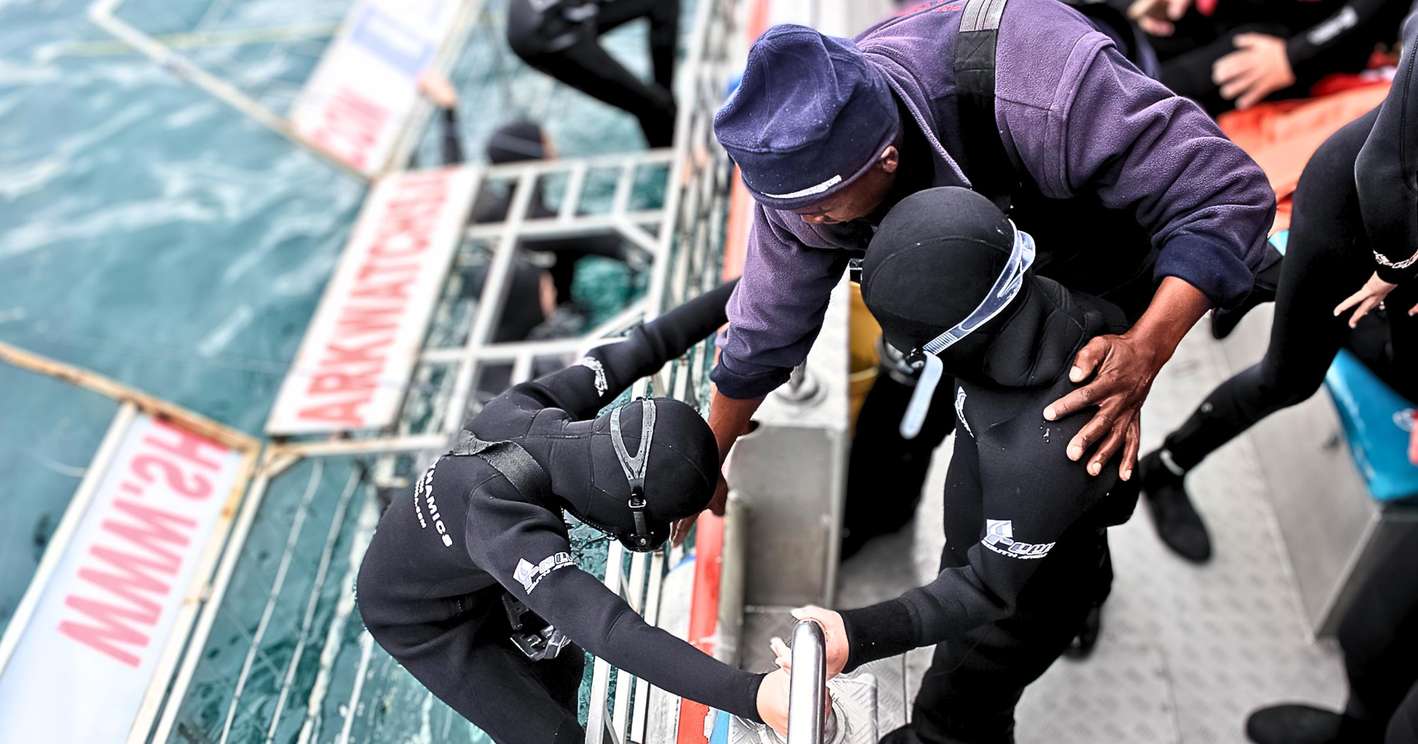
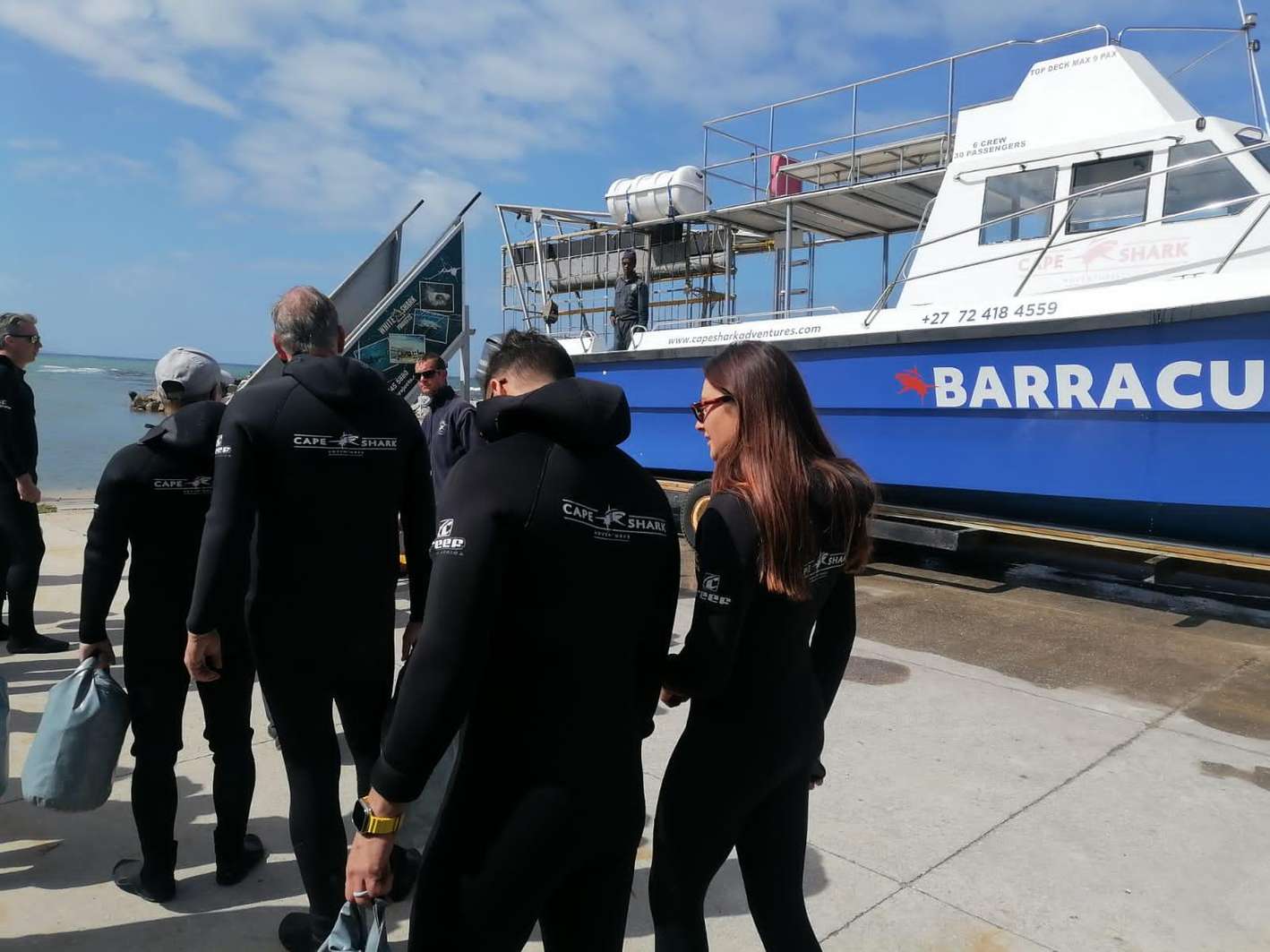
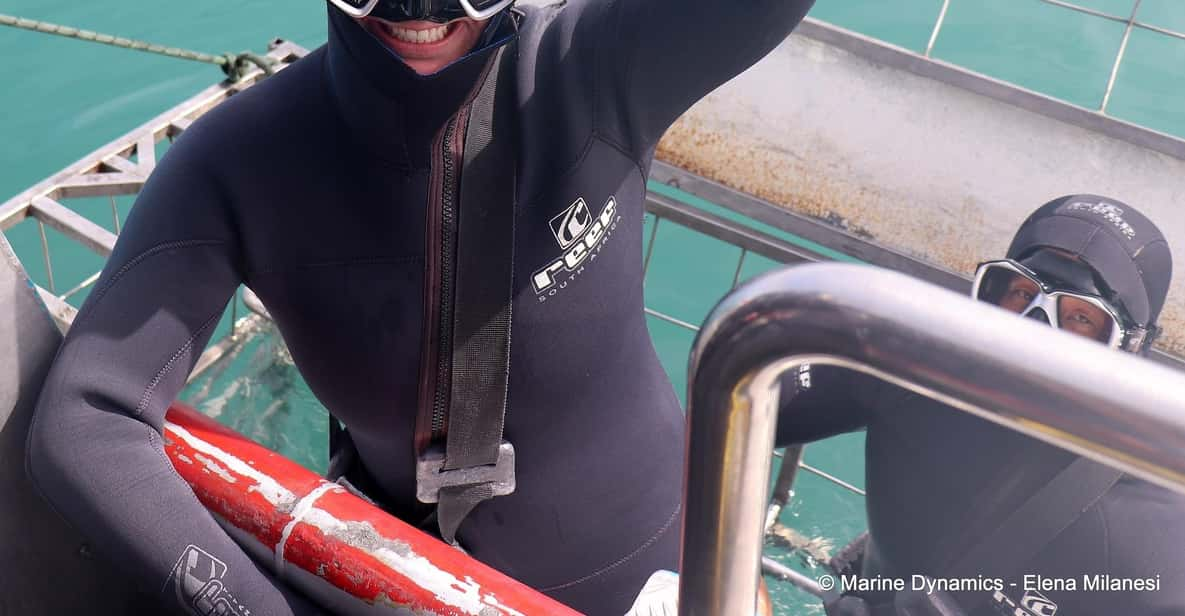
SwimwearYou change into your wetsuit on the boat, so arrive with your swimsuit under your clothes.
LayersBring a warm jacket, a hat, sunscreen and shoes that hold on a wet deck.
The driveGansbaai lies two to two and a half hours from Cape Town, Simon's Town about 45 minutes.
No sharksIf a trip draws a blank, some operators hand out a return voucher or a free place on another day.
Ready for shark cage diving? Viewing and transport from Cape Town, sorted
pickup confirmed by 4 pm the day before
Answer a few quick questions and see which shark day trip from your hotel fits.
1Where are you starting from?
2What's your budget?
3What kind of trip?
Your best match
match
From Hermanus or Cape Town: Shark Cage Diving Experience★ 4.7 (903) · 4.5 - 8 hours · Classic experience
Draws solo travelers, 91% of whom gave it 4 or 5 stars.
Booked 28 times last week
Babysitting for children under six means the whole family can come along.
importantShark cage diving departures from Cape Town depend on wind, swell and tide, and the skipper can cancel a trip on short notice, sometimes only the afternoon before.
Plan the day with a spare morning behind it, and rest easy on the money: a weather cancellation brings a full refund or a free change to another date.
Pick your cage diving or viewing tour - transport from Cape Town arranged
exact pickup time arrives the day before
Most booked
4.5 - 8 hours·English, Afrikaans
4.7(903)
From Hermanus or Cape Town: Shark Cage Diving Experience
Option: Shark Cage Diving Experience with Hotel Pickup and Drop-Off
903 reviews and a 4.7 rating make this the most booked, with breakfast, a marine biologist briefing and a light lunch included.
Your day, from Cape Town pickup and deck viewing to the transport back by evening
fur seals here draw the sharks in
about 8 h
Seal Island is home to a large fur seal colony, and the sharks that hunt there. This eight-hour day from Cape Town puts you in the water with them in a cage fixed to the boat, no diving experience needed.
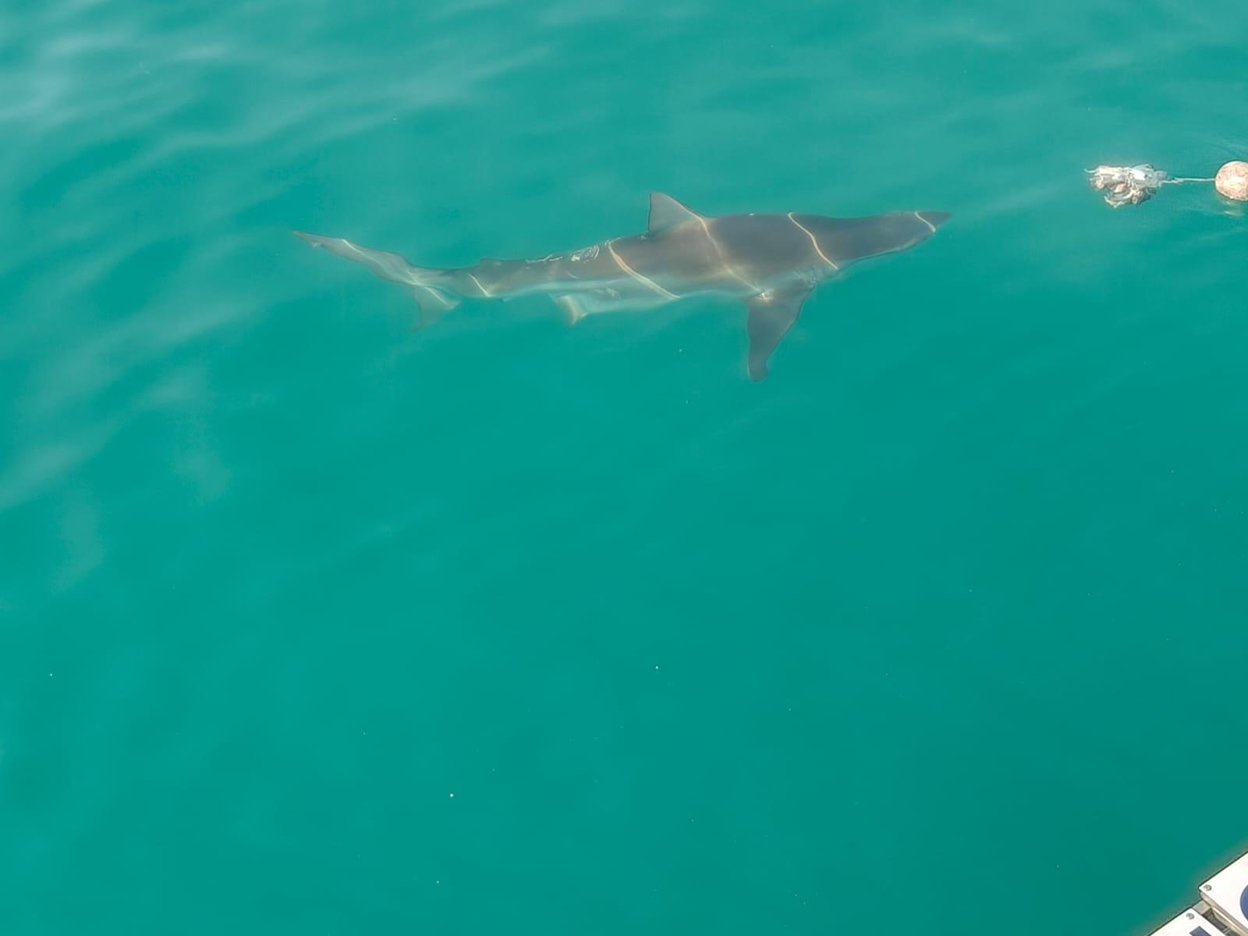
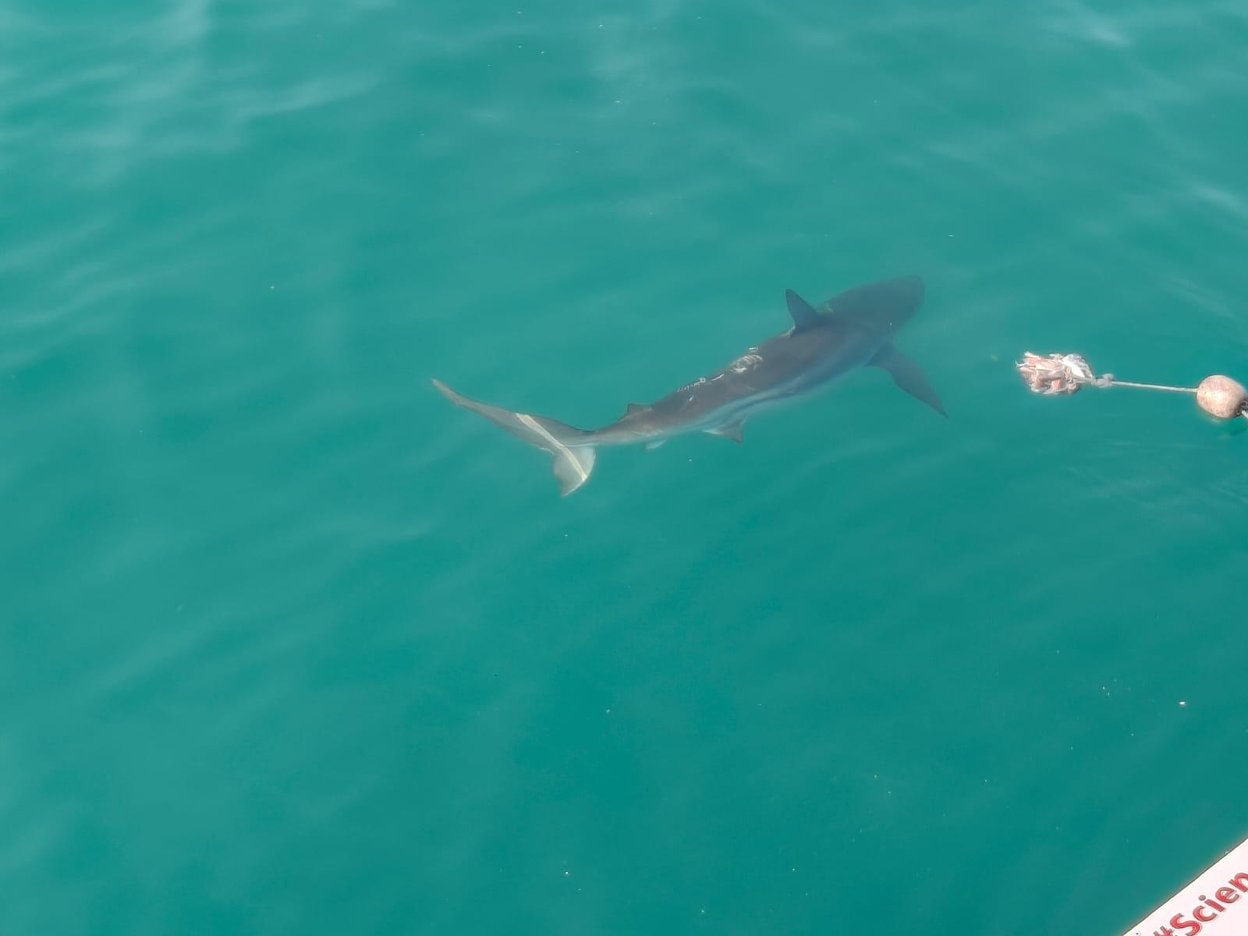
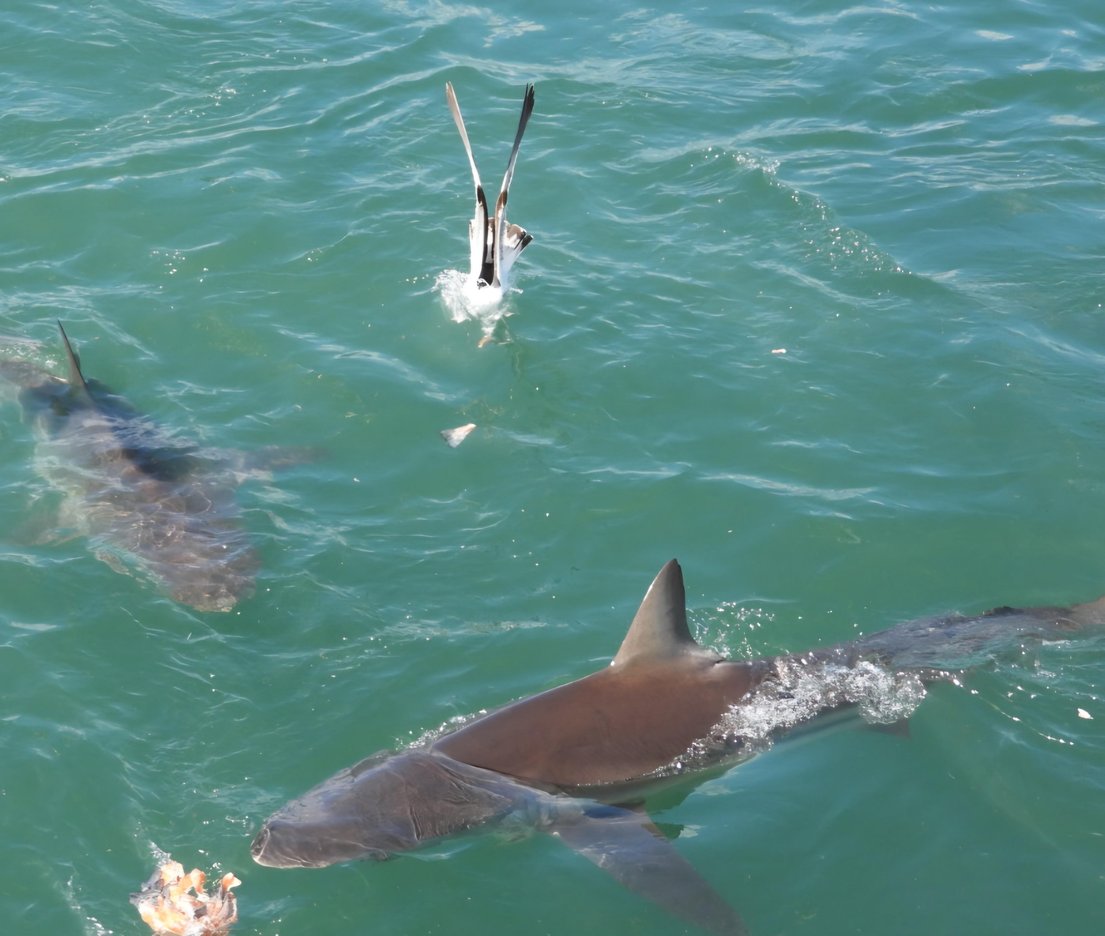
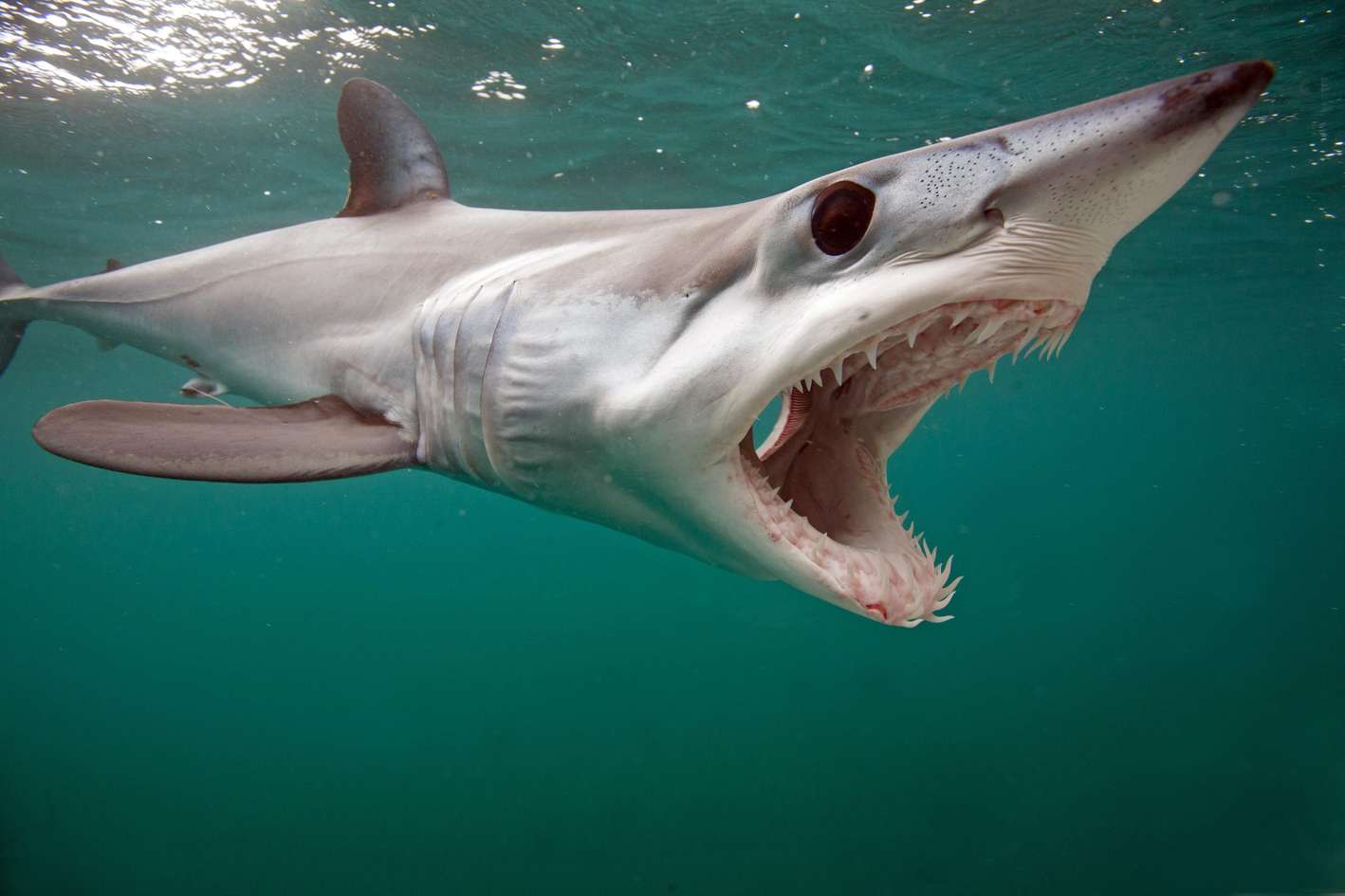
Duck your head below the surface to see bronze whaler, seven gill, mako and blue sharks pass, with a chance of a great white cruising by after its next seal meal.
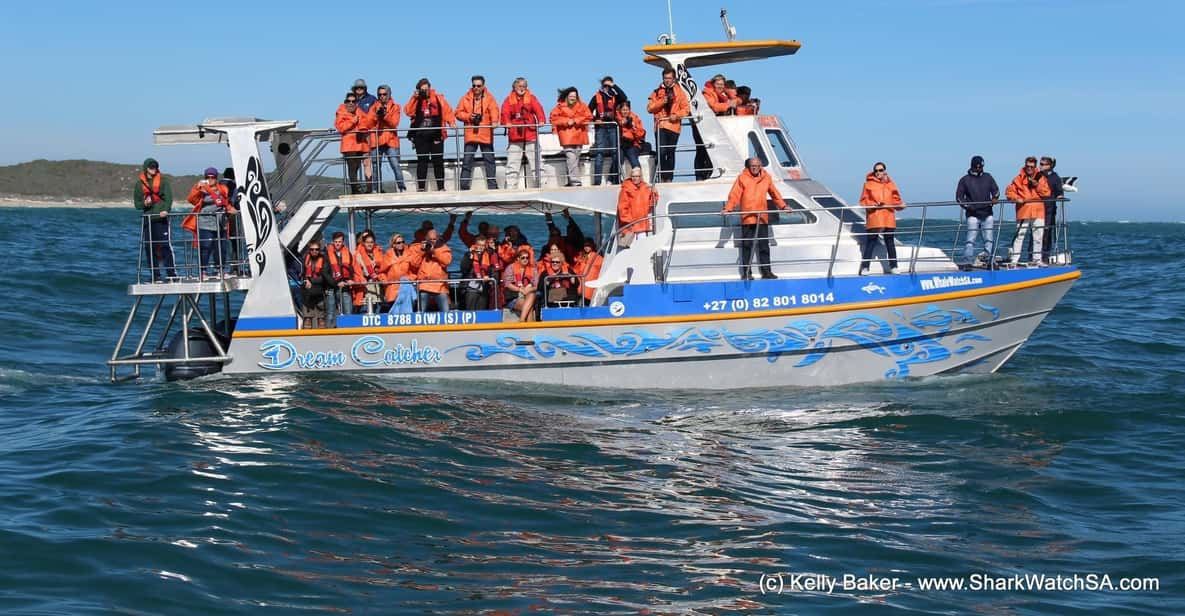
The cage comfortably holds up to ten people, and a photographer on board films the group while you dive. Wetsuit, mask, towels, entrance fees, breakfast and snacks are included; a video of your dive can be bought afterwards. If time and weather allow, the boat circles the island before heading home.
Stop 1The run out to Seal Island· about 120 minThe boat heads for the island, where a large fur seal colony keeps sharks close by. Watch the water and the coast slip past on the way out.Stop 2Breakfast and kit up· about 40 minBreakfast is served, then you pull on the provided wetsuit and mask while the crew fixes the cage to the side of the boat.Stop 3Cage time and deck viewing· about 150 minGroups of up to ten take turns in the cage, ducking under the surface as bronze whaler, seven gill, mako and blue sharks pass. The deck gives a dry view of the same water.Stop 4Around the island· about 40 minIf time and conditions allow, the boat circles the island after the dive, with the great white's seal-hunting ground all around you.Stop 5Refreshments and the road home· about 130 minSnacks come out on board while the photographer's photos and video of your group are ready to buy. Then the boat makes for Cape Town.
Included
Mask, wetsuit and towelsEntrance feesBreakfastSnacks
Not included
Hotel pickup and drop-offVideo (optional) - R400/personTips
Where the other tours go
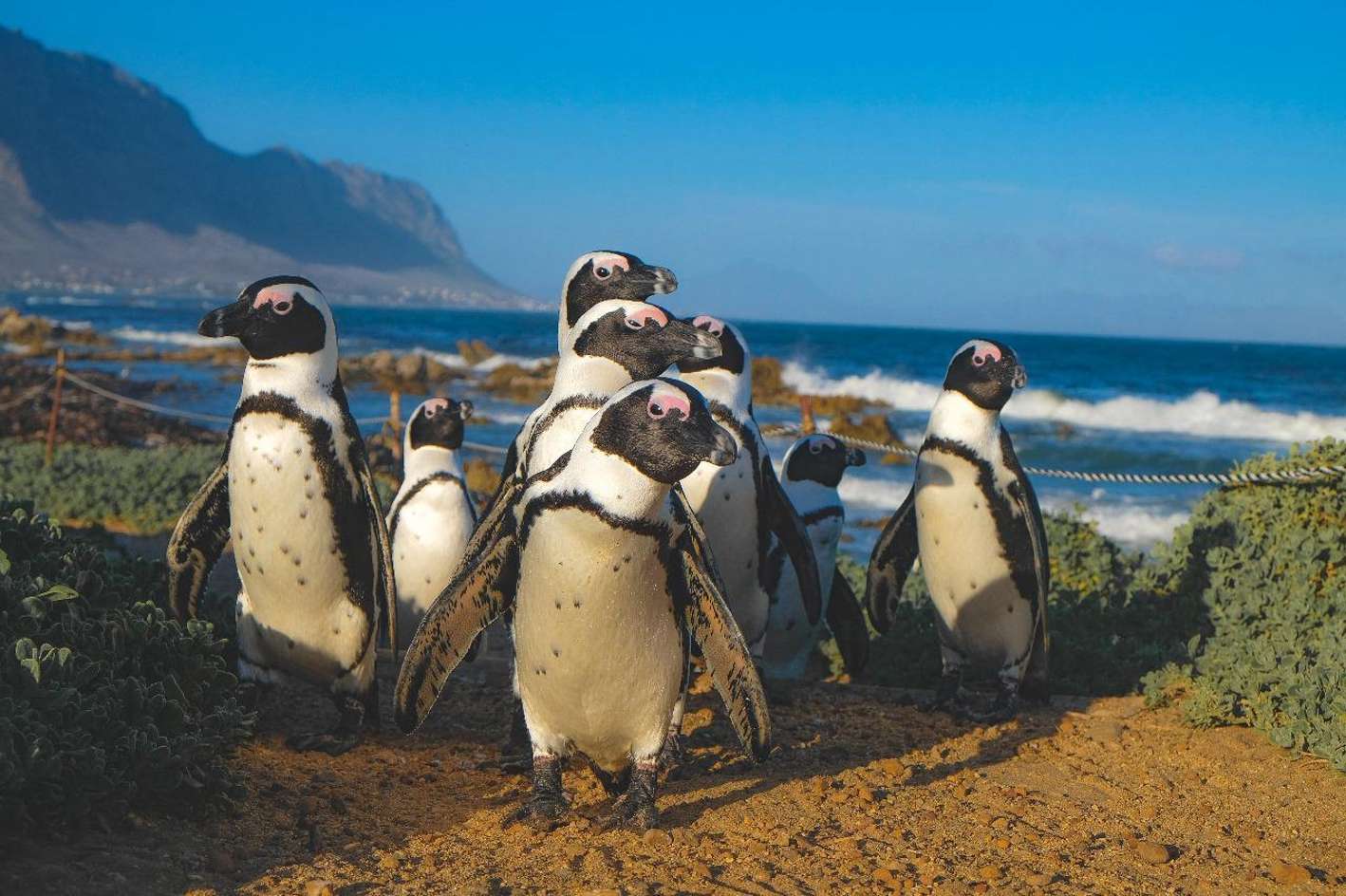
Gans BayStony Point Penguin Colony
Exhilarating Shark Cage Diving Experience in Cape Town
Book for early in your Cape Town stay and keep the following day loose, because strong swell moves trips more often than rain does. The full outing runs about 8 hours with transfers.
RecommendedPick a day with a spare morning after it, so a rescheduled launch never eats into a flight or a booked winery tour
2. Pick the right option for your day
Decide how you want to travel. One option collects you from your Cape Town hotel and returns you there after; the other has you drive to the meeting point in Kleinbaai yourself.
Pro tipThe hotel pickup option makes it an 8-hour day, while driving yourself to Kleinbaai keeps it closer to 4.5 hours
3. Watch for your pickup time
Your exact collection time is only fixed once the skipper has checked the tides and swell. Expect a call or message the afternoon before, and one operator confirms by 4 pm.
Common mistakeTreating the time on your booking as final; collections run from about 4:30 am to 11:30 am because launches follow the tides
4. Pay and read your voucher
Cancellation is free up to 24 hours before departure, so you can commit now and change later. The voucher arrives by email with your meeting details, and the operator contacts you about pickup.
ImportantSkim the extras line before you pay, since one Gansbaai operator adds a compulsory conservation fee that every guest pays
5. Get ready the night before
Pack a swimsuit to wear under your clothes, a towel, a warm jacket and sunscreen. Take seasickness tablets the night before, then again about an hour before boarding.
RecommendedEat a light, low-fat dinner, because greasy or spicy food sits badly once the boat anchors in a swell
What to know before you book shark cage diving and viewing transport from Cape Town
pickup confirmed by 4 pm the day before
Can stop the dayGood to knowGood news
01
ChoosingWhat it is, who it suits, when to go
6
Pickup times
Pickup times are not fixed at booking because launches follow the tides and the sea. One tour operator confirms the exact time by 4 pm the day before; others message that evening. Collections run from around 3:30 am.
Cage time
Cages take four to six divers at a time on a rotation system, with roughly 20 to 30 minutes in the water per turn. Most guests get a second dive when conditions and shark activity allow.
Deck viewing
Mixed groups stay together: anyone who prefers to stay dry watches from the deck on the same boat, often with a clearer view than the cage when the water is murky.
No experience
No scuba certification or diving experience is needed. You float at the surface, breathing on cue or through a snorkel, and some cages supply air through a hose from the boat.
Seasickness
Take seasickness tablets the night before and again about an hour before boarding, since they work best before symptoms start. Eat a light, low-fat meal beforehand, and tell the crew if you feel rough at anchor.
Included
The fare covers the essentials, with a few extras sold on the day:
Wetsuit (5 mm or 7 mm), mask, booties, hood, and towels
Breakfast on arrival and a light lunch after
Onboard snacks and bottled water
Extra: photos and video of your dive
Extra: seasickness tablets and tips for the crew
02
BookingHow far ahead, and what happens if plans change
1
Cancellation
Cancel up to 24 hours ahead for a full refund. If wind or swell stops the boat from launching, you choose a new date or a full refund, and transport is free if the trip is rescheduled.
03
Before you goPapers, health, what to bring
2
Meals
Breakfast is served on arrival at the harbor, with snacks, fresh fruit, and hot and cold drinks on board. After the dive you get a light lunch, often hot soup and bread.
Age limitsCan stop the day
Age rules differ by operator. One Gansbaai boat keeps children under 6 off the water because of the hours at sea, another runs a cage minimum of 12, and children under 5 are excluded outright. Check the age line before you book a family.
04
On the dayWhere to be, when, and how you get there
1
Day length
Plan for a 7 to 8 hour day door to door. Hotel pickup falls between 4 am and 5:30 am, breakfast and the safety briefing follow the 2 to 2.5 hour drive to Gansbaai, and most shuttles are back in Cape Town between 3:30 pm and 4 pm.
05
During the tourWhat is expected of you
2
Photos
An in-house photographer shoots from outside the cage, and you buy the photos or video afterward. If you want your own footage, bring a GoPro on a wrist lanyard so it stays attached in the surge.
Tipping
Tips are not part of the fare on most of these tours. The local custom is about 10 percent, the same as at restaurants.
The shark viewing day with transport from Cape Town, explained
seasickness pill the night before
The 4 am pickup, the coast run and the chum slick: a full shark day out of Cape Town, told as it really runs. You decide whether the alarm is worth it, and which boat fits your group, cage or deck.
Cape Town· 33.92° S, 18.42° E
If you only remember three things
1
Great whites are no longer guaranteed; bronze whaler sharks fill most cages now, so book for sharks of any kind.
2
Your exact pickup time lands by 4 pm the day before, and some vans leave before 4 am.
3
Winter gives the clearest water, summer the calmest sea; take a morning launch either way.
Is it worth the 4 am transport from Cape Town for shark viewing
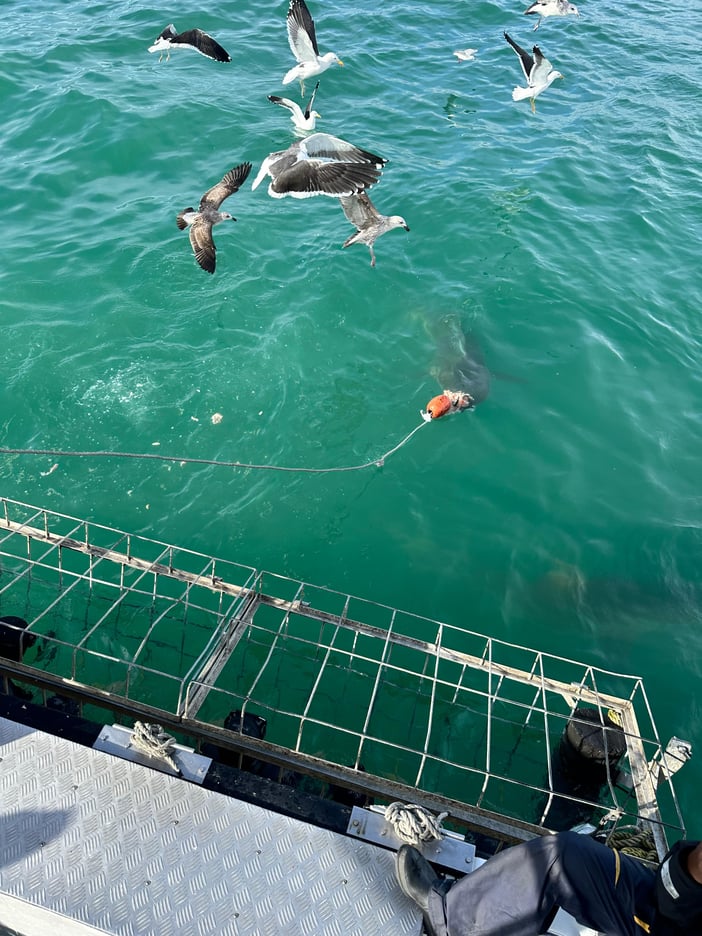
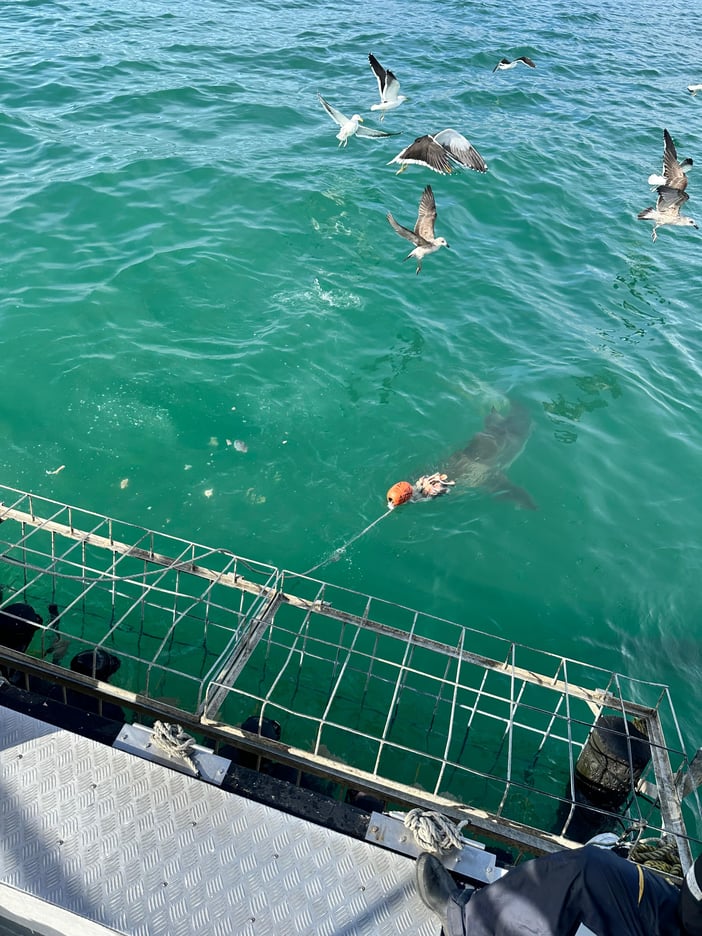
The chum slick goes out first: fish oil spreading from the stern while the crew watches the surface. Mornings like this start in the dark in Cape Town, and whether the alarm is worth it comes down to one fact.
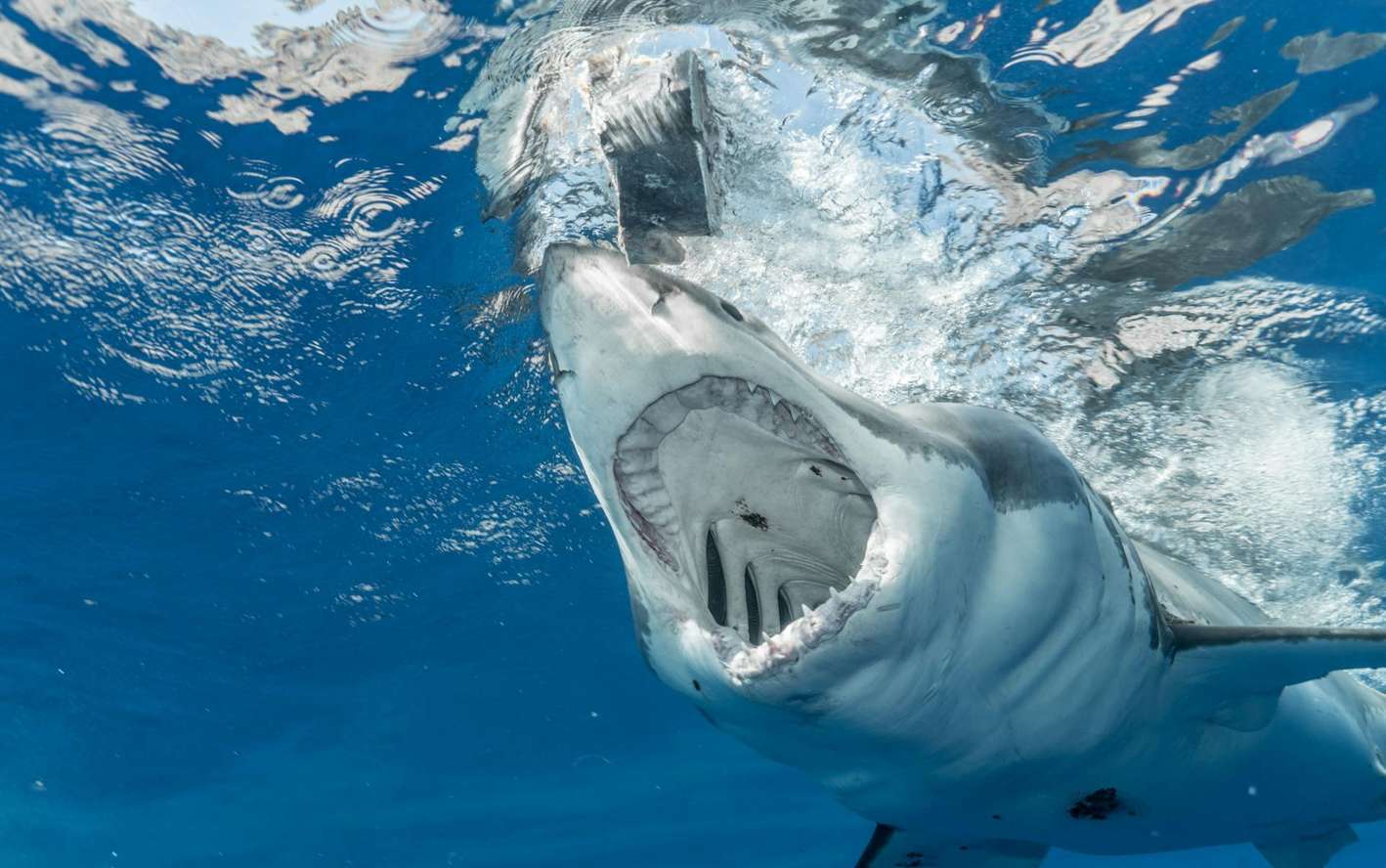
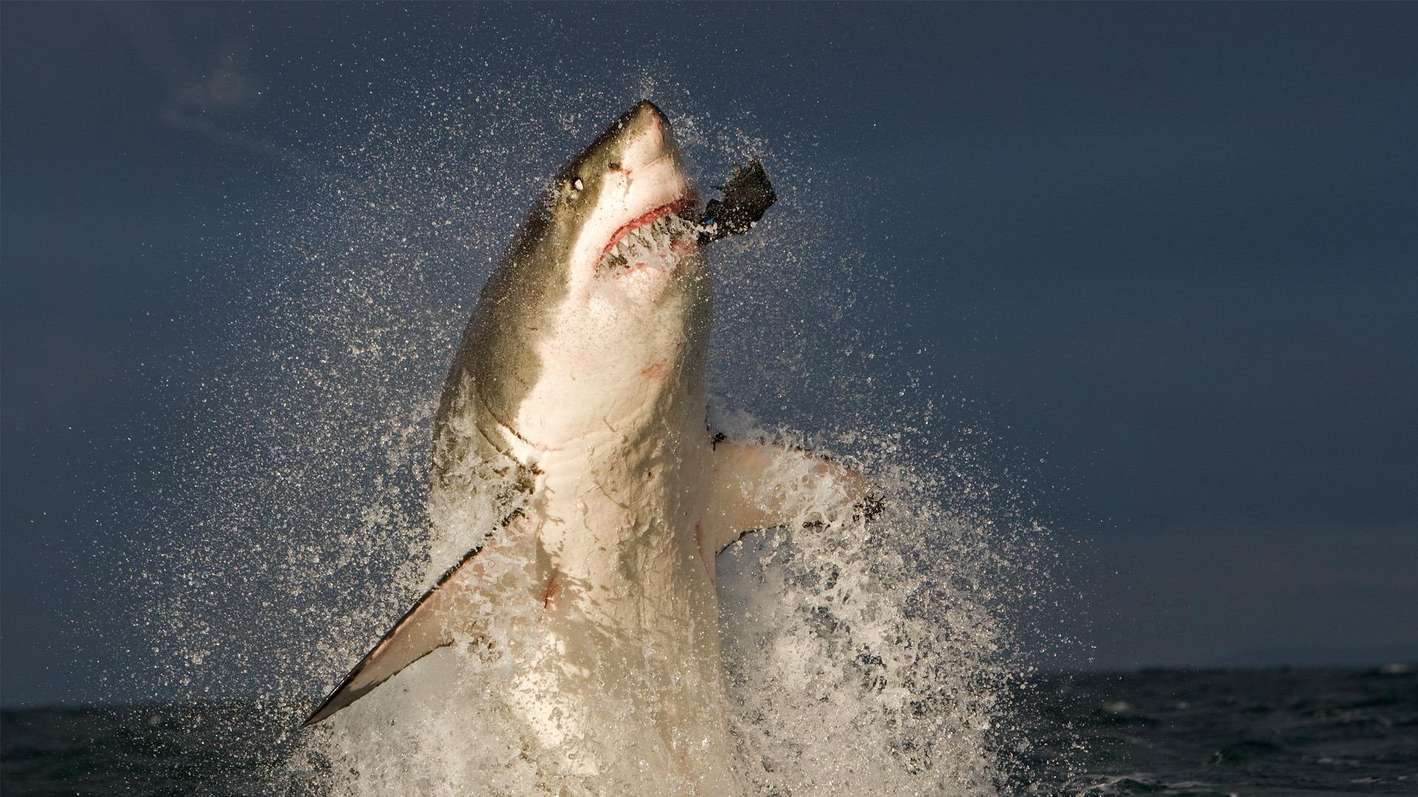
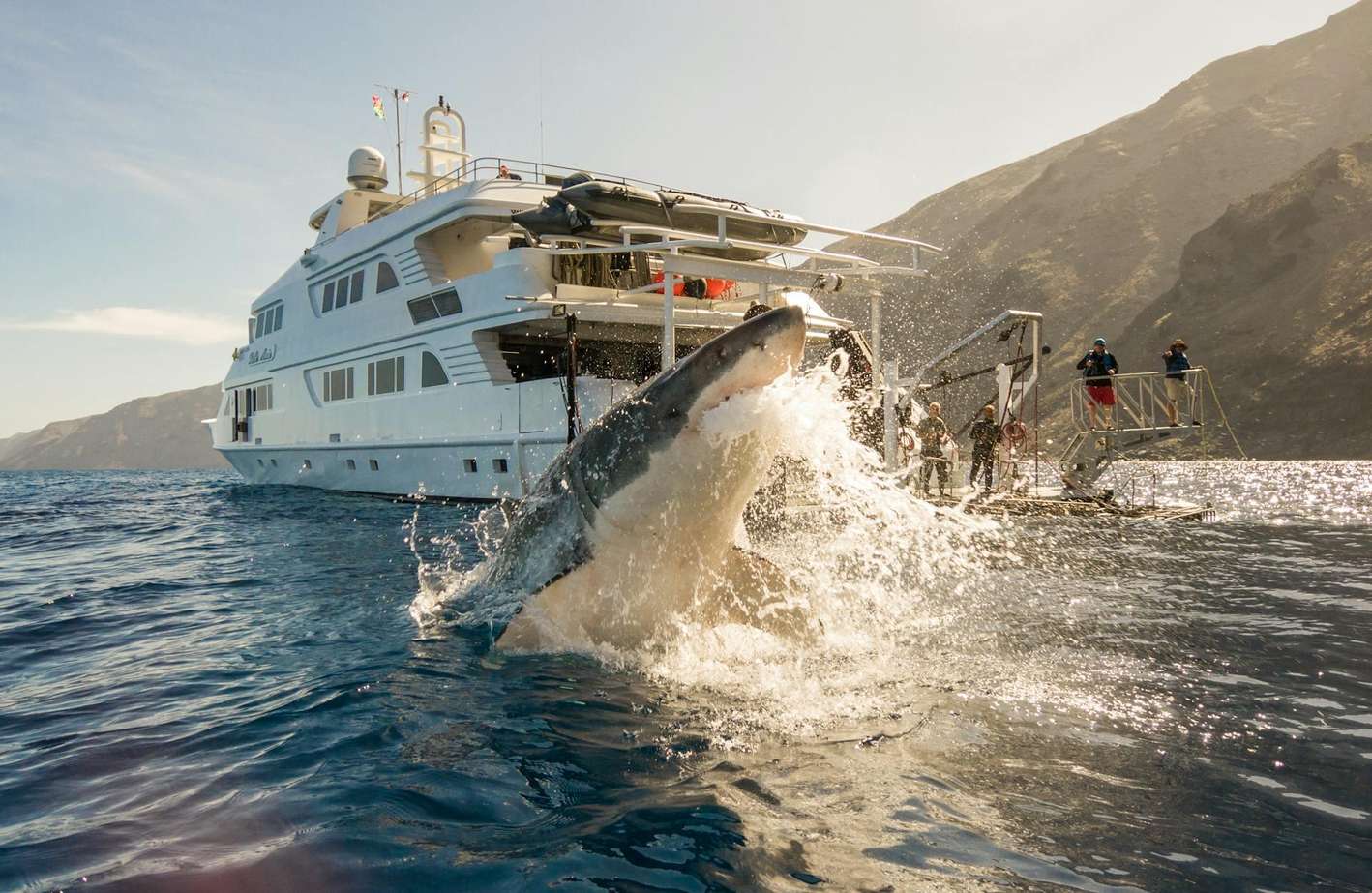
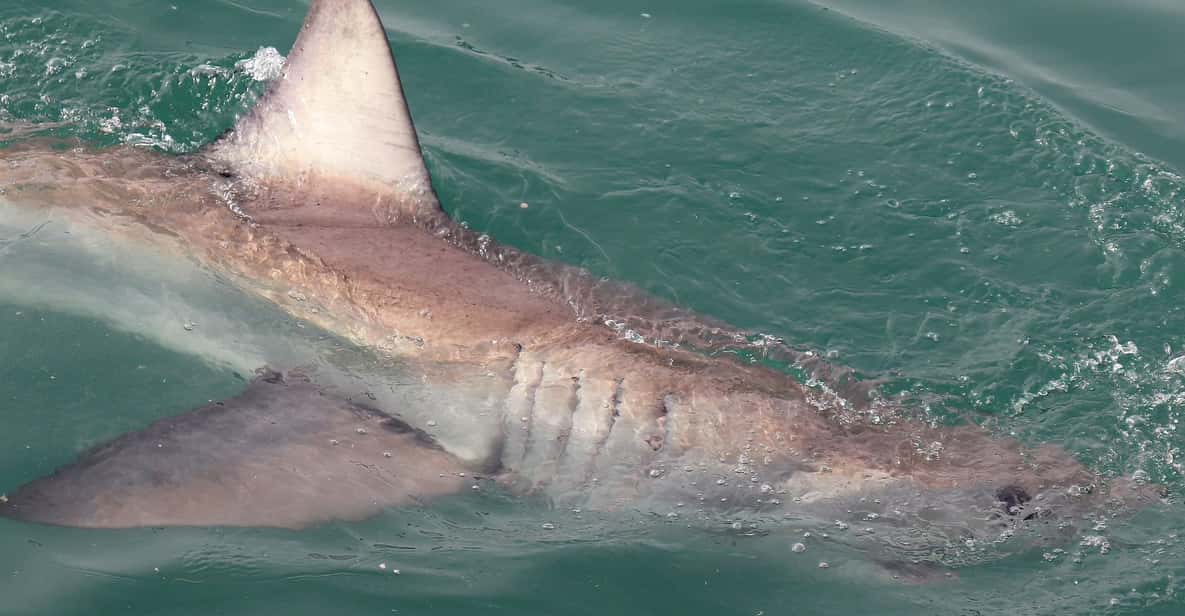
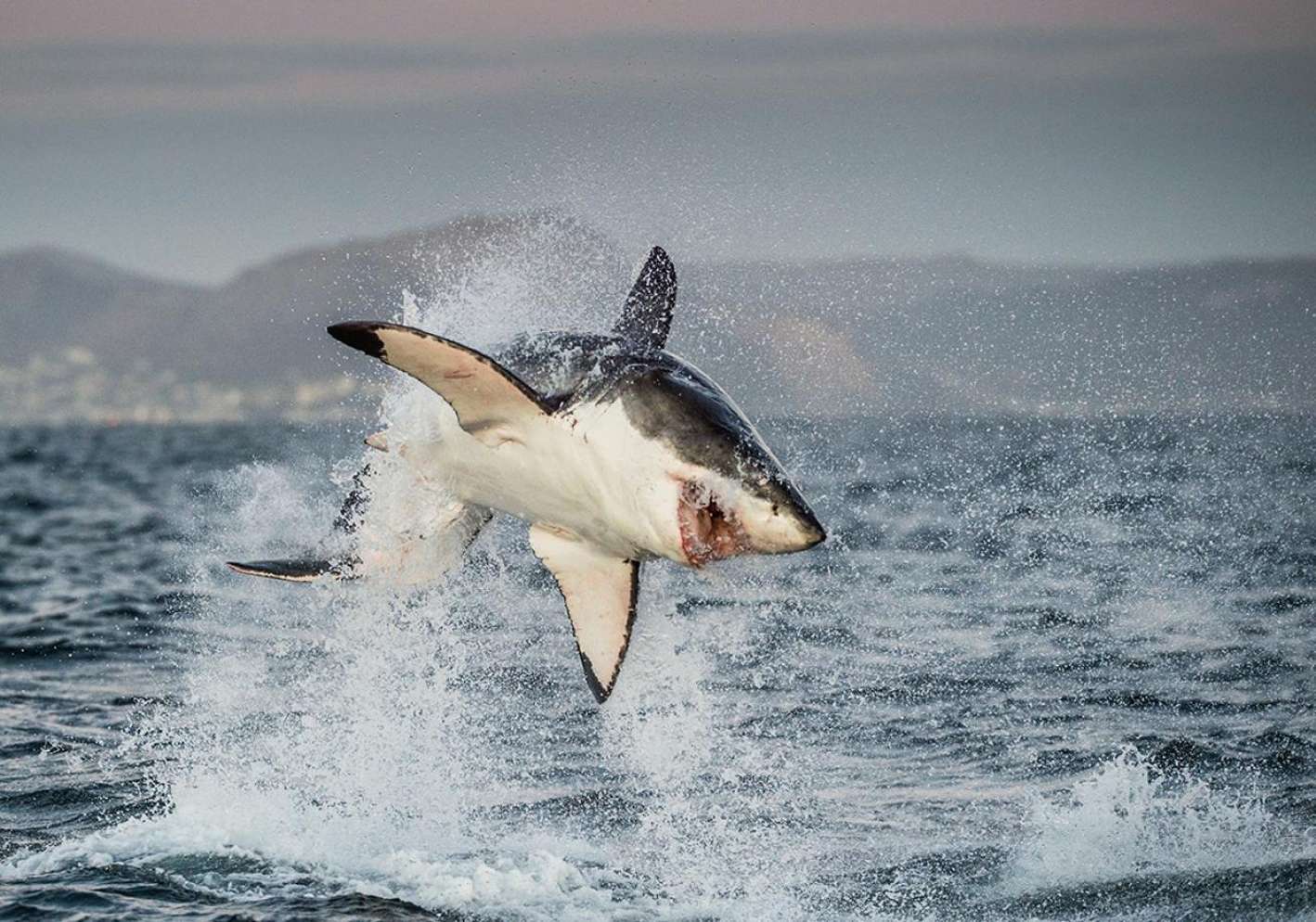
No operator promises a great white any more. Resident orcas have pushed them off the nearshore launch sites, and bronze whaler sharks now fill the cage.
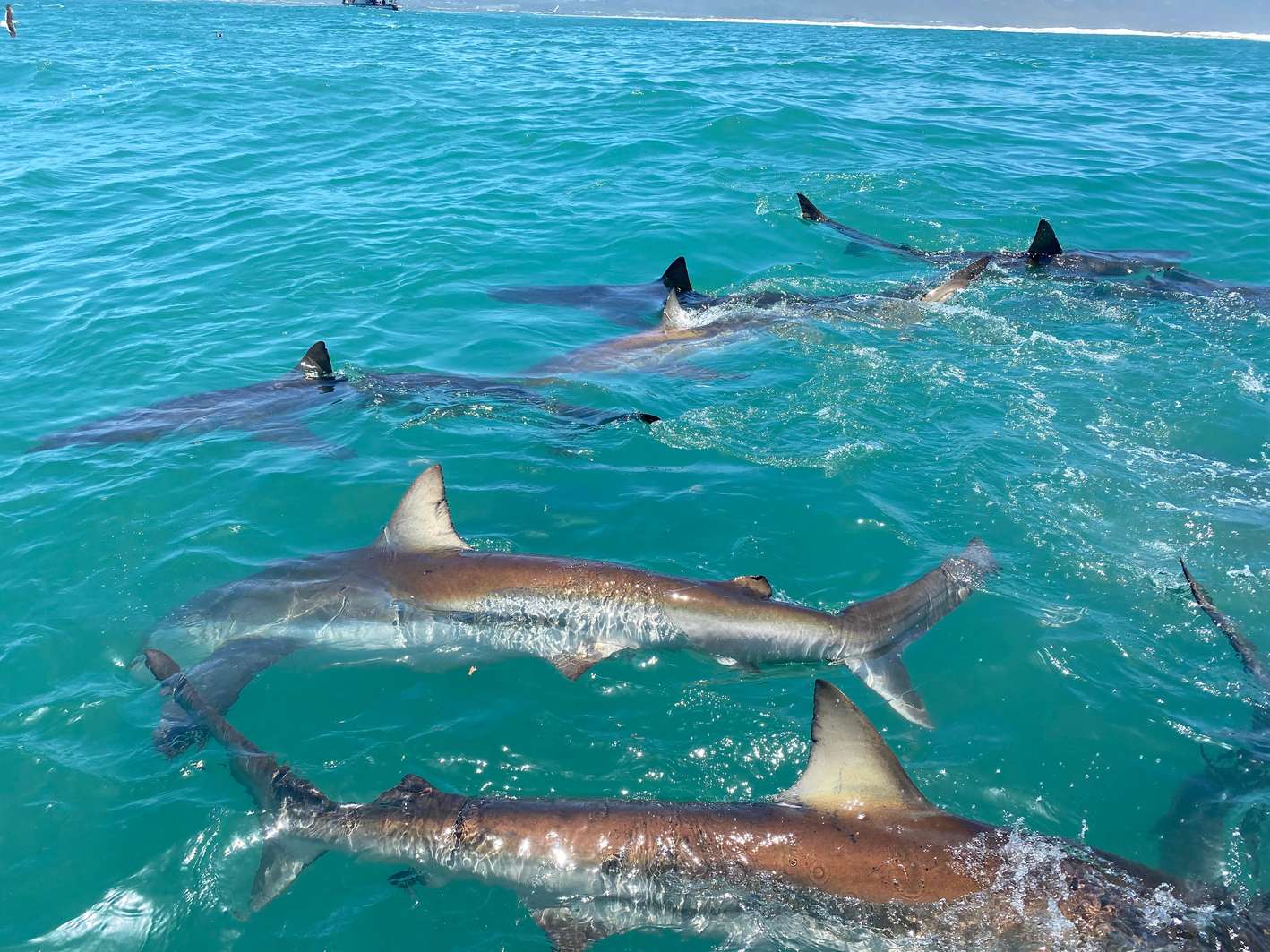
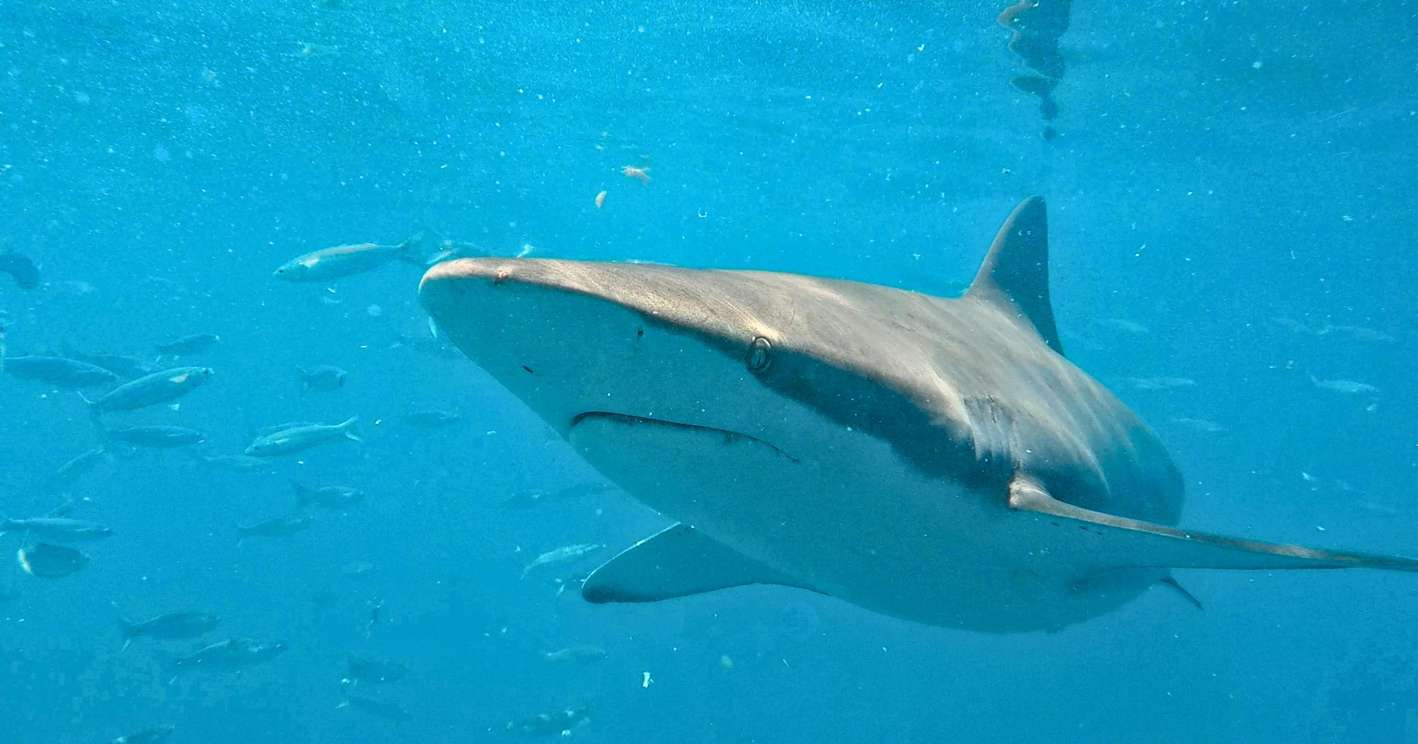
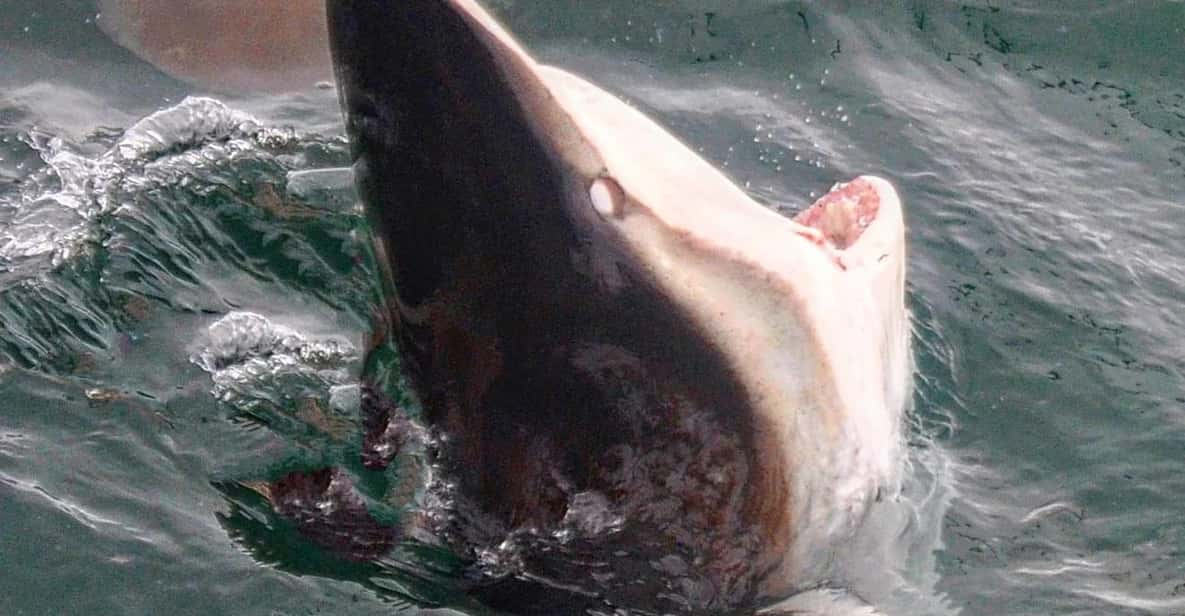
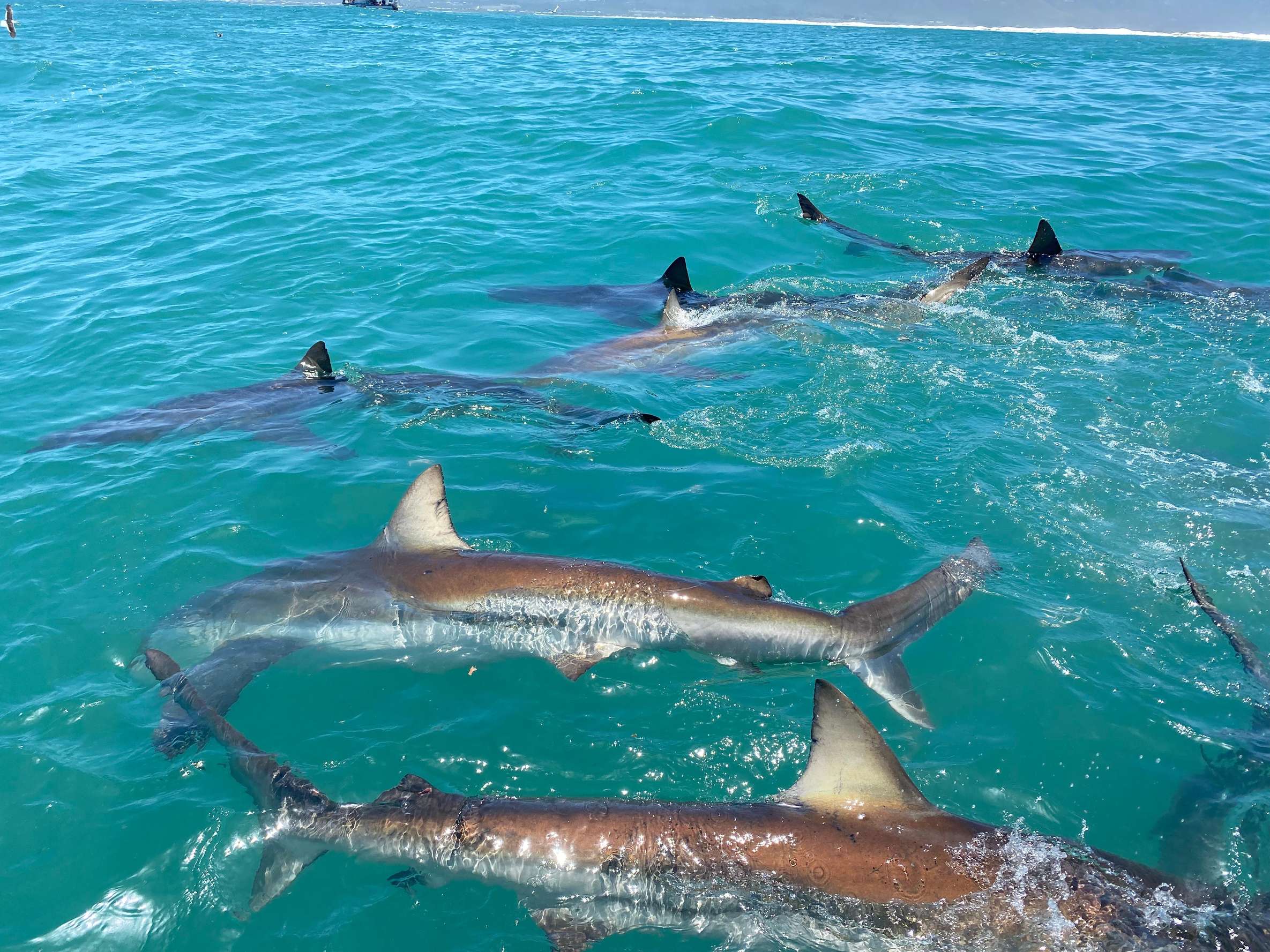
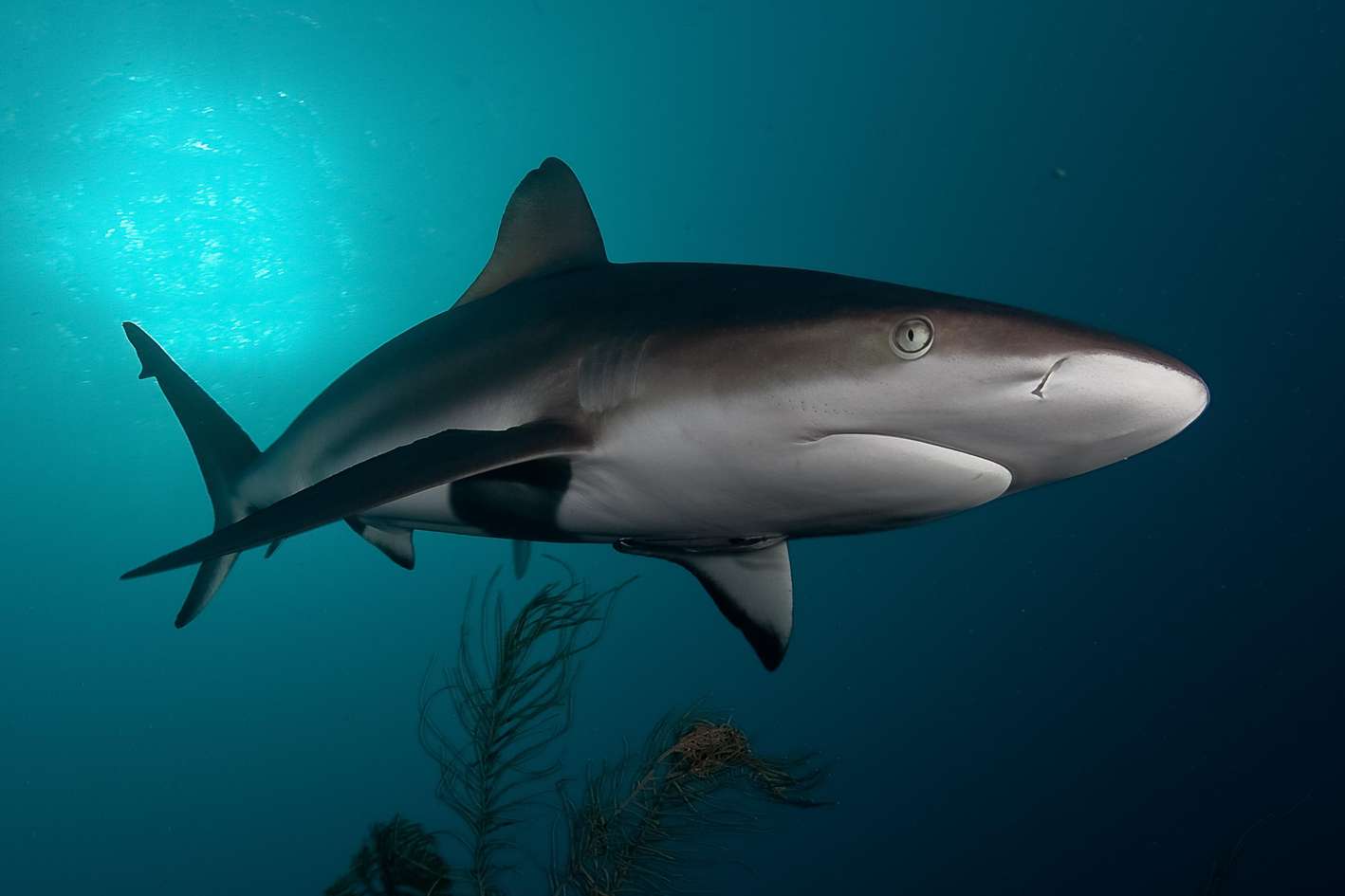
Bronze whaler sharks are now the main event, backed by sevengill cow sharks, seals and dolphins on most trips.
That still adds up to a morning with a big shark at arm's length from a steel bar, plus one of the prettier coast runs in the Western Cape. What the day will not deliver is the movie poster.
What people get wrong about the great whites
MythGreat whites are guaranteed year-round in False Bay and Gansbaai
Reality
Resident orca pairs have driven them from nearshore launch sites, and bronze whaler sharks now lead most encounters
MythOperators run deep scuba cages with air tanks
Reality
South African law allows only surface cages, where you hold your breath or breathe from a surface air line
Some days the oil sits on the water for hours and nothing arrives, and the boat docks with zero cage time. Wild animals, no script. People who come back happy are the ones who booked for sharks of any kind and treat the great white as a bonus.
Tour for this
From Cape Town: Gans Bay Great White Shark Cage Diving5.0★ (3) · 4 hours · Hotel pickup · Free cancellation
Cage and deck viewing after the transport ride from Cape Town
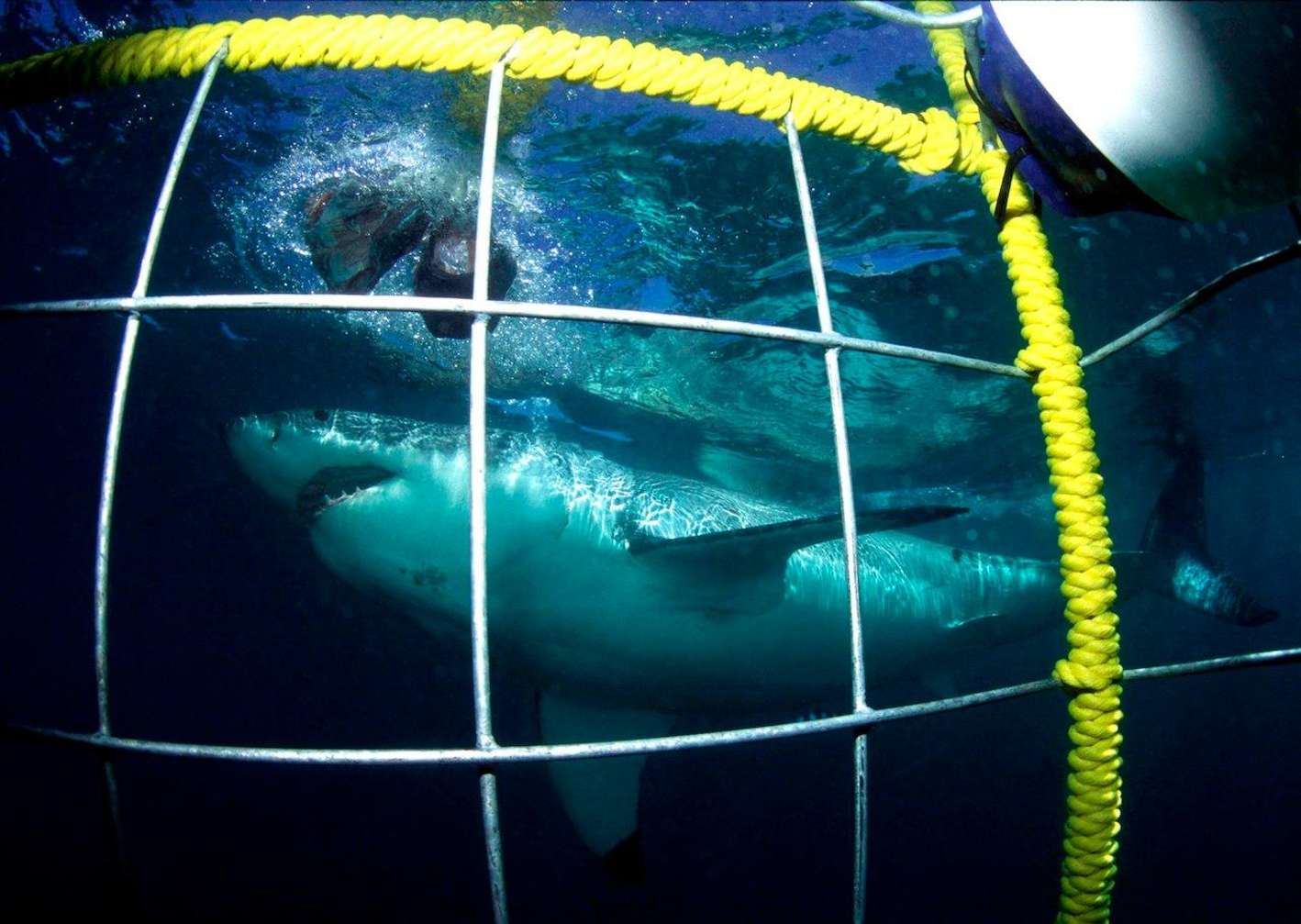
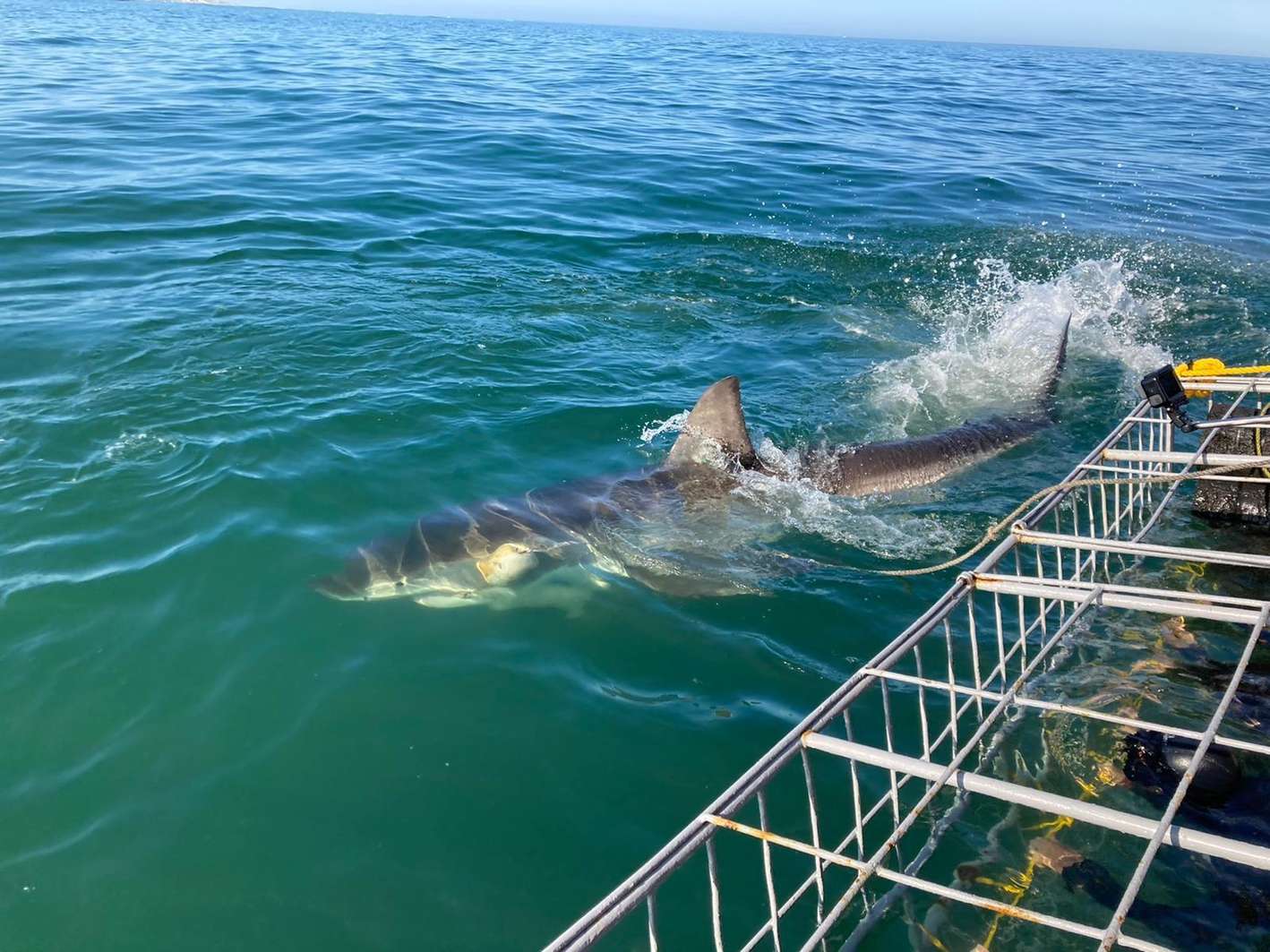
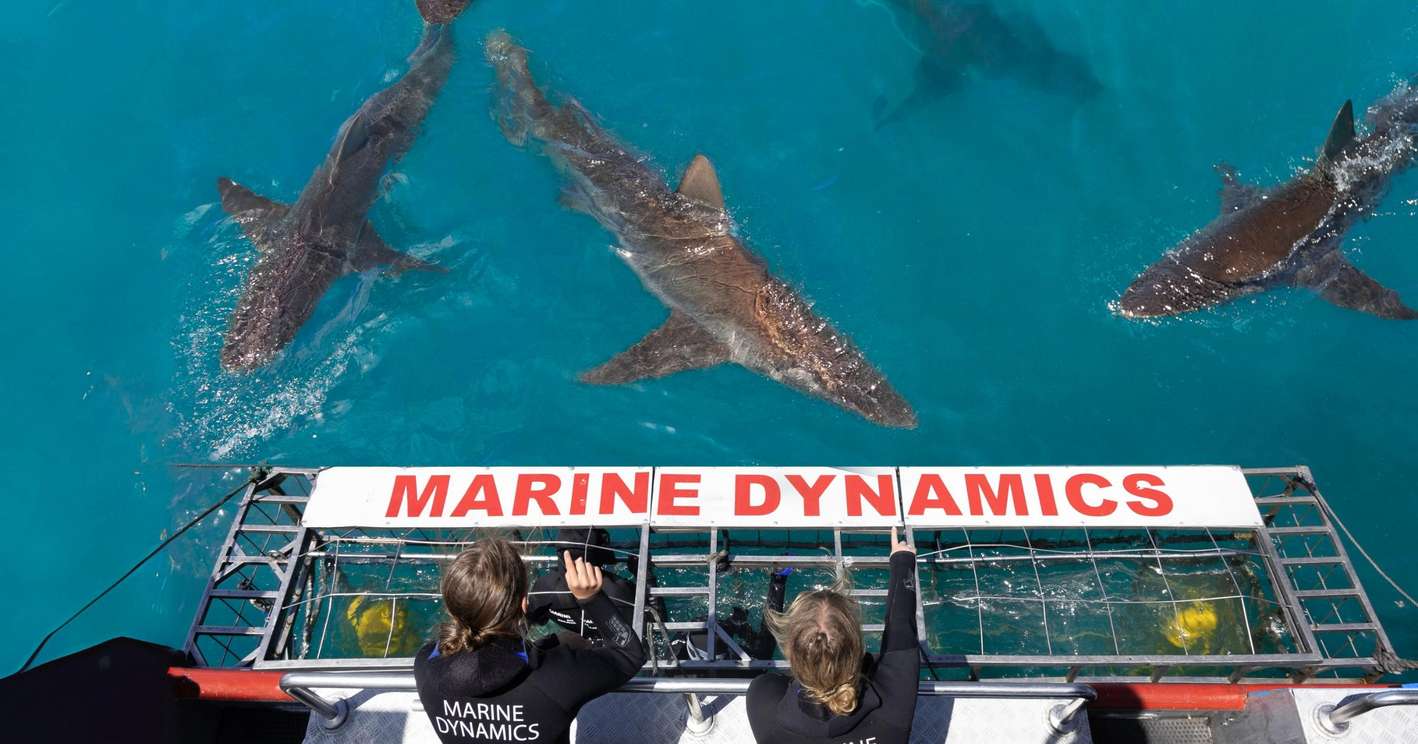
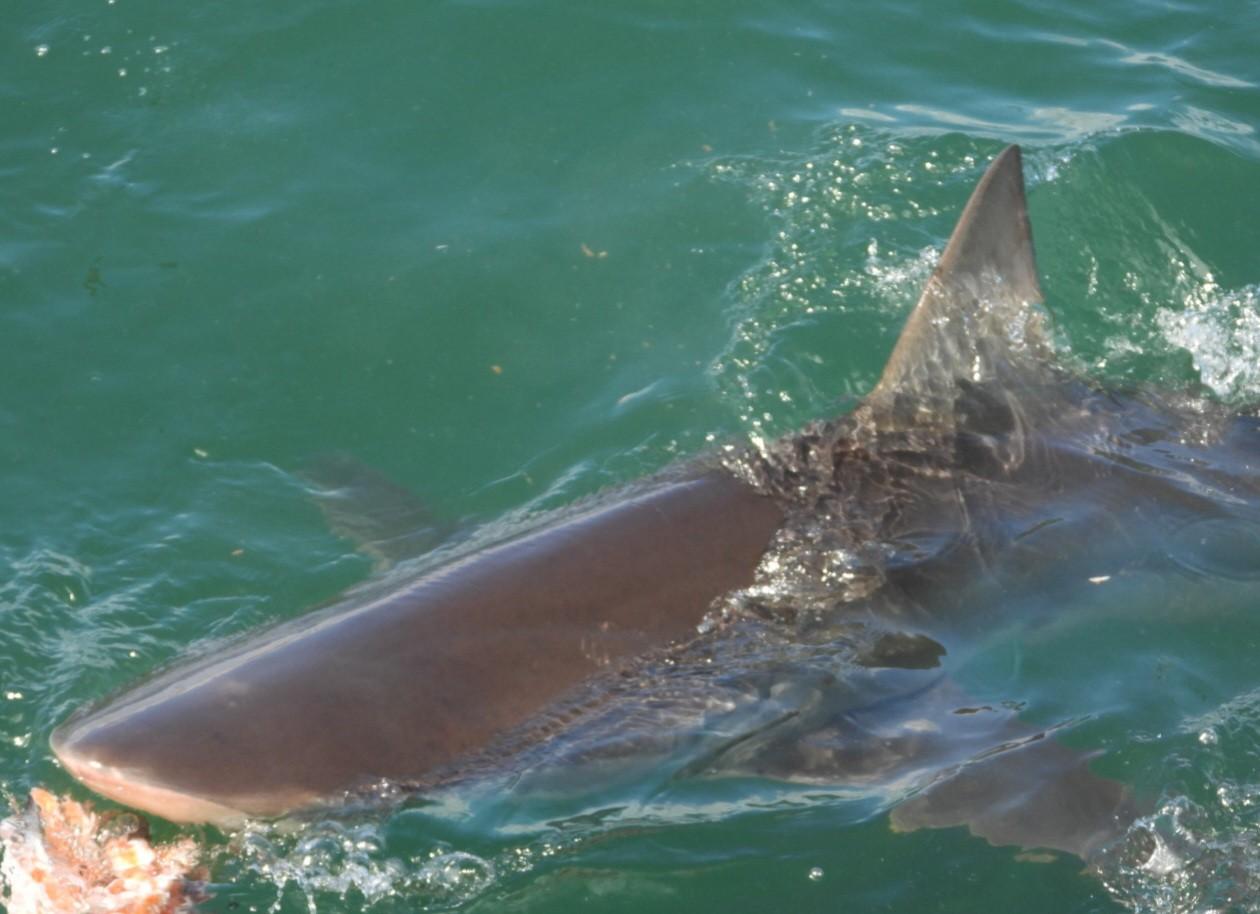
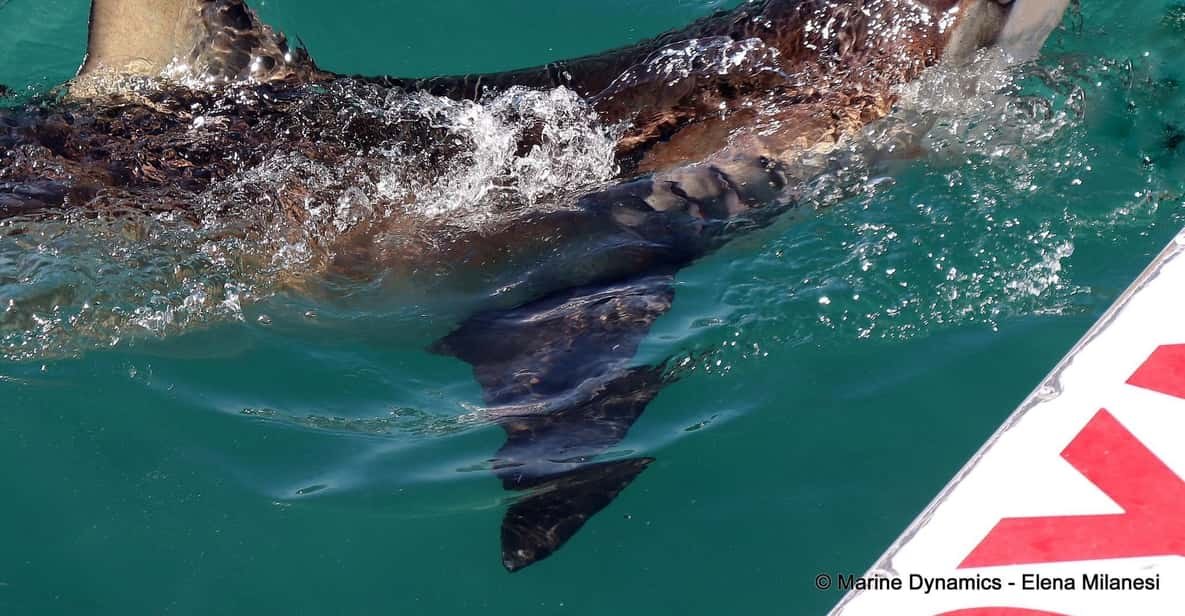
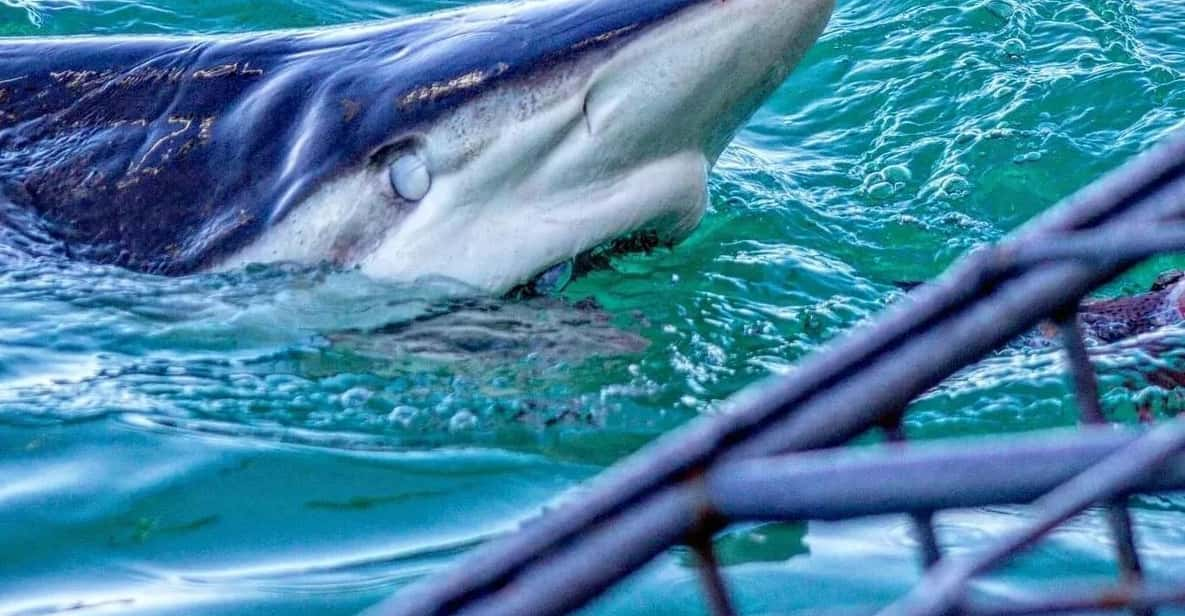
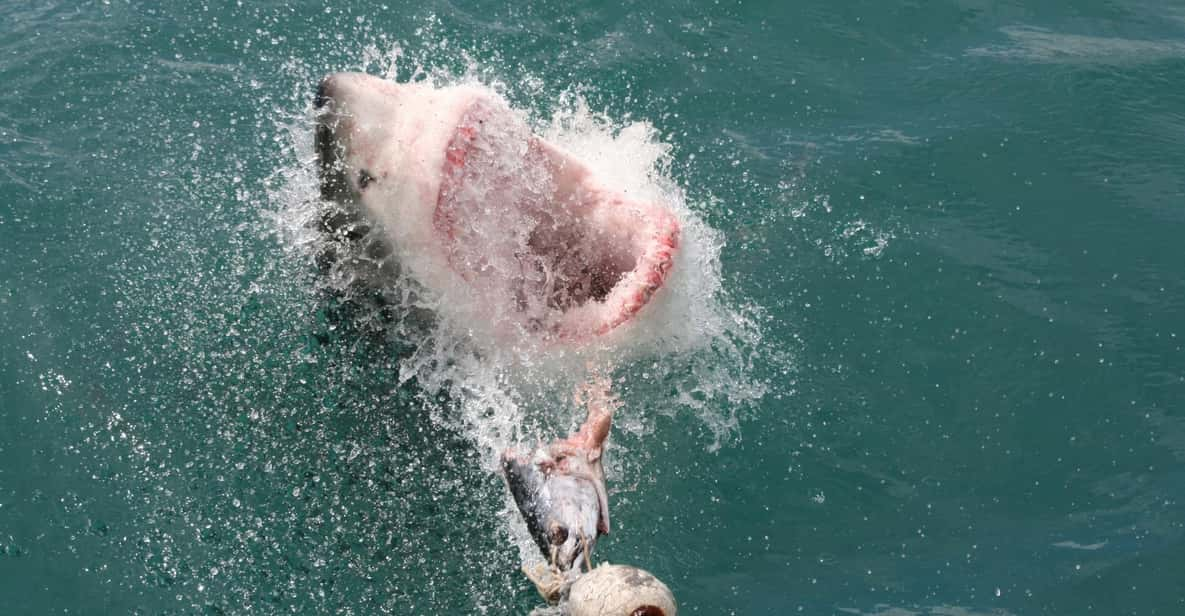
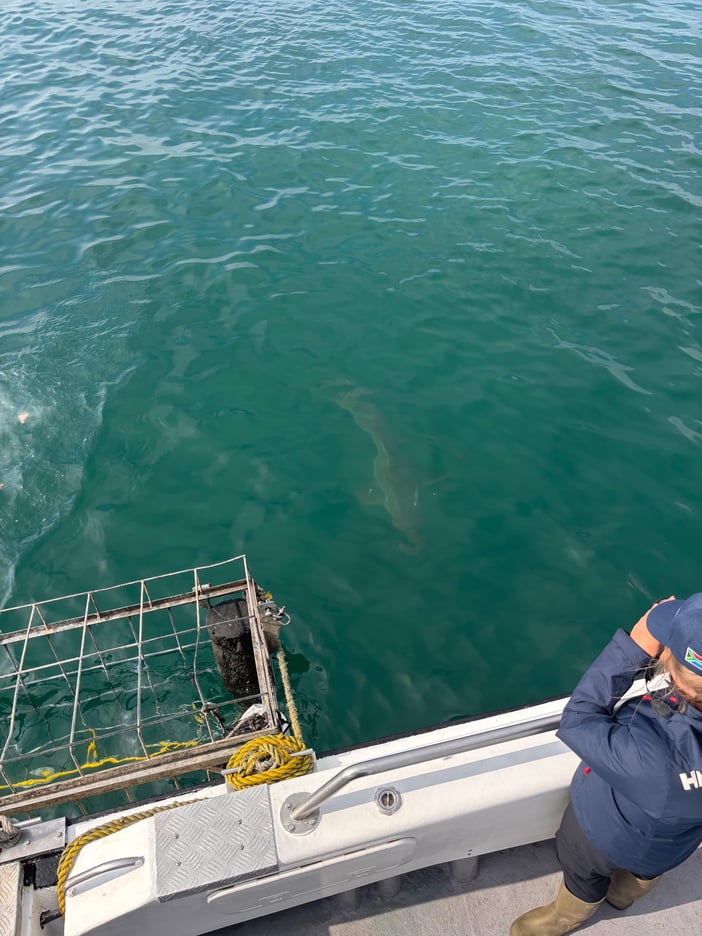
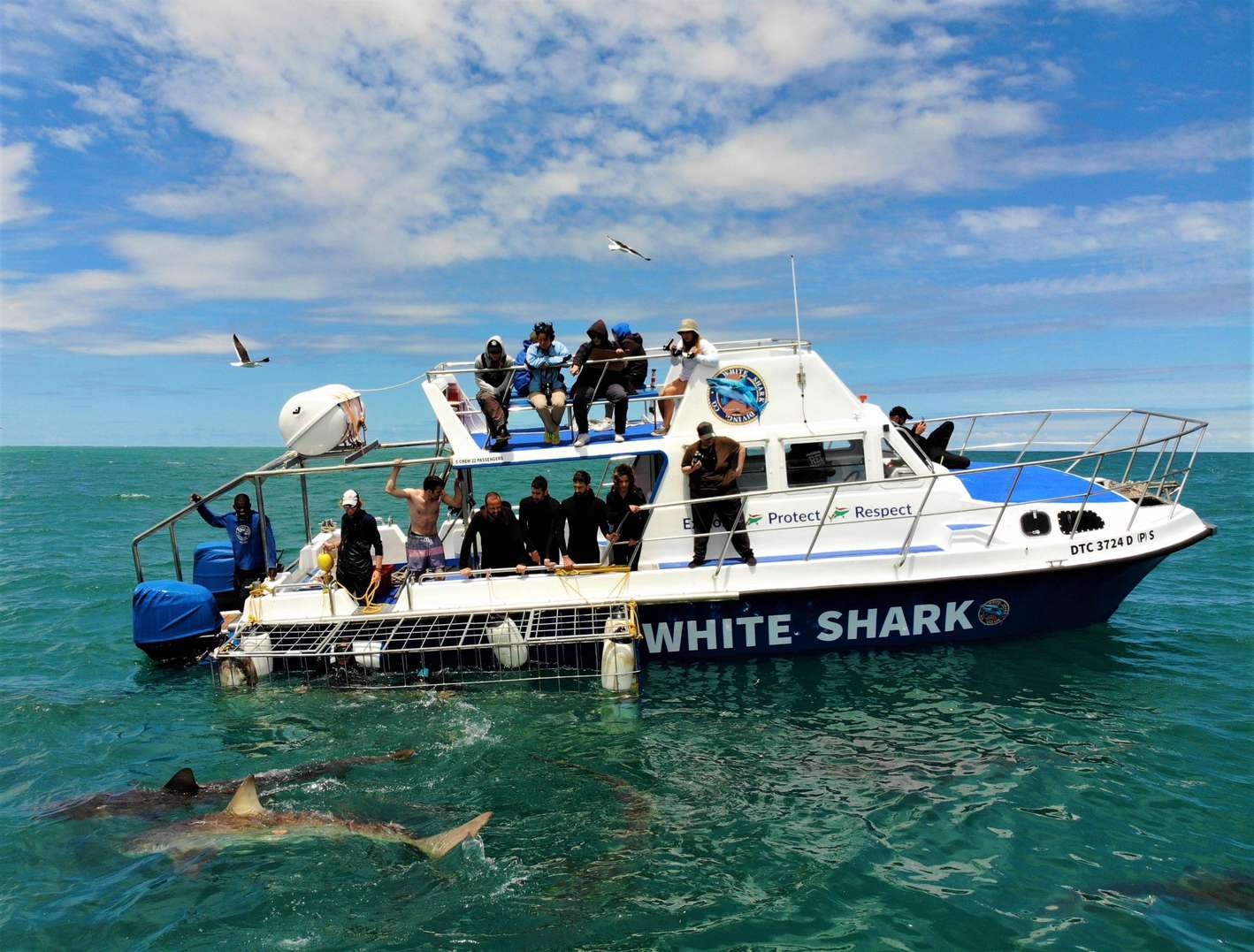
Bronze whalers slide past the cage at water level, close enough to watch a snout turn towards the fish trail. The crew calls the duck, you hold the interior bar, and a full-grown shark passes an arm's length away. Between your turns, the deck runs its own show.
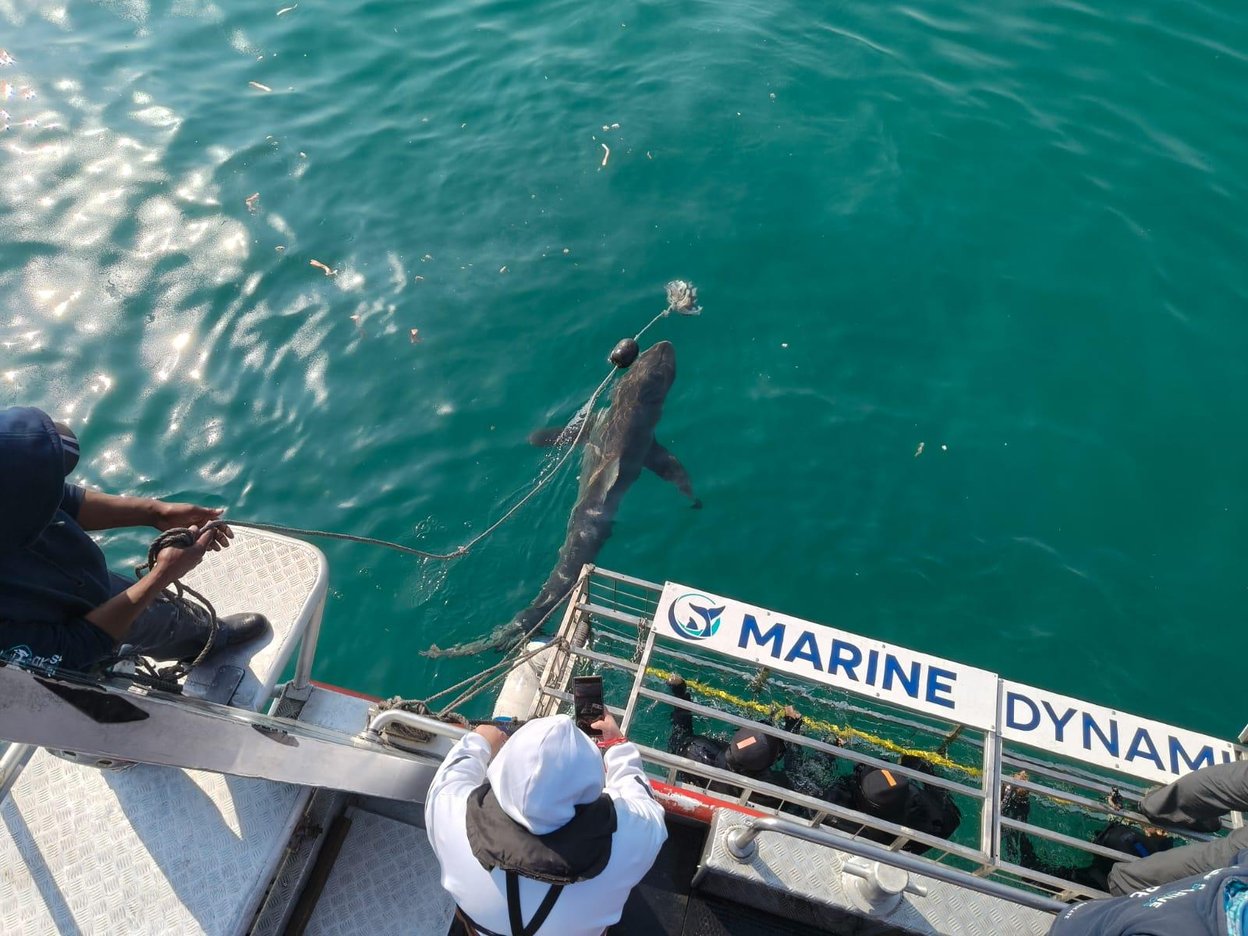
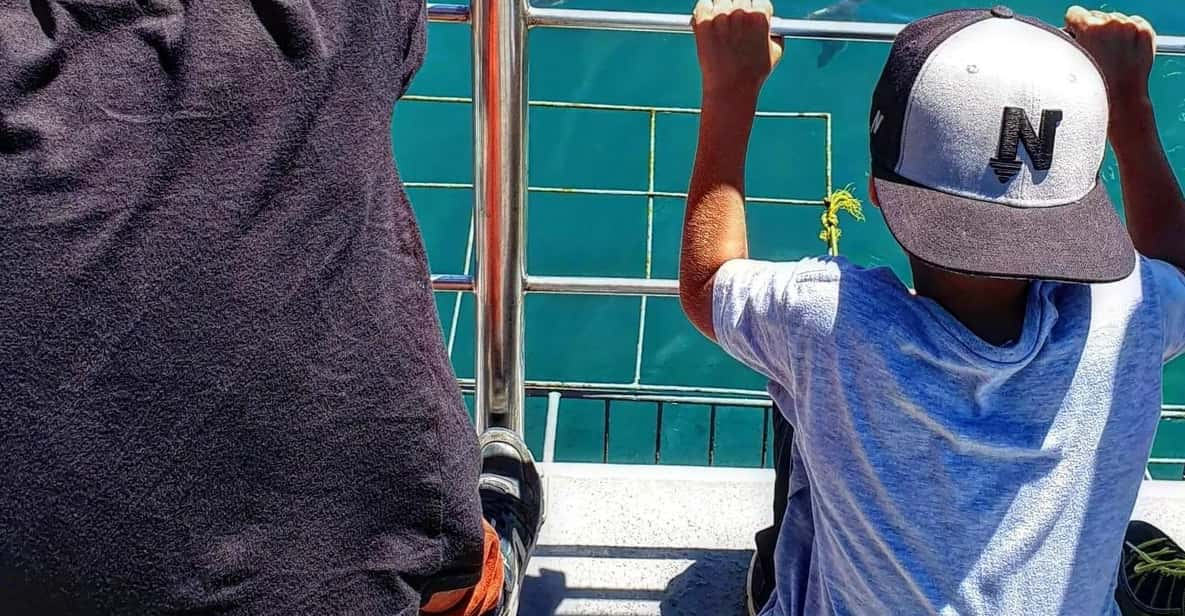
From above, the viewing is often better than in the cage. The upper deck wins on cloudy days: you watch a shark approach, swing at the bait and vanish, with no bars and no surface chop in the way.
Dry spectators see the same animals as the divers, and in poor visibility they sometimes see more.
One shock nobody warns you about is the smell. Chum means oily fish mash and tuna heads drifting past the cage, and the slick sits on the water for hours. That pungent mess is exactly what pulls the sharks in, so pack your patience along with your swimsuit.
The "From Cape Town: Great White or Bronze Whaler Shark Cage Dive" lists six to eight hours, and that figure counts the excursion as the operator books it, from base to boat and back.
Pair the dive with hotel transfers and the road stretches the same day towards twelve hours from door to door. The guide aboard fields questions at the bars, and breakfast and bottled water come with the morning.
Tour for this
From Cape Town: Great White or Bronze Whaler Shark Cage Dive5.0★ (2) · 6 - 8 hours · Free cancellation
When to book viewing transport from Cape Town for clear water
Clear water and calm seas pull in opposite directions, and your dates decide which you get.
Winter, May through September, brings the clearest water of the year: around 3 to 6 metres of visibility in Gansbaai, and past 8 on the best days. Winter also builds the biggest waves, so cancellations bunch up in exactly those months.
Summer turns the trade around. Calm crossings, cloudier water sums it up: visibility in Gansbaai drops to half a metre or two, while False Bay trips from December to February regularly log 10 to 20 bronze whalers in a day, the best sighting odds in the Cape calendar. Sevengills run strongest from September into February.
Best months for shark cage diving and visibility in the Western Cape
October: 5 out of 5 for how busy it gets. Visitor numbers surge with warming spring weather, while underwater visibility begins to drop significantly.
HighestJan, Mar, Oct to Nov
In betweenFeb, Apr, Sep, Dec
LowestMay to Aug
Darker: a higher how busy it gets score, out of 5
Tap a month to read it.
September: great white shark seen 21 times. Tour numbers begin to rebound as the winter visibility window draws to a close and sea swells ease.
HighestMar, Jun to Sep, Nov15 to 21 times seen
In betweenApr, Oct, Dec9 to 14 times seen
LowestJan to Feb, May2 to 6 times seen
Darker months: higher, from 2 to 21 times seen
Tap a month to read it.
January: calm sea on 15% of days. Tour demand is high and sea conditions are relatively calm, but underwater visibility is often murky and water temperatures are cool.
HighestJan, Mar to Apr11 to 15% of days
In betweenFeb, Oct to Nov7 to 10% of days
LowestMay to Sep, Dec1 to 4% of days
Darker months: higher, from 1 to 15% of days
Tap a month to read it.
July: waves up to 3.5 m on an average day. Low visitor numbers coincide with the clearest underwater visibility of the year, alongside the highest winter swells.
HighestJun to Aug3.3 to 3.5 m
In betweenMay, Sep2.9 to 3 m
LowestOct to Apr2.2 to 2.4 m
Darker months: higher, from 2.2 to 3.5 m
Tap a month to read it.
June: 1.4 windy days. The quietest month on the water delivers prime underwater visibility and high shark activity, though winter storms bring rough waves.
HighestJun to Aug1 to 1.4 days
In betweenSep0.6 days
LowestOct to May0 to 0.4 days
Darker months: higher, from 0 to 1.4 days
Tap a month to read it.
Midwinter shows the fewest calm-sea days of the year, which agrees with everything the wave heights say. The practical call: winter for film-clear water and thinner crowds, summer for gentle crossings and high whaler counts.
Whatever the month, take a morning launch. Coastal water is calmest early, before the afternoon wind stirs the sand and builds the chop.
Late November sits near the tail of the old great white season, yet travelers still report several sharks circling and brushing the cage that month.
Tour for this
From Cape Town: Shark Cage Diving and Viewing5.0★ (1) · 8 hours · Free cancellation
Your viewing day, hour by hour, with transport from Cape Town
The pickup time is the first surprise: it is not printed on your booking. Launches ride the tides, so shuttles confirm your exact collection by 4 pm the afternoon before, and on some days the van leaves before 4 am. Plan the evening before around that phone call.
Then the day finds its rhythm. A two- to two-and-a-half-hour drive east, coffee and a continental breakfast at the base around 7:30 am, a safety briefing from the marine biologist, and the boat pushes off between 8:30 am and 9 am
Two to three hours at sea follow, guests rotating into the cage in small groups while everyone else watches from the rail. The boat docks between noon and 12:30 pm for hot soup, a light lunch and warm showers onshore.
Full-day shark cage diving excursion schedule
Breakfast and briefing7:30 am to 8:30 am
Arrival at Gansbaai base for breakfast and briefing.
Boat cruise and dive8:30 am to 12:30 pm
Boat launches for cage diving rotations at sea.
Lunch and debrief12:30 pm to 1:30 pm
Warm showers and hot lunch onshore after docking.
Return to Cape Town1:30 pm to 4 pm
Transfer drive back to drop off at Cape Town.
Cape Town pickup4 am to 5:30 am
Shuttles collect guests early from Cape Town hotels.
QuietBusyThe busiest
Back in Cape Town by 3:30 or 4 pm, which leaves enough of the evening for a shower and dinner at a normal hour. Tours such as Shark Cage Diving with transport from Cape Town bundle the transfers, breakfast and light refreshments, so the only decision at 5 am is which seat you claim.
Simon's Town or Gansbaai on your viewing transport day from Cape Town
Two launches sit within reach of a Cape Town hotel, and they make different days. Simon's Town, about 45 minutes down the False Bay coast, puts you on smaller boats with fewer divers per cage. Peak-season traffic can stretch that drive to 90 minutes.
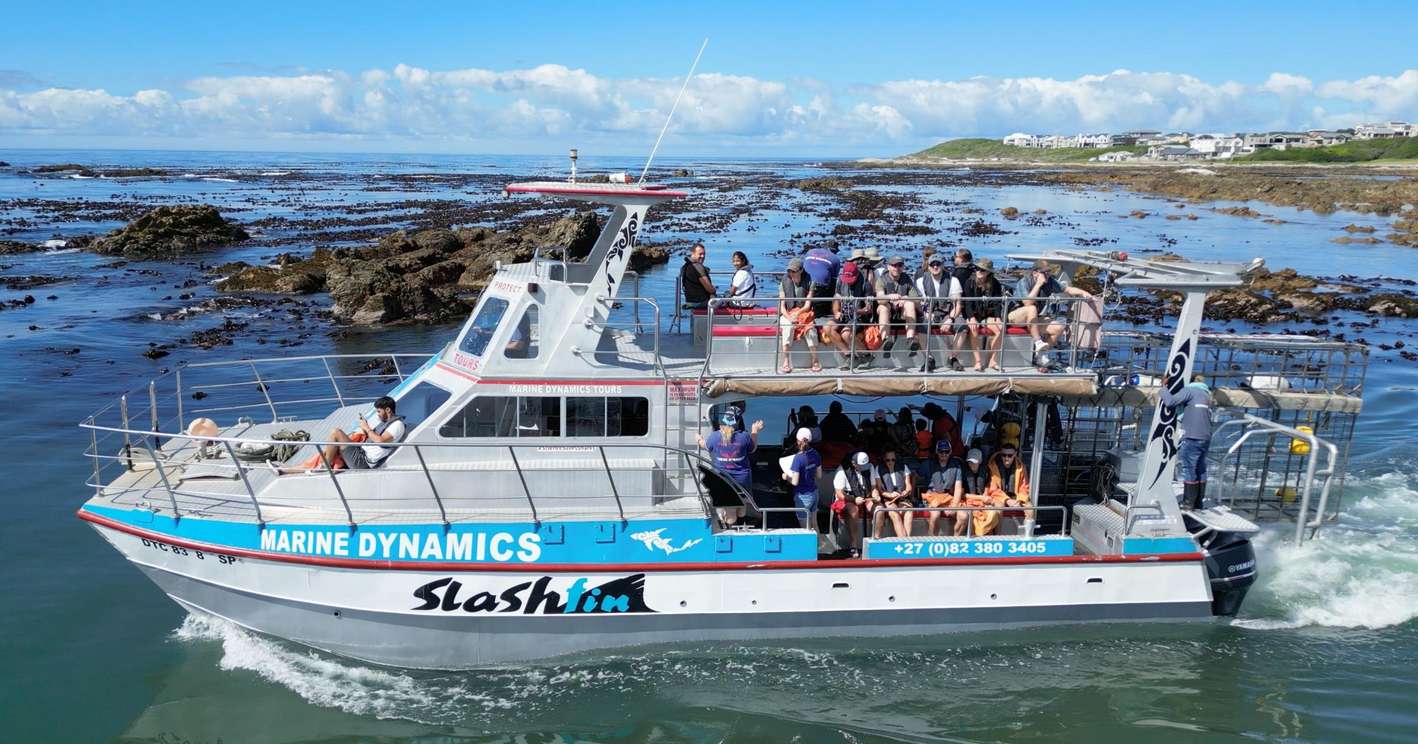
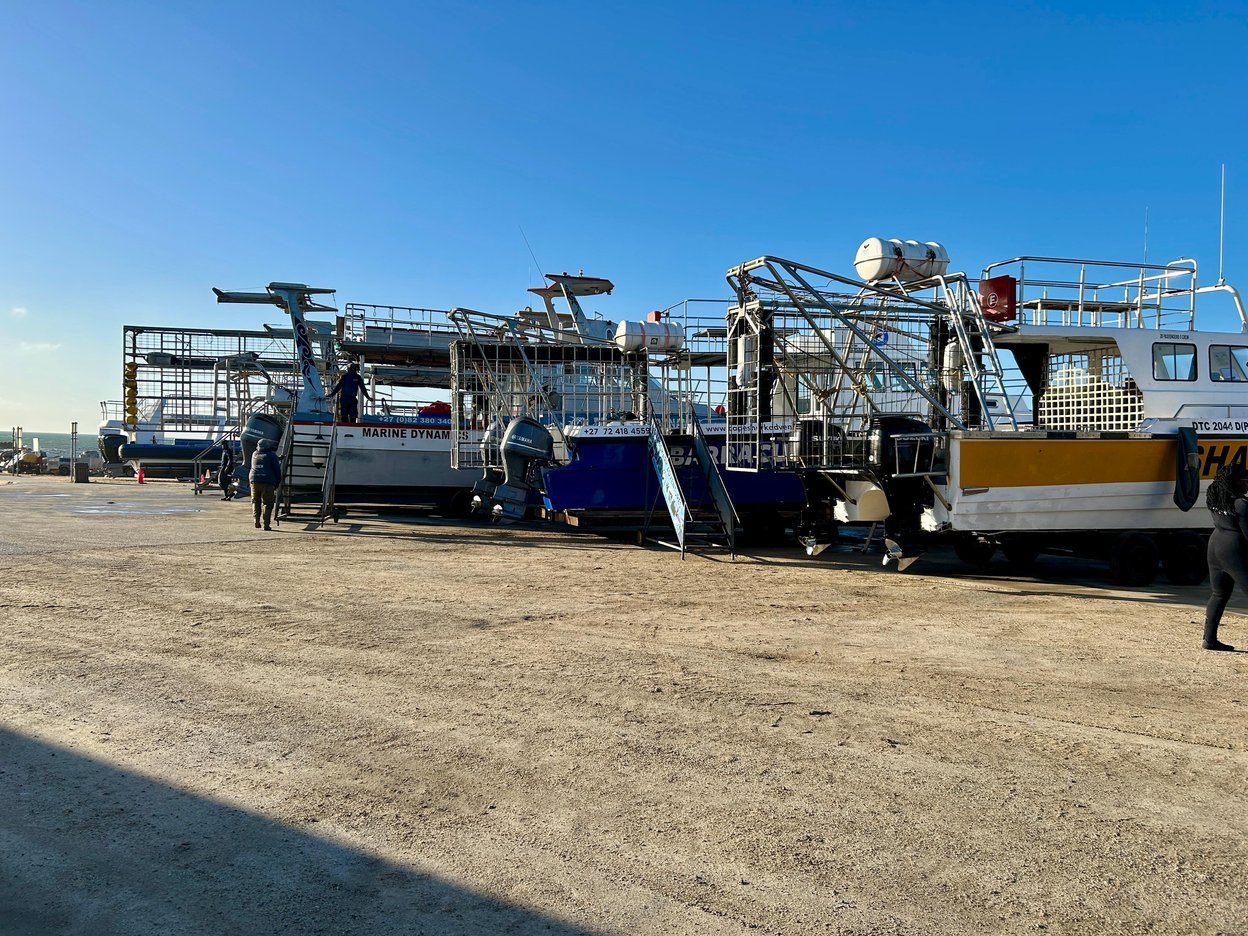
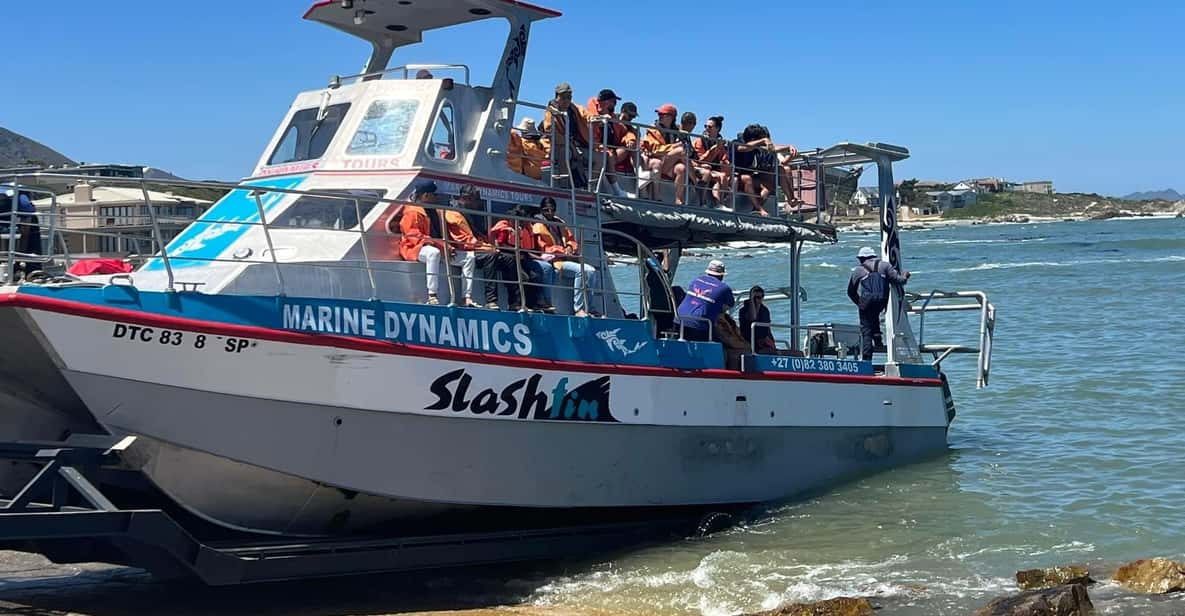
Gansbaai costs the long drive and pays it back with larger catamarans and bigger breath-hold cages off Dyer Island, where the seal colony keeps sharks close.
Simon's Town, Gansbaai or Mossel Bay
Simon's Town
Gansbaai
Mossel Bay
Drive from Cape Town
about 45 minutes each way
2 to 2.5 hours each way
4 to 4.5 hours east
Main shark species
bronze whalers and sevengills
bronze whalers and sevengills, great whites seasonally
the most consistent great white sightings
Boats and cages
smaller boats, fewer divers per cage
larger catamarans, bigger breath-hold cages
one licensed operator, a six-diver cage
Simon's Town
Drive from Cape Town
about 45 minutes each way
Main shark species
bronze whalers and sevengills
Boats and cages
smaller boats, fewer divers per cage
Gansbaai
Drive from Cape Town
2 to 2.5 hours each way
Main shark species
bronze whalers and sevengills, great whites seasonally
Boats and cages
larger catamarans, bigger breath-hold cages
Mossel Bay
Drive from Cape Town
4 to 4.5 hours east
Main shark species
the most consistent great white sightings
Boats and cages
one licensed operator, a six-diver cage
For most visitors with one free day, Gansbaai is the classic pick and Simon's Town is the clock-saver. Mossel Bay tempts only if a great white is the whole point of the trip.
Nearly all Gansbaai boats anchor in the same water off Dyer Island on similar schedules, so the transfer option matters more than the tour title. The Cape Town: Gansbaai Eco-Friendly Shark Cage Diving Cruise takes the long haul in stride, with round-trip transport, breakfast or lunch at the base and a marine biologist aboard.
Tour for this
Cape Town: Shark Cage Diving Tour (with Breakfast & Lunch)4.4★ (11) · 8 hours · Hotel pickup · Free cancellation
Van or self-drive transport for viewing from Cape Town
The transfer wins for most people, and not only because navigating the N2 before sunrise is no fun.
The van takes Sir Lowry's Pass and the Houw Hoek Pass while you doze, and the R43 east rolls past the Bot River lagoon, Hermanus's whale cliffs and Stanford before De Kelders appears. A driver who knows the road earns his seat at 4 am.
Driving yourself is the other option, and the road makes it an easy one.
Two figures circulate for the same route: self-drive estimates without traffic give about 2 hours 45 minutes for the 163-kilometre run, while transfer schedules allow 2 to 2.5 hours each way. The gap is estimate against timetable, and peak traffic can stretch either one.
Roads stay paved and in good condition throughout, with fuel, cafes and bathrooms at Hermanus and Stanford. Take the wheel and locals will point you down Clarence Drive for scenery, with the Hemel-en-Aarde wine valley as a detour on the way home.
Who goes in the cage and who keeps deck viewing on Cape Town transport trips
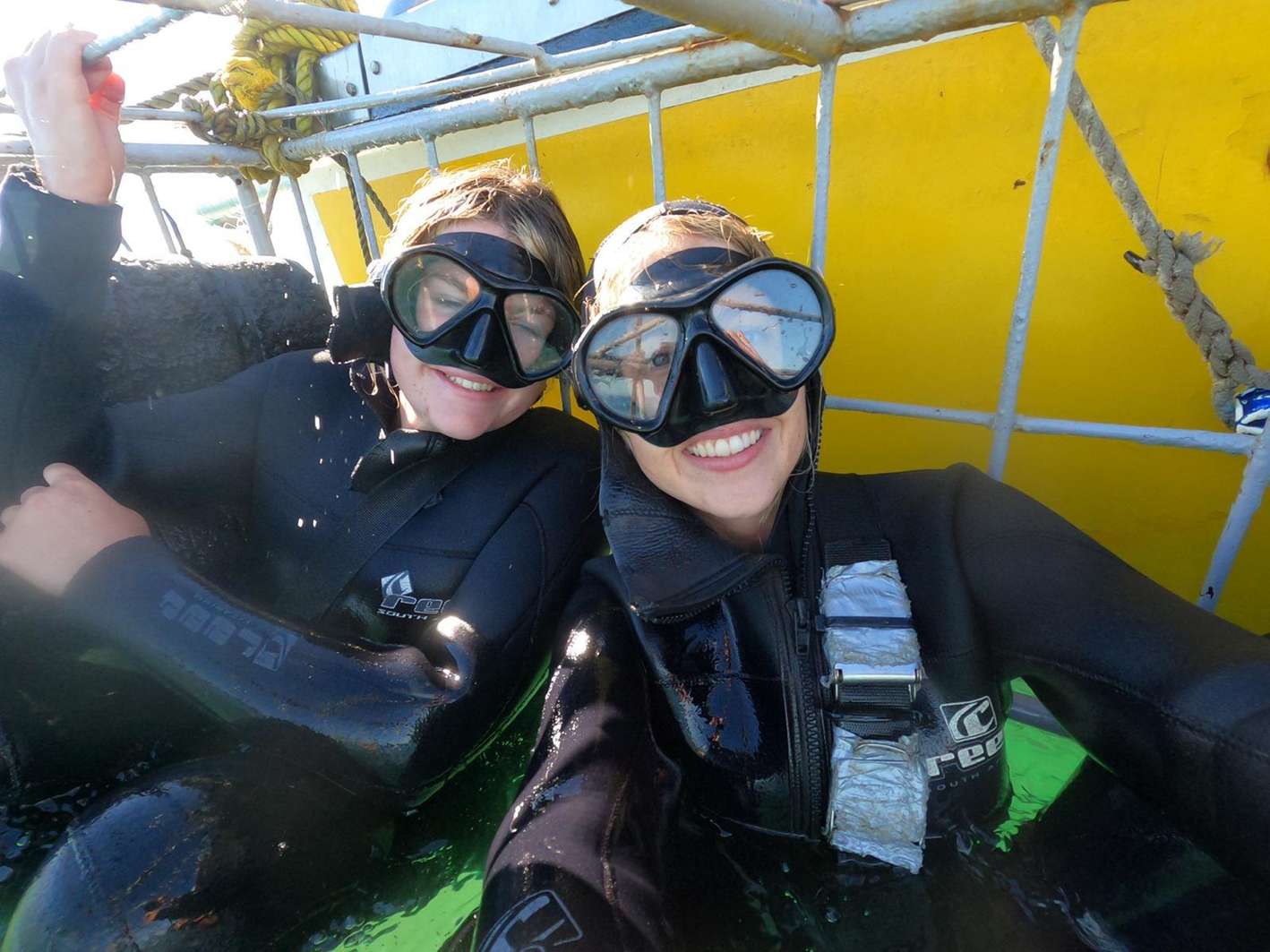
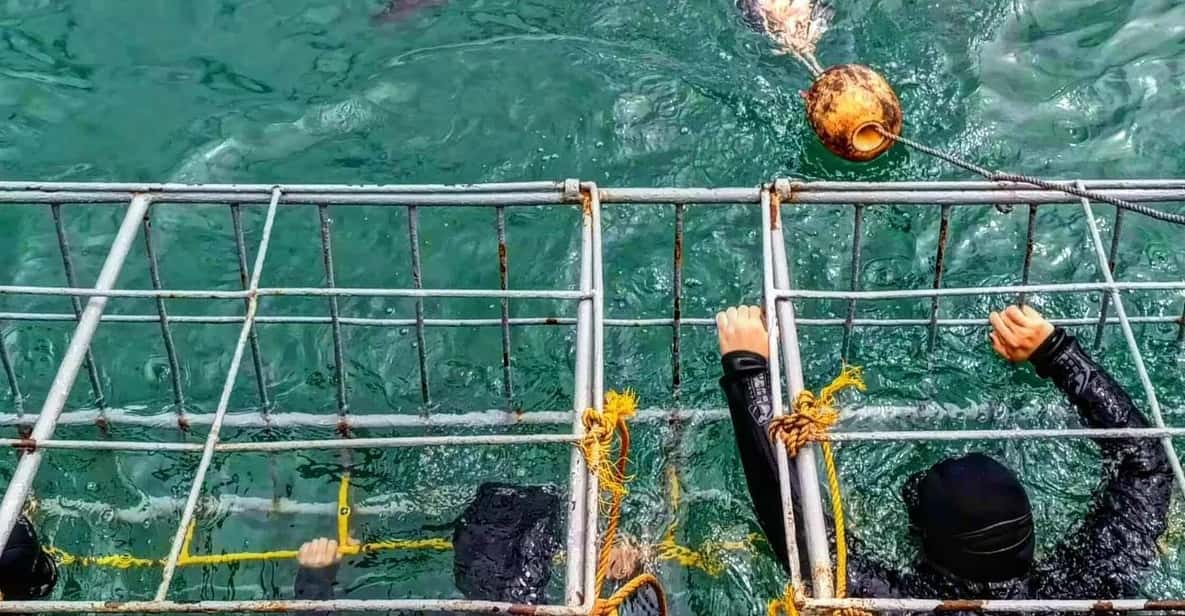
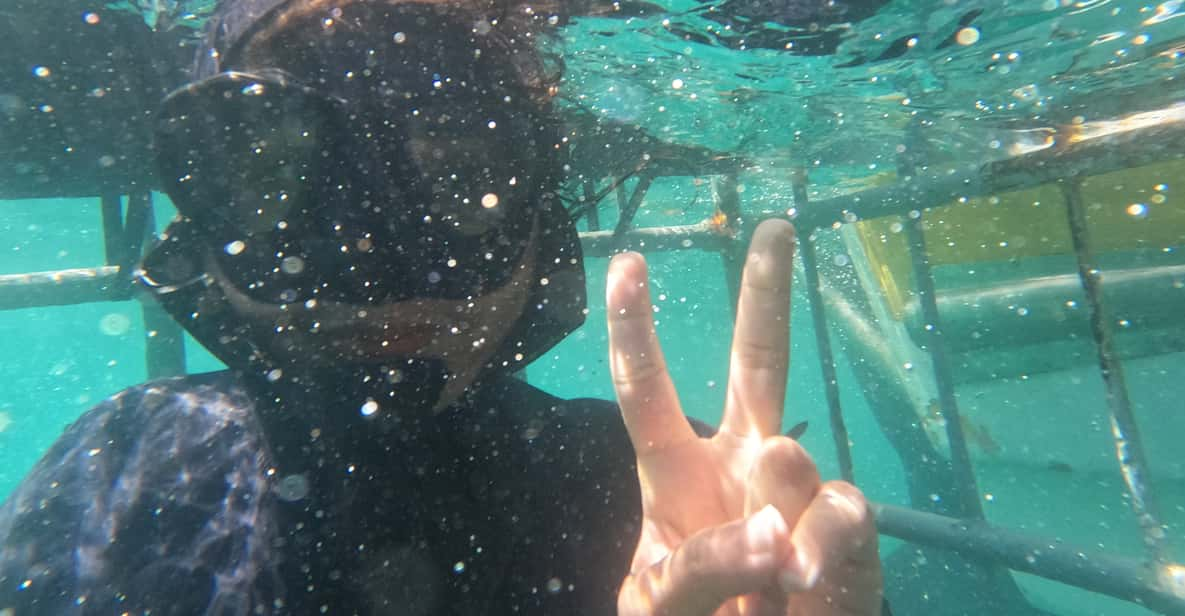
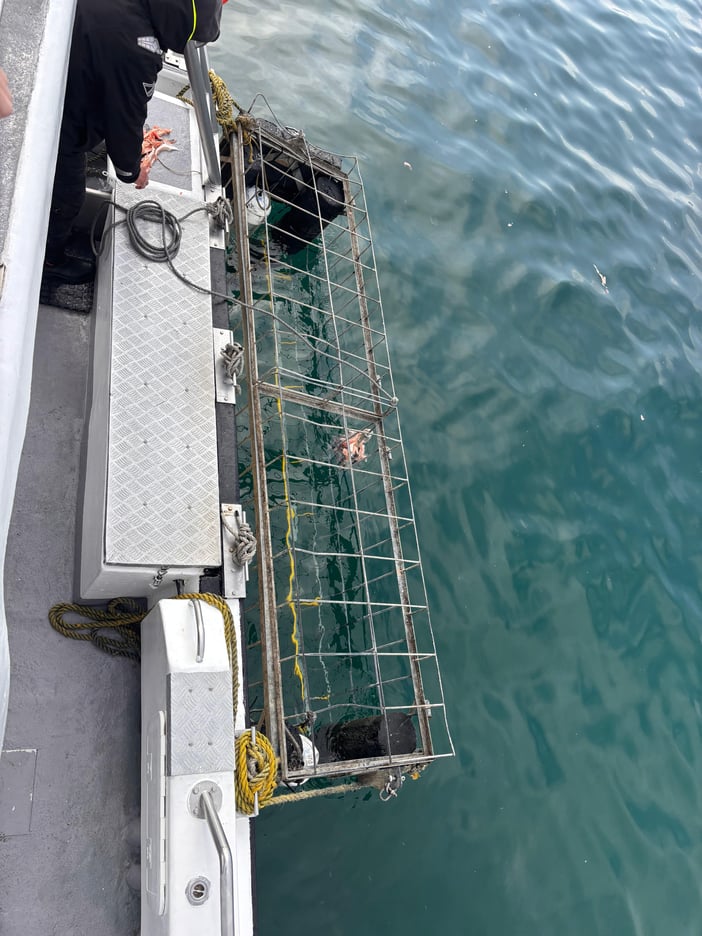
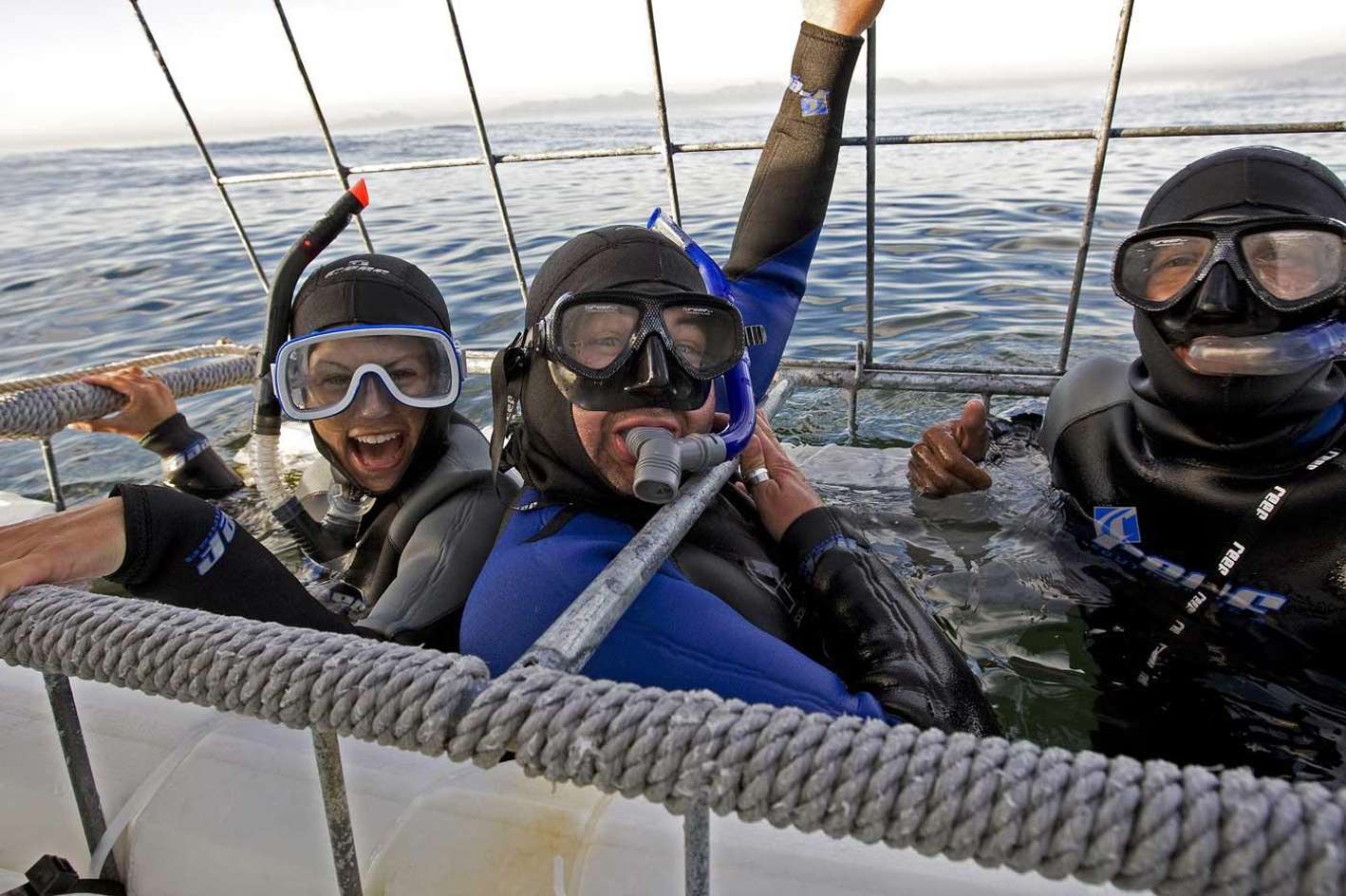
Nobody in your group needs a certification, a logbook or swim-team lungs. South African cages sit at the surface: you hold the bars and duck your head on the crew's count, or breathe from a hookah line on some boats.
Certified divers should know that commercial cages here never go deep; every dive happens right at the waterline.
The only fitness test is the ladder in a swell. Comfort in choppy water matters more than strokes: a panicky few metres from the cage door is the real risk for non-swimmers, so shaky swimmers do better on deck.
Children's rules vary by operator: one keeps under-12s on the deck, another takes younger children with a parent alongside, and most cage rules land between 8 and 12.
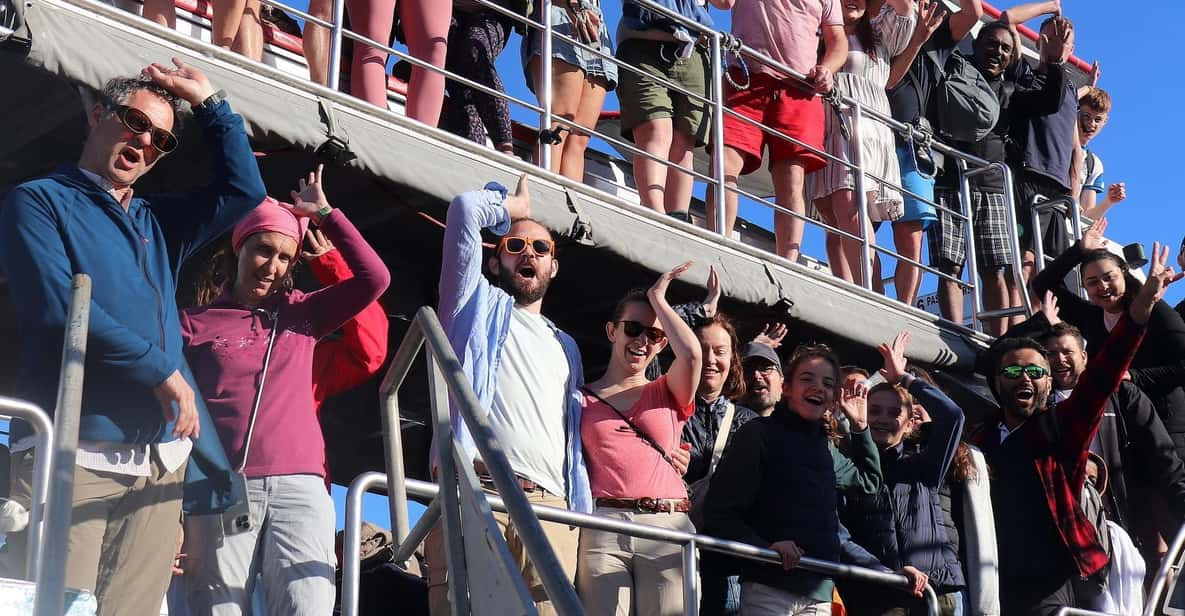
Mixed parties share one boat regardless. Anyone who prefers staying dry watches from the upper deck, where the view of a shark's approach is often better than from in the water, and needs no wetsuit. Solo travelers slot into shared group departures and tend to come back with new friends.
Tour for this
Shark Cage Diving with transport from Cape Town5.0★ (2) · 8 hours · Hotel pickup · Free cancellation
How safe is the cage on a viewing trip with transport from Cape Town
The steel has been thought through. SAMSA certifies every vessel and cage, engineers sign off the design, and the bars carry smooth caps so nobody, shark or diver, gets cut.
Two incidents sit on file, told plainly: a great white broke cage bars off South Africa in 2005, and one pushed its head into a Gansbaai cage in 2013.
Sharks do not test the bars to reach the people inside, and where things have gone wrong on these trips, the boat or the swell caused it.
Etiquette inside the cage is one rule: keep everything inside the bars, hands, cameras and feet included. Hold the interior rail and the rule keeps itself. If you panic or get cold, you leave the cage the moment you say so.
A traveler's note
Our guide Leonard was wonderful - knowledgeable, accommodating, and kept the long ride fun and educational. Great White House staff answered all questions. Added seal diving to the cage dive, highly recommend it.
Does the chumming harm the sharks on Cape Town viewing transport tours
Permits are capped, and that frames everything else. South Africa limits white shark cage diving operators by permit, confines the activity to a handful of designated spots, and bans feeding outright. What trails the boat is scent: fish offcuts and oil on the water, with bait pulled away as a shark closes in.
Researchers have watched the result for years. A 14-year Gansbaai study found the boats do not appear to change white shark behaviour or pin them to one site, and studies of non-feeding operations leave migration and foraging patterns undisturbed.
Sharks that never win a food reward tend to lose interest in the boats altogether, which is the opposite of training them.
The scent line is the whole trick, and the law guards it. Touching, tagging or chasing a shark is illegal, diving outside the cage is illegal, and no licensed operator takes guests free-diving with white sharks. You can book without a guilty conscience.
What to pack for viewing with transport from Cape Town
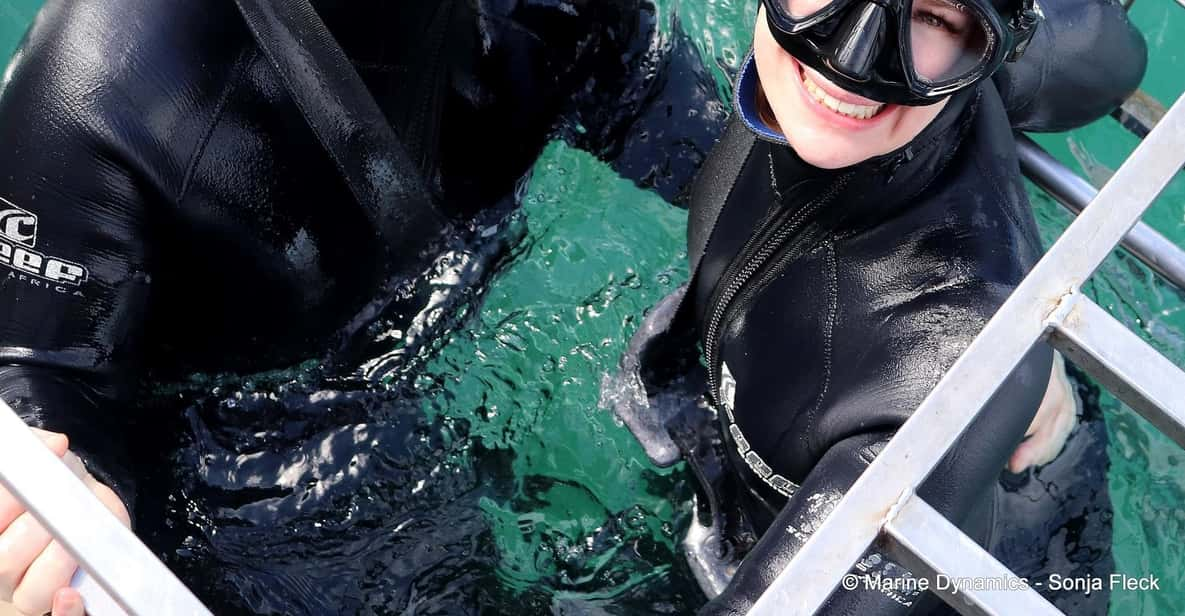
Pack the night before, because a 4 am pickup leaves no room for regrets. The wetsuit problem is solved before you arrive: operators supply 5 mm to 7 mm suits, hoods, booties, masks and towels across a wide range of sizes.
The water off Gansbaai sits near 15°C in winter and warms towards 20°C in summer, so the suit does the real work; your job is everything around it.
Put the swimsuit on under your clothes at the hotel, since wetsuit changes happen on board. Then think of the deck hours: a warm windproof jacket, closed shoes for wet decks, sunscreen, sunglasses and a hat for two to three hours of glare.
What to pack for cage diving
Swimsuit worn underneath clothesTour operators ask guests to arrive with swimsuits on under street clothes for fast changes into wetsuits on board.
Warm jacket and wind layerBoats face cold ocean spray and wind between cage turns; a warm wind-resistant jacket is required.
Sensible closed shoesBoat decks and harbor slips get wet and slick during boarding and gear transfers.
Dry change of clothesOperators recommend a clean, dry set of warm layers to put on after your hot shower back on land.
Waterproof camera or action camSubmerged encounters require a waterproof housing or waterproof camera to shoot through the cage bars.
Sunscreen, sunglasses, and hatSurface glare and reflection on the bay lead to rapid sun exposure during two to four hours on the water.
Motion sickness medicationBoats anchor in rolling open bay waters for hours; operators strongly recommend taking seasickness tablets early.
Pills only work if absorbed before the swell starts, so take one the night before and another well before boarding. By the time the chum smell reaches you at the anchorage, the pill has either done its work or missed its window.
If nausea still wins, the crew will move you to better seats and you can skip your cage turn without anyone blinking. A towel from your hotel beats paying rental fees at the dive centre, and your own mask comes along if rental masks bother you.
If weather or no-show sharks upend your Cape Town viewing transport day
The skipper reads the sea, the sky barely matters: heavy swell and strong wind cancel trips under blue skies, while rain almost never does, because the boats carry dry cabins. The call usually lands the afternoon before, so keep a spare day in your itinerary and stay reachable that evening.
When the Atlantic wins, the terms are mostly friendly. Weather cancellations bring a full refund or a free date change on the Cape Town tours, and your own cancellation up to 24 hours ahead refunds you too.
A few clauses cut the other way: if wind forces a launched boat home early, refunds generally do not follow, and transfer costs usually stand even when the launch never happens, though rebooking usually rides free.
When the day goes sideways
If this happens
What happens then
Heavy swell or wind cancels the launch
A full refund or a rescheduled date, your choice
Wind forces the boat home mid-trip
No refund in most cases
No sharks appear at all
A return voucher from some operators, a free second trip from others
You cancel yourself
Full refund up to 24 hours before departure
No-show sharks are the quieter risk; some days the slick works for hours and the water stays empty. Operators cannot promise sightings, but several will write your name on another boat, which is the policy worth checking before you pay.
A whole afternoon of viewing before the transport back to Cape Town
The boat docks around midday, and the region fills whatever afternoon you can claim. The African Penguin and Seabird Sanctuary cares for more than 250 birds a short drive from the harbour.
The De Kelders cliffs look over Walker Bay, where southern right whales pass between June and November, and a boardwalk from the reserve gate leads out to Klipgat Cave.
Eat where the fish was caught: fresh fish and calamari as takeaway from the Fish Lady on the main road, an old fishing cottage at the Blue Goose, or flatbreads in a garden at Buns & Bases.
Coffee on the Rocks hangs over the De Kelders shore, and its balcony doubles as a whale watch in season.
On a transfer tour, arrange a later shuttle before you plan any of this. Combination tours from mid-June to mid-November add Hermanus whale watching to the same day, with August and September the sweet spot for both animals. Drivers have it easier: the coast path, the cave and lunch all wait on the way home.
Worth the 4 am, if you came for sharks of any size
The day is organised, the cages are certified and the crew carries the nerves for you. What you must bring is the right expectation: bronze whalers and sevengills, seals and dolphins, with a great white as the bonus.
Manage that and a Cape Town day without the driving is one of the better uses of a holiday morning.
Go ifYou want sharks without renting a car or driving before dawnYour group splits between cage divers and dry spectatorsYou can keep a spare day open for weather
Skip ifA guaranteed great white is the whole point of the tripYou have no flexibility for a weather cancellationChoppy seas or the smell of chum would end your day early
Our pick to book
From Cape Town: Shark Cage Diving and Viewing5.0★ (1) · 8 hours · Free cancellation
Travelers' questions on diving, viewing and the transport from Cape Town
pickup times land by 4 pm the day before
What travelers ask before booking a shark day trip from their Cape Town hotel: pickup times, deck viewing, and what you will actually see.
Cape Town2026
The bronze whalers came right up to the cage this morning. Take the seasickness tablets before you board, there is a real swell out there.
What time will I be picked up from my Cape Town hotel?
It depends on the tides and the sea, so operators set the exact time around 4 pm the day before. Collection usually falls between 4:30 am and 11:30 am, since the drive to Gansbaai takes about two to two and a half hours and boats launch between early morning and midday.
Can I see sharks from the boat without getting in the cage?
Yes, and you stay on the same boat as the divers. From the deck you can follow a shark's whole approach, body and dorsal fin, with no bars in the way, while the cage puts you closer, at water level. When the water is murky, the deck view can actually be the clearer one.
Which sharks will I see, and are great whites guaranteed?
Bronze whaler sharks are now the species you are most likely to meet, with sevengill sharks, seals and dolphins often around too. Great white sightings have become irregular in False Bay and Gansbaai, so no operator can promise one.
Do I need scuba certification or diving experience?
No. The cages float at the surface, and you either hold your breath for a few seconds as a shark passes or use a snorkel. Some boats supply air from the surface instead. You stay in the cage the whole time.
Do I need to be a strong swimmer?
Surface cage diving is open to beginners, and you can usually stand or kneel on the cage floor while you hold the interior bars. Basic comfort in choppy water matters, because swell can pull at you between the boat and the cage.
How safe is the cage?
Every commercial vessel and cage in South Africa must be certified safe by the maritime authority, with cages built from steel by a registered engineer and checked for sharp edges. Operators have kept a perfect record against shark attacks, and the riskiest part of the day is the ladder between deck and cage.
What happens if bad weather cancels my trip?
The skipper checks the marine forecast the afternoon before and calls off a launch when wind and swell make it unsafe. You then get a full refund or can move to another day. Tours booked on this page can also be cancelled up to 24 hours ahead for a full refund.
What if no sharks show up on the day?
It can happen, and boats sometimes spend hours on the chum line without a sighting. Some operators then hand you a voucher to come back another day, and one lets you join a later trip free of charge.
Is the trip worth it without a great white?
It is, if you go for the day itself: the coastal drive, the seal islands, and close passes from bronze whalers, which these tours find reliably. Go expecting a great white by name and you set yourself up for a letdown.
What should I bring, and how cold is the water?
The ocean sits around 14 to 21 degrees depending on the season, and the operator hands you a thick 5 mm or 7 mm wetsuit, hood, boots and mask. You bring a swimsuit to wear under your clothes, a warm jacket for the deck, and seasickness tablets taken well before boarding.
Where to next after your shark viewing and transport day from Cape Town


 Your best match