
- 1
No paying guest has ever been killed by a shark inside a licensed South African cage.
- 2
Book a flexible day: winter wind cancels about 18 of 30 Gansbaai departures, and the skipper decides by 2 pm the day before.
- 3
Take motion sickness pills two hours before boarding, well before any swell starts.
Not every boat takes every traveler: some tours are not suitable for non-swimmers, people with heart problems, or people with respiratory issues, and a few bar children under 12. Read the suitability notes on the tour you pick before booking, and tell the operator about any heart, lung, or swimming limitation when you reserve so they can confirm you into the right trip.
Safe shark cage diving - photos from the boats and cages


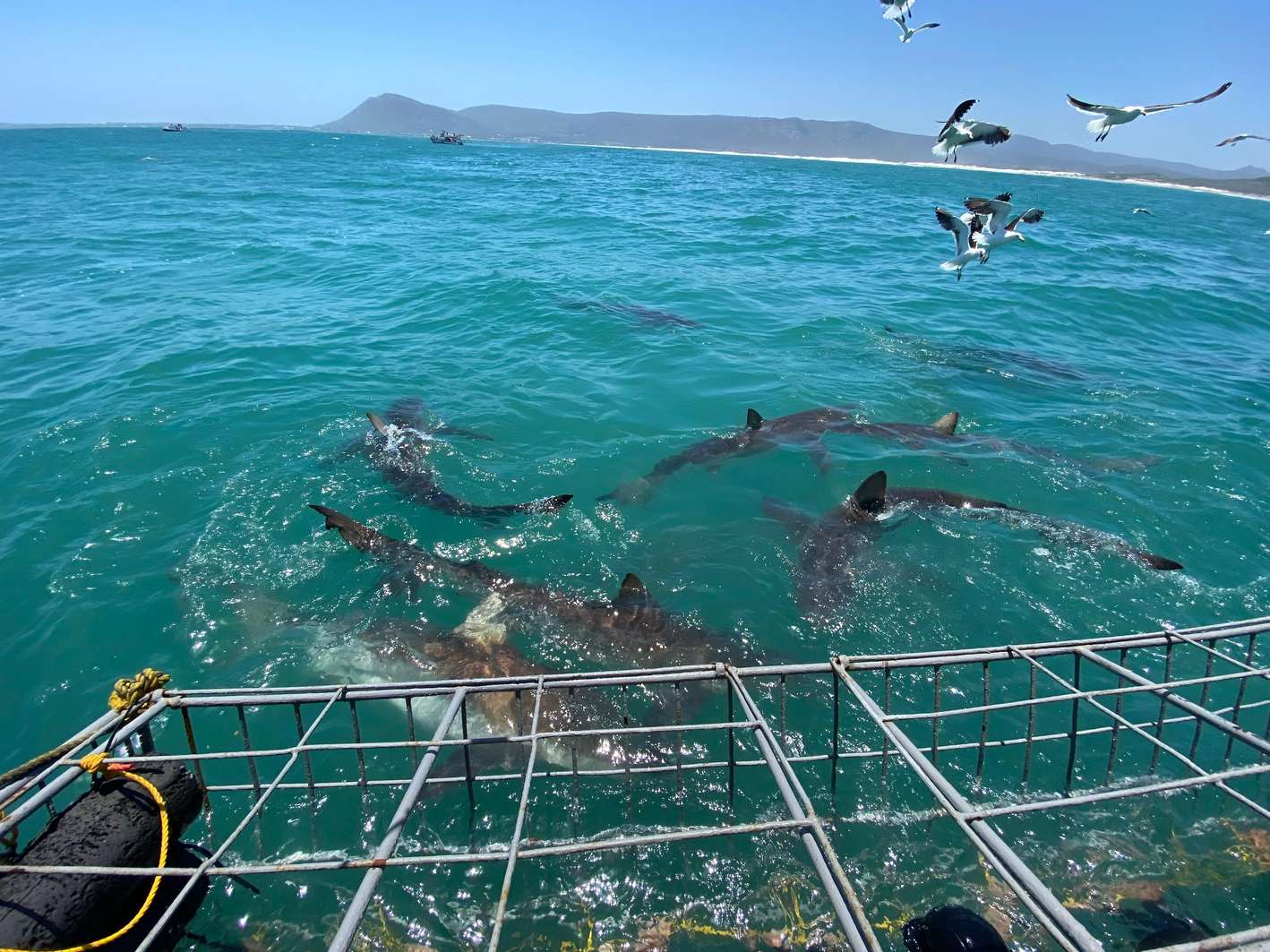


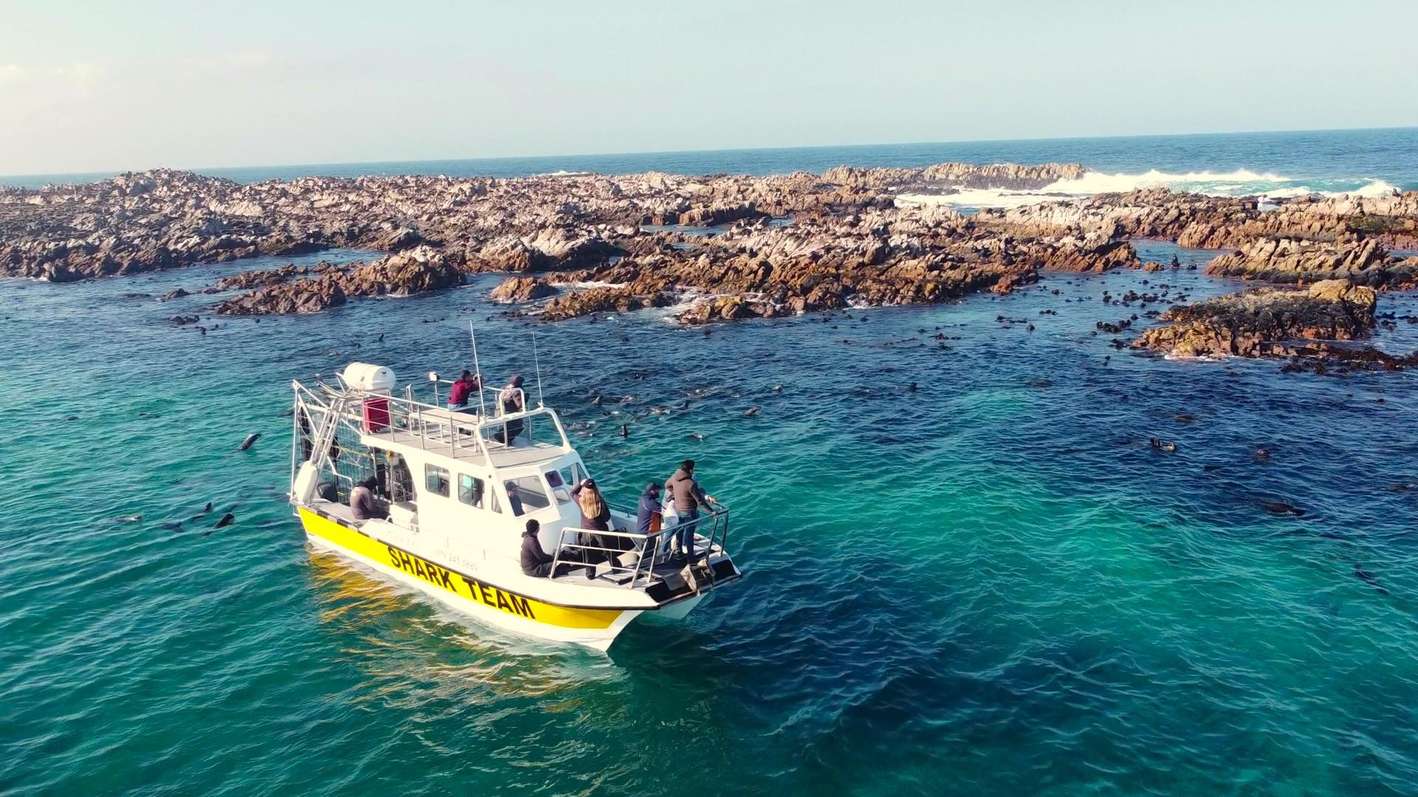


Shark cage diving deaths and accidents - the actual South African record
water chills you 25x faster than air
The numbers first, because this is the page you came to. In the whole history of licensed commercial cage diving in South Africa, there is no record of a shark killing a paying guest inside a cage. Not once.
The incident people half-remember is different: on 13 April 2008 a commercial boat capsized in Gansbaai and three tourists drowned. It remains the only fatal incident of its kind in the industry, and it was a boating accident.
Everything was well organized, staff friendly and knowledgeable. The shark dive was unforgettable - I felt safe throughout, and seeing sharks up close was incredible. Highly recommend it to anyone wanting a unique activity.
Every accident on record in this industry traces back to the boat or the sea. Surface cage diving is a tightly controlled activity, and the physical risk most people take is the small one of stepping from a moving deck into a cage in a swell.
So the fear you arrived with, the viral clip of a shark in a cage, has no South African death behind it. What the record does show is that the boat, the weather and your own stomach are the things to plan around.
Cage design and engineering standards - can a shark break through?
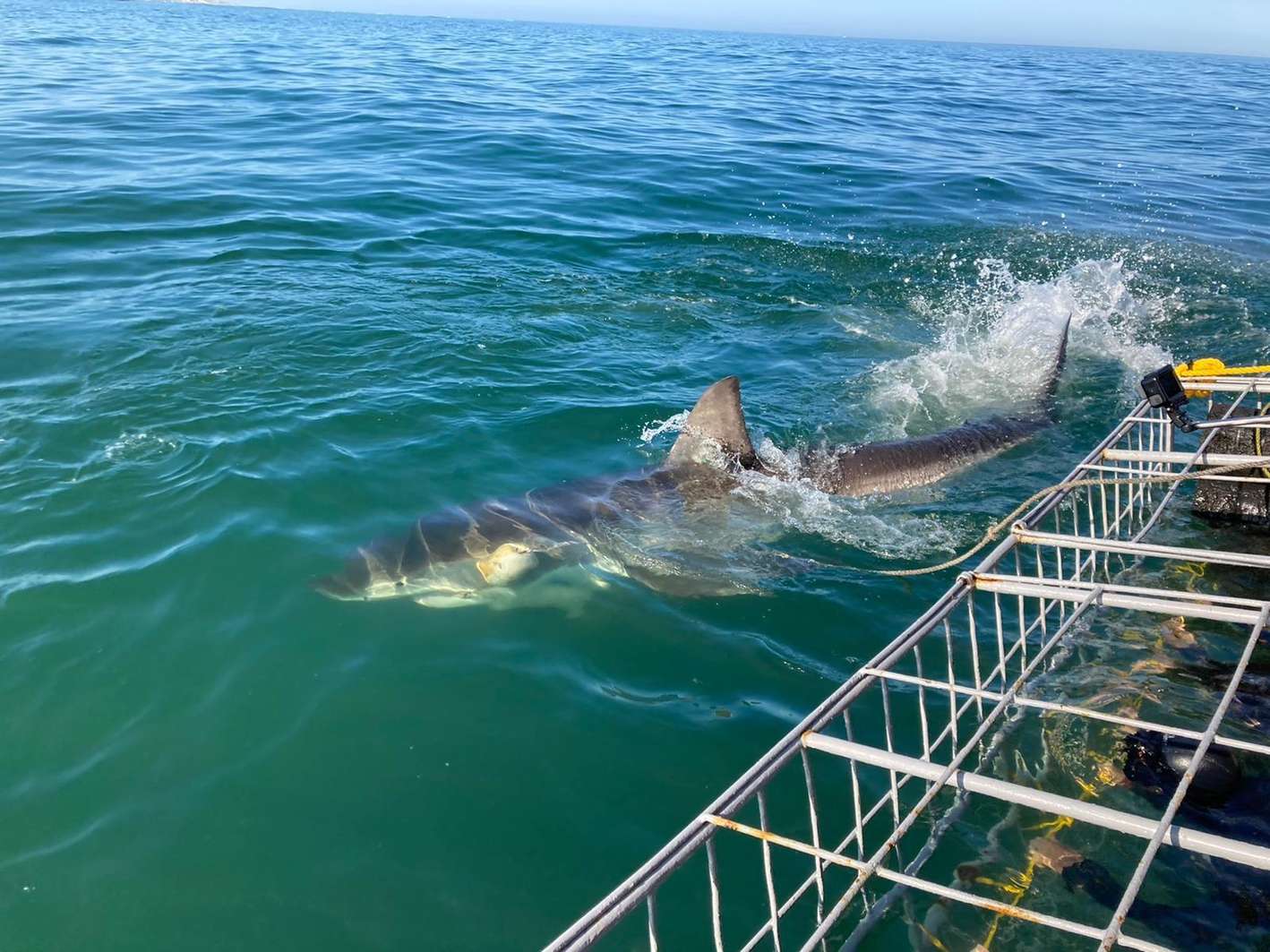
Two clips fuel most of the worry. In 2005 a great white broke through the bars of a cage off South Africa with a British tourist inside. In March 2013, an eight-foot great white pushed its head into a cage at Gansbaai. Both divers survived. Both cages were older designs; the rules have tightened since.
Today a cage used with white sharks must be certified safe and suitable by the South African Maritime Safety Authority, and designed by a registered engineer.
It is built from aluminium, stainless steel or galvanized mild steel, with no sharp edges, and the access door sits at the top.
Viewing gaps may be no larger than 400 mm, and a 300 mm gap is recommended so smaller sharks cannot wedge in. Raised bars over the top edges stop a shark from getting over the side, and interior handrails mean you never need to reach out.
Sharks do not deliberately ram or try to break into cages. Collisions happen by accident when a shark chases the bait line, and modern cage rules are written around exactly that.
The law caps viewing apertures at 400 mm and recommends 300 mm, sized to keep sharks out and stop them getting trapped.
Cages are engineer-certified and built from certified steel with smooth welds and capped corners. A bump is what the structure is there to absorb.
The clips are real; the conclusions people draw from them are not.
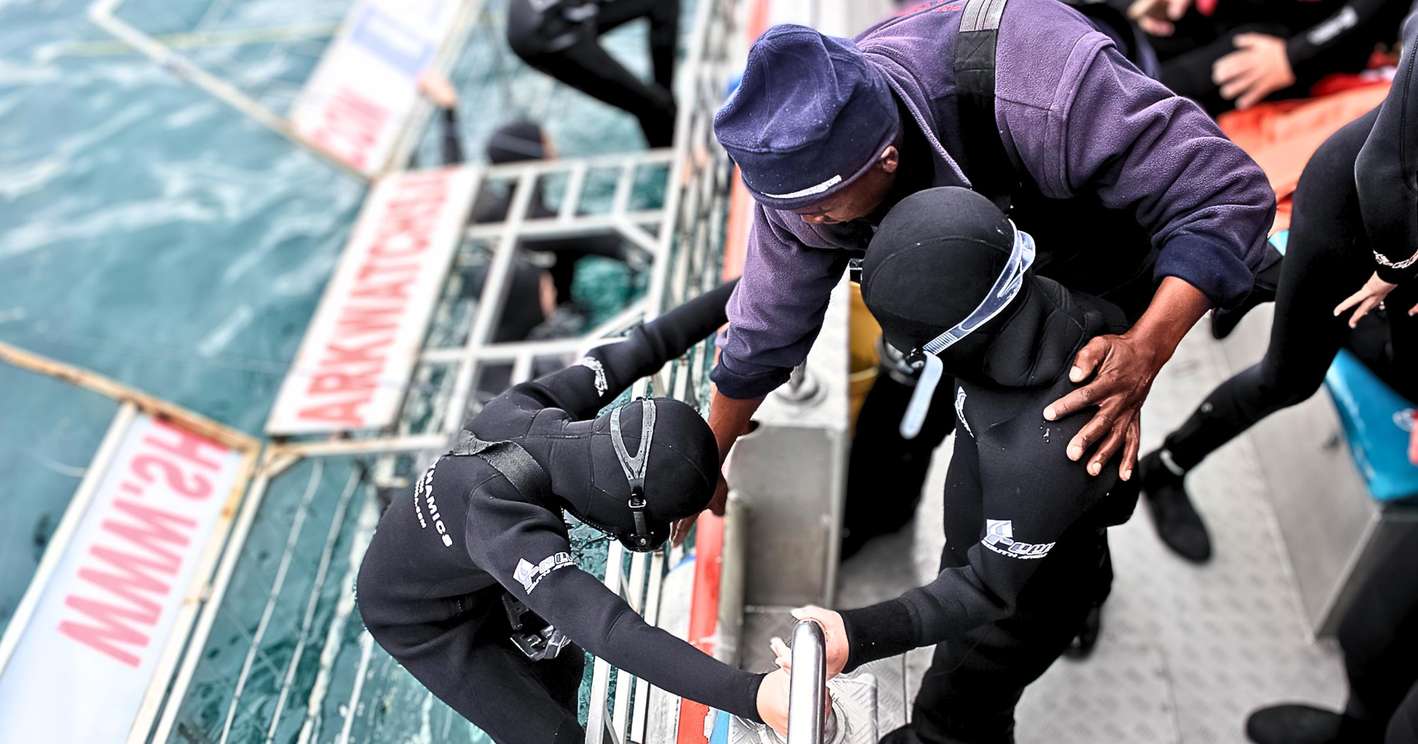
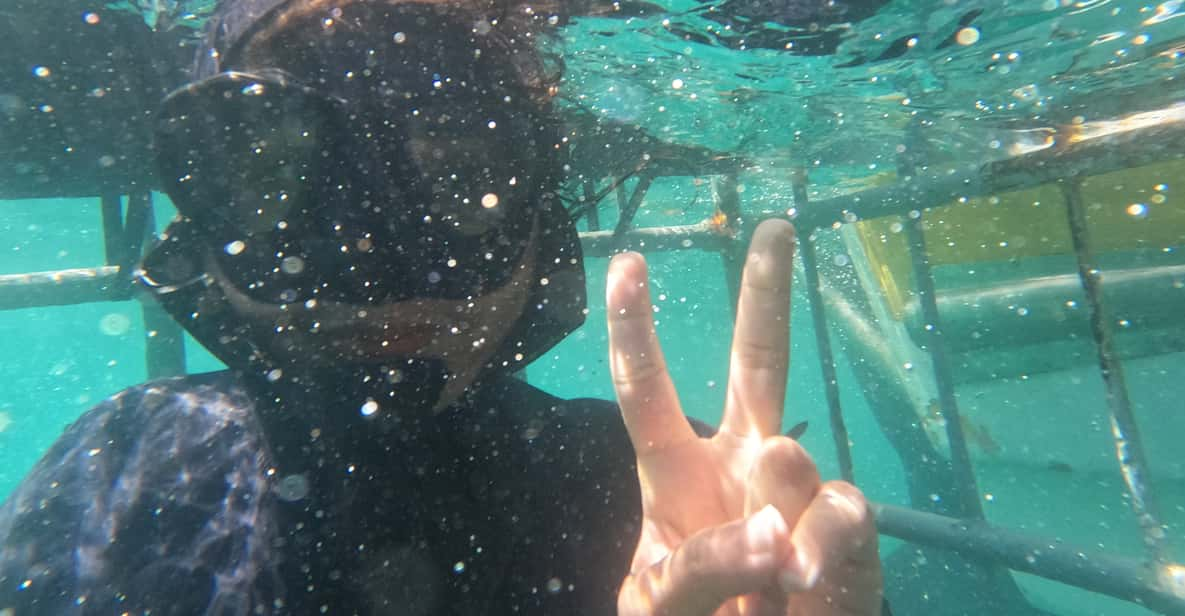
How the cage stays at the surface - sinking and drowning risk explained
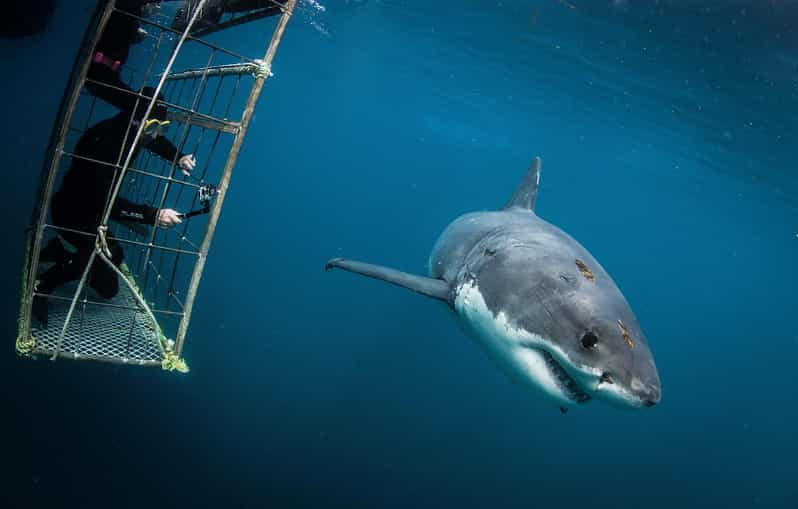
The drowning fear has a simple answer: the cage is not underwater. A surface cage sits at the waterline against the boat's hull, your head and shoulders above the water unless you choose to duck down.
Its connection to the boat is layered. Two thick ropes lash it to the gunwale with steel carabiners, the lines carry no slack, and a secondary safety bridle stays attached to catch the load if a primary cable ever snaps.
South African rules also require cages to carry enough integral flotation to float even if cut free from the boat. Modern cages have foam-filled or airtight pontoons welded along the top, so in the worst case the cage bobs like a buoy.
What nobody tells you
Foam-filled pontoons along the top give it positive buoyancy, so it floats even if every rope to the boat is cut.
You step straight from the deck onto the cage, never through open water.
If you get cold or panic, you climb out in seconds. Nobody is locked in and nobody is held under.
That top-hinged door is the detail nervous first-timers care about most. You are in the cage for as long as you want to be, and no longer.
Do you need scuba certification or breathing gear in the cage?
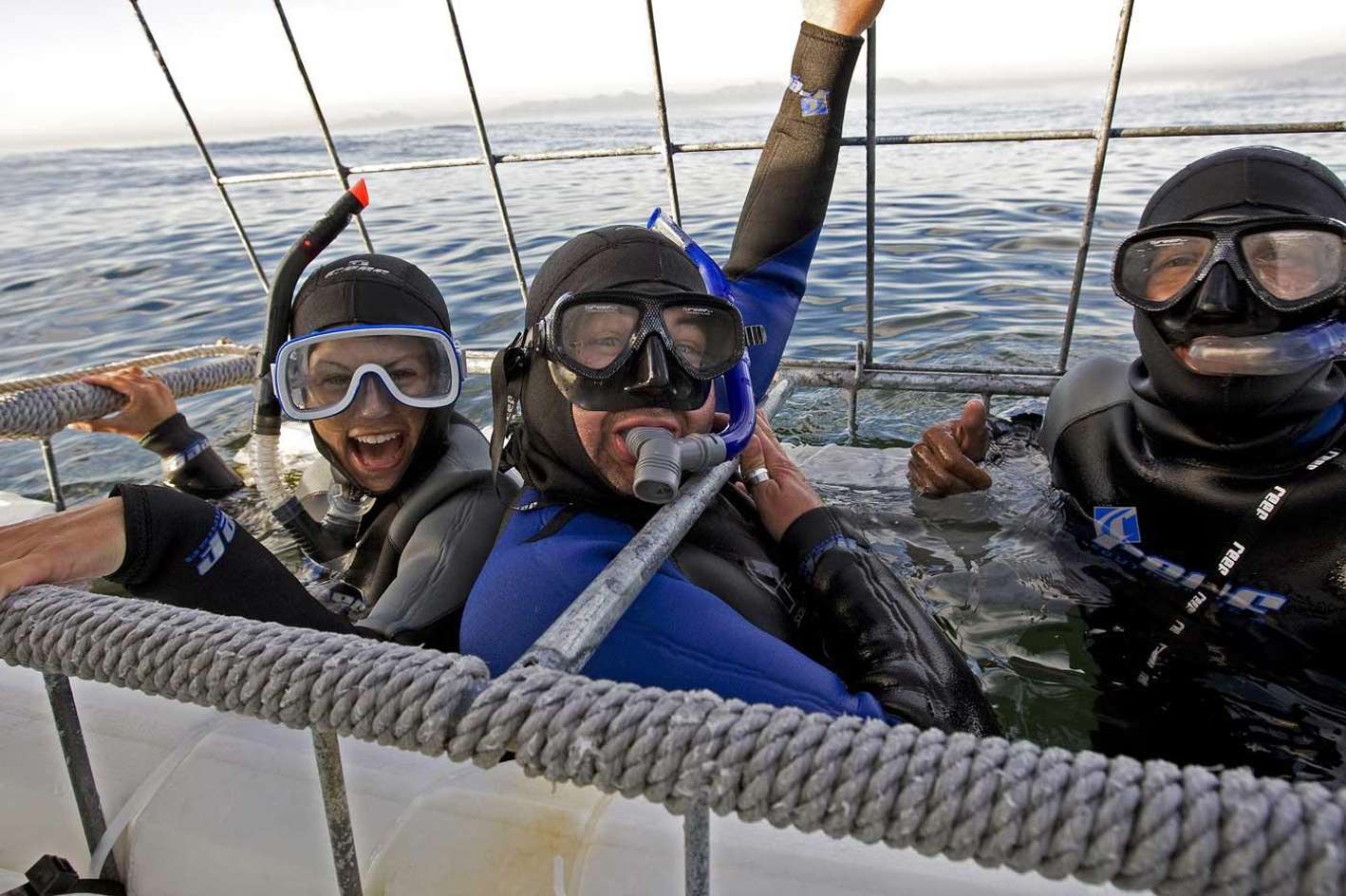
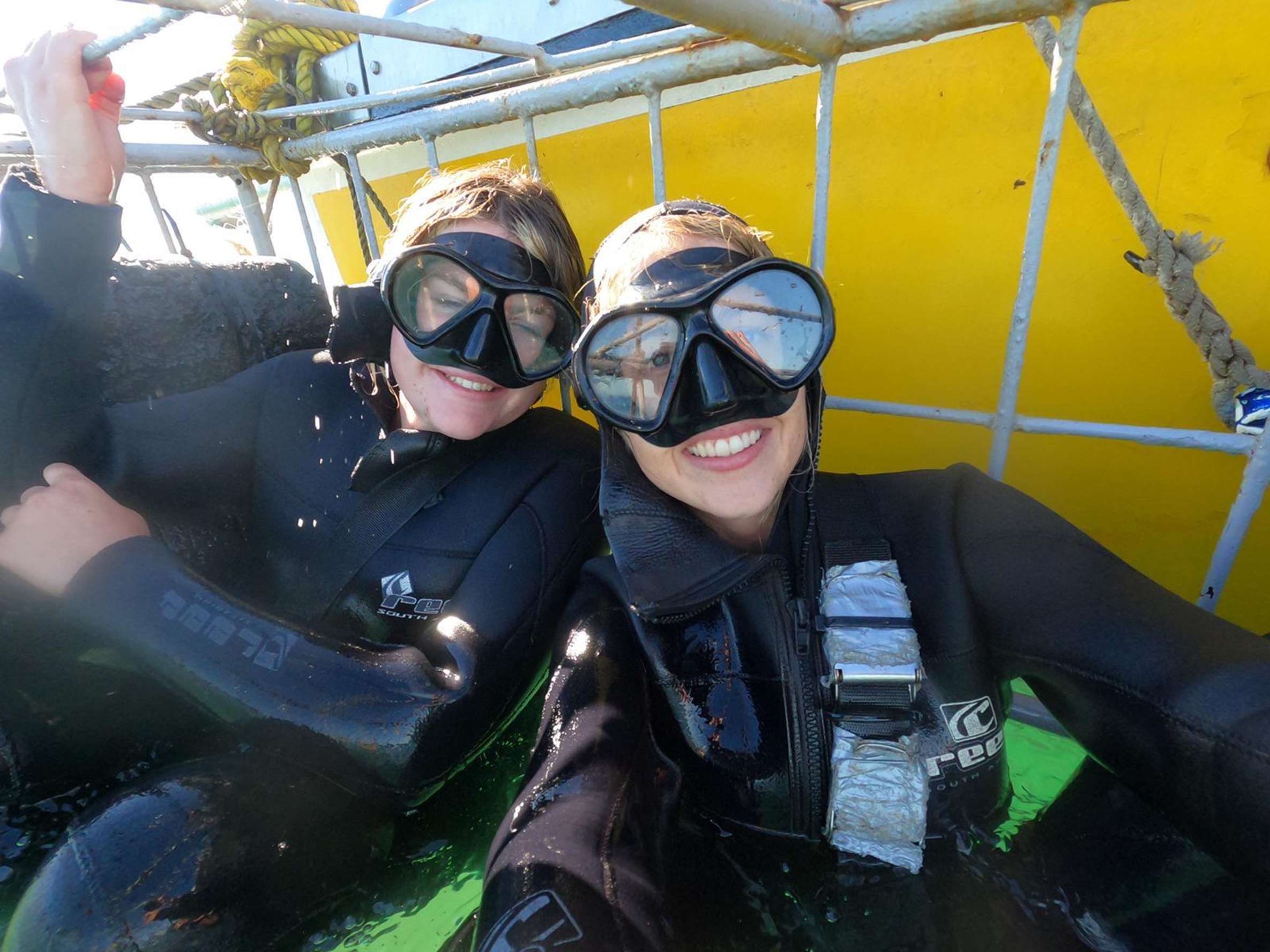
No regulator failure to fear, because in South Africa there is legally no scuba in the cage. Commercial operators may only run surface cages, where you either keep your head above water or hold your breath on cue as a shark passes.
Some boats add a hookah line, a simple surface-supplied air hose from the boat's compressor, but many trips need nothing more than a snorkel mask.
That means no scuba certification and no diving experience of any kind. You hold the interior bars, drop your face under when the guide calls it, and come up when you like. Most people hold their breath for ten or fifteen seconds at a time.
Swimming ability is the honest caveat. You do not need to be a strong swimmer; you stay in one place and can often stand or kneel on the cage floor.
But if you have never been comfortable in choppy water, the swell pulling at the cage can cause panic, and that is the real limitation. Total beginners go out on these trips all the time and do fine.
Non-swimmers should say so when booking, since some operators take them in the cage if they can enter safely and follow the crew, while one tour from Gansbaai is not suitable for non-swimmers at all.
No tanks, no gauges, no depth. The equipment is the simple part of the day.
Do chum and bait make sharks attack the cage?
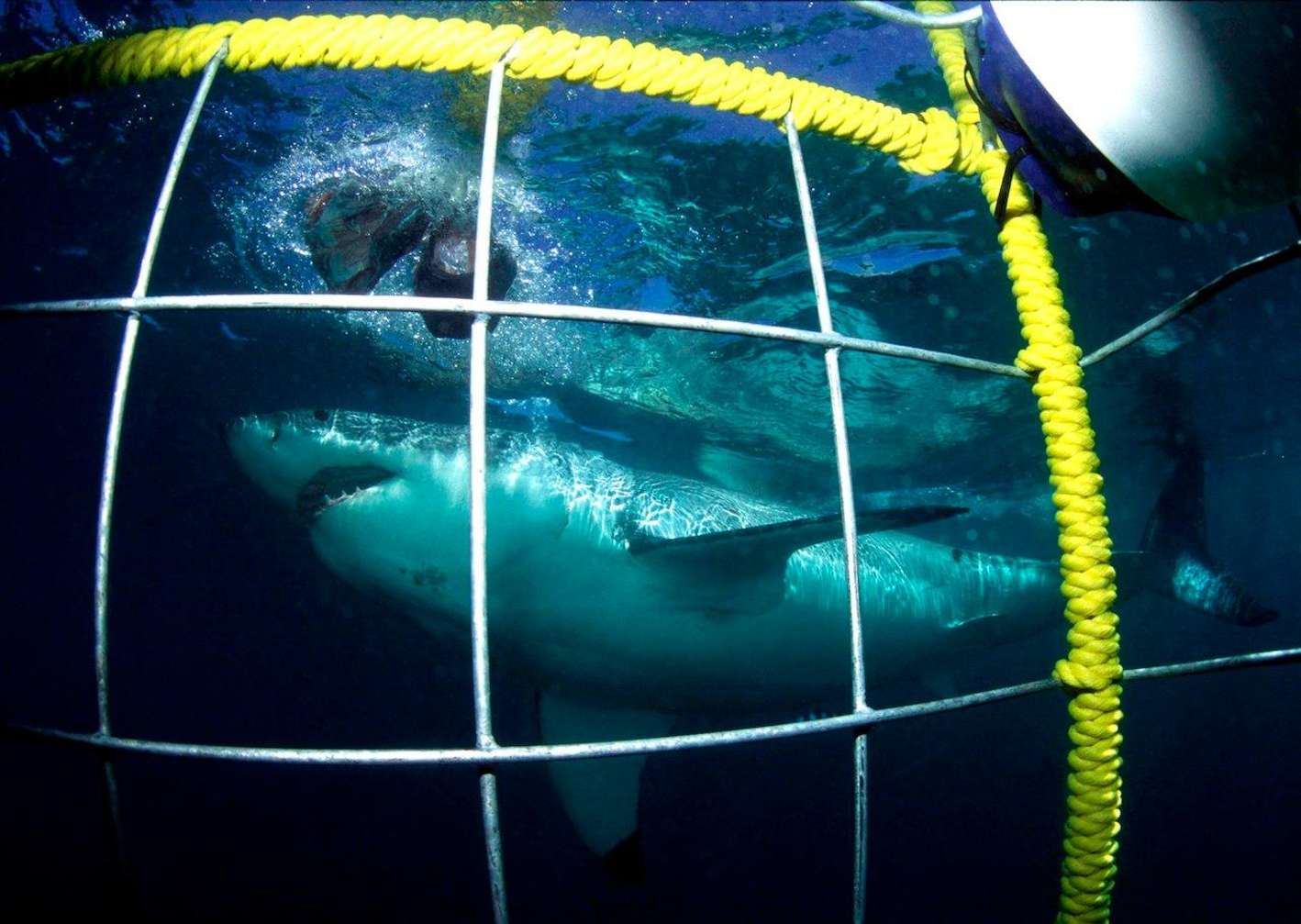
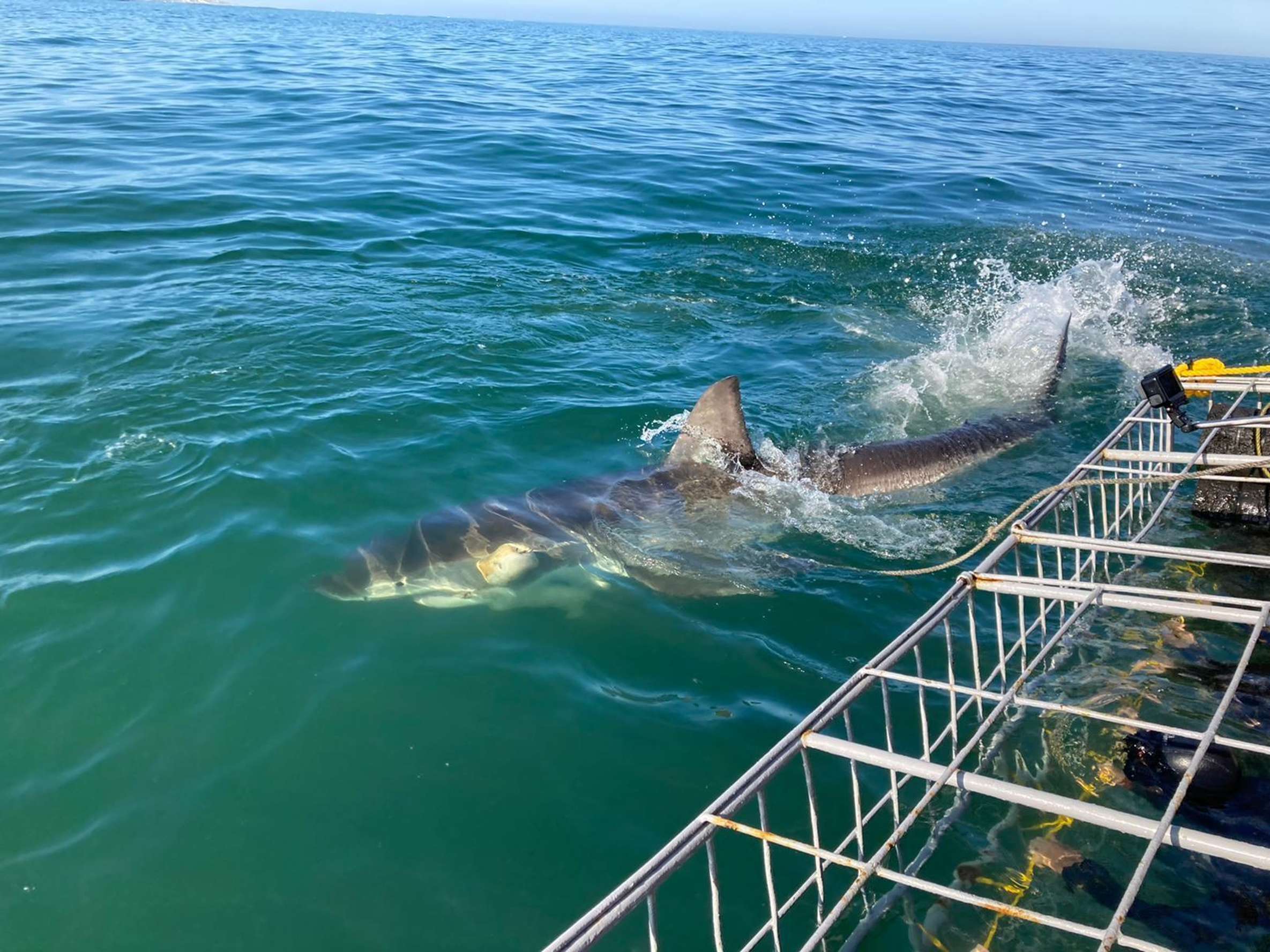
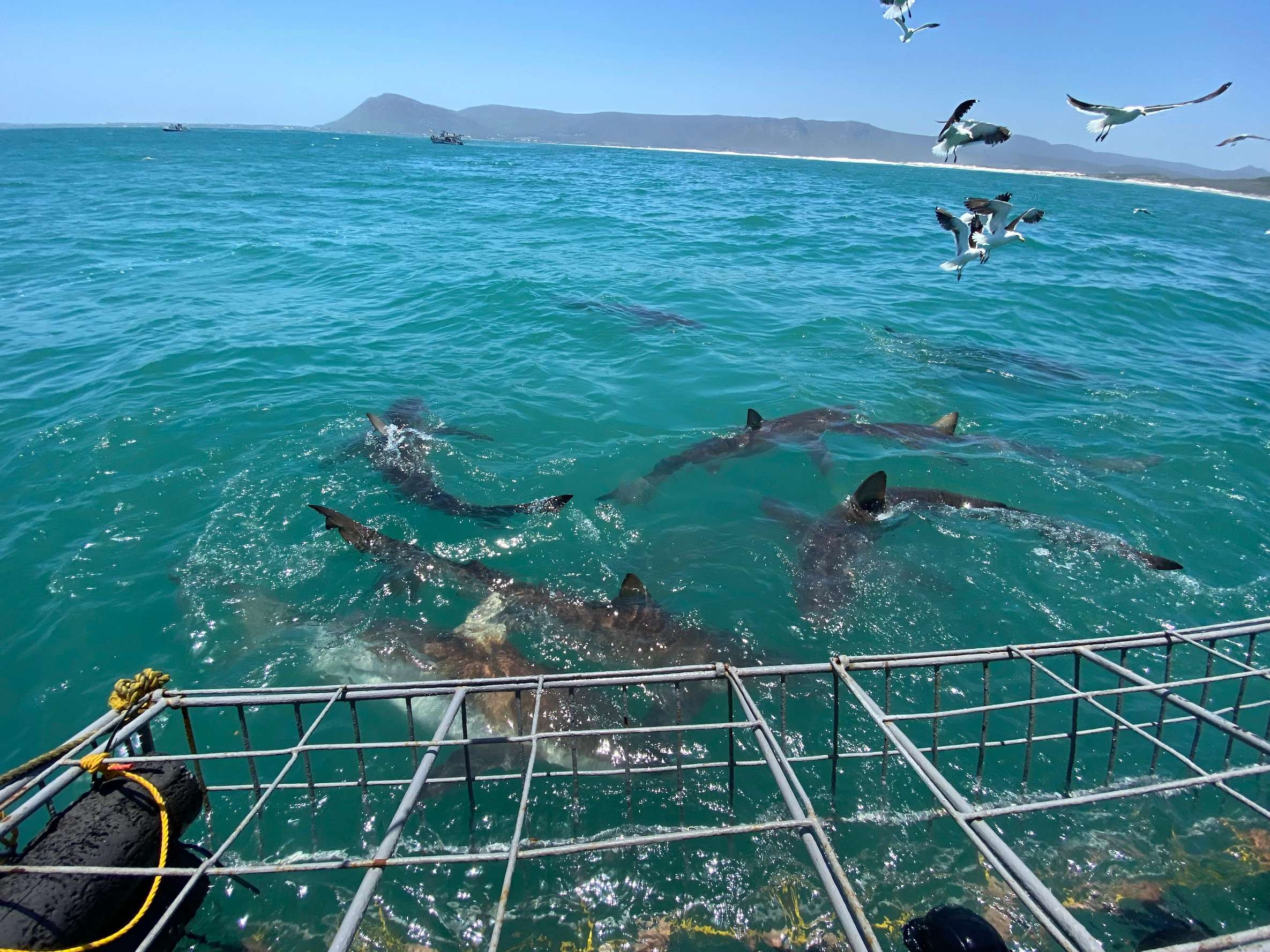
The picture in your head is probably a feeding frenzy, and the water around the boat is nothing like it. Sharks are drawn in by a scent slick of fish offcuts, oil and blood, a trail of smell that never becomes a meal.
South African law prohibits feeding sharks during cage diving, and the bait on the rope is pulled away as the shark closes in. It never gets the reward.
That distinction matters more than it sounds. When operators follow the rules and sharks get no food, they lose interest in the boats over time; researchers call it negative conditioning.
Studies have found no evidence connecting cage diving with higher risk to swimmers and surfers in Cape Town's inshore waters, and a 14-year study at Gansbaai found the boats did not change white shark behaviour or keep the animals hanging around.
The shark that glides past the cage is a wild animal following its nose. It has never learned that people mean dinner. Touching, tagging or interfering with a shark is illegal for everyone on board, crew included, and the same rule covers you: never reach a hand or camera outside the mesh.
So the scene is calm by design. A curious shark circles a smell it cannot cash in, and you watch it from behind steel bars.
Medical emergencies on board - crews, first aid and the real cold-water risk
Here is the danger nobody films: the Atlantic itself. Water cools the body roughly 25 times faster than air, and on a cage dive the mild hypothermia risk outweighs anything a shark is likely to do.
Crews plan for it. Dry towels, windproof jackets, hot showers and dry clothing wait for you back at base, and most boats hand out hot soup and bread after the dive.
The medical kit on board is regulated, not optional. Every shark cage diving vessel must carry an oxygen cylinder with a mask and a shark trauma kit.
At least one crew member holds a Level III first aid qualification, and at least one is trained in oxygen administration; the on-board first aid manual must be under five years old. Each vessel also carries an emergency response flow chart covering every shipboard emergency.
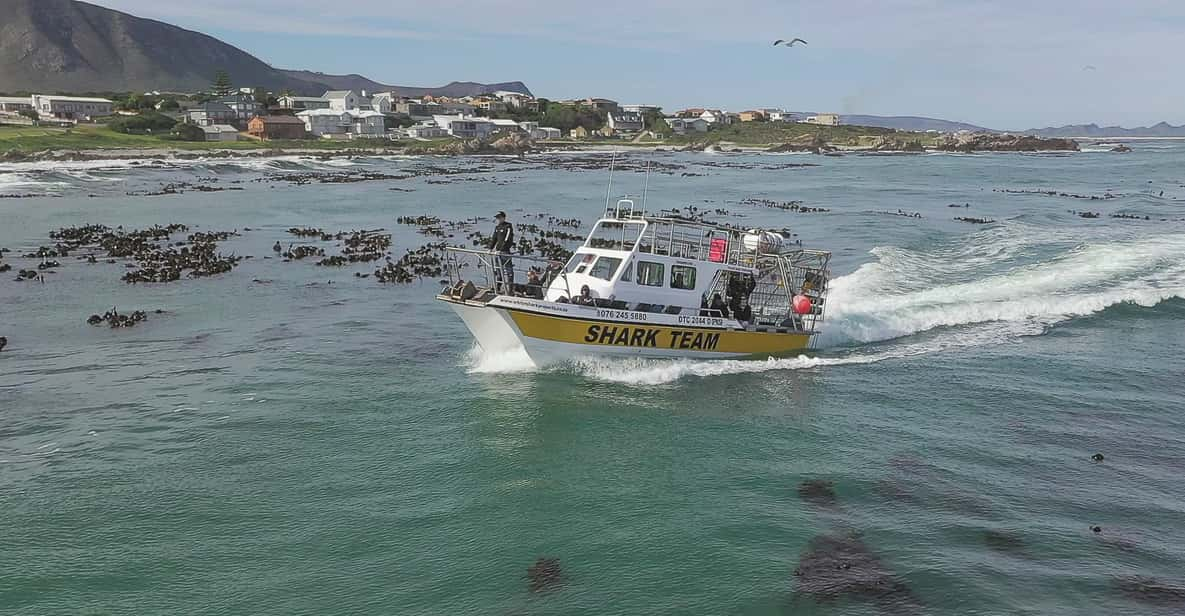
The skippers are qualified too. Nobody may run a commercial passenger vessel without an endorsed certificate of competence, plus a certificate of fitness for protected waters.
As for feeling rough out at the anchor: crews deal with seasick guests constantly. They will move you to a better seat, get fluids into you, and nobody is pushed into the water. You can cancel your turn in the cage at any time, for any reason, and watch from the deck instead.
Permits, licensing and who checks South African shark dive operators
This is one of the most tightly regulated shark tourism industries anywhere, and you can check an operator against it in a minute.
White shark cage diving is a restricted activity under the Biodiversity Act: nobody may run it without a permit, permits are strictly capped per area, and the operator may use only the vessels named on that permit, one at a time.
The hardware is checked as well. Vessels and cages must be certified safe and suitable by the South African Maritime Safety Authority, and the permit itself must be displayed in a visible spot on the boat during operations. Advertisements must carry the permit number, so a legitimate operator shows it without being asked.
Where they may work is fixed too: Seal Island in False Bay, Dyer Island in Gansbaai, Quoin Rock, Seal Island in Mossel Bay and Algoa Bay. Free-diving outside the cage with white sharks is prohibited, and so is touching or interfering with any shark.
One thing the law leaves to the skipper is the weather. No fixed swell height forces a cancellation; the skipper judges wind speed and direction, swell height, wave period and harbour conditions each day.
One operator treats swells near 3 metres, long wave periods or southwest winds over 15 to 20 km/h as its practical limits. Pick a licensed, surveyed operation and those judgements are made by someone qualified to make them.
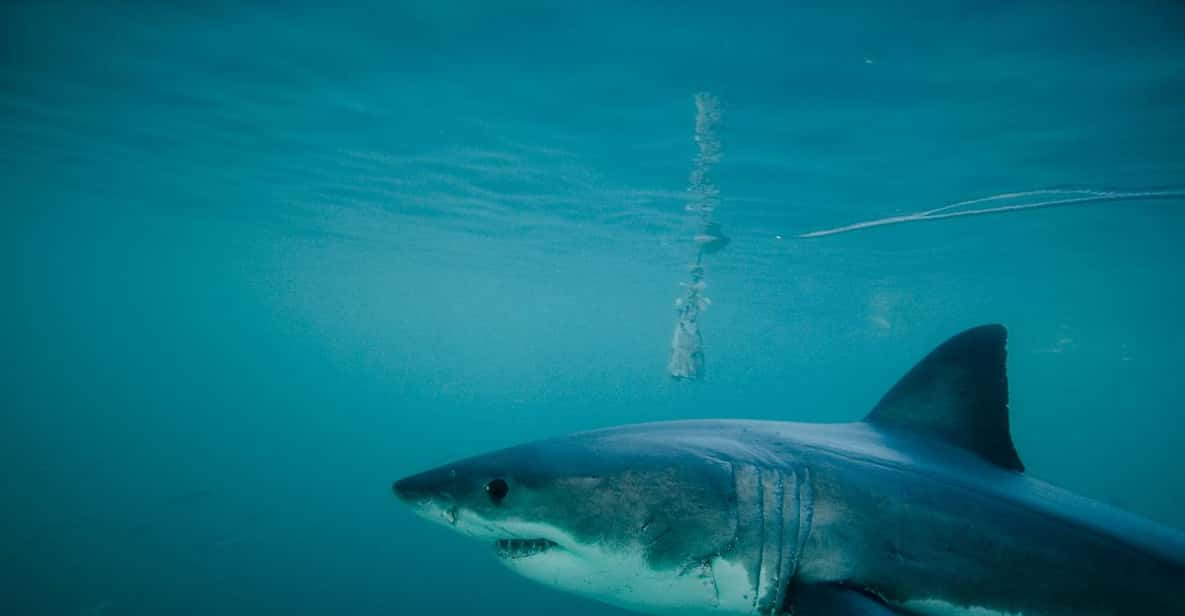
False Bay, Gansbaai or Mossel Bay - where the best shark dive is
Once the fear is settled, the choice is about drive time and which sharks you most want to meet.
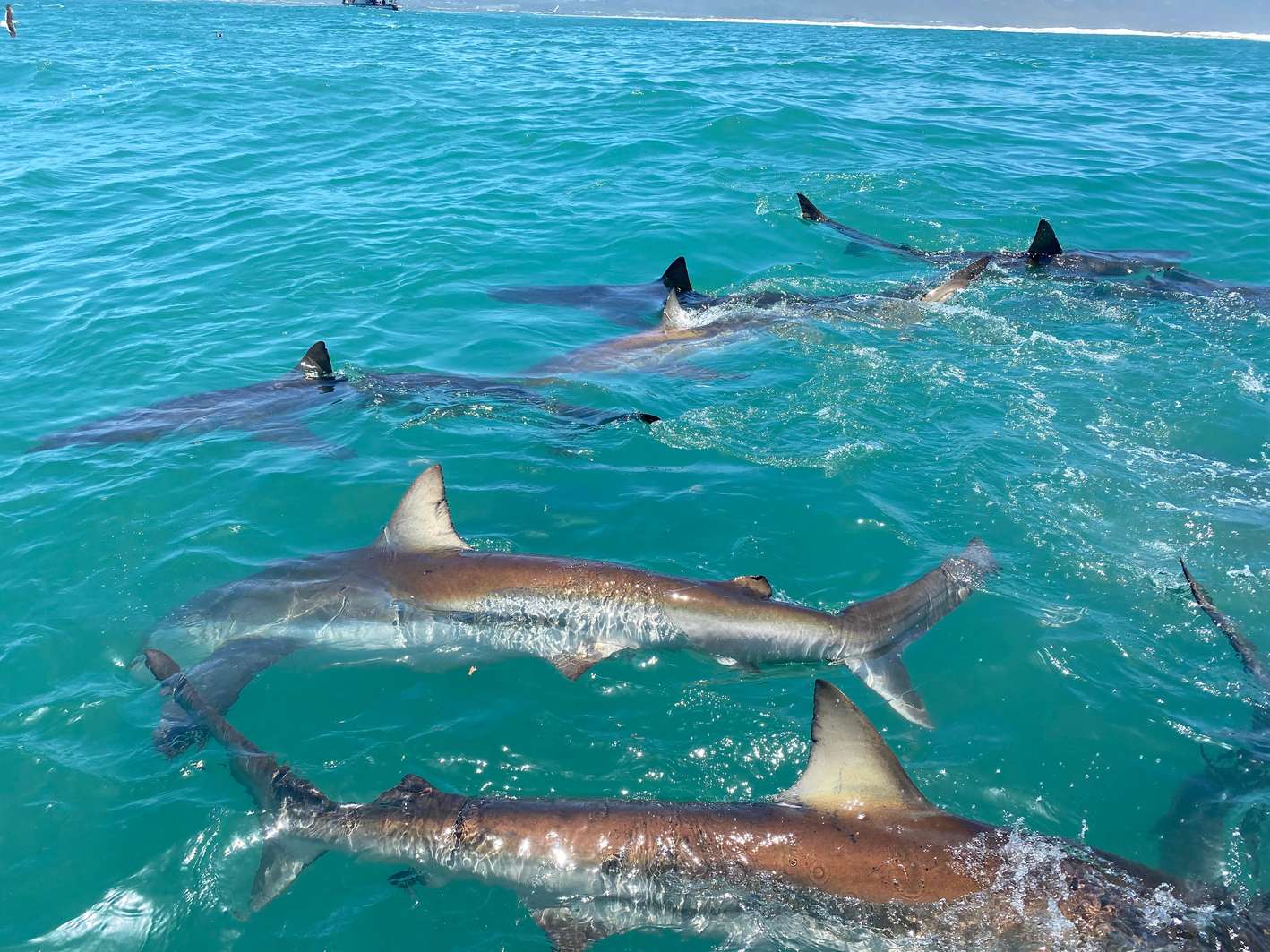
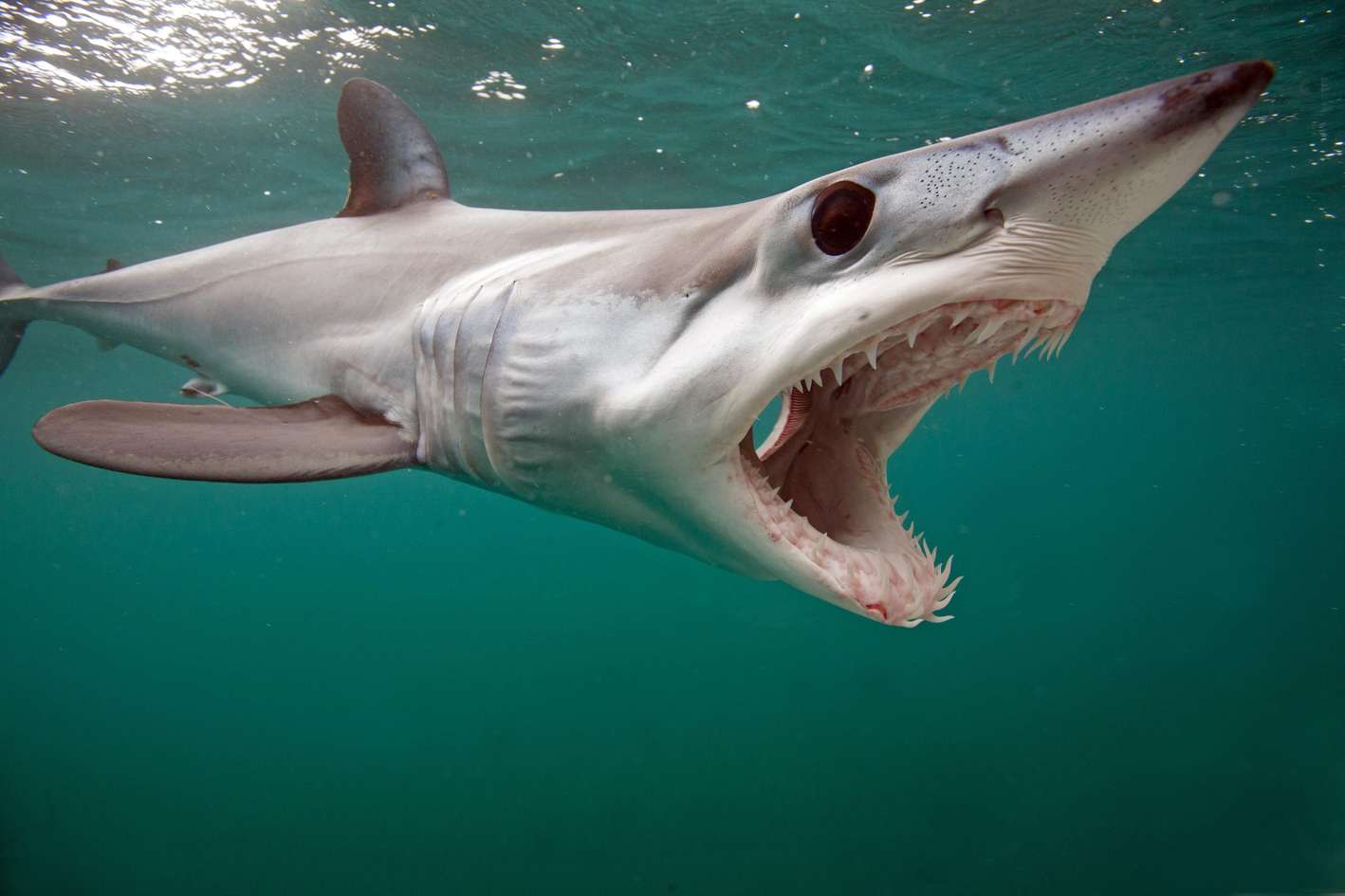
Simon's Town is the easy day: about 45 minutes from central Cape Town, diving False Bay, where bronze whaler and sevengill sharks are the regulars.
For a short stay, one tour does it neatly: the Cape Town: Award-Winning Shark Cage Diving in Simon's Town runs four hours with wetsuits, snacks and drinks included, and an owner-run conservation focus.
Gansbaai, 2.5 hours from Cape Town, is the classic and the stronger destination overall: more operators, higher shark concentrations and the Dyer Island seal colony. Most days bring bronze whalers and broadnose sevengills, with great whites appearing seasonally.
Mossel Bay is the long drive, four to four and a half hours east, but it has become the most consistent place in South Africa for great white encounters. Orcas displaced the white sharks out of False Bay, and sightings there and in Gansbaai have grown irregular ever since.
Whichever site you choose, set your expectations at bronze whalers, seals and dolphins, with a great white as the bonus. Regulars say the trips deliver plenty of shark action on most days; the guarantee nobody can make is which species shows up.
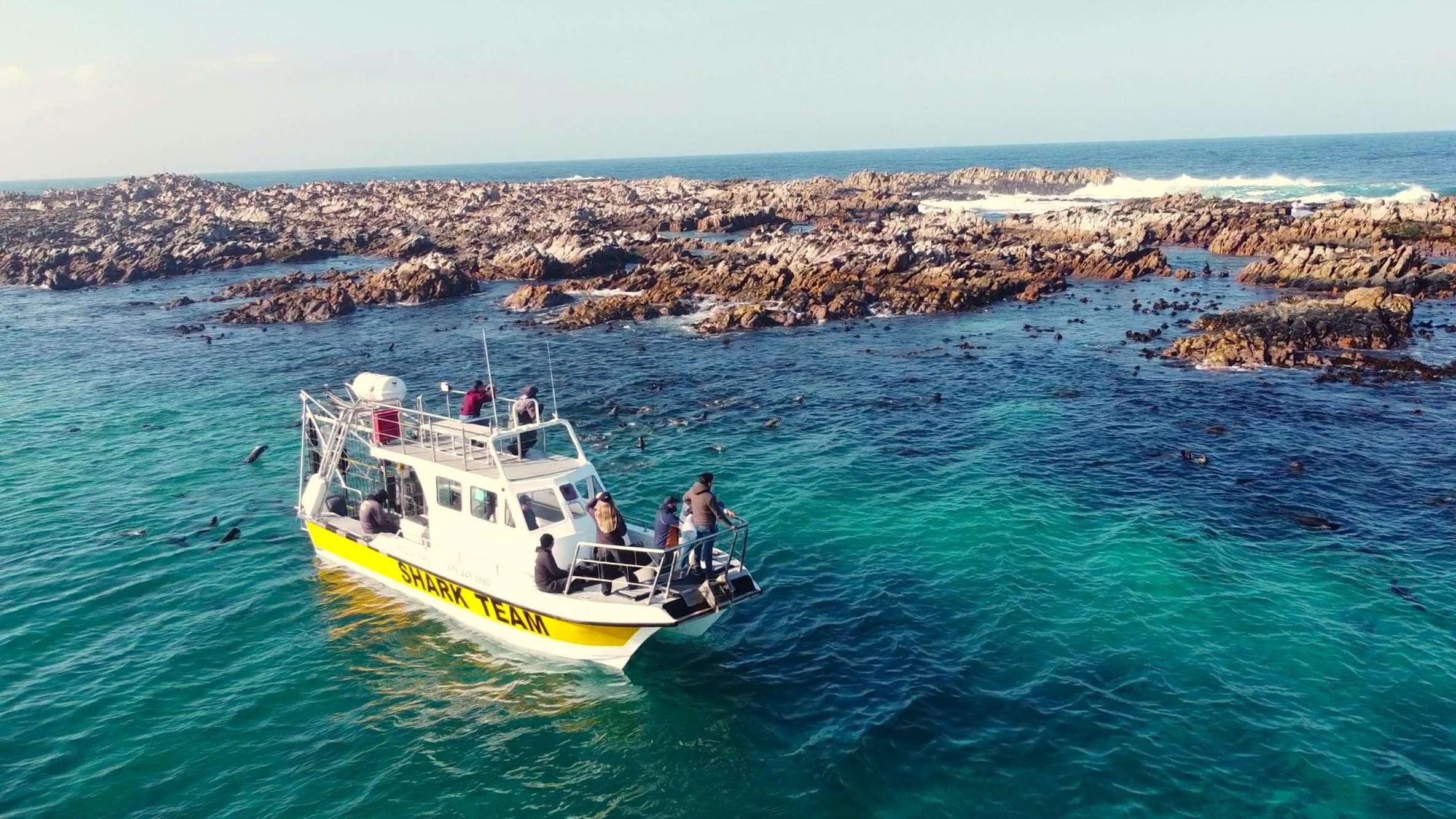
Driving from Cape Town to the dive sites yourself
Renting a car works well for both launch sites, and the roads are the easy part.
To Simon's Town, the direct drive from central Cape Town takes 45 to 53 minutes, about 45 km, though peak-season congestion can stretch it to 90. Leave early and it is an easy run down the peninsula.
To Gansbaai, plan roughly 2 hours 43 minutes without traffic, 163 km. The route runs east on the N2 over Sir Lowry's Pass and Houwhoek Pass, then branches onto the R43 past Hermanus and Stanford into Gansbaai.
The tarmac is paved and in good condition the whole way, so the only planning worth doing is the stop: Hermanus and Stanford have the most convenient fuel, coffee and bathrooms. Folding in a pause in Hermanus turns the drive into part of the day rather than a chore.
Self-drive guests who book the Gansbaai operator that runs from Hermanus meet at the activity provider's office rather than the harbour, so check your meeting point when you book. The afternoon before, the operator confirms your launch time, since tides and collection schedules set it and it cannot be fixed earlier.
If driving before a 6 am launch sounds like too much, the transfer options pick you up at your hotel instead.
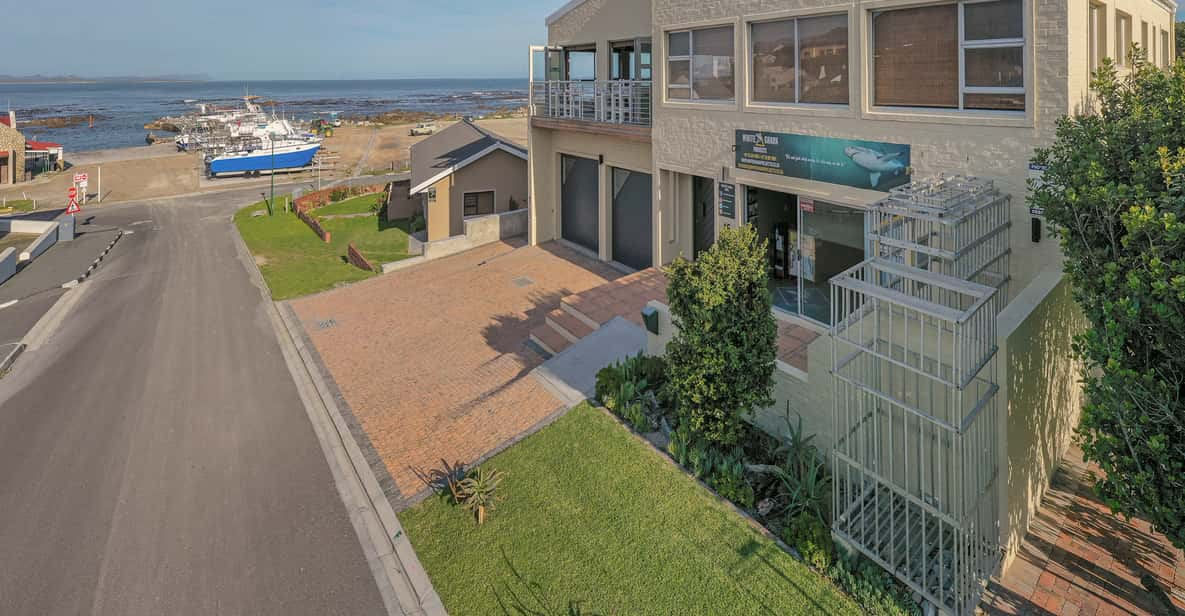
When trips are cancelled for weather and what you get back
The honest risk of a cage dive day is not the shark; it is the wind. Rain cancels nothing, because the boats have dry cabins.
Heavy swell and strong wind cancel plenty: from Gansbaai in the winter months, roughly 18 of 30 departures stay tied up, with summer cutting that to about 10 in 30. Simon's Town sits in a more sheltered bay, though summer southeasters still blow 5 to 8 windy days a month, building in the afternoon.
The call is made by the skipper, usually confirmed the afternoon before at 2 pm on the marine forecast. Book the earliest day of your stay so a washed-out trip has somewhere to move.
When the weather decides your day
| If this happens | What happens then |
|---|---|
| Trip cancelled before launch for sea conditions | You choose a full refund or move to another day, and if you had transfers those run free on the rescheduled date. |
| You cancel yourself | Cancel up to 24 hours in advance for a full refund. |
| Strong winds pick up while the boat is already at sea and it turns back | No refund for the shortened trip; the sea called it, not the operator. |
| No sharks show on the day | Some operators hand you a free return dive or a rebooking voucher; one counts a shark spotted from the boat as a successful trip. |
Those are operators' own published terms, and they vary, so read the cancellation line on the tour you book. Then build a spare day into the trip and treat any cancellation as luck shifting, not money lost.

How to prepare for the day - seasickness, wetsuits and cage rules
Preparation decides whether this day is a joy or an ordeal, and the list is short.
Start with your stomach. Take motion sickness medication two hours before boarding, or the night before as well if you know you suffer, because pills taken after the nausea starts barely absorb.
A light, low-fat breakfast helps; skip the greasy and heavily spiced stuff. The open water at the anchor can roll heavily, and seasickness is the thing most likely to keep you out of the cage.
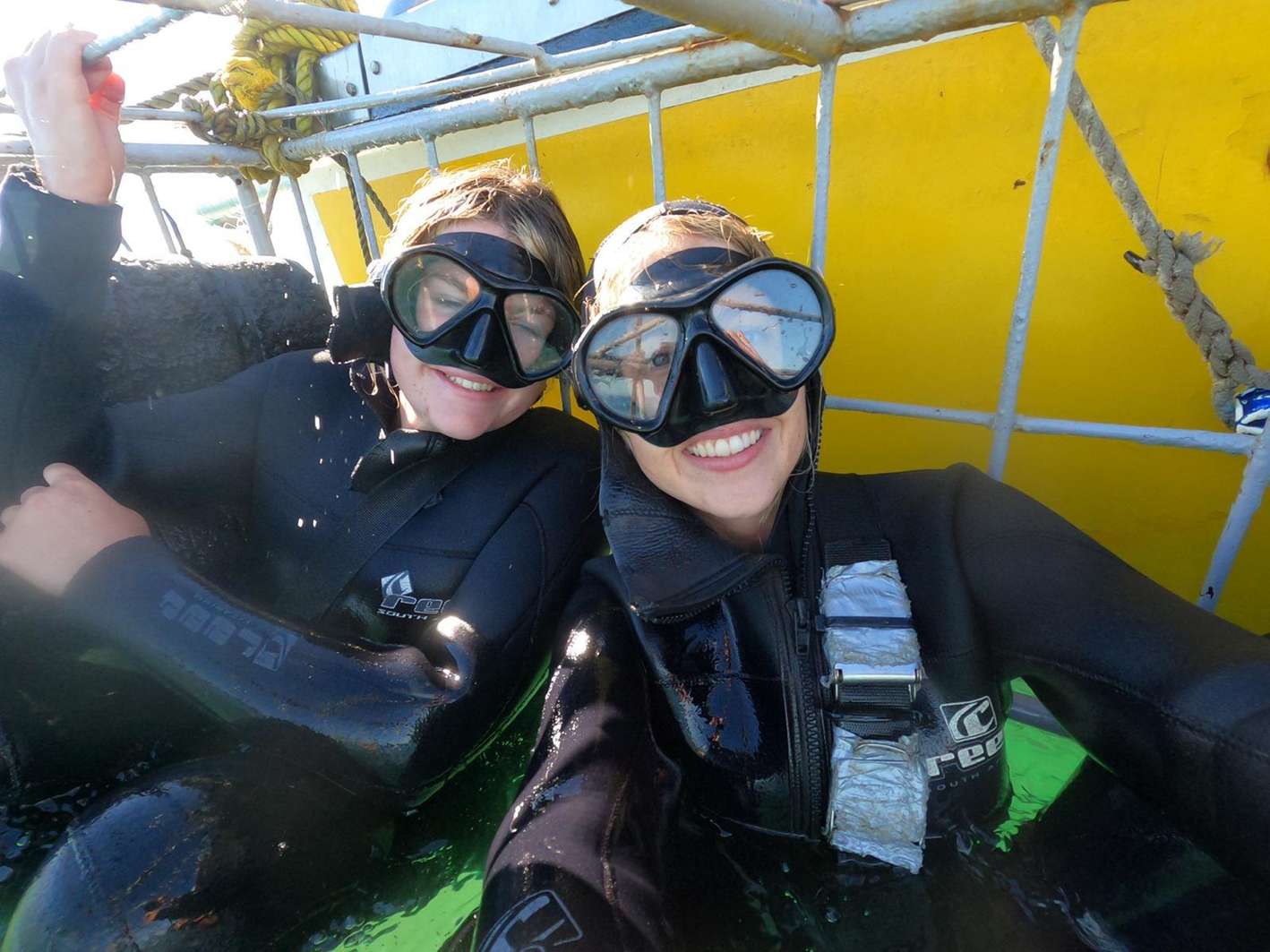
Cold is handled for you. Western Cape water runs from 14 to 16 degrees in winter to 18 to 21 in summer, and operators supply thick 5 mm or 7 mm full wetsuits with booties, hoods and masks.
You bring a swimsuit and warm layers for the deck, where a windbreaker and beanie earn their place on the boat ride. Breakfast on arrival, snacks and hot or cold drinks on board, and soup with bread afterwards are all part of most trips.
In the cage, one rule governs everything: hands, cameras and feet stay inside the bars, always. Hold the interior handrails or hook a foot under the bottom rung against the swell, and clip your GoPro to a buoyant grip with a wrist lanyard rather than trusting a plastic clip.
Then duck your head under and watch a bronze whaler slide past. That part is easy.
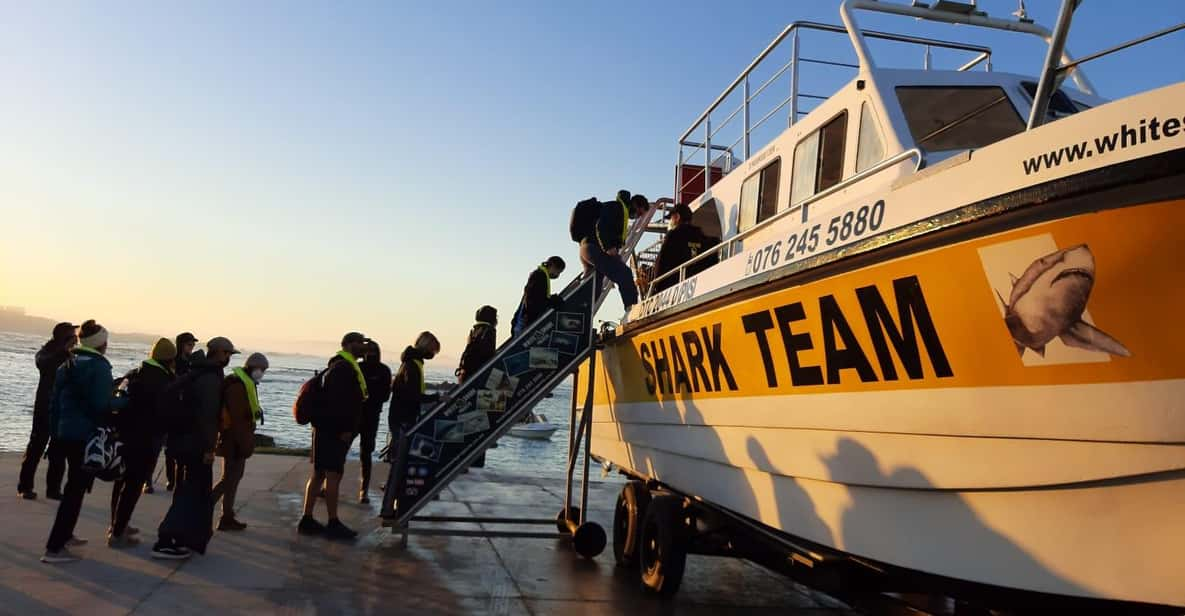
Safe, with the sea as the variable
Yes, shark cage diving in South Africa is safe by any honest measure: no paying guest has died from a shark in a licensed cage, the cages are engineer-certified and float even cut free, and the boats carry regulated medical kit and qualified crews.
The risks worth planning around are cold, swell and seasickness. Go with a licensed operator, a flexible day and pills taken early, and the fear you arrived with will not survive the first shark pass.
What to know before you book a safe shark cage dive
No paying guest has ever been killed by a shark inside a licensed South African cage. The industry's single fatal accident happened on 13 April 2008, when a tour boat capsized off Gansbaai and three people drowned. It was a seamanship failure, and it remains the only fatal incident of its kind.
Every cage must be certified safe by the South African Maritime Safety Authority and designed by a registered engineer. The rules require aluminium, stainless steel, or galvanized mild steel, no sharp edges, and a door at the top. You float with your head at the surface, and you can climb out whenever you want.
The cage sits flush against the hull, lashed down with heavy ropes and steel carabiners, and a secondary bridle catches the load if a primary cable fails. By law the cage must carry enough flotation to float on its own, so it stays at the surface even if every line was cut.
South African cages are surface cages. You breathe at the surface, hold your breath on cue, or use a snorkel or a simple air line fed from the boat. You sink only as far as your head and shoulders. Scuba tanks and certification never come into it.
Beginners and non-certified swimmers can dive, but you should be comfortable in choppy water. The swell pulls at you while you hold the bars, and panic is the real risk. If you would rather stay dry, one tour's crew welcomes you to watch the sharks from the deck instead.
Keep your hands, camera, and feet inside the bars at all times, even for a closer shot. Hold the interior handrails or hook a foot under the bottom rung to steady yourself against the swell. Crews brief you on this before anyone gets wet.
Every shark diving vessel must carry an oxygen cylinder with a mask and a shark trauma kit. At least one crew member holds Level III first aid and is trained in oxygen administration, and the first aid manual on board has to be less than five years old.
Skippers of commercial passenger vessels need an endorsed certificate of competence, and a valid certificate of fitness to enter a Marine Protected Area. The skipper decides each morning whether the sea allows a launch, and that call is final.
“Pickup was on time, small breakfast and briefing in Gansbaai, then out on the boat..”
Shark cage diving safety - accident and death questions answered
Is shark cage diving safe in South Africa?
Commercial operators run under strict rules, and their record against shark attacks is clean. Surface cage diving is a controlled activity with minimal physical risk beyond stepping between the deck and the cage. The boats and cages must be certified as safe by the South African Maritime Safety Authority before a single guest boards.
Has anyone died from shark cage diving?
No paying guest has died from a shark while inside a licensed South African cage. The industry's only fatal incident came on 13 April 2008, when a commercial cage diving boat capsized near Gansbaai and three tourists drowned. That was a boating accident, and it remains the only one of its kind.
What shark cage diving accidents have happened in South Africa?
The 2008 Gansbaai capsize killed three people and injured two more, one with a fractured foot and one with a broken arm. Beyond that, recorded accidents on cage diving trips trace back to boat handling rather than sharks. Sharks have never caused a documented fatality to a guest inside a licensed cage.
Has a shark ever gotten into a cage?
It has happened twice. In 2005 a great white pushed through cage bars off South Africa with a British diver inside, and in March 2013 an eight-foot great white got its head into a cage in Gansbaai. Neither diver died. Current rules on bar spacing and cage design exist to prevent exactly this.
Is shark cage diving scary?
The first minute in the water gets most people's heart going, and that is part of the draw. Once a shark glides past, divers usually describe the cage as calm and quiet. You stay at the surface with your head above water between drops, and you can climb out at any point.
What stops a shark from breaking into the cage?
Every cage must be certified as sound by a registered engineer and built from aluminium, stainless steel or galvanized mild steel with no sharp edges. Viewing openings may not exceed 400 mm in height, and a 300 mm gap is recommended to keep smaller sharks out. Internal handrails keep your hands away from the openings.
Could the cage sink or break loose from the boat?
The rules require enough built-in flotation for a cage to float even if it is cut free. Cages are lashed to the hull with heavy ropes and steel carabiners, modern designs carry foam-filled pontoons on top, and a secondary safety bridle catches the load if a main cable snaps.
Do I need scuba certification or strong swimming skills?
You need neither. Surface cages run on breath-holding, a snorkel or a simple air line from the boat, so no scuba qualification applies. Basic comfort in choppy water matters, though, because a passing swell can pull at you. Most people stand or kneel on the cage floor and hold the bars.
What happens if I panic or feel claustrophobic in the cage?
You leave. The cage door sits at the top, you float at the surface throughout, and you can exit at any point for any reason. Crews see nervous first-timers every day and expect it. If you would rather stay dry, watching sharks from the deck gives you a clear view too.
What medical help is on board if something goes wrong?
Every vessel must carry an oxygen cylinder with a mask and a shark trauma kit. At least one crew member holds a Level III first aid qualification and training in oxygen administration, and the boat carries a written emergency response chart covering every shipboard scenario. Some tours also carry a paramedic.
How dangerous is shark cage diving, honestly?
The physical risks are ordinary ones: getting in and out of a cage in a swell, seasickness and the cold Atlantic water, which cools your body about 25 times faster than air.
Crews hand out dry towels, hot showers and warm soup afterwards. Keep your hands inside the bars and the shark itself stays a spectator.