

Our pick
4.5 - 8 hours·English, Afrikaans
4.7(903)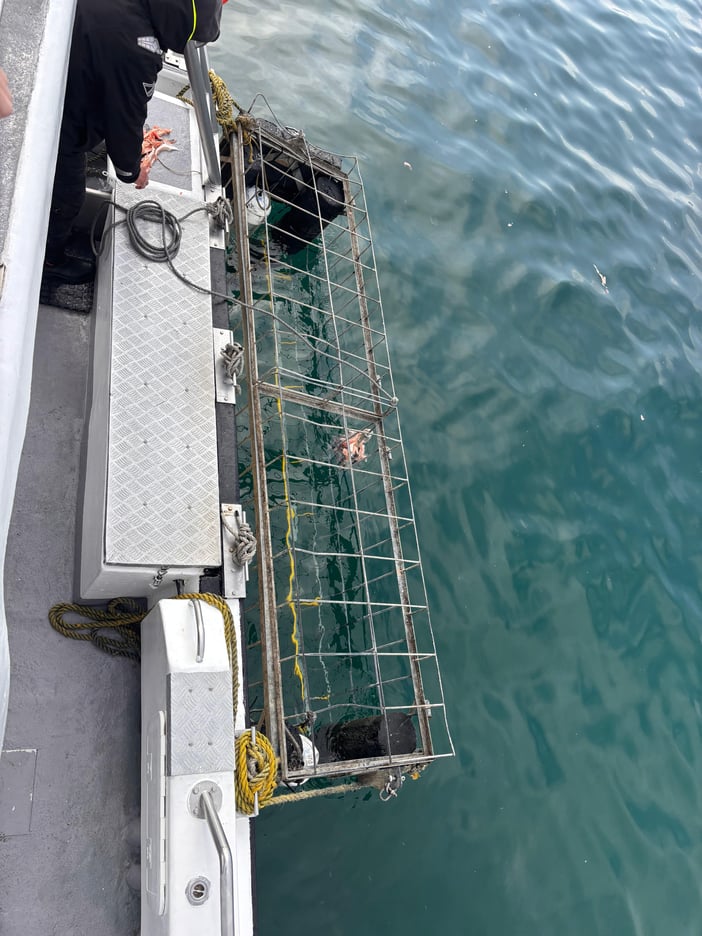
From Hermanus or Cape Town: Shark Cage Diving Experience
Free cancellationHotel pickup includedShark cage diving experience

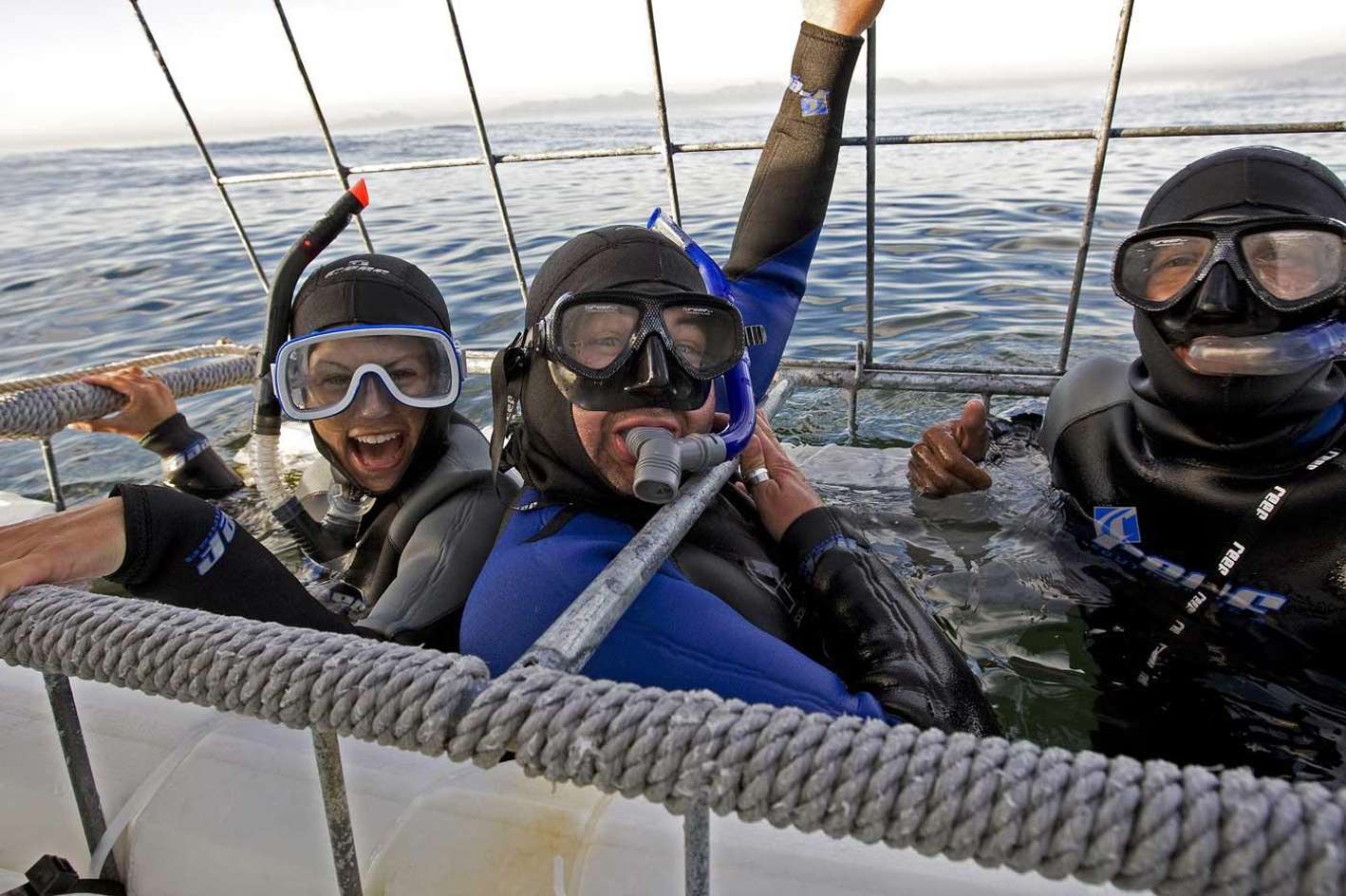
Dive in a cage with sharks, no scuba experience needed. The Gansbaai day trip from Cape Town or Hermanus puts you in the water with bronze whaler sharks - wetsuit and gear included, breakfast on arrival, hot showers and soup after. Pick your date and let the crew handle the rest.
Nothing bookable on this page runs out of Durban, Umkomaas, or Rocky Bay. Every shark cage diving trip sold here launches from the Western Cape, where South Africa's established cage diving industry works from Gansbaai, Simon's Town, and Hermanus.
The closest match is the From Hermanus or Cape Town: Shark Cage Diving Experience, a 4.5 to 8 hour day in Gansbaai with a continental breakfast, a marine biologist briefing, and about 20 minutes in the cage, with a second dive often possible.
Warm-water sharks and a short drive from Durban are off the table; instead you get Gansbaai, one of the world's main cage diving locations, with hotel pickup or a self-drive meeting point.
See the tour
No cage diving tour runs out of Durban, and none of the bookable trips here do either. If a KZN itinerary cannot stretch to a flight, the dive this page recommends instead is the From Hermanus or Cape Town: Shark Cage Diving Experience, run out of Gansbaai in the Western Cape.
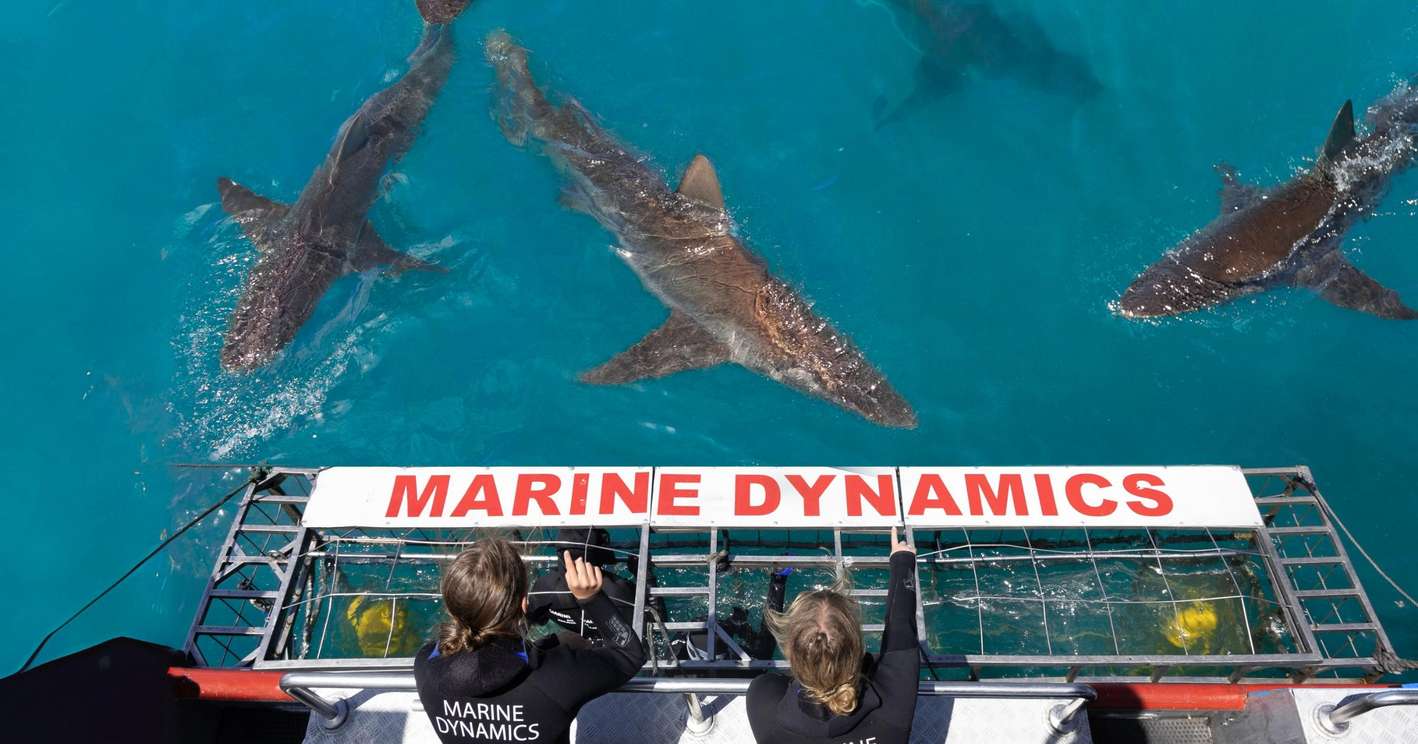
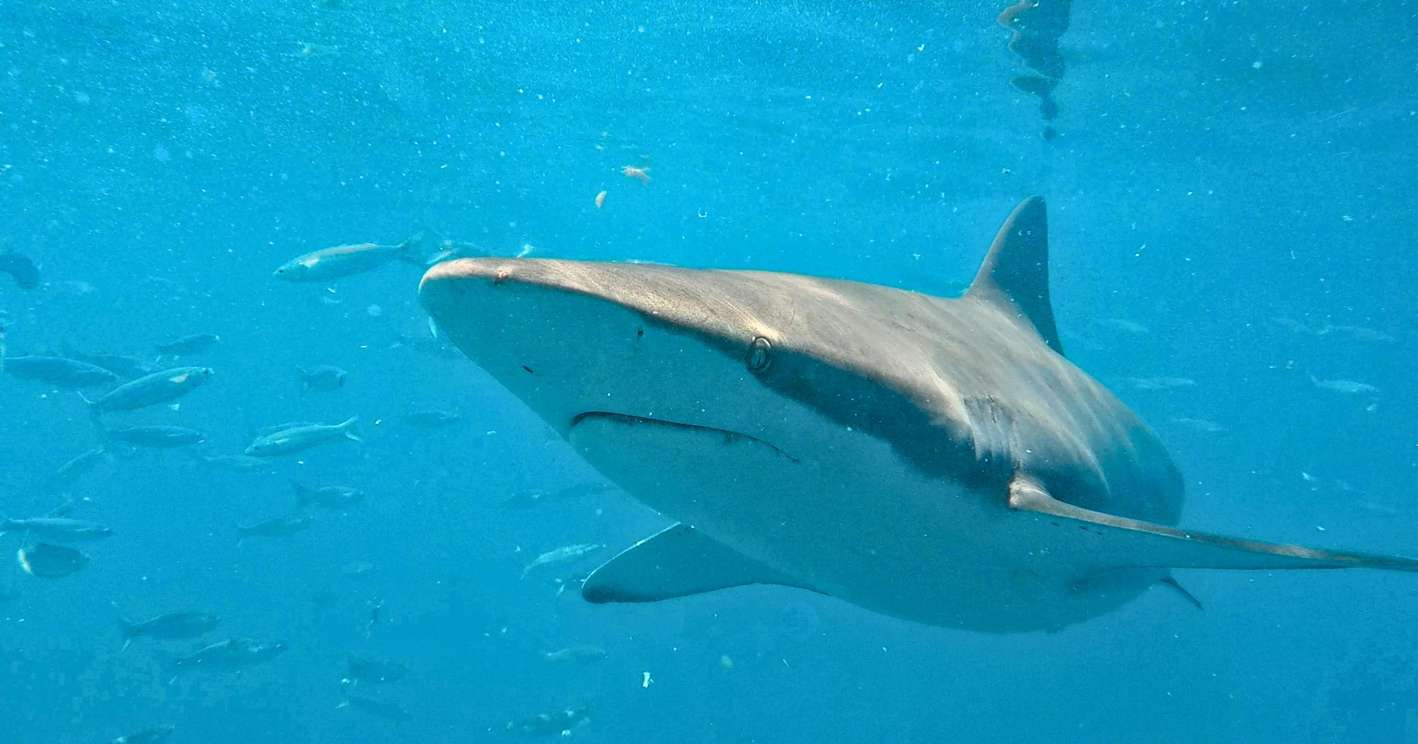
It delivers the core of what you were after: a real surface cage dive, with about 20 minutes in the water and the chance of a second turn. The boat trip lasts roughly three hours, and bronze whaler and sevengill sharks are the species you will most likely see.
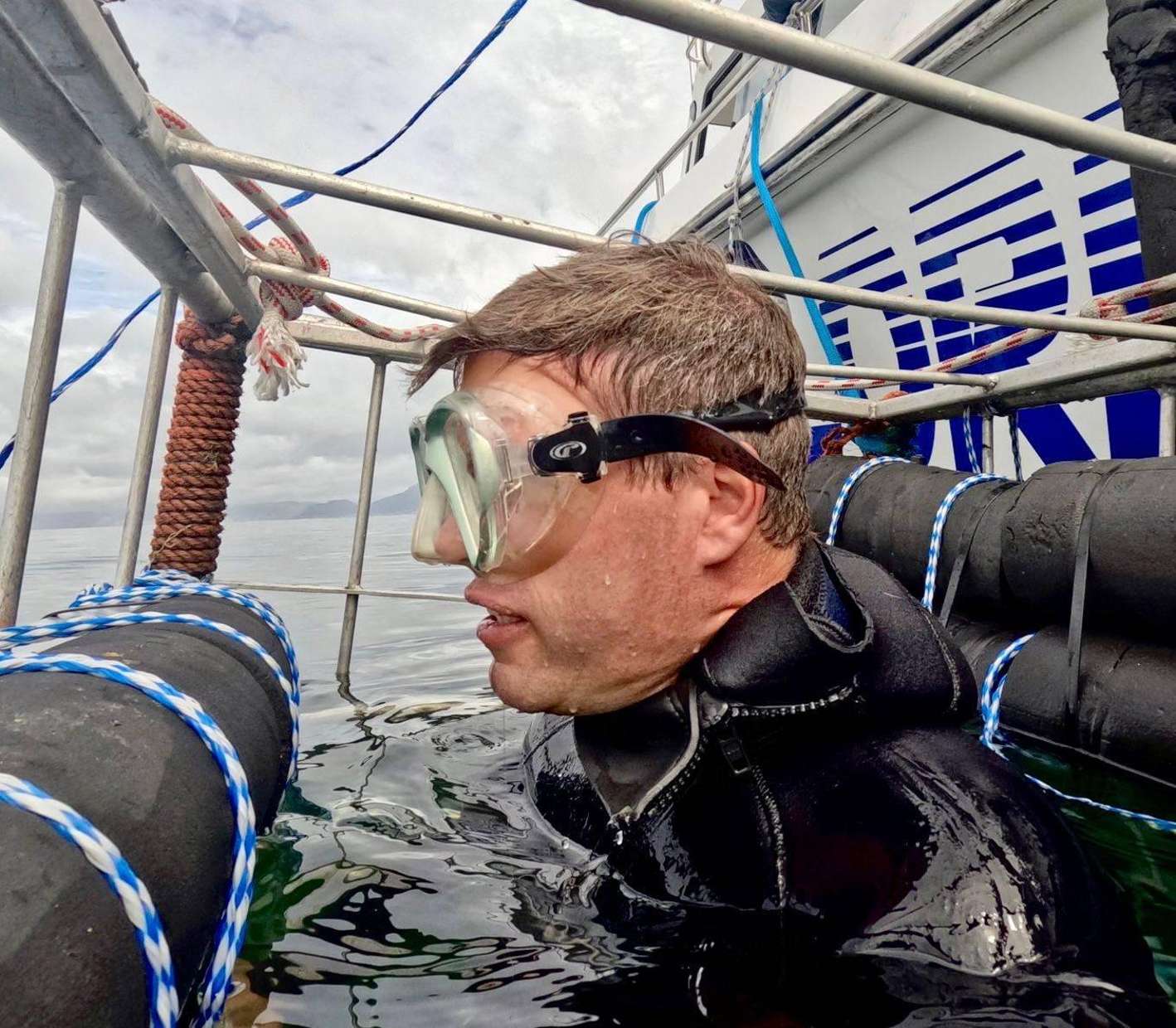
Water runs 12°C to 17°C in winter, colder than the Agulhas current off Aliwal Shoal, but a 7 mm wetsuit, hood, boots, mask and weight belt all come supplied, along with hot showers and towels when you climb out.
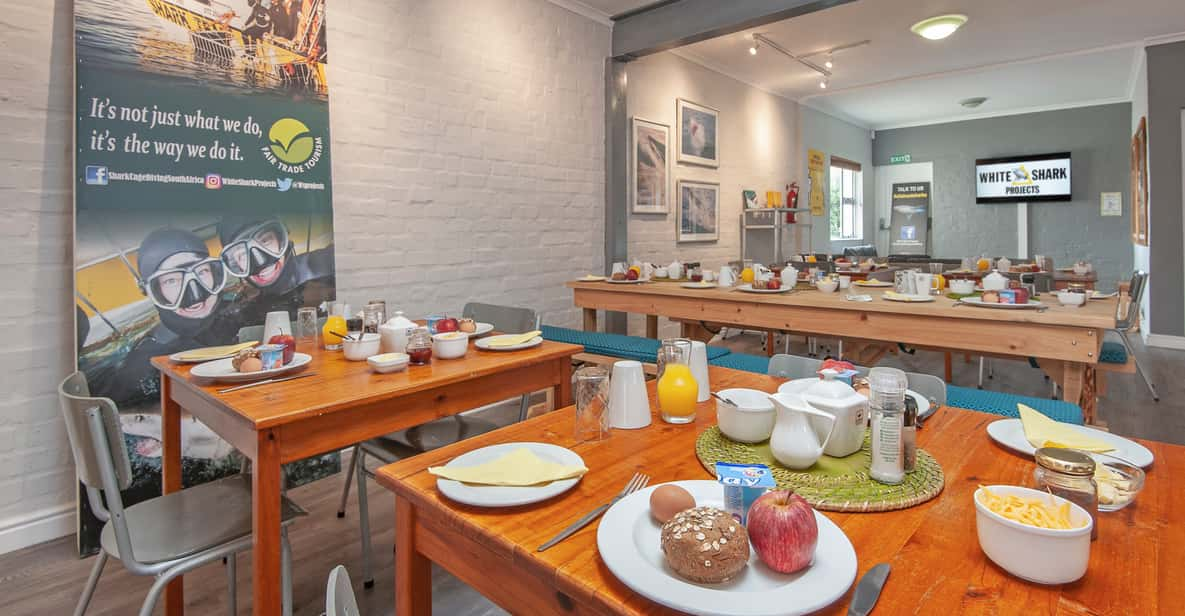
Breakfast on arrival, a marine biologist briefing, snacks, bottled water and a light lunch afterwards are included. Collection from Cape Town takes about two hours and from Hermanus about 45 minutes, or you can drive to the meeting point in Kleinbaai.
It suits first-timers best, since no diving experience is needed. Children under 6 stay off the boat, and seasickness tablets are worth packing.
no scuba certification needed in any cage
Green marks the lowest price. Prices per person.
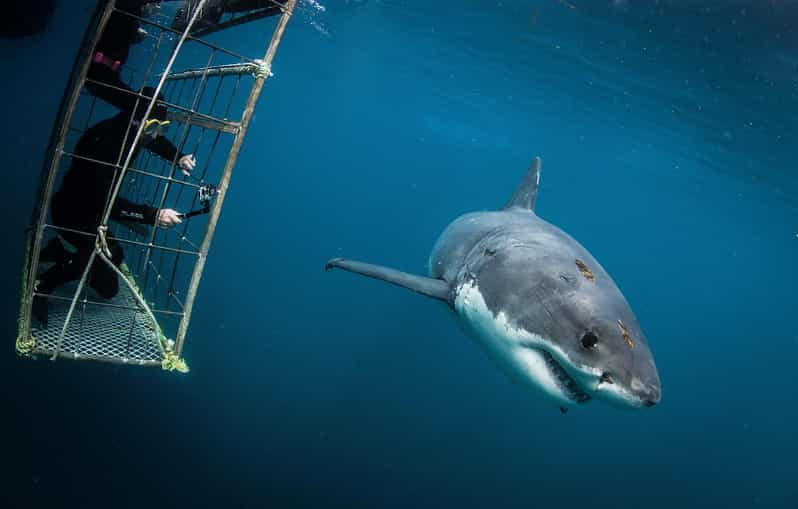
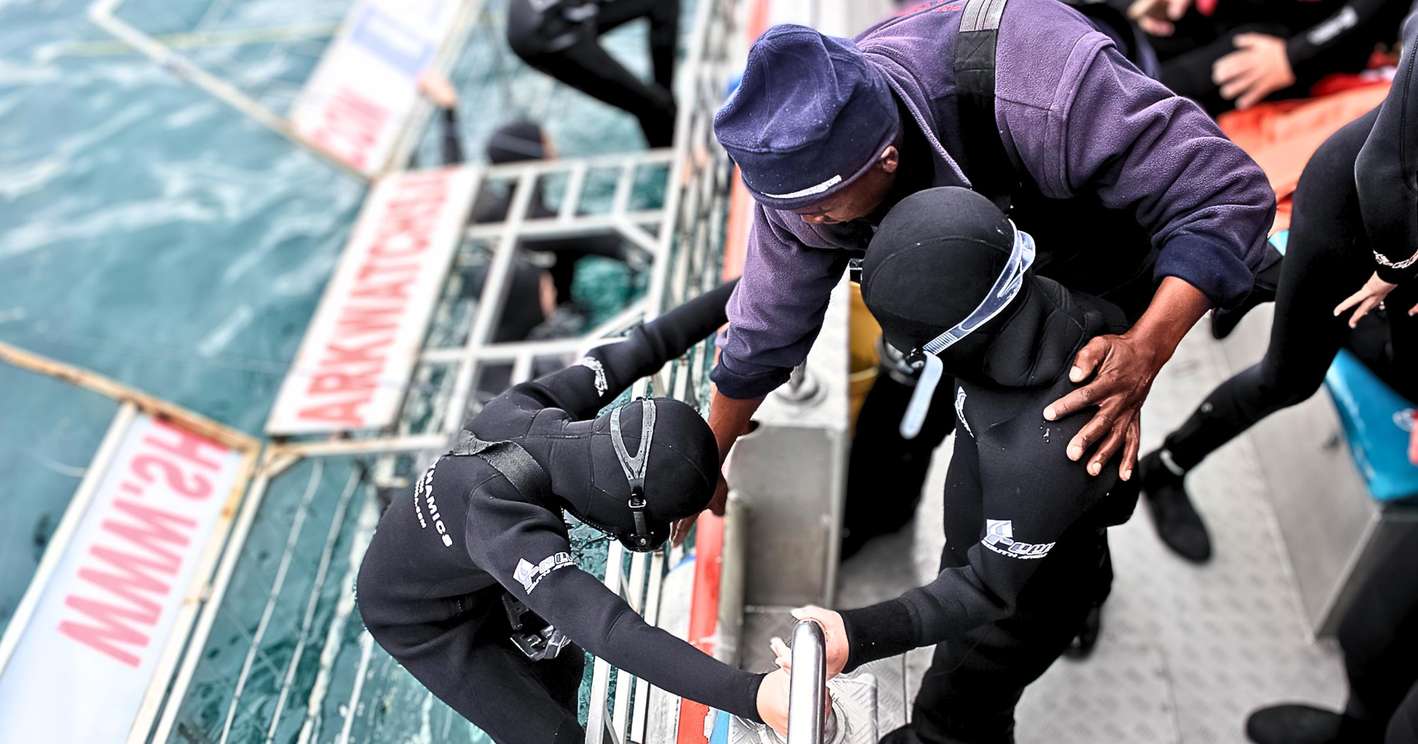
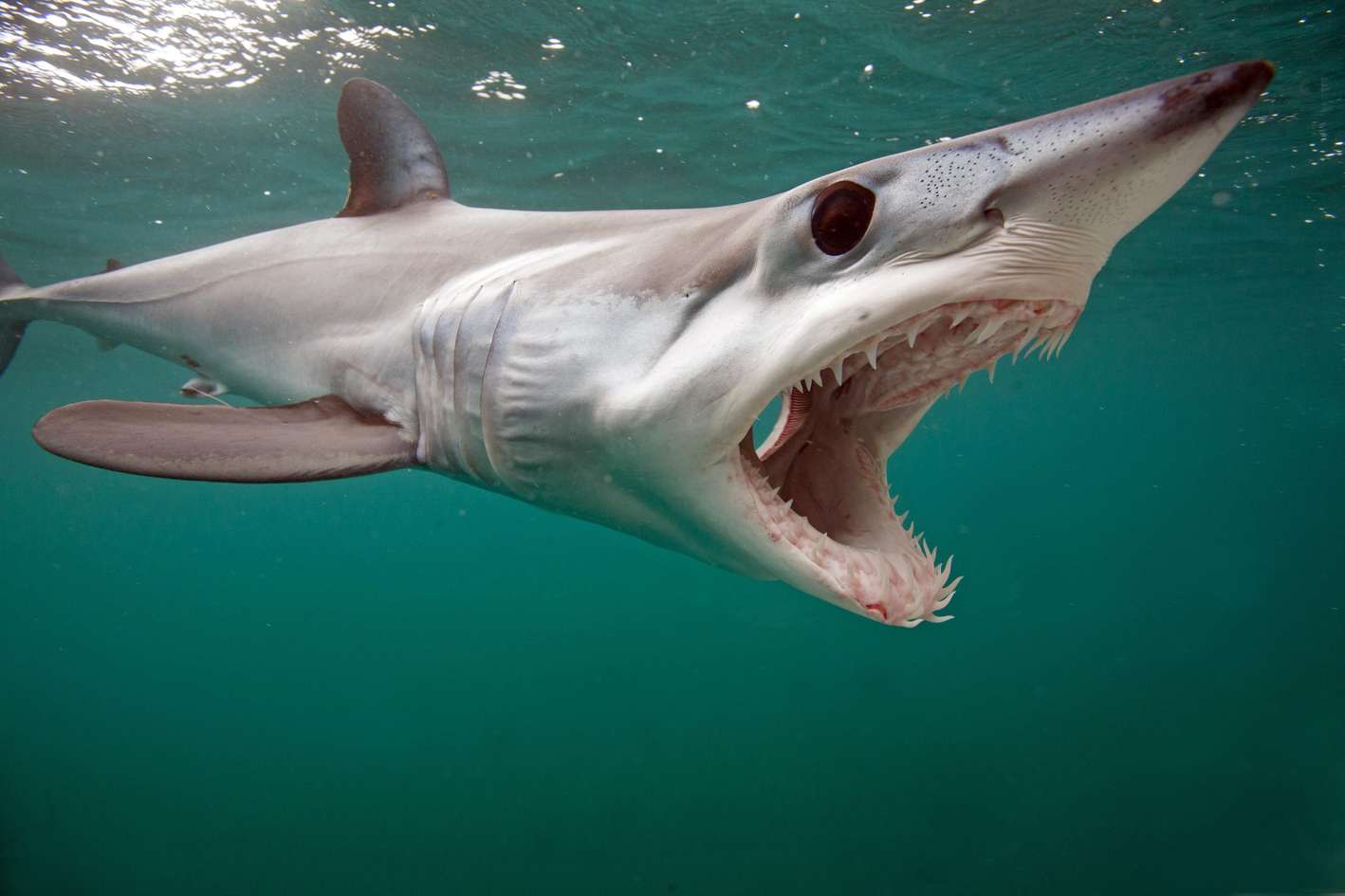
winter water runs clearest, 3 to 6 m visibility
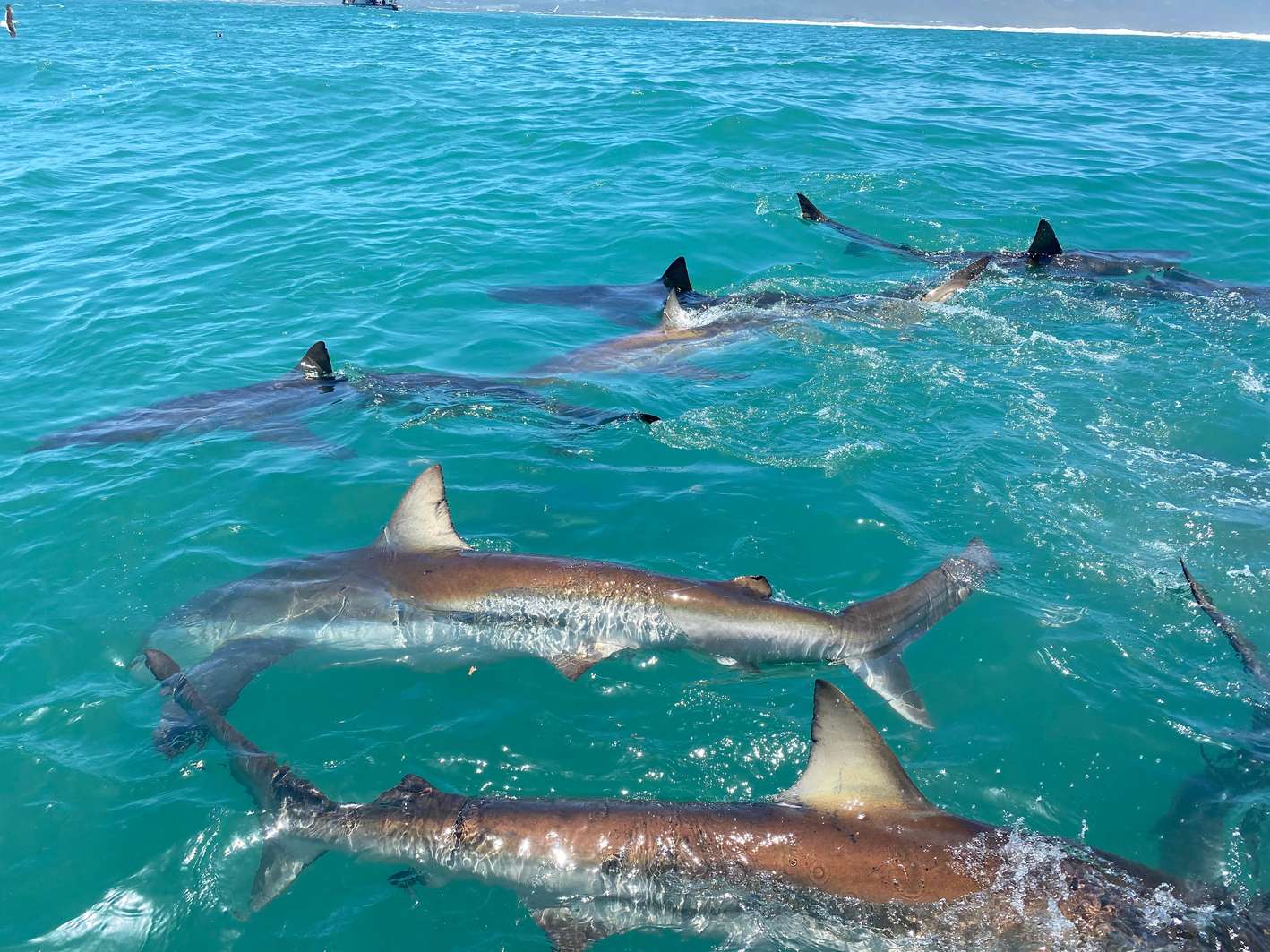
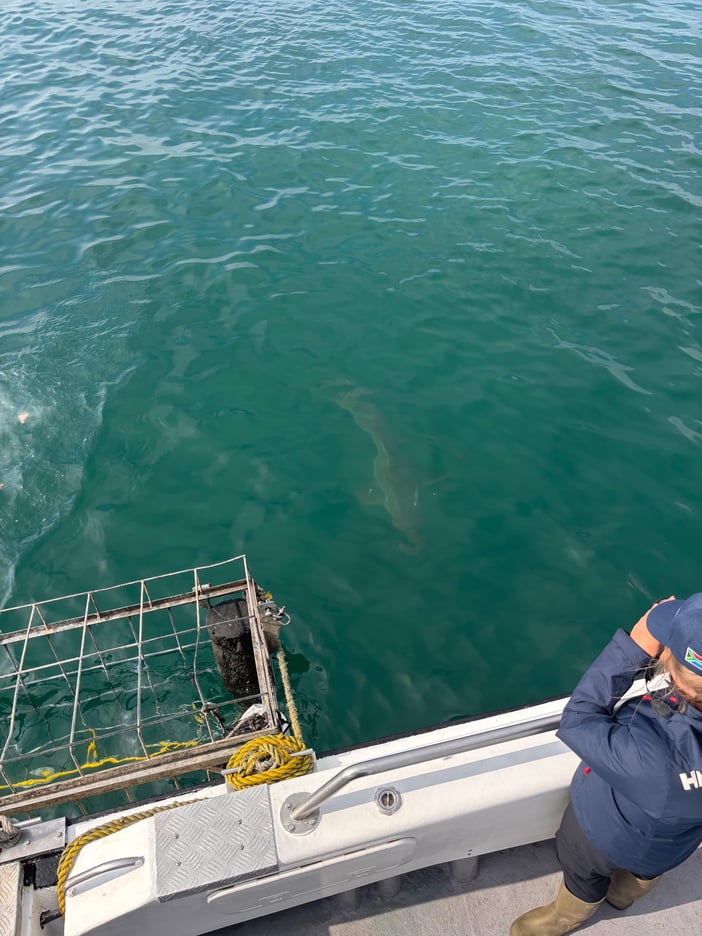
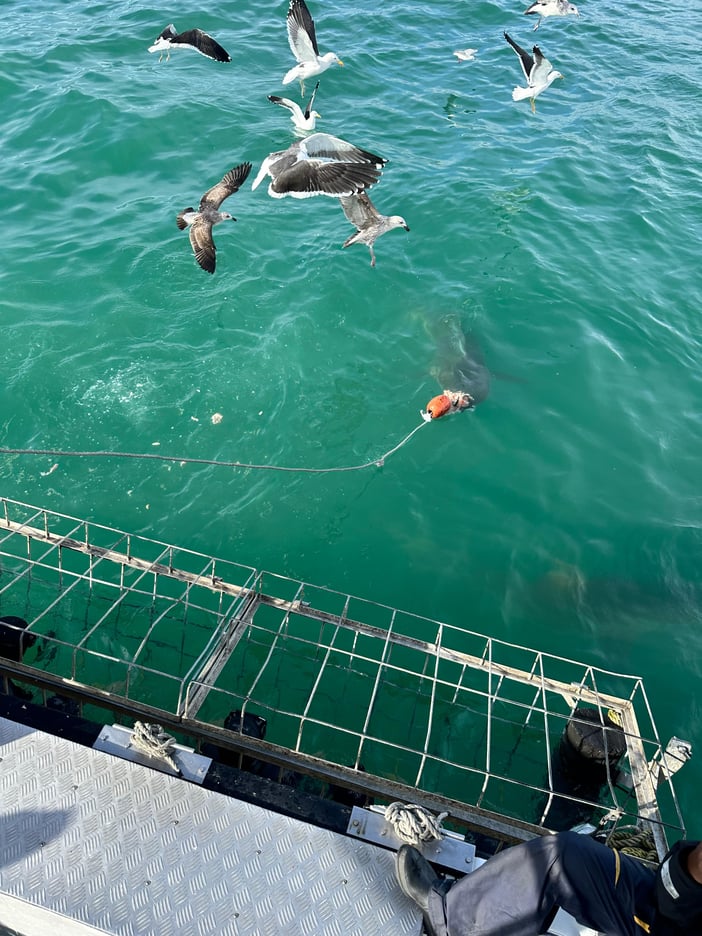
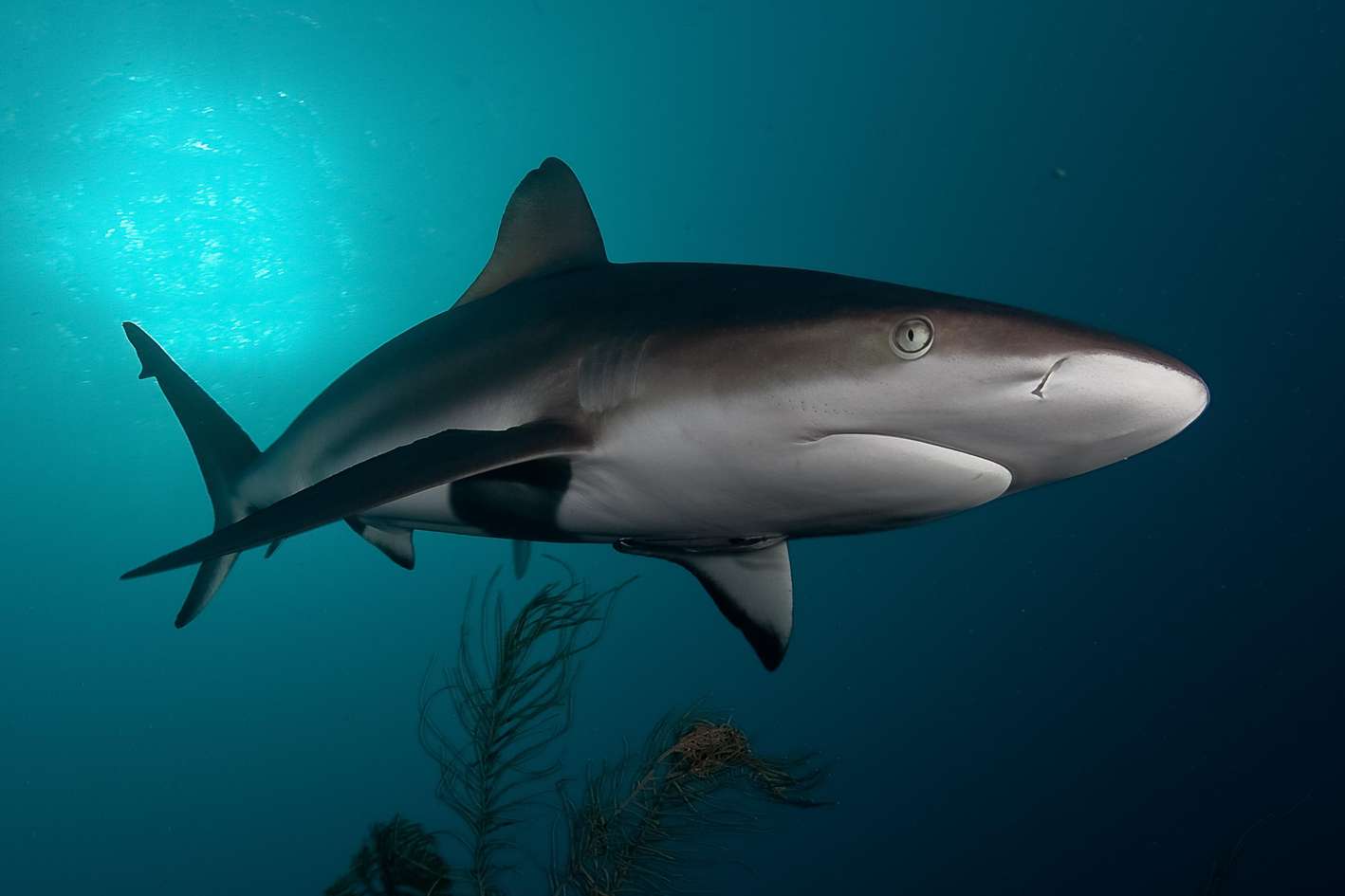
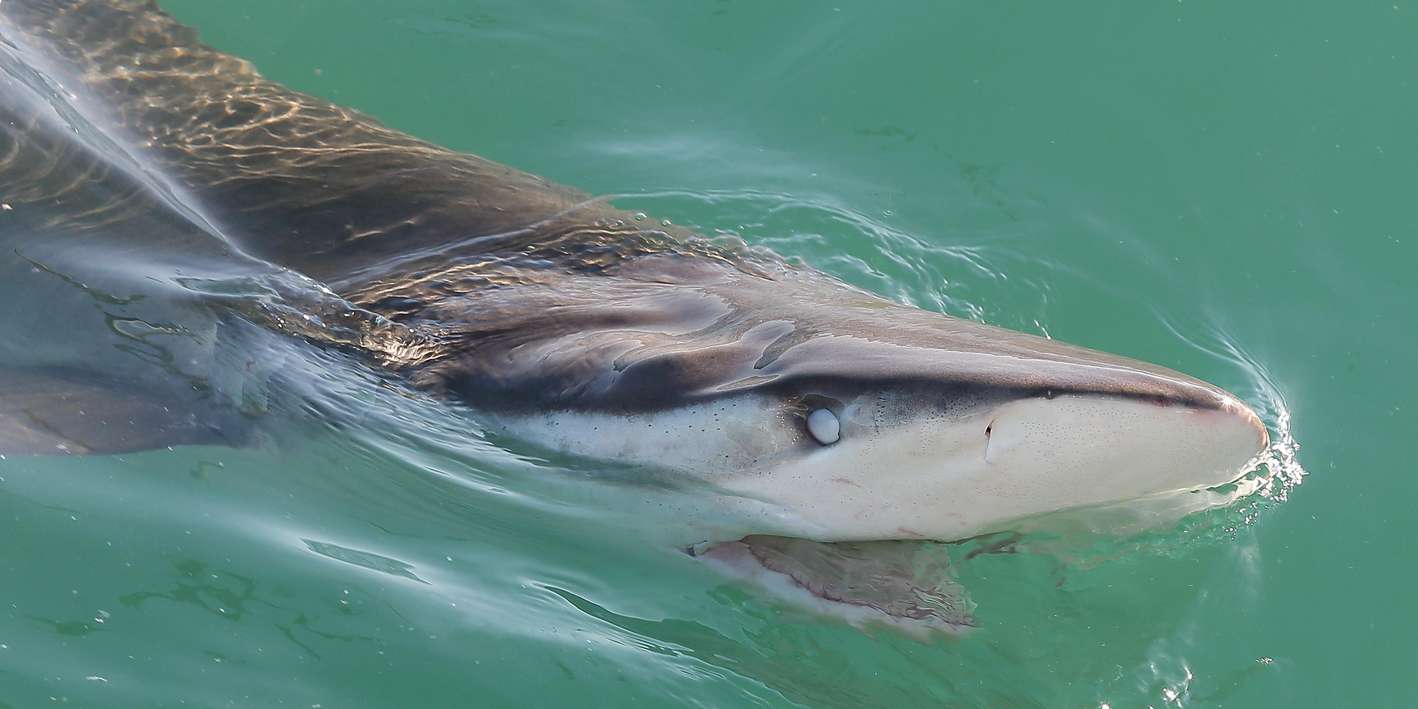
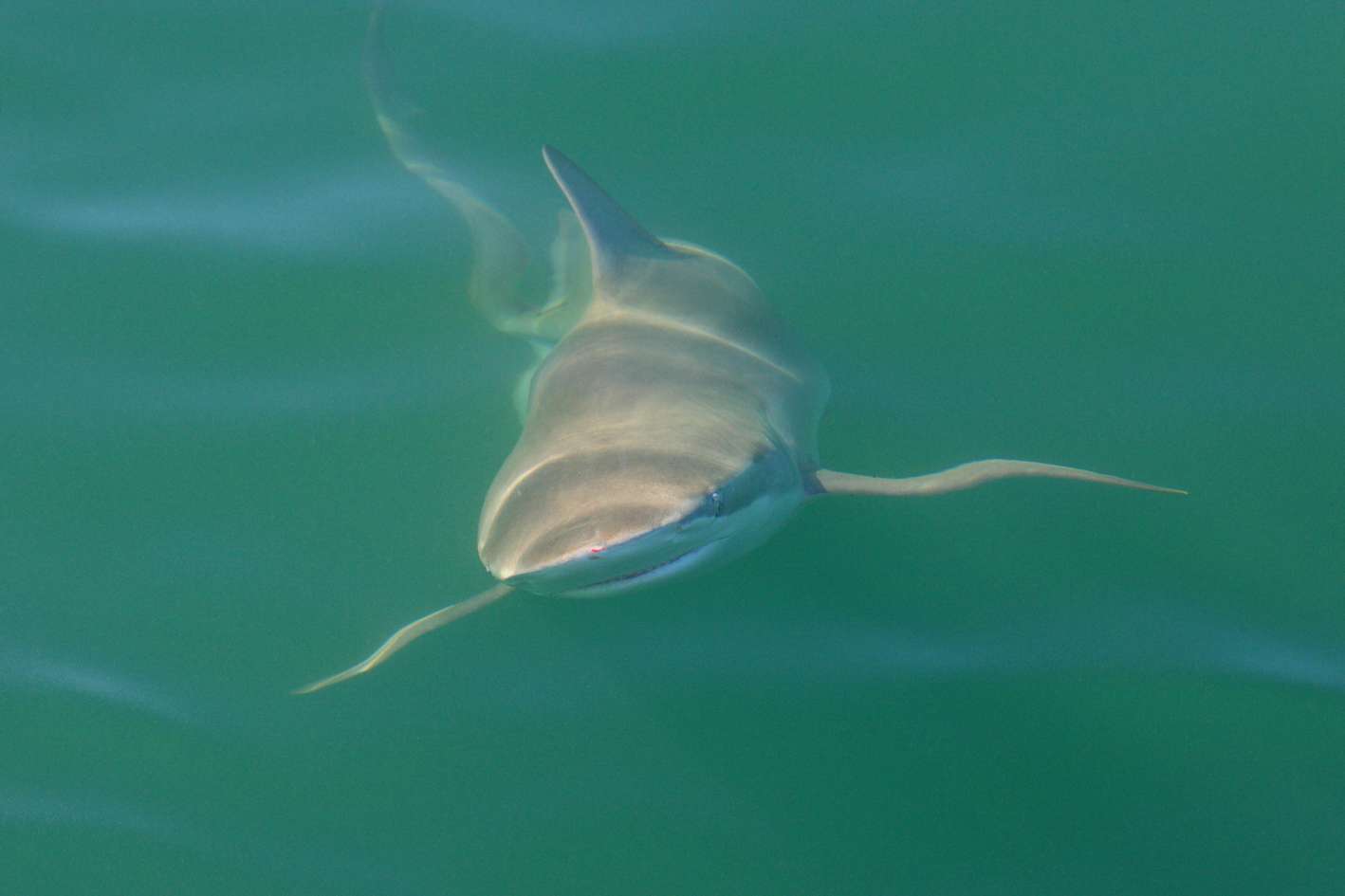
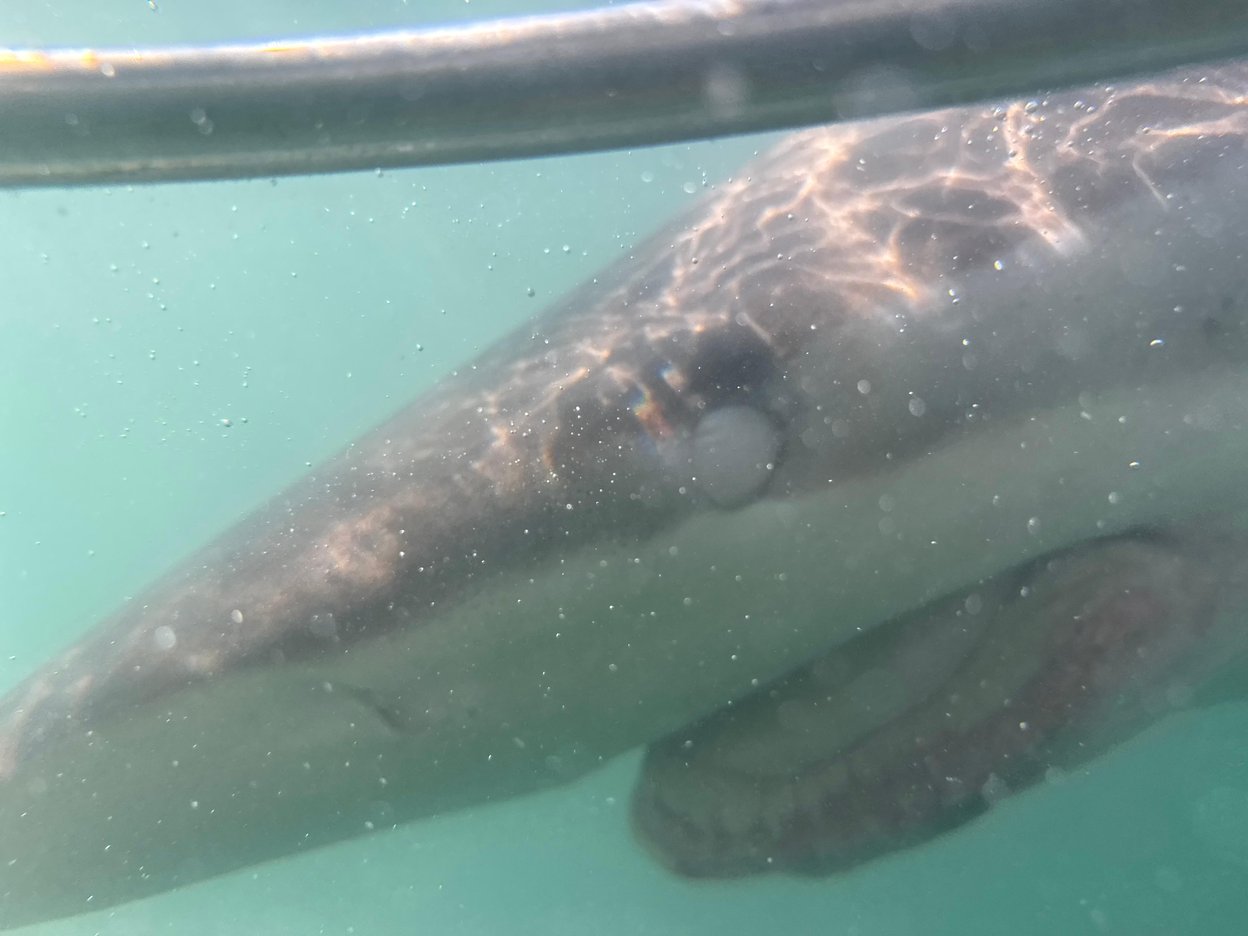
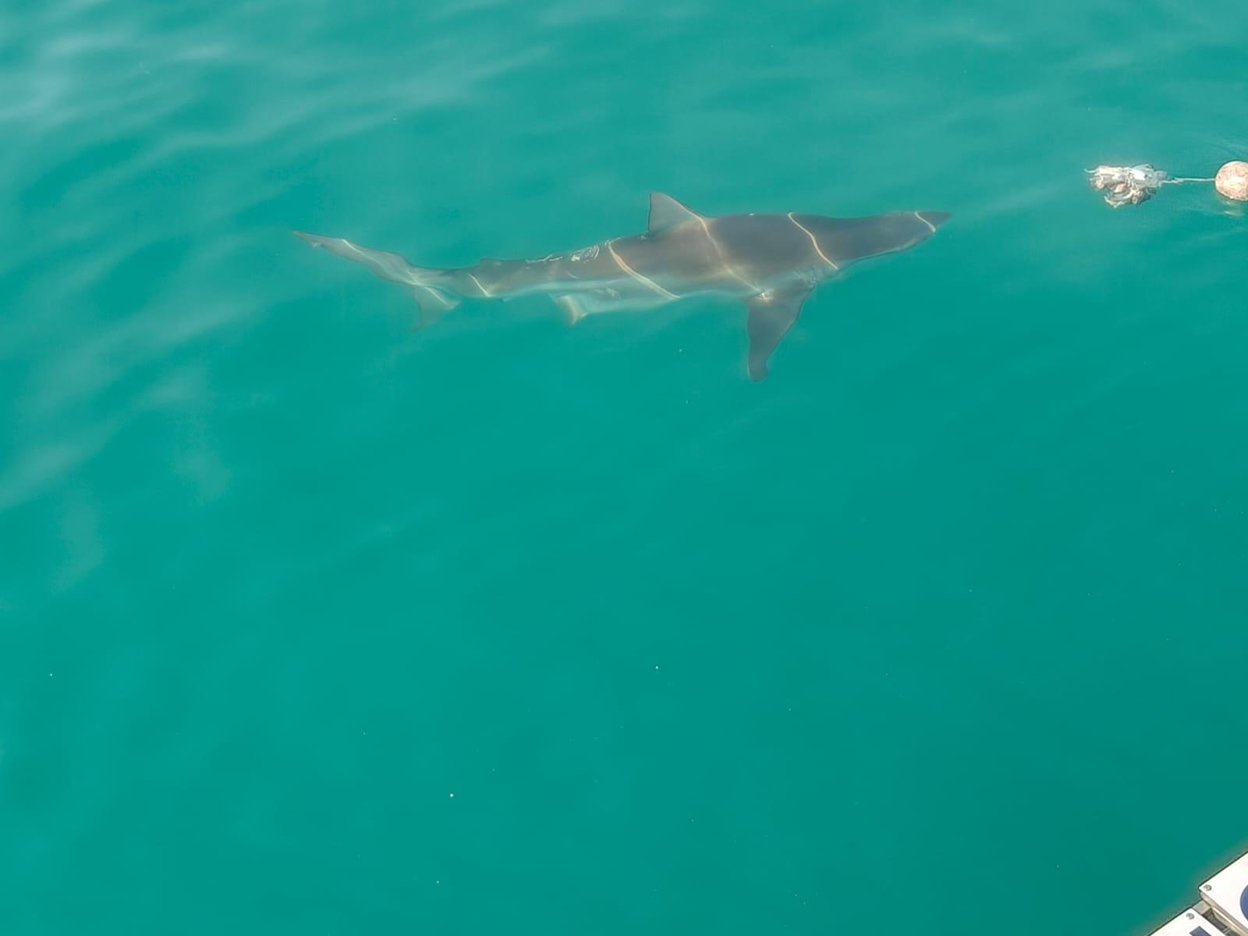
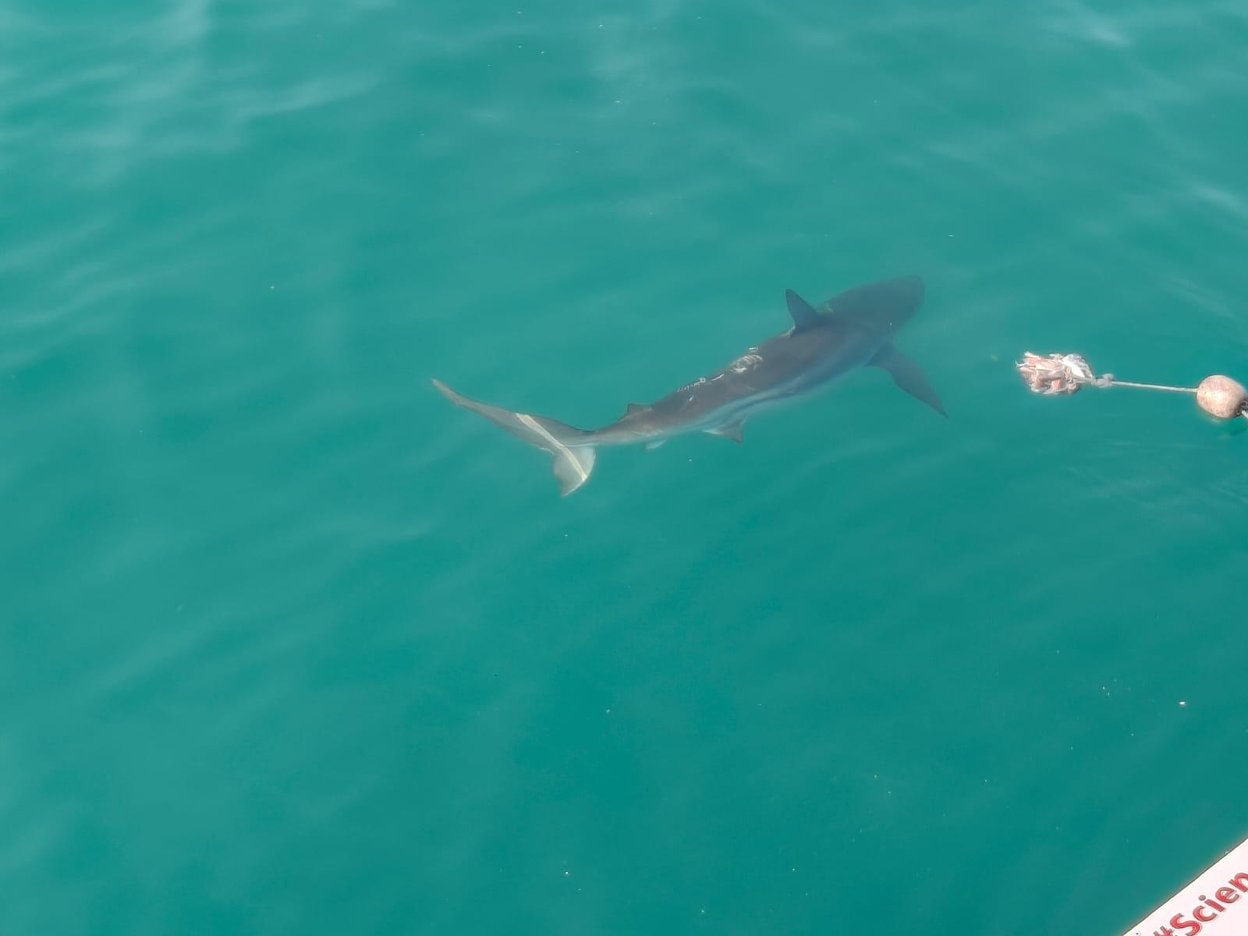
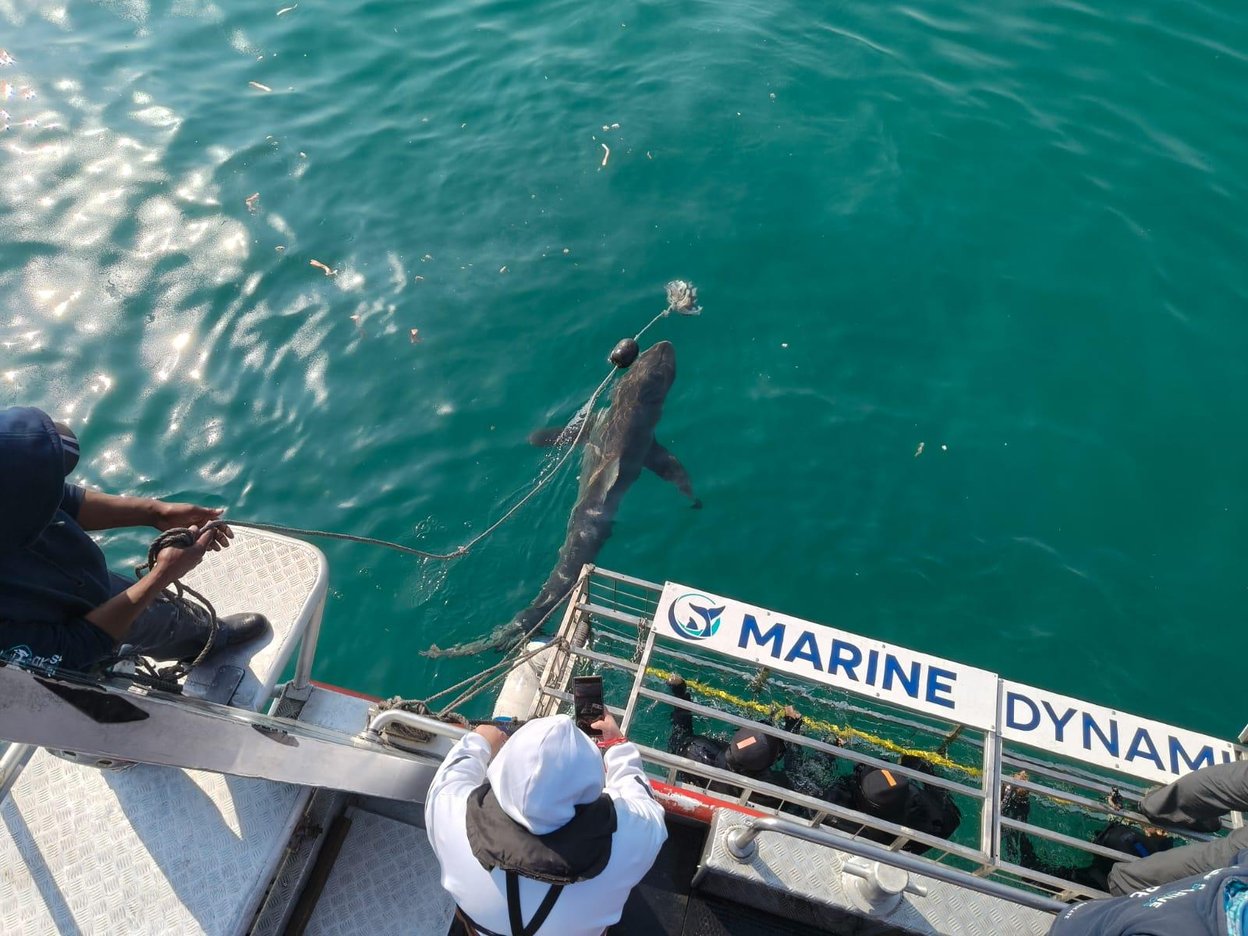
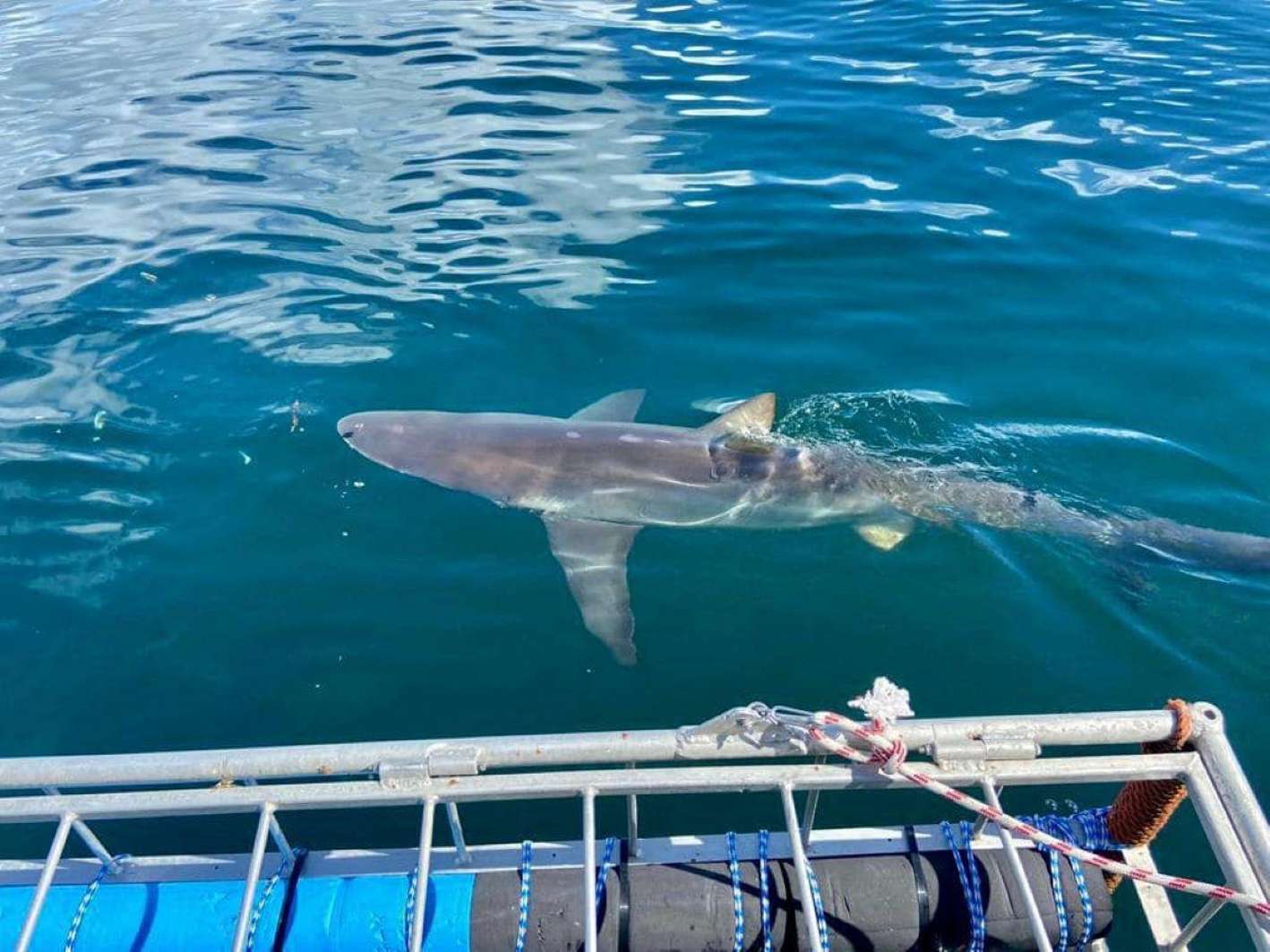
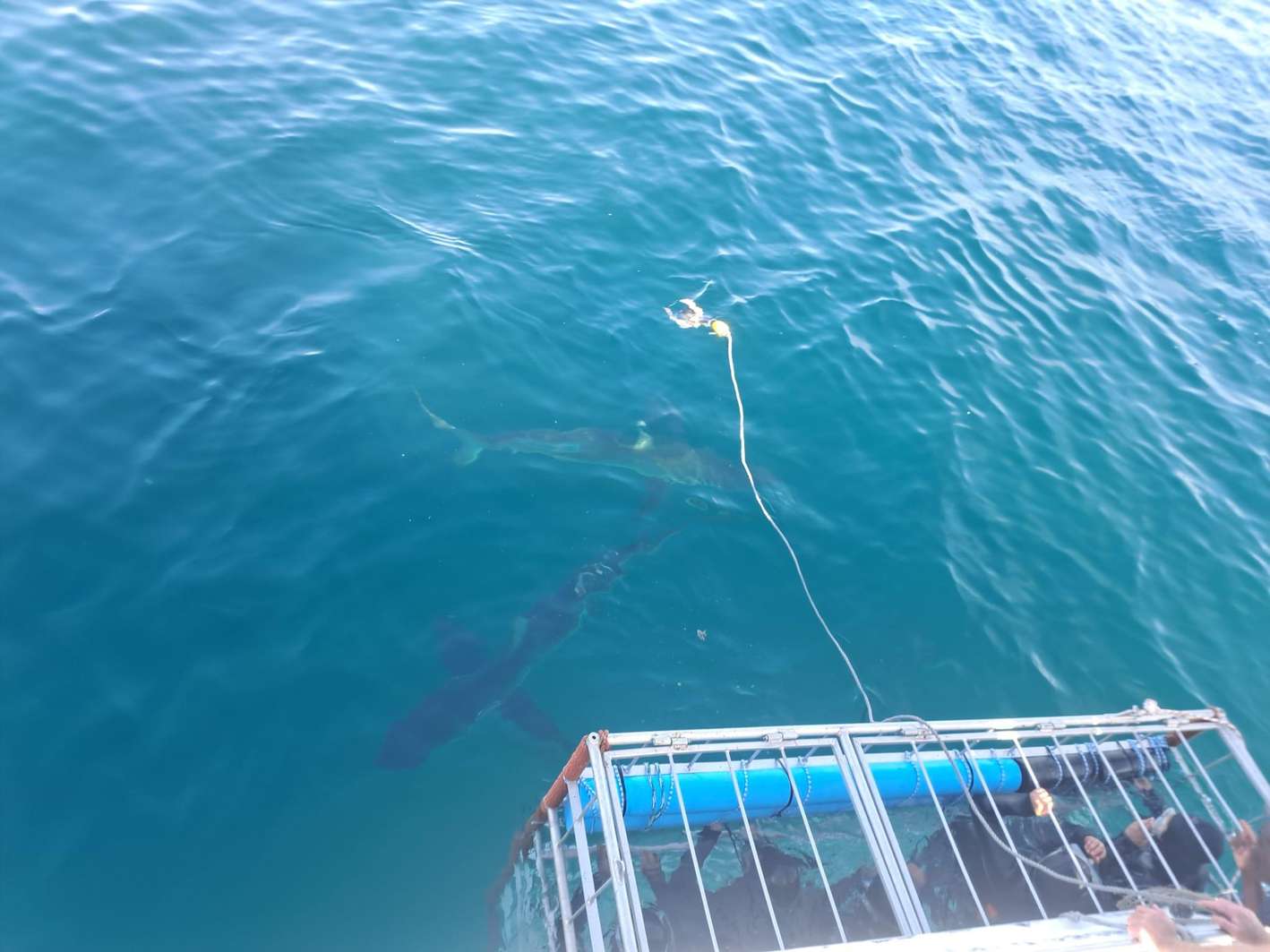
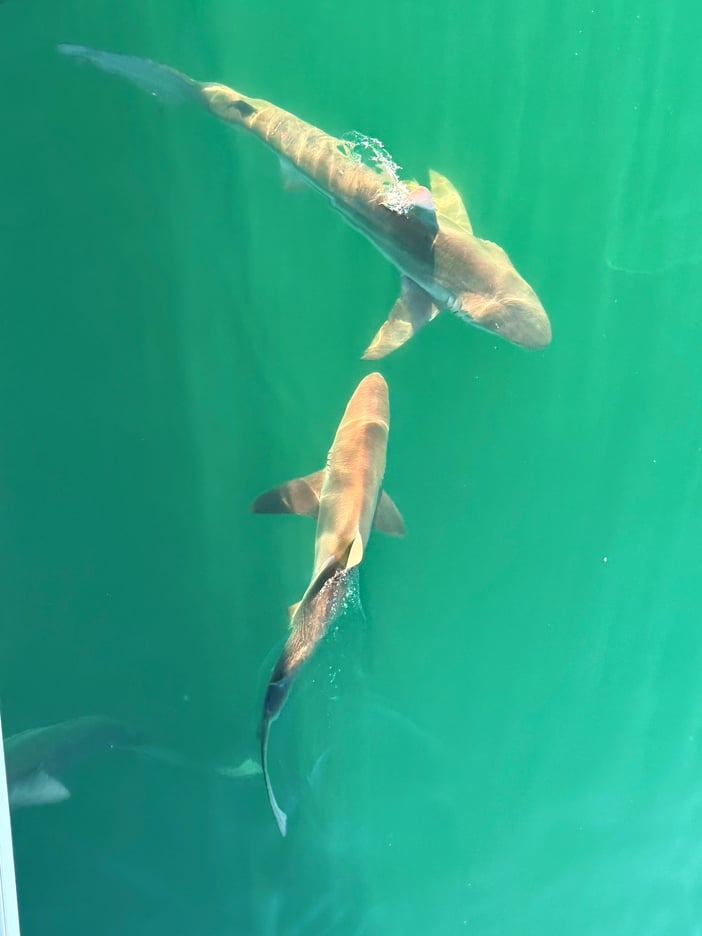
Bronze whaler sharks and sevengill cow sharks glide up to the cage first. They come to a scent trail the crew lays from the anchored boat, and you watch them from the water or from the deck, close enough to see the white edges of their fins.
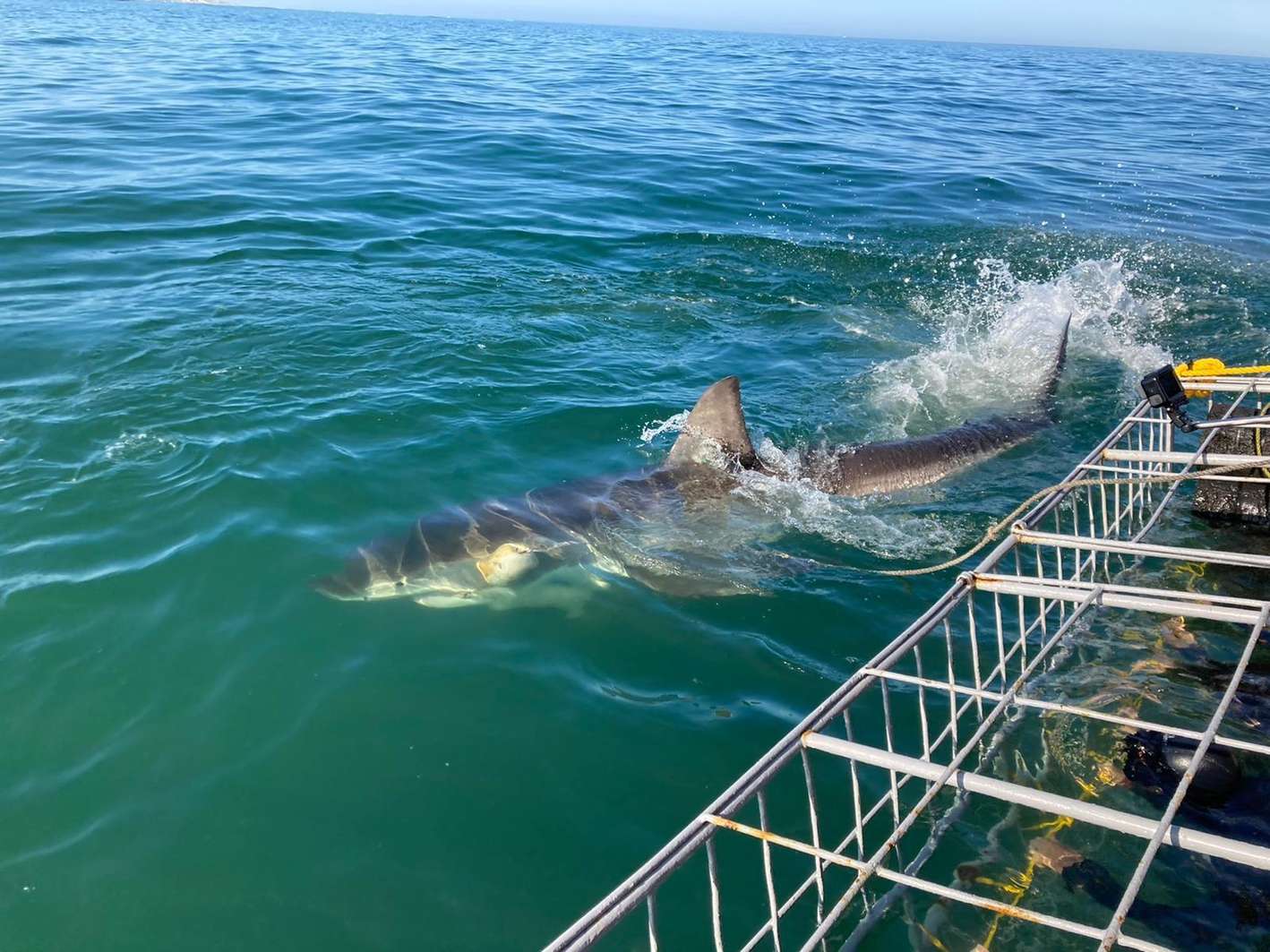
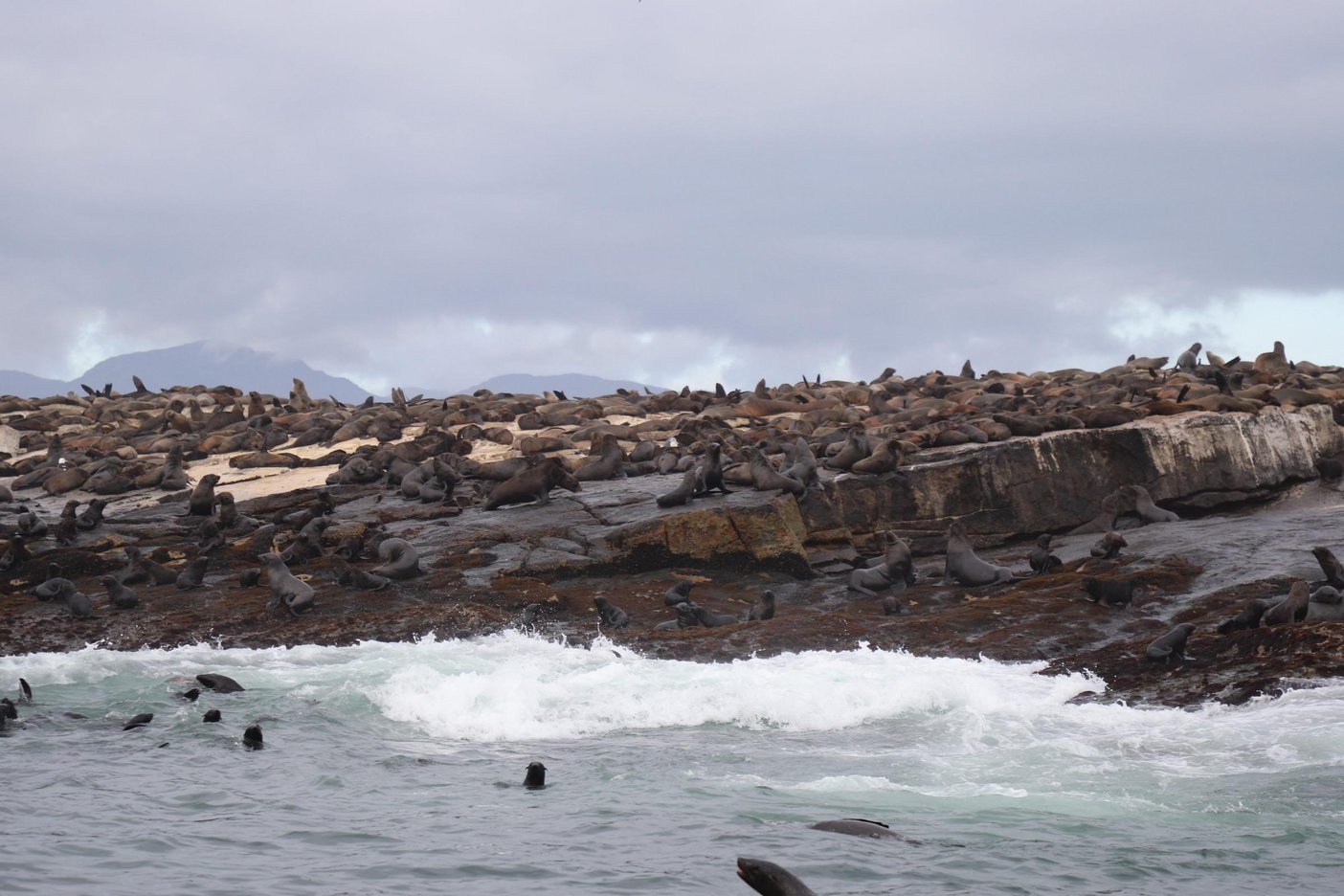
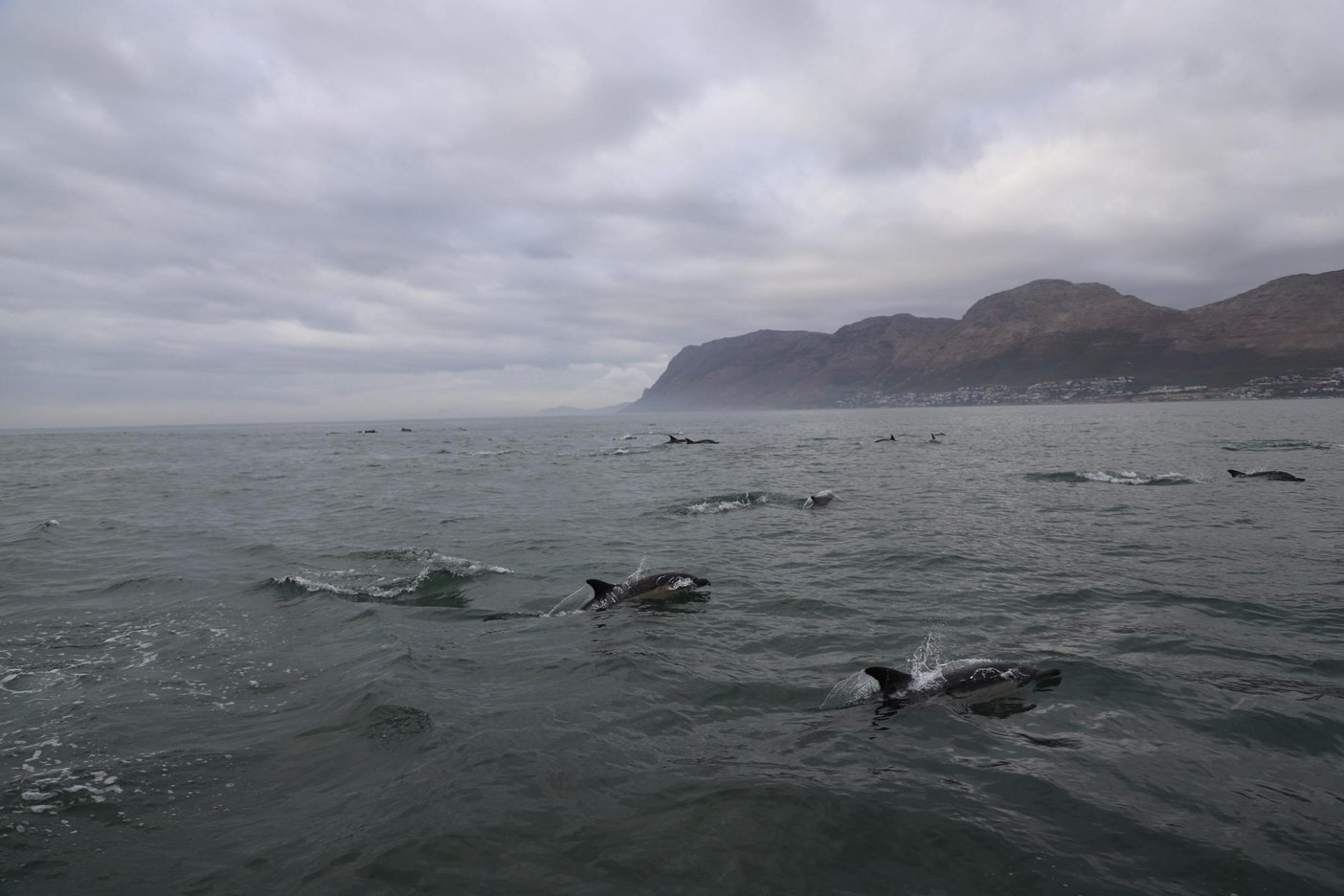
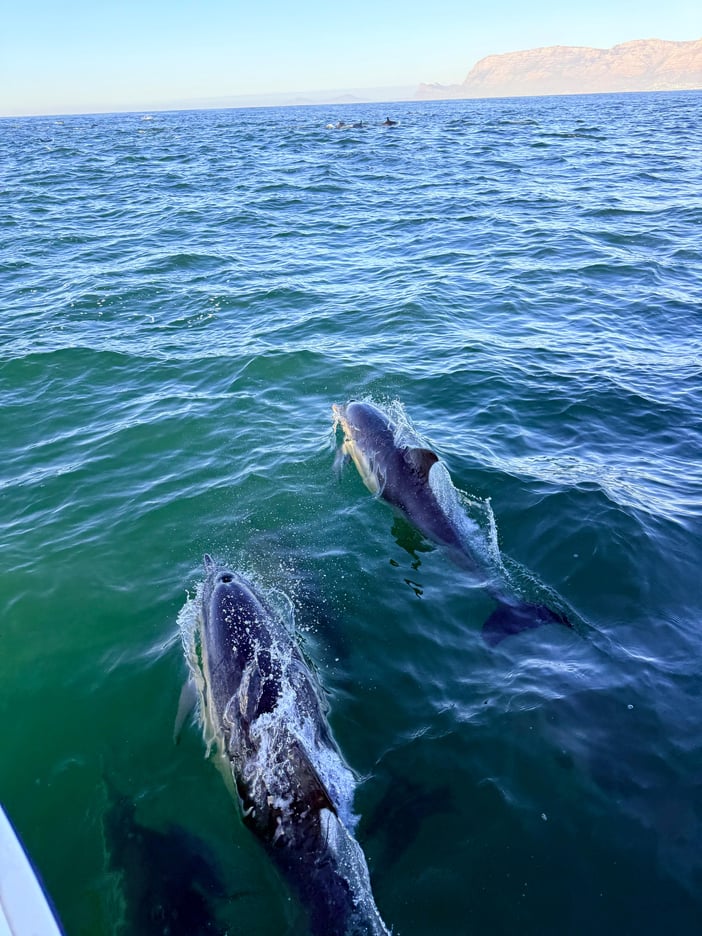
No great whites, not on most days, but seals, dolphins and penguins often pass through.
The day runs about 4.5 hours on site, longer with the drive from Cape Town. Breakfast and a marine biologist's briefing come before the boat, a light lunch and hot showers after. You step into the cage in small groups for around 20 minutes, with a second turn if the sharks are keen.
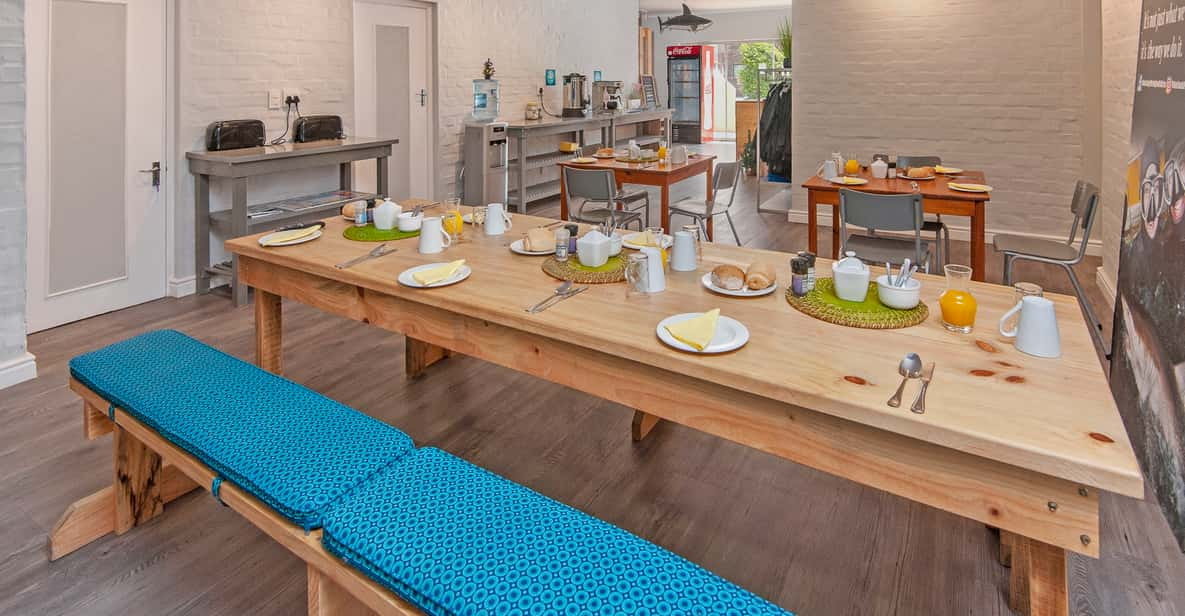
bronze whalers are the usual sharks now
Amazing day seeing white sharks and a playful seal!
A true once-in-a-lifetime trip. Staff and setup were 100% start to finish. Qualified marine biologists taught us all about shark behaviour. My wife, son (19) and I were blown away. Highly recommend.
Seeing sharks, rays and seals was great. Our cage time was shorter than earlier groups', but the crew gave us extra in the water. Transport, breakfast and lunch included.
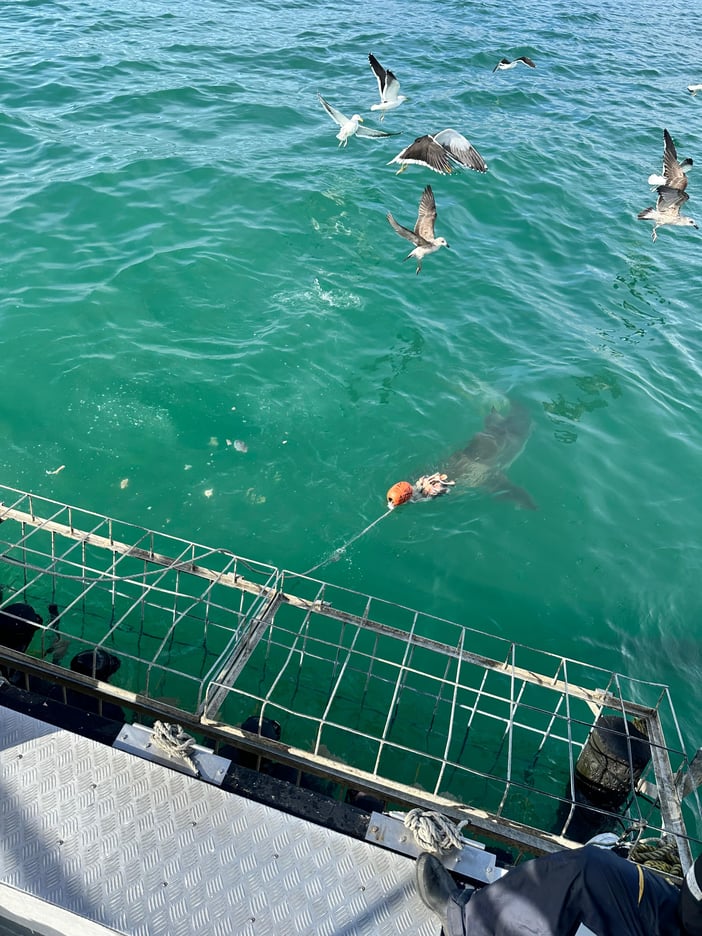
Such a cool experience with my girlfriend! We saw Milo, the world's biggest short-tail stingray, up at our cage, plus a bronze whaler. Lovely staff, great food. We got lucky with calm weather.
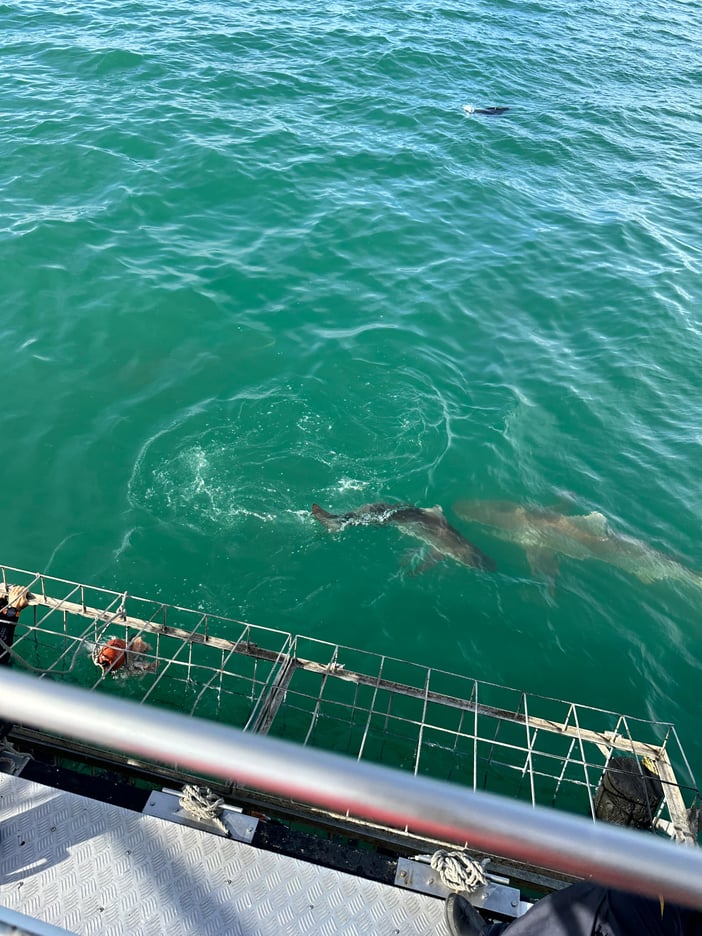
Well-organised day with friendly, helpful people. The guide knows her stuff and loves sharks.
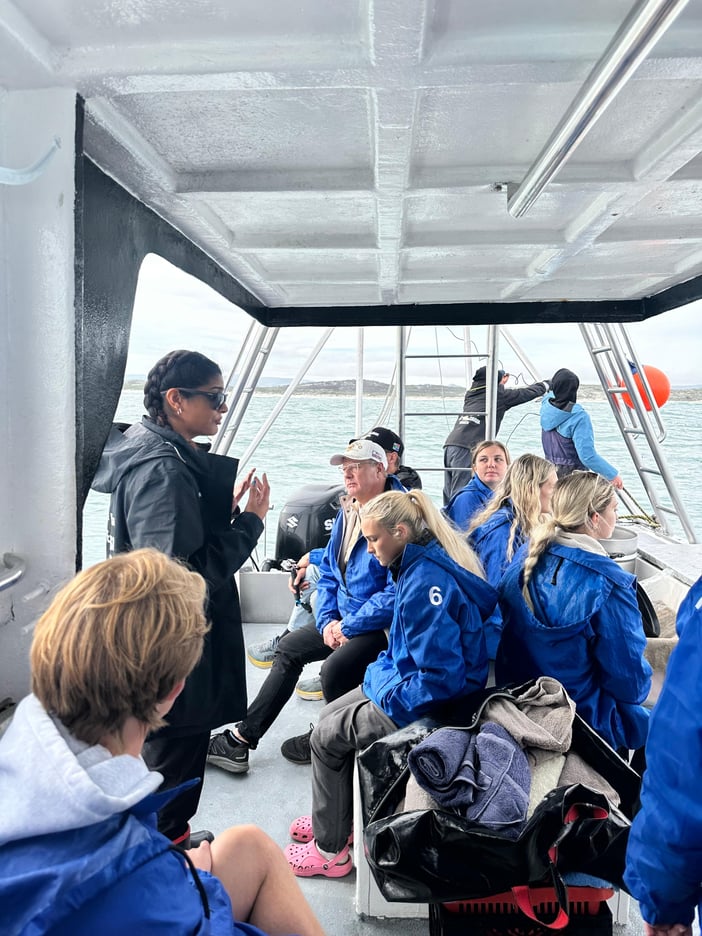
A must-do in South Africa. Emma drove me safely to and from my Cape Town hotel, and guide Sammy, a marine biologist, was incredibly knowledgeable. Eight well-organised hours with meals included.
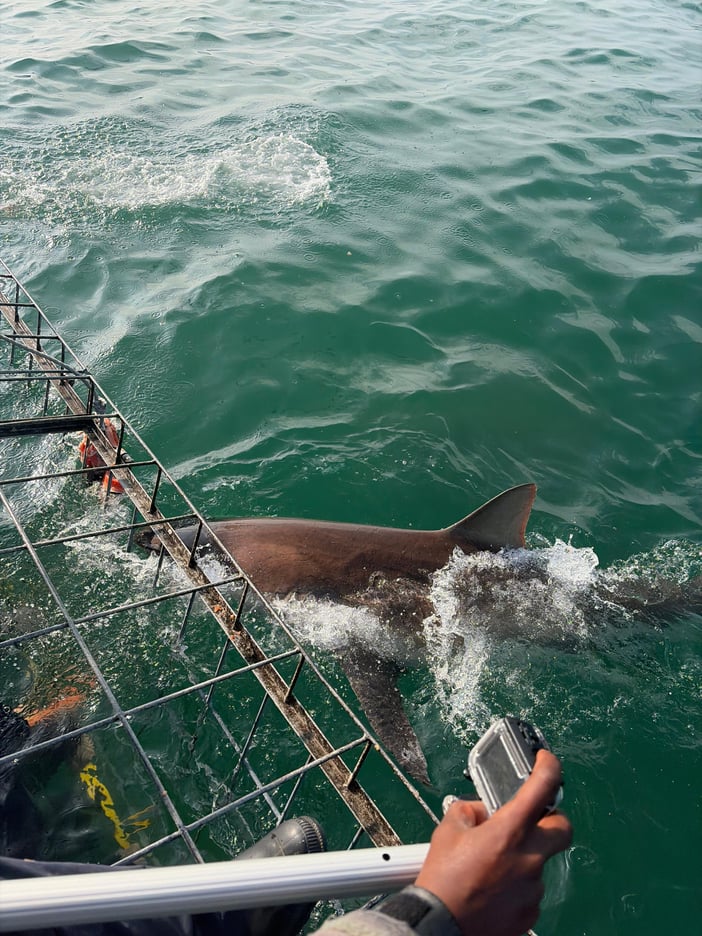
What a trip, though a long transfer from Cape Town. Just bring swimwear, a t-shirt and flipflops. Great showers and food, knowledgeable staff who get sharks, rays and seals close. Profits support conservation.
Most reviewers praise the crew, saying the guides and marine biologists explained everything and kept them calm and safe.
Many travelers did not expect the day to bring dolphins, seals, whales, and even a huge short-tail stingray alongside the sharks.
Several reviewers wished they had more time in the cage, though some groups were given extra minutes to make up for it.
start times confirmed 4 pm the day before
Choose the first days of your holiday. Launches depend on wind and swell, so a spare day or two lets you reschedule if the sea keeps the boat in harbour.
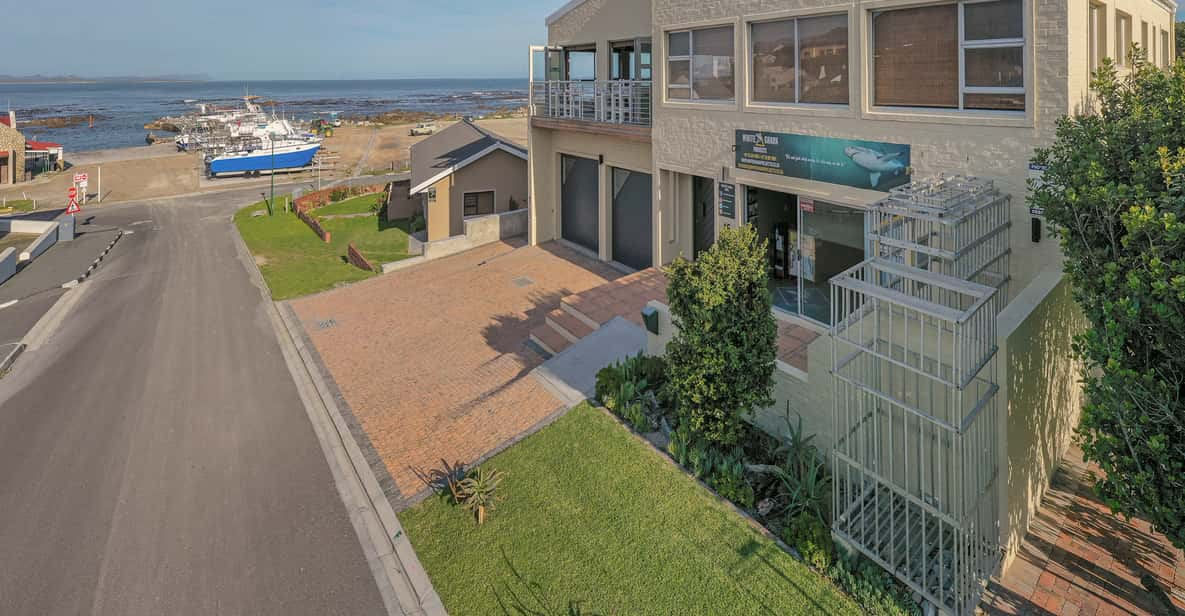
Pick between driving yourself to the operator's office at Kleinbaai, which has private secure parking, and the hotel pickup option, which collects you door to door and returns you after the trip.
Pay through the site and a voucher arrives by email. You can cancel up to 24 hours in advance for a full refund, so a change of plans costs nothing.
Exact collection and start times are confirmed at 4 pm the day before, since tides set the launch. Keep your phone charged and leave the whole day open.
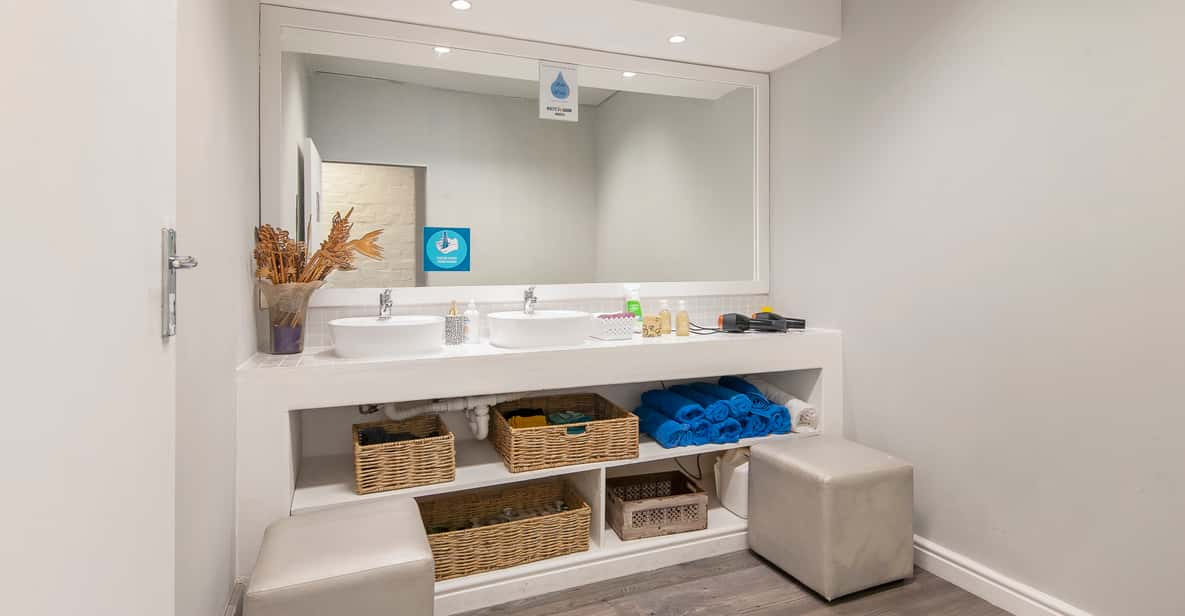
Arrive for a continental breakfast and the marine biologist's safety briefing, then collect your wetsuit, mask, boots, hood and weight belt. Bring a swimsuit, towel and warm jacket.
wetsuits, boots and hoods all provided
Collection times can only be confirmed at 4 pm the day before, and exact launch times follow the tide. Keep the whole day free, and book the earliest day of your stay so a moved trip still fits.
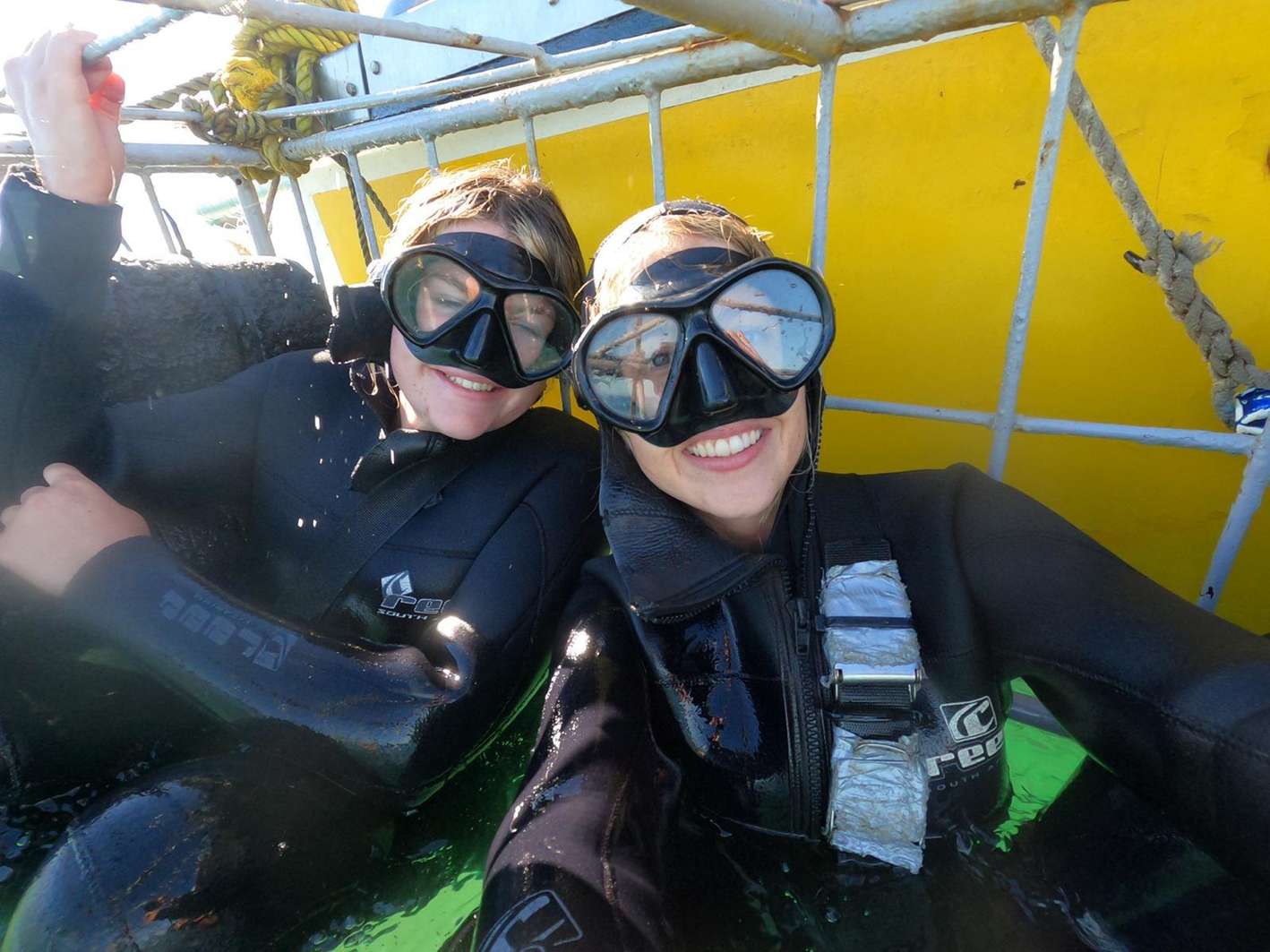
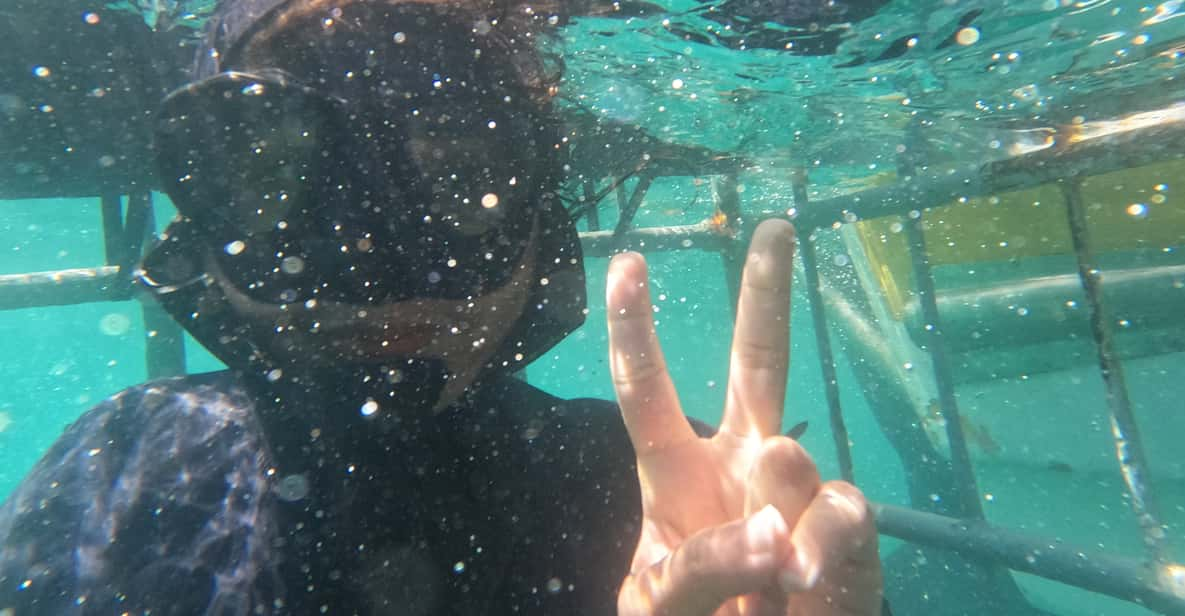
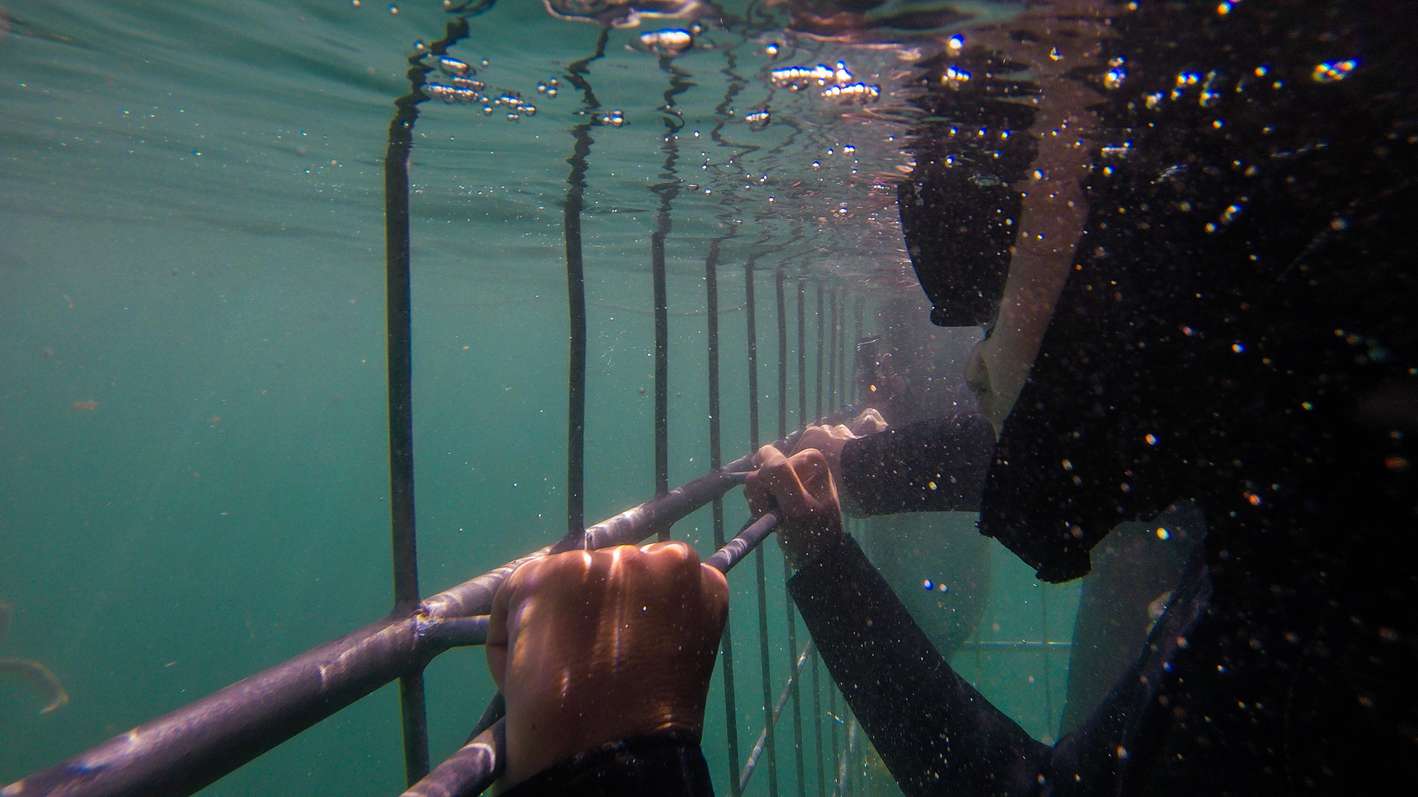
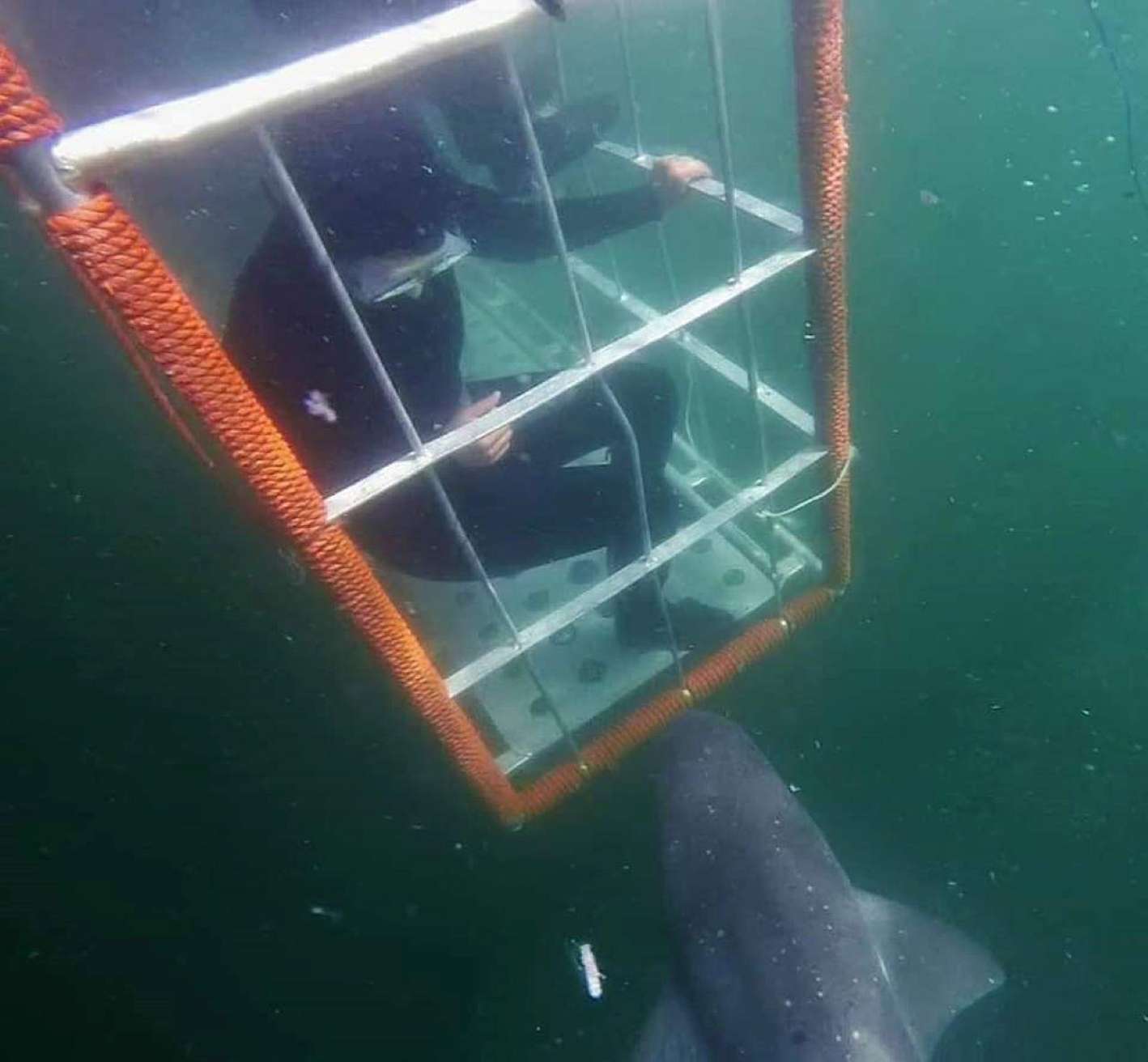
No diving experience or scuba certification is needed for any of these trips. The cage floats at the surface, so you breathe on the surface or hold your breath as sharks pass.
Every tour supplies the full dive kit: wetsuit, mask, boots and hood. On the Gansbaai trips that also covers a continental breakfast on arrival, snacks and water on board, and a light lunch after.
You rotate into the cage in small groups for about 20 minutes, with the chance of a second turn on the Gansbaai tours. While you wait, you watch the sharks from the deck, which can be just as clear.
Take your tablets the night before and again about an hour before boarding, since the pills need time to work. Eat a light, low-fat breakfast and skip anything greasy or heavily spiced.
The skipper judges the marine report the afternoon before and confirms or cancels the launch then. If wind stops the boat after you have already arrived, transport costs stay payable, but rescheduling is offered free.
All four tours let you cancel up to 24 hours ahead for a full refund. If sea conditions call the trip off beforehand, you get your money back or a place on another day.
One Gansbaai operator keeps children under 6 off the boat because of the hours at sea, and offers babysitting instead. Two tours are not suitable for children under 5. The Gansbaai eco cruise sets no age limit.
Pack for a day at sea: a swimsuit to wear under the wetsuit, a towel, a warm jacket, a hat, sunscreen and sunglasses. Sensible shoes only, since high heels are not allowed on board.
One Gansbaai tour collects you from your hotel in Cape Town or Hermanus and drops you back after the trip. The other three use a meeting point, so you make your own way to the harbour.
Touching marine life and feeding animals are not allowed, and alcohol and pets stay ashore. If you feel unwell at the anchor point, you can sit out the dive; the crew helps seasick guests all the time.
simon's town pier: 45 min from cape town
raggies gather at aliwal june to nov
The warm water off Durban holds blacktips, tiger sharks and ragged-tooth sharks, yet no bookable great white cage dive runs here. The trips on sale launch from the Western Cape, and one of them earns the swap.
Expect bronze whalers, blacktips or sevengills: no operator in South Africa will promise you a great white
Cancel up to 24 hours ahead for a full refund, since weather can stop launches right up to the day before
Gear is supplied on every tour, so bring a swimsuit, warm layers and seasickness tablets taken an hour before boarding
Durban's beaches have been shark country for a long time. Shark nets went in along this coast in 1952, and they thinned the tiger sharks so thoroughly that local organizers dropped the words tiger shark from the dive's name.
The warm water still draws sharks, yet a great white cage dive has never launched here, and every cage dive bookable on this page starts from the Western Cape: Gansbaai, Simon's Town or Hermanus.
The From Hermanus or Cape Town: Shark Cage Diving Experience leads them. It runs about three hours at sea from Kleinbaai, opens with a marine biologist briefing and breakfast on arrival, includes the full cage dive, and carries a 4.7 rating from more than 900 reviews.
What you wanted from a Durban day decides the comparison: a launch close to your holiday base, warm water, a mix of species and a half-day that fits a beach itinerary. Keep those four measures close, because every bookable trip here gets judged on them.
Nobody can promise you a great white, anywhere in South Africa. Sightings in False Bay and Gansbaai have thinned in recent years, and operators are open about it.
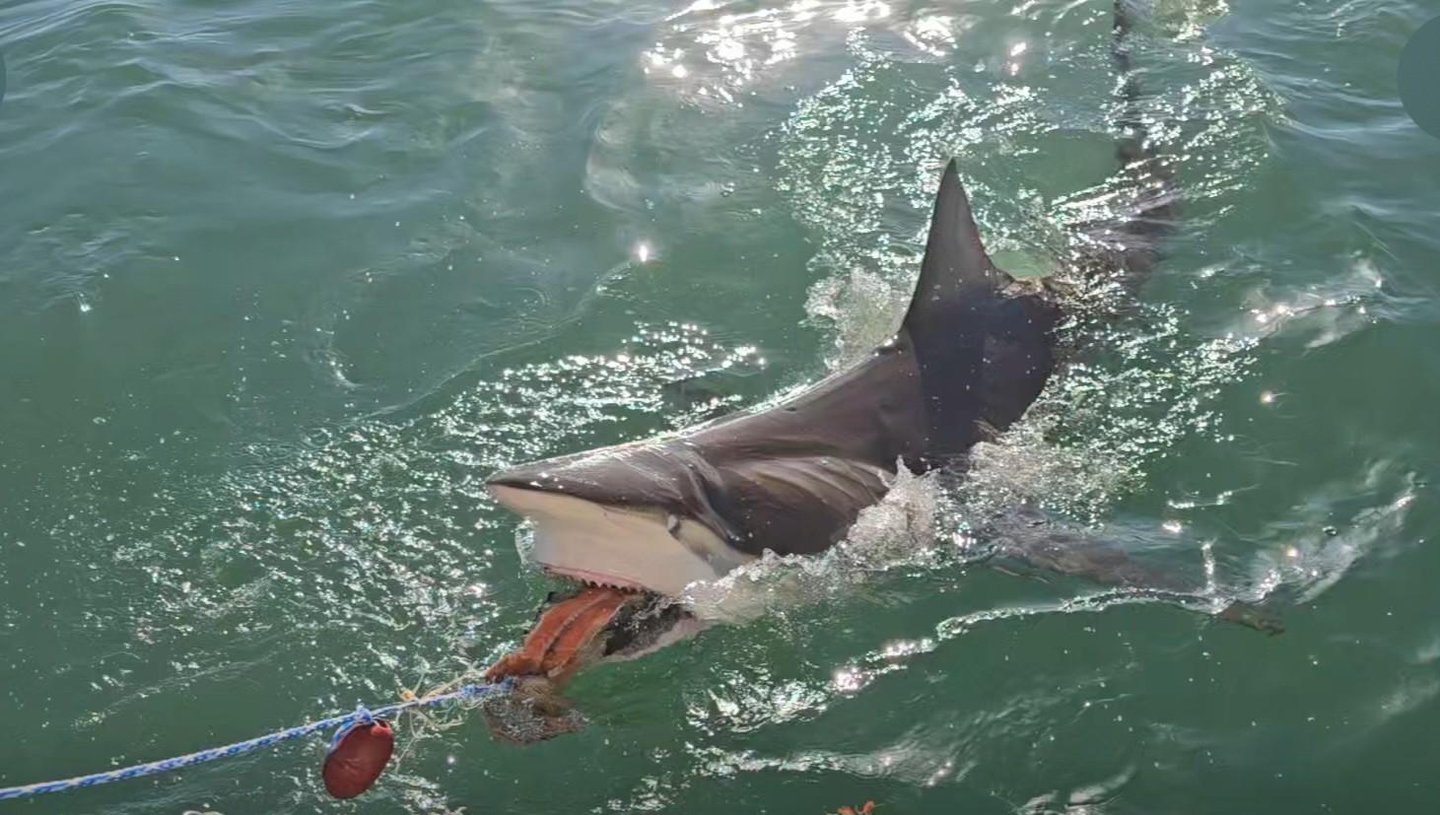
What people who go often describe is a busy day: bronze whalers arriving in numbers, stingrays, seals and dolphins working the same water, sharks drawn to the surface by scent trails with the bait kept away from them.
The From Hermanus or Cape Town: Shark Cage Diving Experience builds its day around that reality. The marine biologist briefing before departure explains which sharks are around and why the great whites have moved on, so you know what you are watching the moment it appears below the cage.
A true once-in-a-lifetime trip. Staff and setup were 100% start to finish. Qualified marine biologists taught us all about shark behaviour. My wife, son (19) and I were blown away. Highly recommend.
Set your hopes at bronze whalers and the day pays for itself. A guaranteed white is a promise no operator in the country makes.
Give the KZN coast its due on species. Aliwal Shoal sits about 5 km offshore from Umkomaas, and its shark life runs wide: oceanic blacktips all year, tiger sharks and bull sharks seasonally, spinner sharks, schools of hammerheads at certain times, and copper sharks.
Between June and November, ragged-tooth sharks crowd the reef's caves and amphitheatres by the hundred, gathering to mate. Nobody has worked out why they pick this one fossilized sandstone ridge.
The encounter style differs from the Cape. Most Aliwal Shoal trips are cage-free baited dives: you scuba to mid-water, and blacktips pass within arm's reach of the bait drum.
Rocky Bay, near Park Rynie, runs the caged version, a four-person stainless steel cage floating at the surface with blacktips, duskies, spinners, tiger sharks and Zambezi bulls around it, and snorkelling outside as an option.
In June and July the sardine run turns the inshore surf zone into a feeding ground, with bronze whalers, dusky sharks and blacktips herding bait balls alongside common dolphins.
Blacktips swim within arm's reach at the bait drum, so ask which style a local operator runs before you book
Shark nets off Durban since the 1950s thinned tiger numbers so much that organizers dropped tiger shark dive from the name
There is no cabin and nowhere dry, so everything you take must be tied down or sealed in a dry bag
The one species the east coast keeps out is the great white, held away all year by the warm Agulhas Current. That single fact sends cage divers south.
Timing splits cleanly between the coasts. Off Durban, winter from May to September is the strong season: cooler, drier months stop the plankton blooms, visibility often reaches 15 to 25 metres, and ragged-tooth sharks arrive in their hundreds.
Summer from October to April warms the water and lifts the odds of tiger sharks, while plankton haze and bigger swells cut the clarity.
The Western Cape runs on opposite logic. Winter there means the heaviest swells of the year, enough that a Gansbaai boat can lose more launch days than it keeps, while summer calms the sea but clears the water to as little as half a metre. The monthly numbers put the two coasts side by side.
October: 5 out of 5 for how busy it gets. Crowds surge ahead of summer, accompanied by 22°C waters and 2.6-meter waves at Aliwal Shoal compared to 16°C water in Gansbaai.
Tap a month to read it.
November: calm sea on 11% of days. Tours reach their busiest peak of the year, bringing the calmest sea conditions of 11% calm days at Aliwal Shoal with 23°C waters, while Gansbaai averages 18°C.
Tap a month to read it.
August: waves up to 2.6 m on an average day. Bookings stay relatively low as water temperatures bottom out near 20°C at Aliwal Shoal and 15°C in Gansbaai, with winter swells reaching 3.6 meters.
Tap a month to read it.
January: calm sea on 8% of days. Tour crowds are brisk, with warm 25°C waters and 2.1-meter waves around Aliwal Shoal compared to cooler 20°C seas and 2.3-meter waves in Gansbaai.
Tap a month to read it.
July: waves up to 3.7 m on an average day. Crowds remain light during South Africa's winter, with Aliwal Shoal water dropping to 20°C while Gansbaai dips to 15°C with heavy 3.7-meter waves.
Tap a month to read it.
Read it for your dates. A winter KZN holiday lines up with ragged-tooth season and the calmest shoal days; the same months are when Gansbaai loses launch days to swell.
If the cage is the point and your dates flex, the Western Cape shoulder months give you workable sea and water clear enough to see a shark approach, and the tours here run year-round, rescheduling or refunding when the sea refuses.
Four bookable trips cover the shapes a Western Cape shark day can take, and they split along the measures you brought from the Durban search: time on the water, the drive to launch, and what sits in front of the cage.
The From Hermanus or Cape Town: Shark Cage Diving Experience is the all-rounder. Breakfast, a marine biologist briefing, about three hours at sea from Kleinbaai, hot showers and soup afterwards, with pickup from Cape Town or Hermanus as an option.
The Cape Town: Shark Cage Dive is the tight-schedule pick, a short three-hour trip from Simon's Town, 45 minutes from the city centre, with tea and biscuits on arrival and snacks aboard. You arrange your own transfer for that one.
| Shark Cage Diving Experience | Shark Cage Dive, Simon's Town | Eco-Friendly Cruise, Gansbaai | |
|---|---|---|---|
| Time out | 4.5 to 8 hours | about 3 hours | 6 to 10 hours |
| Launch | Kleinbaai, Gansbaai | Simon's Town, False Bay | Kleinbaai, Gansbaai |
| Getting there | pickup option, or a 2.5-hour drive | 45 minutes by car | pickup option, or a 2.5-hour drive |
| Most likely sharks | bronze whalers, sevengills | bronze whalers, sevengills, seals | bronze whalers, sevengills, stingrays |
| Extras | breakfast, lunch, dive certificate | snacks and refreshments | breakfast or lunch, penguin sanctuary |
A tight half-day points at Simon's Town; a full day with everything handled points at Gansbaai. All three species lists lean the same way, since bronze whalers are now the most seen shark on Western Cape dives.
If your trip touches both coasts, the KZN launch points sit closer than most people expect. From central Durban, the N2 south to Umkomaas or Rocky Bay takes about 35 to 45 minutes over roughly 49 km.
From Umhlanga hotels it is about an hour, and from King Shaka International Airport around 50 to 65 minutes. Scheduled shuttle coaches run from Durban Station and the airport, the airport run taking about an hour and a quarter.
The route options settle one thing fast: the car wins, and the train is out. The south coast commuter line stops at Winklespruit before Umkomaas because of damaged bridge infrastructure, so it is your own car, a shuttle or an organized day tour.
Set that against the Western Cape drive with open eyes. Simon's Town pier sits 45 minutes from central Cape Town, and a Gansbaai launch means about 2.5 hours each way over Sir Lowry's Pass. Pure travel time favours the KZN launches; the cage experience is what the Western Cape gives back.
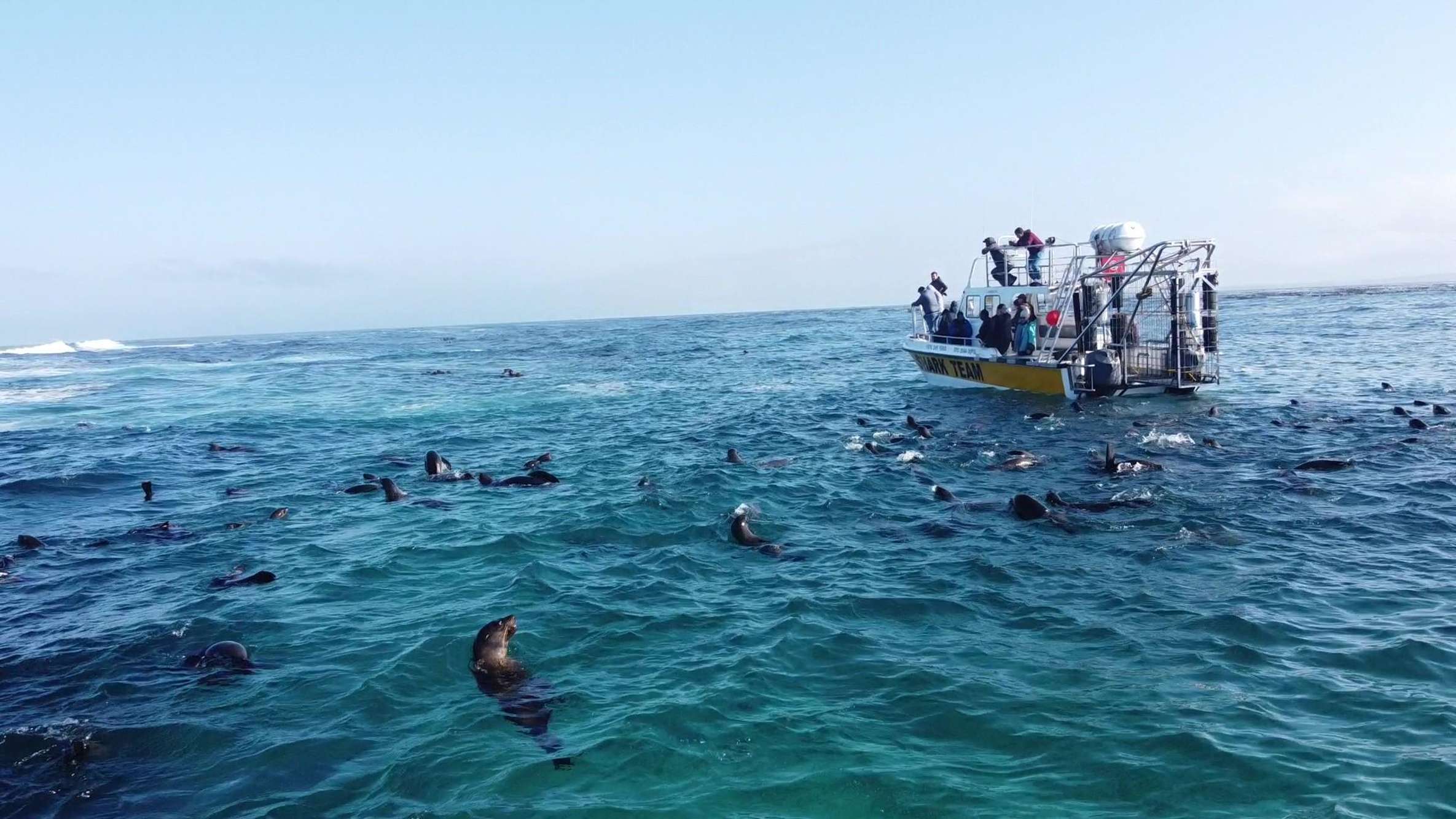
The day starts early on either coast. You arrive for check-in with time for coffee and a safety briefing before the boat launches, and the skipper will already have made the weather call the afternoon before.
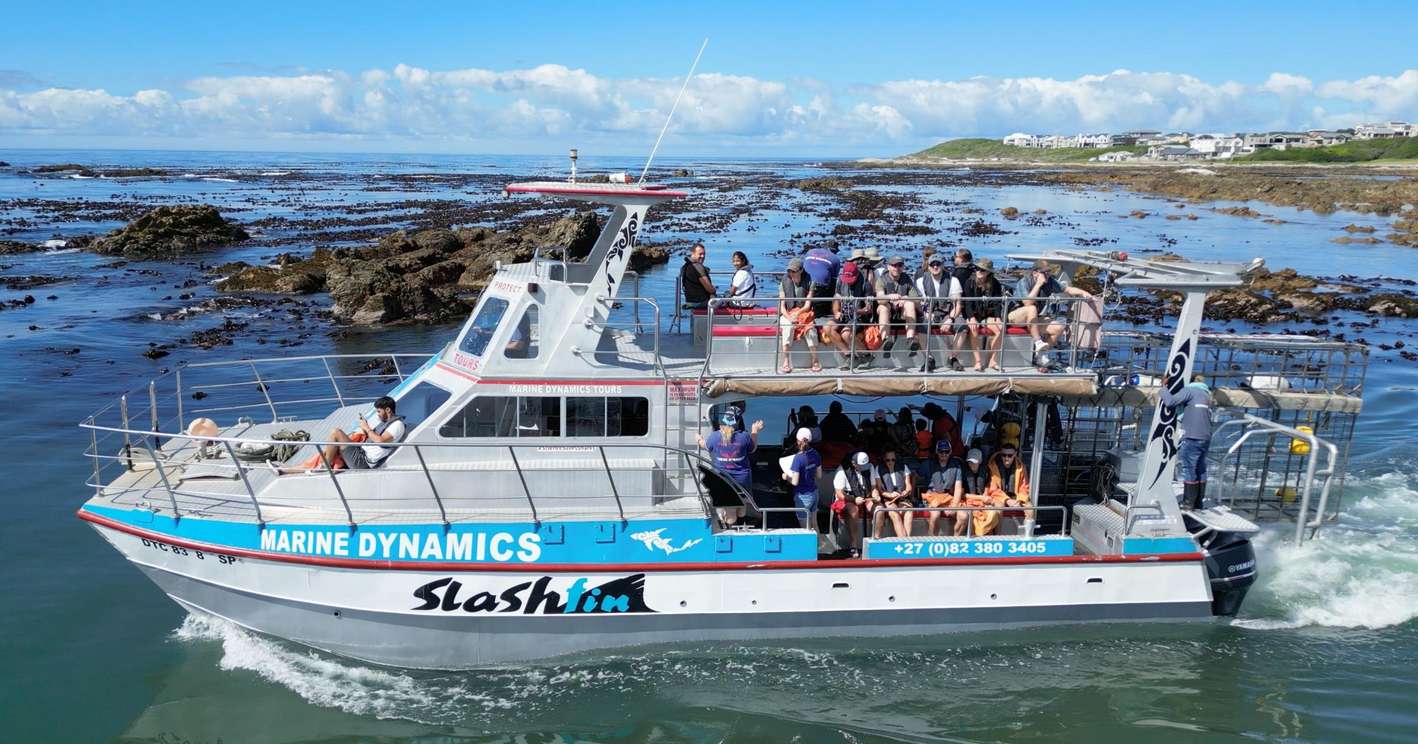
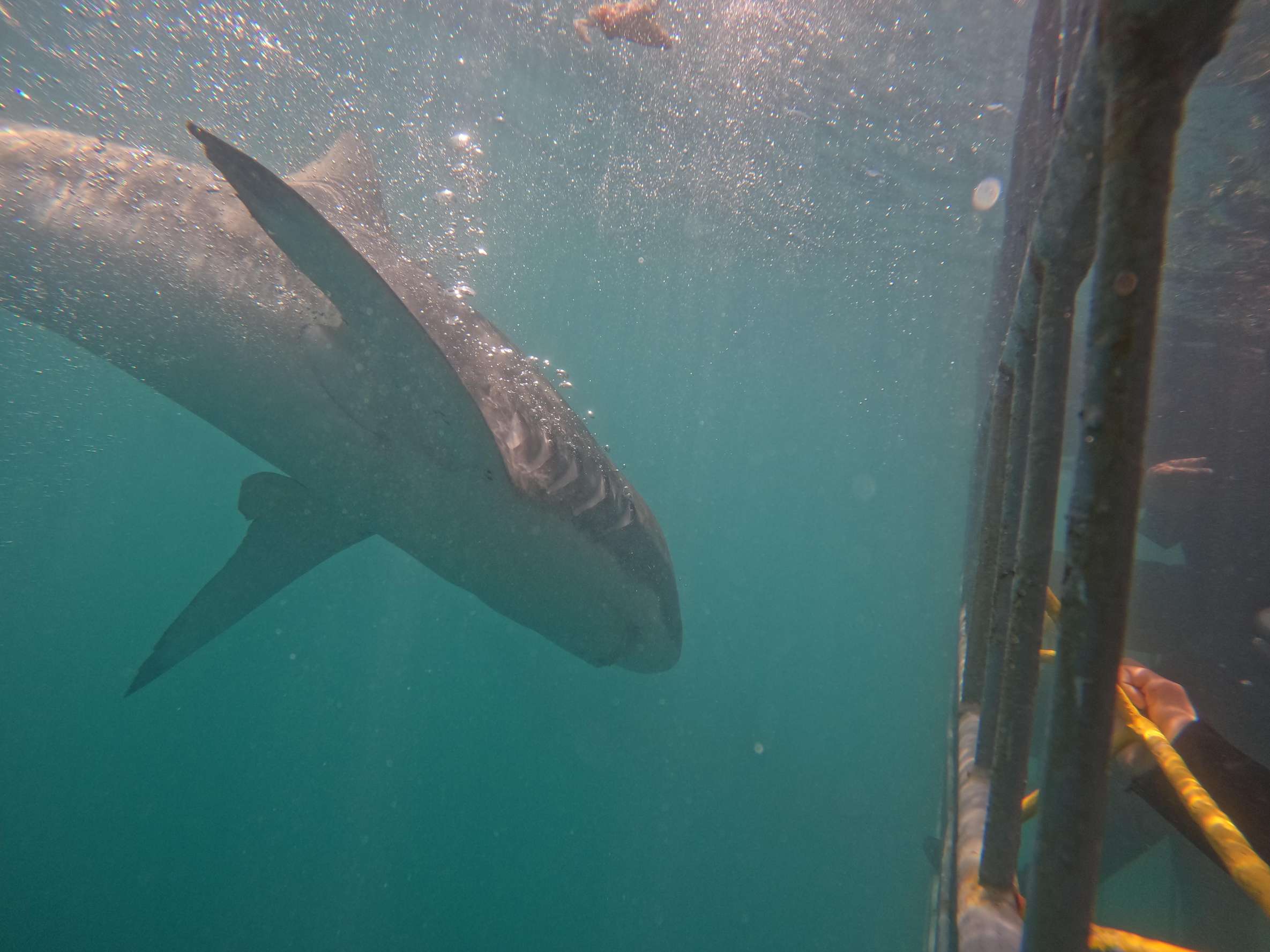
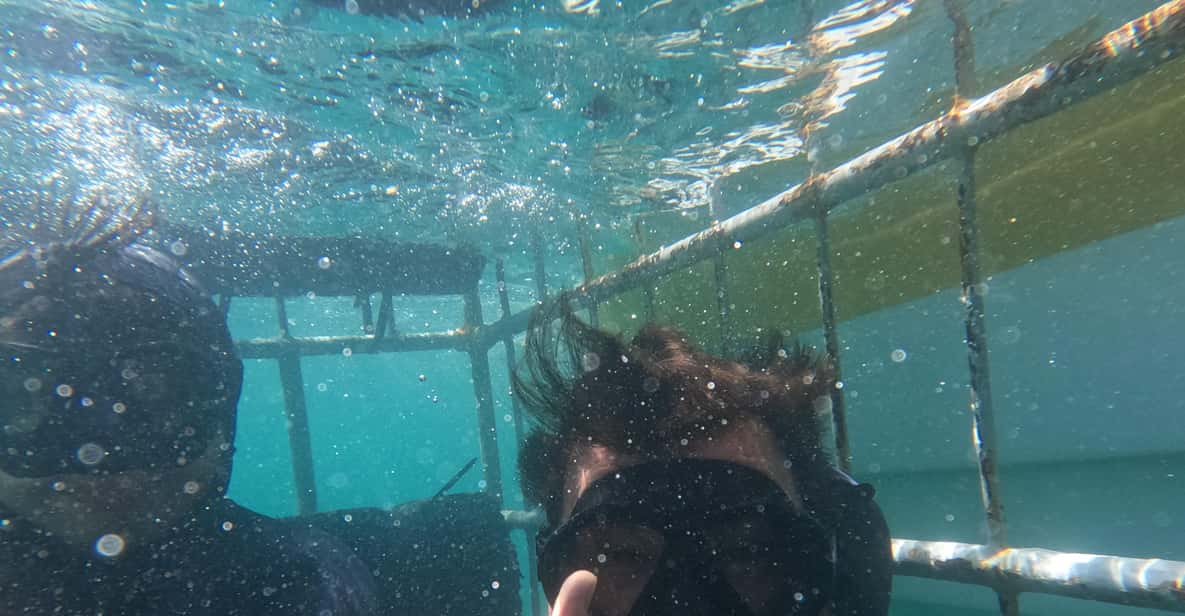
Out at the dive grounds the boat anchors, the chum line goes in, and guests rotate into the cage in groups of four or five for turns of roughly 20 to 30 minutes while everyone else watches from the deck.
The deck is a genuine seat in the show. Regulars say surface viewing shows how the sharks appear and vanish around the boat, and the submerged part feels calm and quiet by comparison.
Snacks, fresh fruit and hot or cold drinks come around on board, and after the trip most operators finish with hot soup and bread. On the lead trip a marine biologist stays with you the whole outing.
Around the Gansbaai launch, a short drive opens up more of the coast for anyone staying on: the Danger Point Lighthouse, the shore at Hydra Bay and the historic Byneskranskop site.
None of that is essential; it is what fills an afternoon if the launch runs early and you have made a trip of the day. The dive takes the morning, and the coast takes the rest.
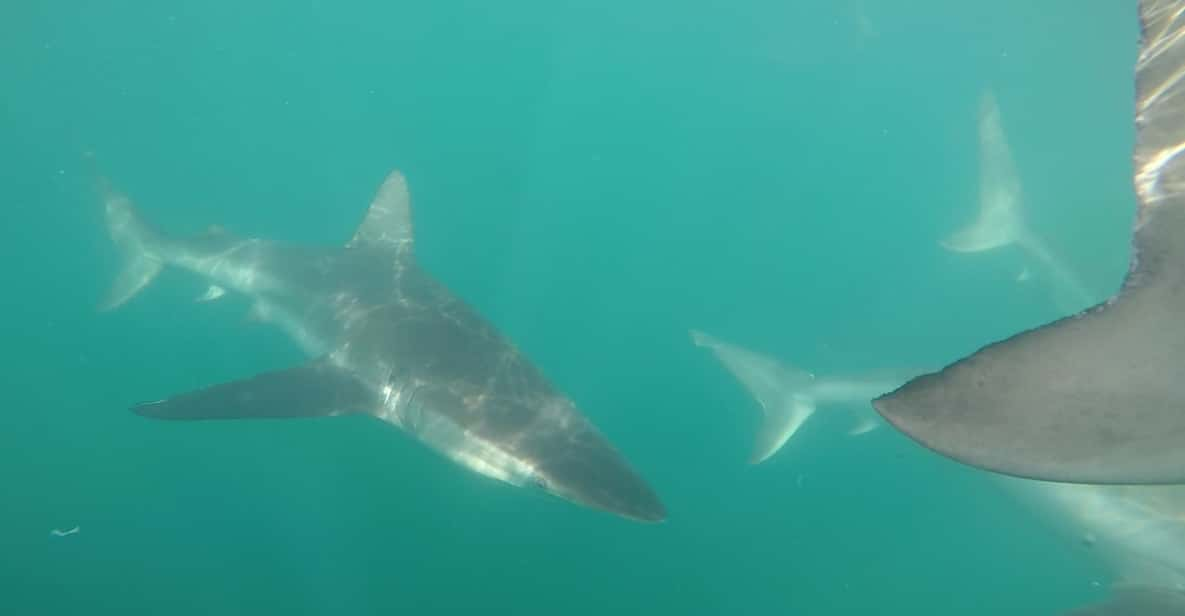
Packing stays short because the operators carry the heavy gear. Every tour here supplies the wetsuit, and they run thick: 5 mm as standard, up to 7 mm with hoods and boots on some boats, sized to fit everyone.
Wear your swimsuit under your clothes in the morning, change on the boat or at the harbour, and put warm layers over the top for the ride out. A windbreaker, a warm jacket and a beanie earn their space on deck.
Cameras are the part people get wrong. In a cage in a swell, a camera on plastic clips leaves your wrist the first time it knocks the bars.
The fix divers swear by is a buoyant hand grip with a wrist lanyard and a metal carabiner, so the camera stays fastened even when the surge pulls it loose.
On safety the record stays calm: no one has been killed by a shark inside a commercial South African cage, and the accidents that did happen trace to boat handling. Cages are built and certified to standards a registered engineer signs off.
The fears that stop hesitant divers are mostly settled by regulation.
Every cage used for white shark diving in South Africa must be certified safe and suitable by the maritime authority, built from steel or aluminium with no sharp edges, an access door at the top and handrails inside to hold. Commercial operators have never lost a guest to a shark.
Three myths do the rounds. Sharks do not ram steel cages on purpose, and the rare cage incidents on record hurt no one. No scuba certification is needed anywhere, because the surface cages run on breath-holds or snorkels, with some boats supplying air from a line.
Chumming turning sharks toward people falls to South African law, which bans feeding outright, and research finds the scent trails change little about how sharks behave.
They do not, and no one has been killed by a shark inside a commercial South African cage
No certification or dive experience is needed for surface cage diving anywhere in South Africa
Feeding is banned by law, so scent trails never pay off as food and sharks stay wild
And once you are in, the choice stays yours. You can leave the cage at any moment, and no one should pressure you into the water if you feel unwell at the anchorage.
No law sets a minimum age for cage diving in South Africa, so the rules are the operator's own, and they differ enough to matter for a family booking.
Cage entry on Western Cape boats generally falls between 8 and 12 years old, with younger children welcome as deck viewers. On the KZN side the one fixed line sits at the Durban aquarium, where its cage experience starts at 12.
Deck minimums matter as much as cage minimums. Some boats turn away children under 6 because hours at sea are too long for them; the lead tour here does that, and keeps an in-house babysitting service at the lodge for the under-6s.
| Check | Why it matters | Our pick |
|---|---|---|
| Minimum age for the cage | Operators set their own line, typically 8 to 12 | The lead tour takes children from 12 in the cage, younger ones on deck |
| Minimum age on the boat | Some boats bar under-6s over the hours at sea | The lead tour bars under-6s and arranges on-site babysitting |
| Whether a nervous swimmer can join | Beginners can enter a surface cage if they follow crew directions | Surface cages run on breath-holds, so no dive training is needed |
One physical test applies everywhere: getting up and down the ladder in a swell. Comfort on a boat ladder decides who goes in.
Book knowing the sea gets a vote, and know the cost of each outcome before you pay. The skipper checks the marine forecast and makes the launch call the afternoon before; rain rarely stops these boats, while heavy swell and strong wind stop them outright.
A weather cancellation brings a full refund or a free change of date, and the tours here also let you cancel yourself up to 24 hours ahead.
Two rougher edges are worth knowing. If strong winds pick up while the boat is already out and it turns back, refunds are not given on some operators.
If sudden winds stop the launch after you have driven to Gansbaai, transport costs stay payable, though a rescheduled day gets free transport. Some boats hand over a return voucher if no shark appears at all.
| If this happens | What happens then |
|---|---|
| Weather cancels the trip before launch | A full refund, or a free move to another date |
| You cancel yourself | Up to 24 hours before departure, a full refund |
| Winds force the boat back mid-trip | No refund on some operators |
| The launch fails after you arrive, transport paid | Transport costs stay payable, with free transport if you reschedule |
| No sharks appear all day | Some operators hand over a return voucher or a free dive |
The habit that saves the day is simple: book the cage for the earliest day of your stay, so a washed-out morning still has a spare one behind it.
A shark morning on the KZN south coast leaves the whole afternoon open, and the stretch around Umkomaas and Scottburgh fills it. Scottburgh Beach has wide sand, swimming in the Indian Ocean and beachside dining.
Crocworld Conservation Centre runs daily animal feedings with a restaurant, an animal farm and a playground, and TC Robertson Nature Reserve sits nearby for a walk.
Both local golf courses play with ocean views, the Scottburgh flea market sets up every Saturday morning, and Blue Ocean Dive Resort plus the beachfront Off The Hook Pub and Grill cover dinner with the sea in front of you.
Boats launch early, between about 6 am and 8 am, because dawn is the only calm window for pushing through the surf; the wind and chop build hard from mid-morning.
Plan the day backwards from the water: launch at first light, one or two dives at the shoal, surface intervals, ashore by midday, then the beach, the reserve or the pub.
The Western Cape trips give back the cage itself, sharks drawn to the boat, hot soup afterwards and a marine biologist alongside you for the whole outing.
No bookable cage dive runs off Durban, and the Western Cape holds the ones on sale: the From Hermanus or Cape Town: Shark Cage Diving Experience in Gansbaai is the trip to take, with the short Simon's Town dive as the half-day pick.
Off KZN, Aliwal Shoal delivers warm-water species, best from May to September when the water clears.
seasickness tablets the night before
Straight answers on sharks, water, ages and launch sites, plus what the Gansbaai day trip on this page delivers.
 Cape Town2026
Shark diving around Durban focuses on tiger sharks, bull (Zambezi) sharks, blacktips, hammerheads and ragged-tooth sharks. At Aliwal Shoal and Protea Banks you can also meet spinner sharks and copper sharks.
Great whites are extremely rare in the warmer waters off Durban, so they do not appear on KZN shark dives. The Gansbaai day trip this page recommends carries a seasonal chance of a great white, with bronze whaler sharks as the mainstay.
The Agulhas Current keeps Aliwal Shoal and Rocky Bay at 19 to 23°C in winter. Gansbaai runs colder, from 12 to 17°C in winter, and the tour supplies a 5 mm wetsuit, hood, boots and mask, so you bring only a swimsuit and warm layers for the deck.
The minimum age varies by operator. The aquarium cage dive at Durban's uShaka Marine World requires participants to be at least 12 years old. On the Gansbaai tour, children under 6 stay off the boat, and a babysitting service is available at the lodge.
The nets set in 1952 removed the risk near bathing beaches, and Durban has recorded no fatal attacks since. They have also thinned tiger shark numbers offshore, which is worth knowing before you pick your species.
May to September brings the clearest water, often 15 to 25 meters of visibility, calmer seas and peak ragged-tooth shark gatherings. Summer from October to April warms the water and raises the odds of tiger sharks.
Wear your swimsuit or wetsuit aboard, and pack sunscreen and a towel. The open RIBs launch straight through the surf with no cabin, so seal anything non-waterproof in a dry bag or leave it ashore.
Central Durban to Umkomaas or Rocky Bay takes about 35 to 45 minutes along the N2, roughly 49 km. From Umhlanga the drive covers about 70 km and takes an hour.
Wind, swell and chop sit at their lowest at dawn, which is the calmest and safest window to punch through the surf. As the day warms, coastal winds build and the sea turns rougher.
No certification or prior experience is needed for surface cage diving anywhere in South Africa. The recommended Gansbaai trip states plainly that no diving experience is necessary.
The tours on this page let you cancel up to 24 hours in advance for a full refund. If sea conditions stop the launch, you get a full refund or can move to another day.
durban to umkomaas on the n2 is about 35 min
Compare every launch hub in South Africa side by side and see which one fits your route and dates.
If a city itinerary matters, the Cape Town page shows short trips that run close to the city center.
Gansbaai draws the most divers in the country; this page explains the boats, the bay and how a day runs.

Hermanus works well as a base, and this page sorts out which boats leave the harbour and which do not.
On the Garden Route? Mossel Bay holds its own cage diving scene and this page walks you through it.
Worried about safety records, the cages and the crew? This page lays out how the trips are run.
Read how chumming, permits and no-feeding rules work before you decide the trip is for you.
No scuba licence needed: this page covers age limits, swimming ability and what to pack for the cage.
Wondering what you get for the early start? This page weighs sighting odds against the cost.
Timing decides the water clarity and the swells; this page maps the best months for a cage dive.
Great whites now gather in only a few spots; this page shows where the odds of meeting one are best.
second cage dive often possible
Breakfast, a marine biologist briefing and about 20 minutes in the cage near the seals, with free cancellation up to 24 hours ahead.