- 1
South African law bans feeding great whites; crews must let go of a bait line the moment a shark takes it.
- 2
Permits are capped, boats and cages need maritime certification, and chumming is limited to five designated sites.
- 3
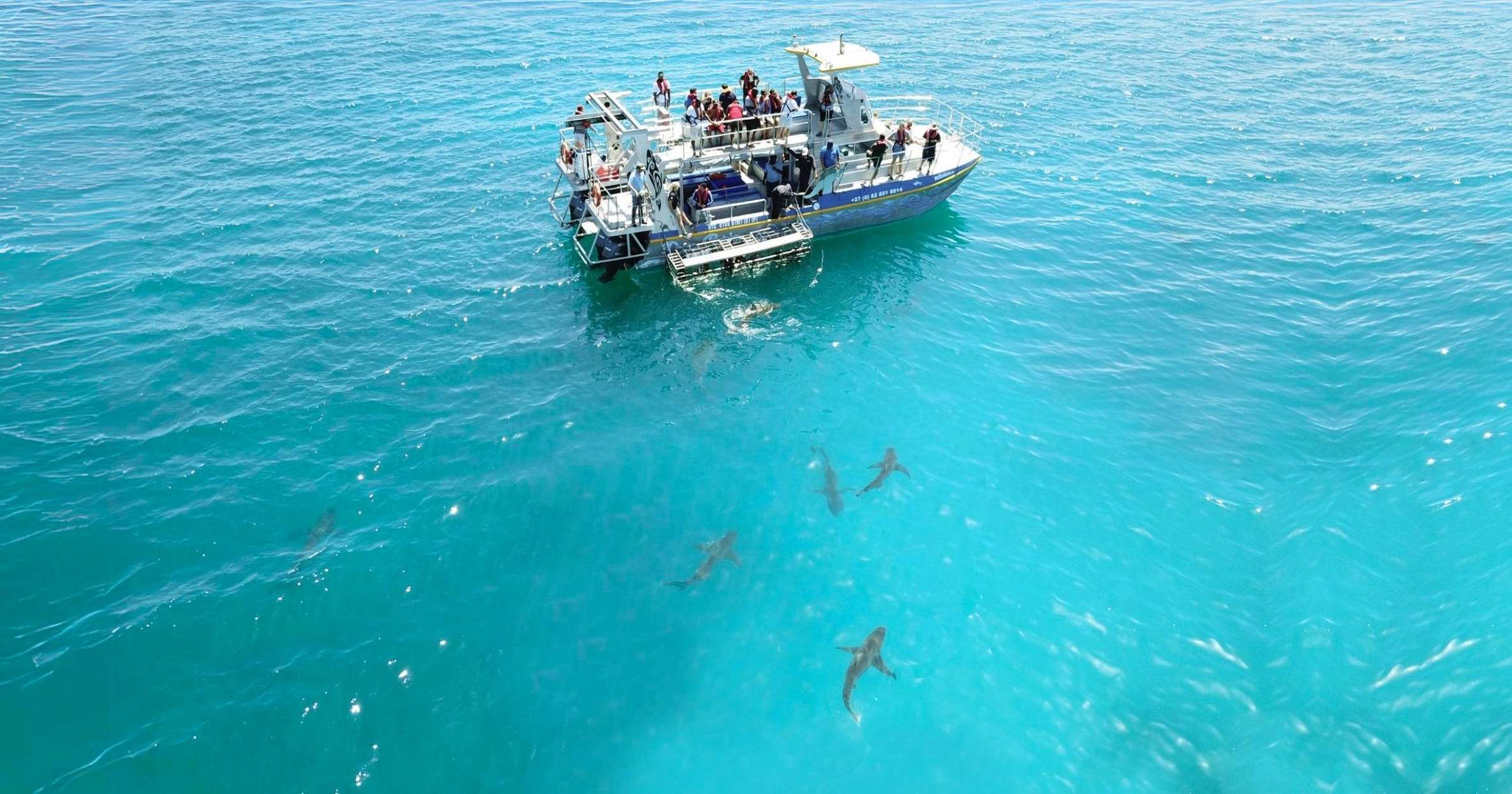
Expect bronze whaler sharks far more often than great whites; anyone who guarantees you a great white is a red flag.
South African law sets no fixed weather or wildlife threshold for cancelling a shark cage diving trip; the skipper decides each day based on wind, swell and harbour conditions. Book your dive early in your stay so a weather cancellation can be rescheduled, and plan for a full refund or a free date change if the boat cannot launch.
Ethical shark cage diving - photos from the tours

Shark cage diving and animal welfare - the honest answer
deck viewing is free, skip the cage if you like
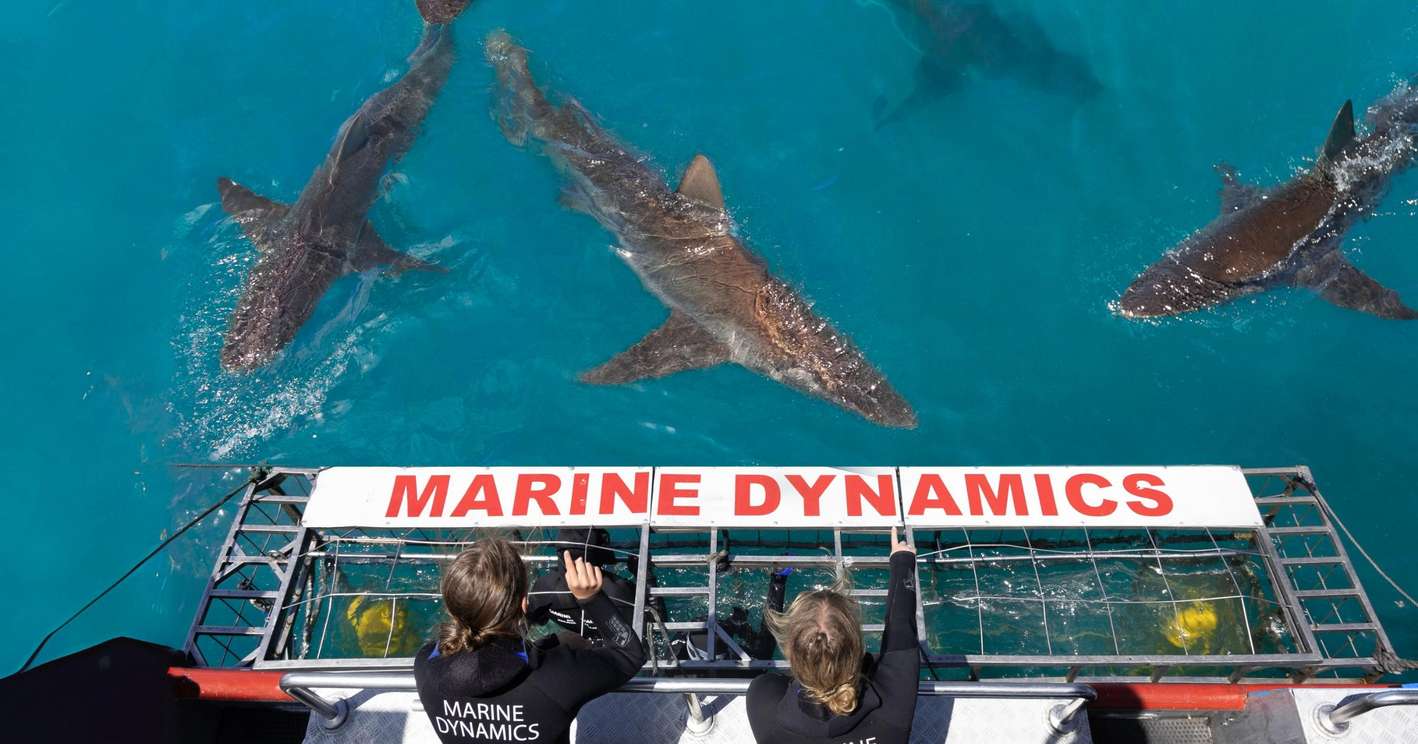
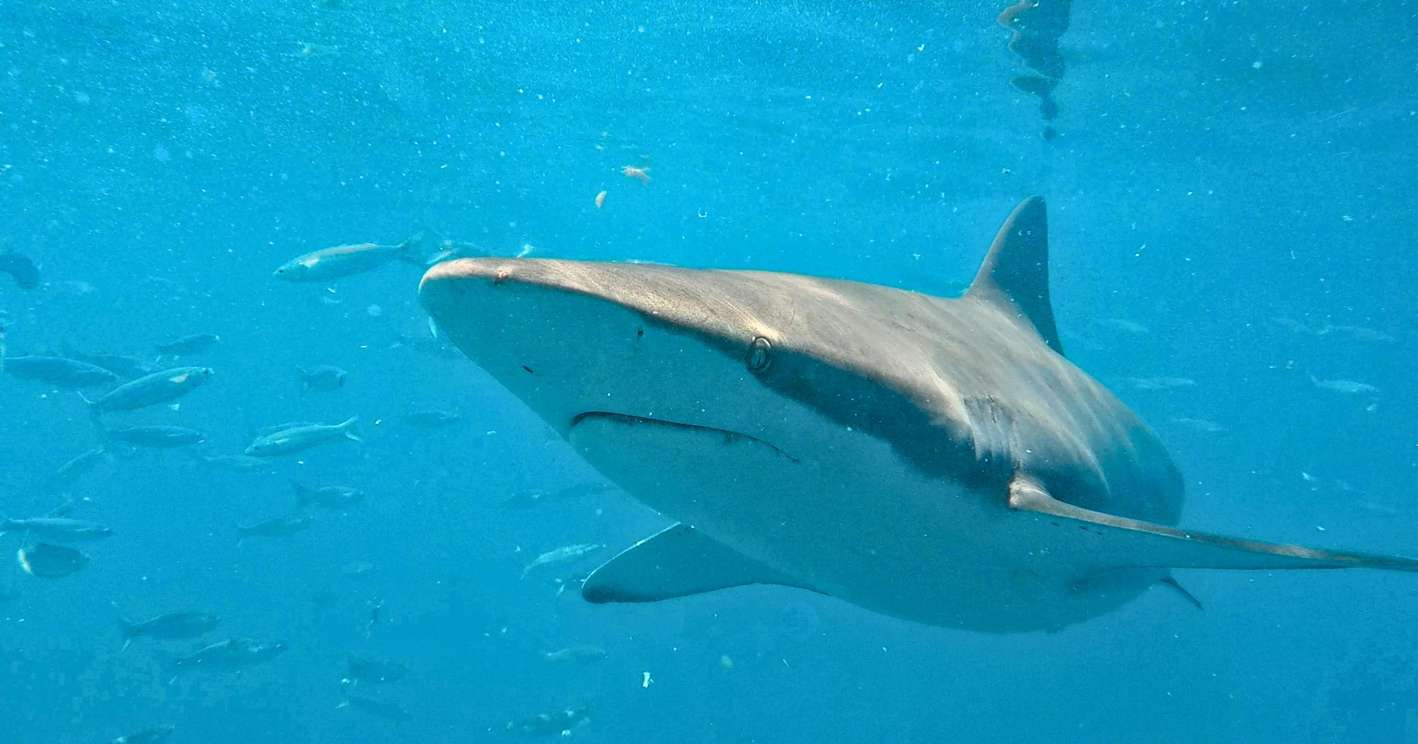
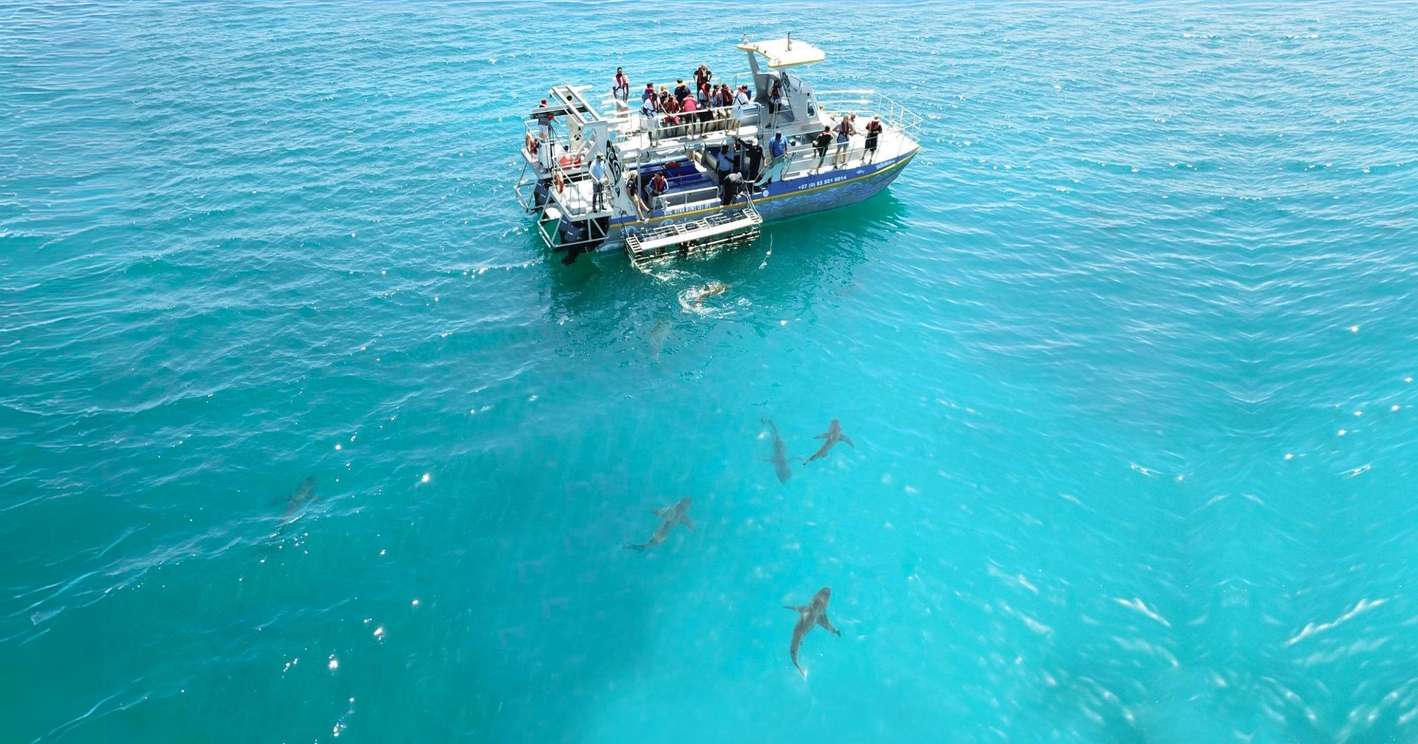
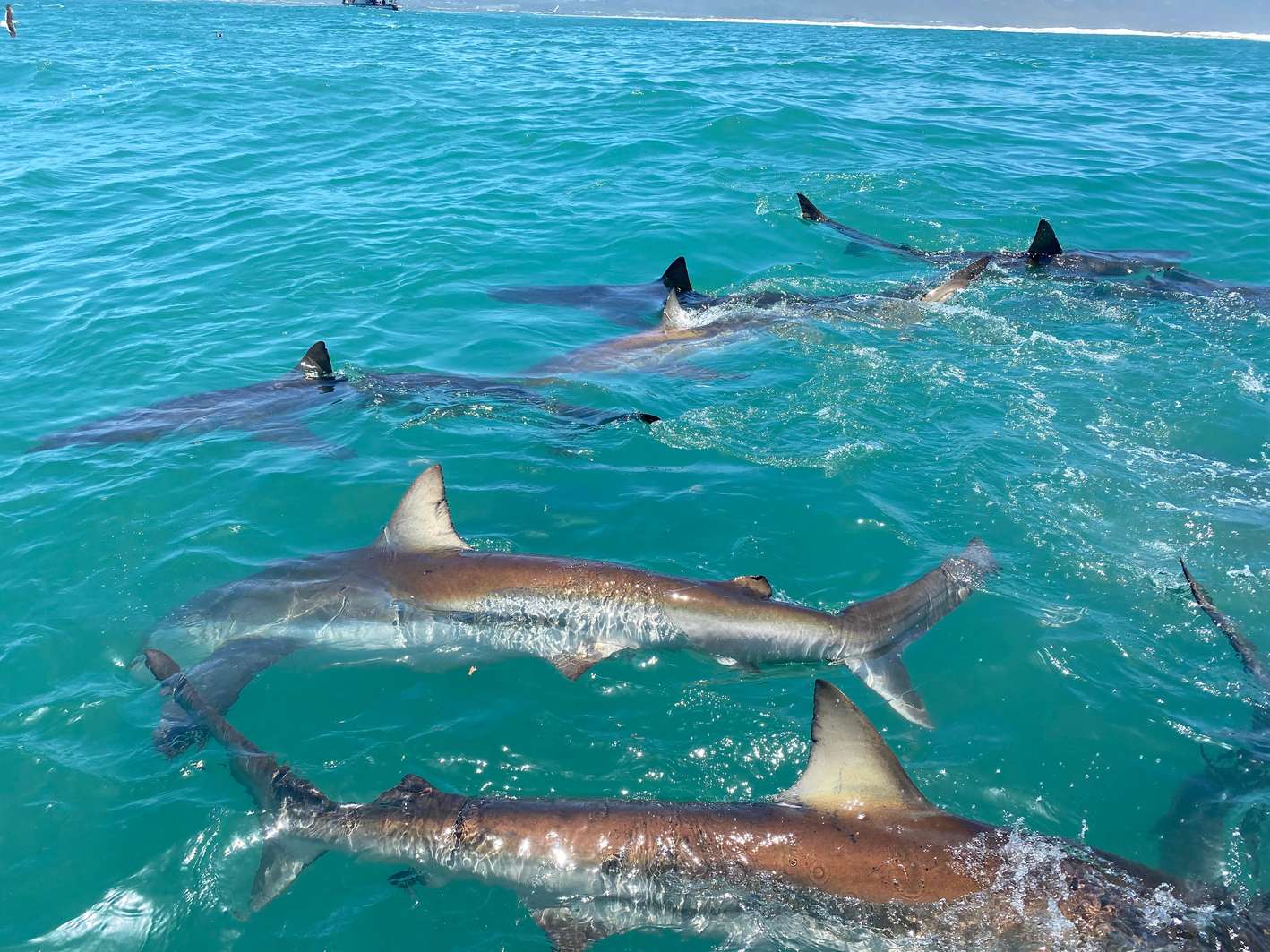
A bronze whaler slides past the bars, close enough that you count the scratches on its flank. Nobody on the boat threw it a meal to get it there. That single fact is where the whole debate about cage diving starts.
The activity is one of the most closely watched forms of shark tourism in the world. South African law bans feeding the animals outright, research finds no lasting effect on their diet, body condition or migrations, and the sharks themselves stay completely wild in open water.
The operator's conduct decides whether the trip is ethical. Well-run trips fund marine research and turn guests into people who argue against shark culling.
There is another side, of course. A careless crew that drags bait into the cage, or teases sharks for spectacle, causes real harm.
So the question worth asking before you book is never simply whether cage diving is cruel, but whether this particular crew treats the animals with the discipline the law demands. The next chapters walk through each worry with what the rules and the science actually say.
Feeding is banned by permit law. Boats use scent trails of fish oil, and crews must release a bait line the second a shark takes it, so sharks never get a food reward.
The animals are wild and free to leave. Studies find no change in their diet, body condition or migration, and the best operators fund the research that protects them.
Long-term studies, including a 14-year one in Gansbaai, found operators do not hold sharks at a site or alter their broad movements.
Is baiting the sharks on a cage dive ethical?
The worry usually starts with the slick: a milky trail of fish offcuts and oil drifting behind the boat. It looks like feeding. It is not. The chum is scent, not food, and the difference is written into every permit.
Here is how the bait line works in practice. A crew member lets a fish-based bait trail behind the vessel on a rope to draw a curious shark closer. If the shark gets the bait into its mouth, the rules say the line is released immediately, so the animal never wins a meal.
A single bait can fuel a white shark for over a day, and that figure comes from the industry-wide record including crews that let a shark feed before the line drops, which is exactly why the release rule matters and why crews keep baits small and interactions brief.
Permit holders must prevent white sharks from being fed or encouraged to eat bait, and the rules cap how many boats may chum, and only inside the specific areas named on the permit.
That discipline cuts both ways in a way scientists find useful. When crews follow the rules, the sharks get no reward and often lose interest in the boat entirely.
Long-term studies of non-feeding, baited trips find no disruption to migration or wild foraging. So the slick brings a shark near your cage for a look, then the animal carries on hunting exactly as it would have without you.
Can sharks get hurt hitting the cage?
The image everyone carries is a shark slamming into steel. The regulations are written largely to make that image impossible.
Baits may never drift inside or directly in front of the cage, lines may not run over the top of it, and nothing may be attached to the cage itself. Bait handlers wear polarizing sunglasses so they can spot an approaching shark before it reaches the boat.
The cage design is policed too. Viewing gaps stay small, welds must be smooth, sharp corners get protective caps, and the whole unit must be certified by a registered engineer and approved by the maritime safety authority.
One cage per boat, a top access door, internal handrails. The rules exist because a shark squeezed through a badly built port can suffer blunt force injuries, which is exactly what the spacing prevents.
The record is honest on both sides. A great white broke through cage bars off South Africa in 2005, and in 2013 an eight-foot shark got its head into a cage in Gansbaai.
Both happened when crews mishandled bait lines, and both pushed the certification and bait-handling rules to where they stand today. No one has ever been killed by a shark inside a commercial cage.
Does cage diving change shark behavior?
Follow the science and the picture is small, temporary and largely tied to rule-breakers. Around boats that use food attractants, white sharks do swim faster and make more bursts of acceleration.
Measured across the whole animal, that extra activity does not meaningfully shift their energy budgets, and biochemical sampling of sharks from tourism vessels finds no change in diet or body condition.
A shark only learns to follow boats when an operator breaks the rules and lets it win food. Do that and conditioning sets in, which is why the release-the-line rule matters so much.
Run the operation legally, and the opposite happens: sharks that get nothing from the boat start ignoring it. Crews also keep the pace of interactions low so animals are not pulled away from natural hunting.
As for swimmers, research has found no evidence connecting cage diving with increased risk to people in the water around Cape Town. A shark near a dive boat stays locked on the scent slick behind the stern, and its attention stays there.
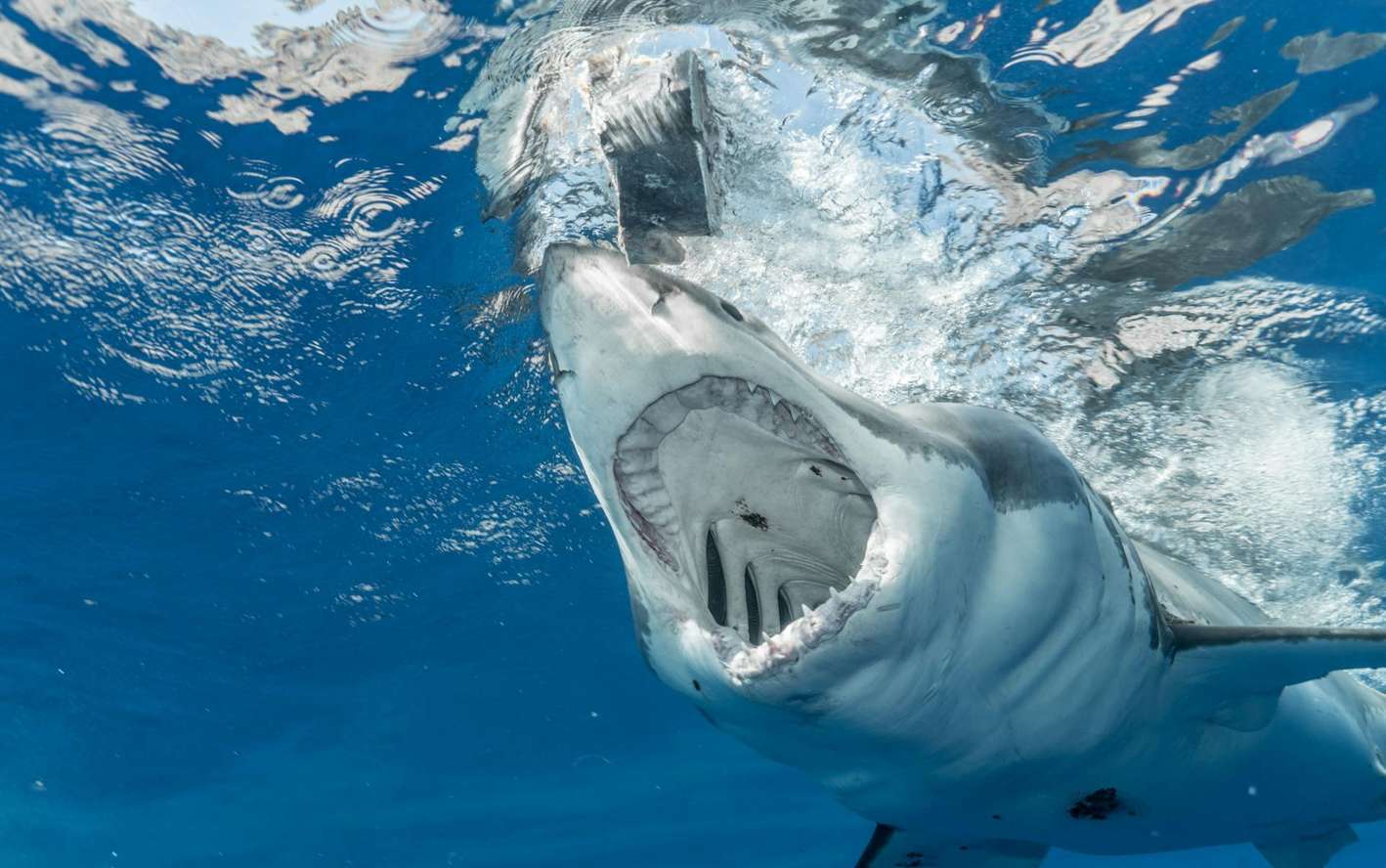
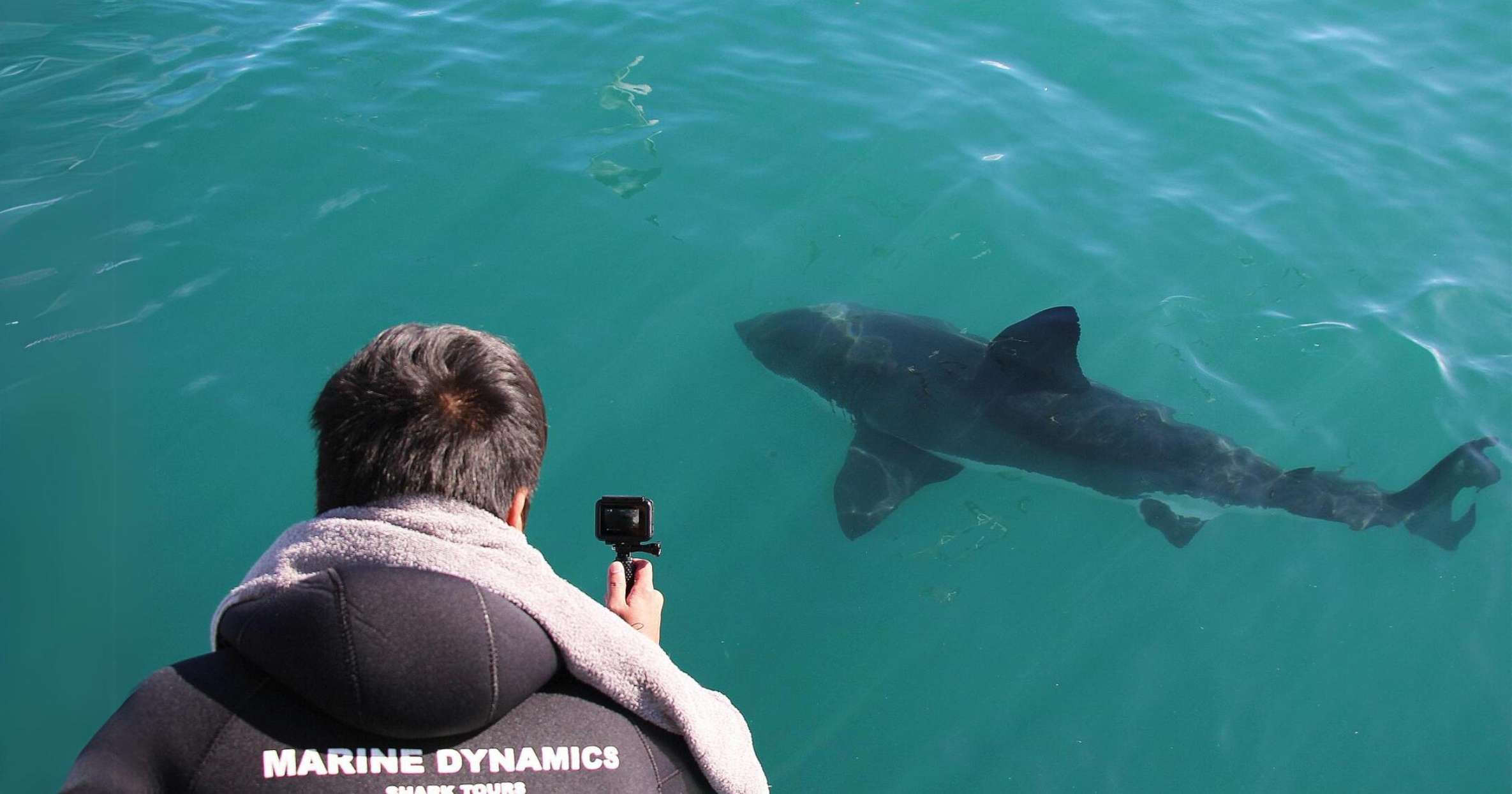
How your ticket funds shark research
Ask where the fare lands and the answer separates the good boats from the rest. Some ethical operators put ticket profits straight into shark conservation and marine research, paying for tagging programs, photo-identification catalogues and the monitoring work that regulators could not run alone.
Their onboard biologists collect data every trip, and guests are often welcome to contribute sightings.
The educational effect is measured too. A study of tourists after a white shark cage dive found a clear positive shift in their awareness, concern and attitudes toward sharks, and structured onboard interpretation strengthens it further.
Meet a seven-foot bronze whaler at arm's length and media monsters stop being monsters. Conservationists make that case for the industry, and it holds when the crew takes the time to explain what you are seeing instead of just selling the thrill.
So look at the fare as two things at once: a seat on a boat and a donation to the people counting, tagging and defending these animals.
Operators who run tagging or photo-ID programs and invite guests into the data are the ones worth your money. Some run week-long volunteer programs where students and biology enthusiasts help collect shark data at sea.
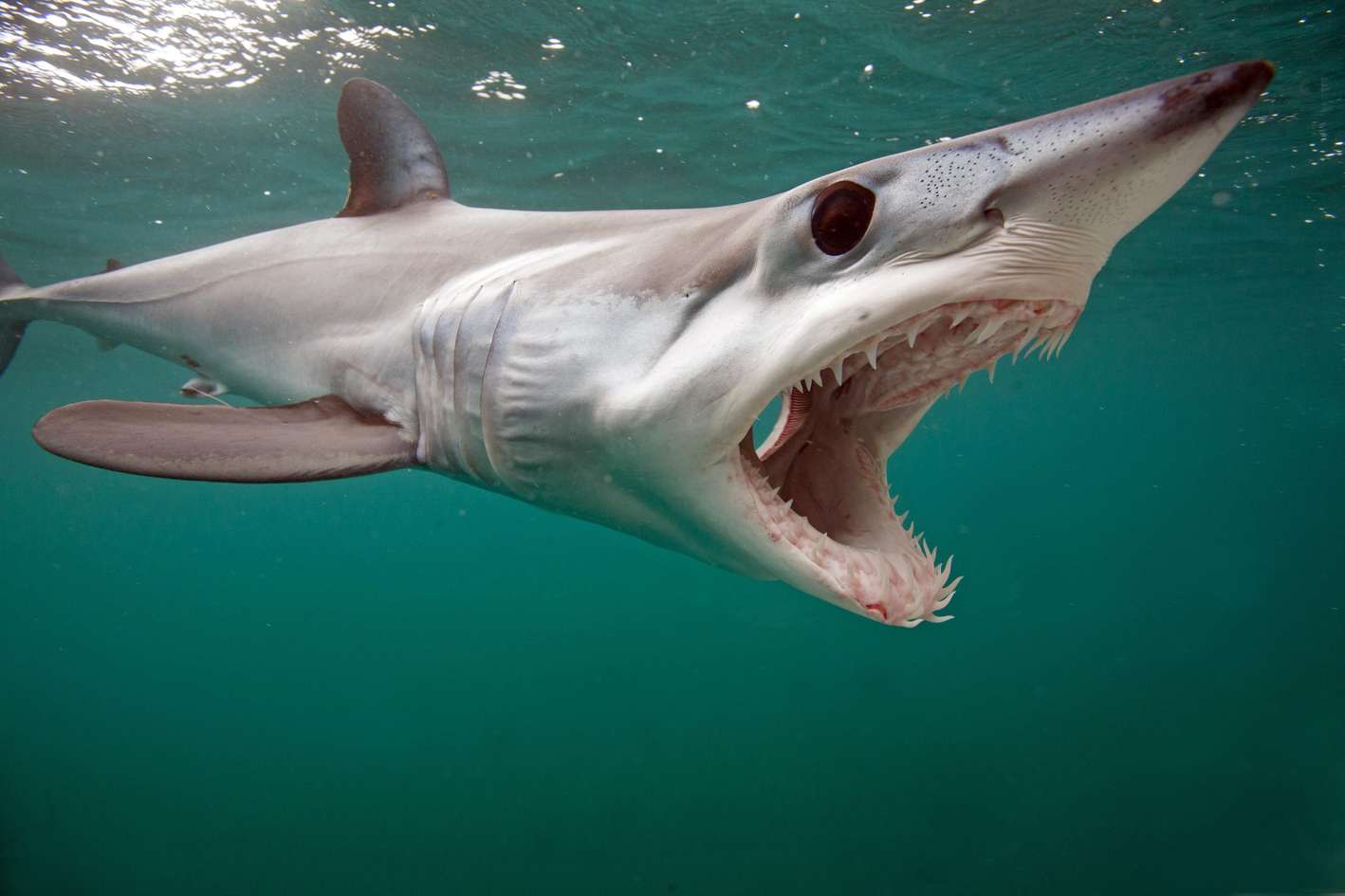
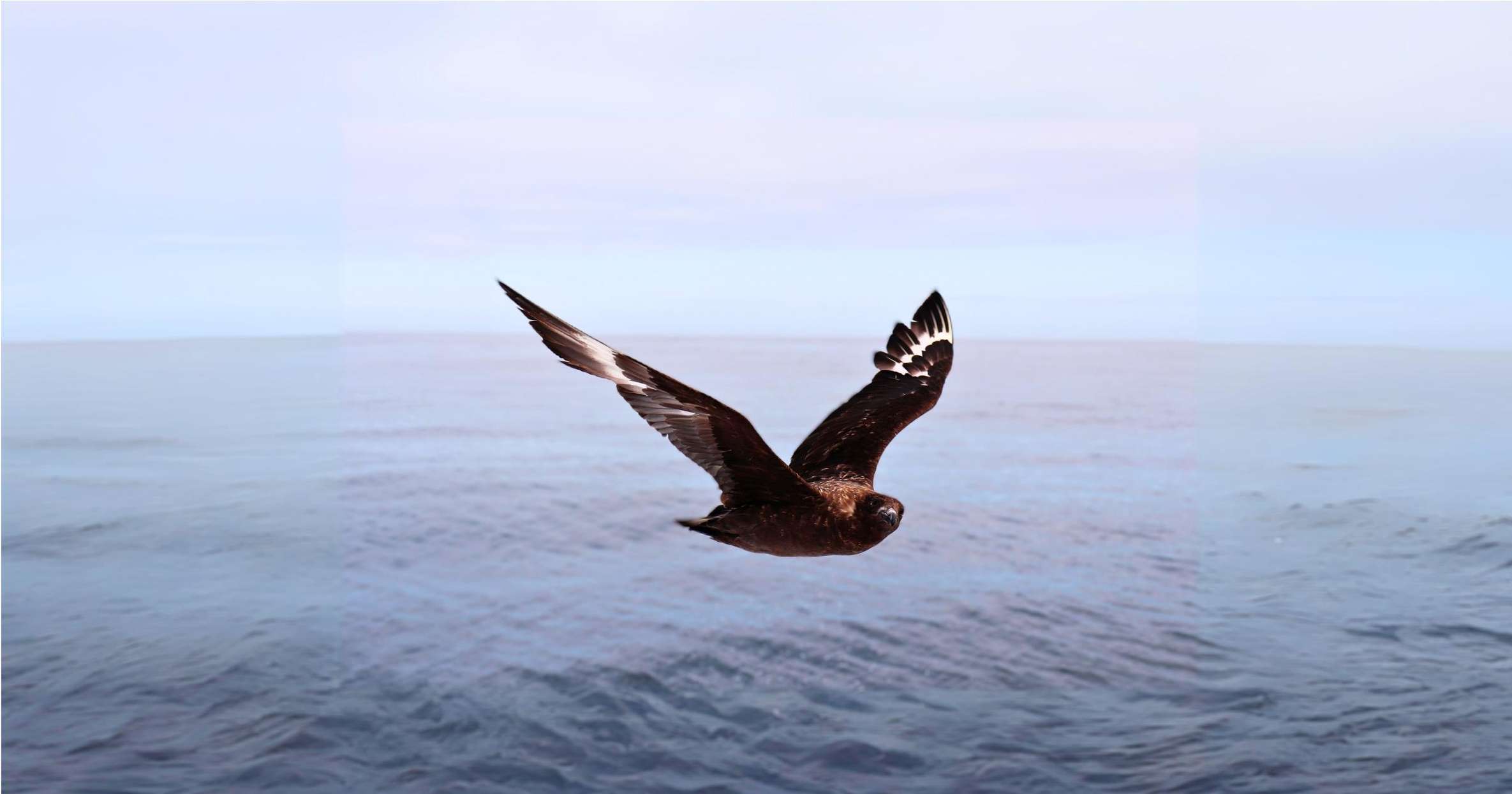
How to spot an unethical shark dive operator
Two websites sit in front of you and the difference is easier to read than you would think. Guaranteed sightings are the loudest red flag: wild animals cannot be promised, and a promise usually means heavy baiting behind the scenes. The same goes for marketing built on feeding frenzies, up-close encounters or the perfect selfie.
Watch the trip count as well. Boats running three or four departures a day rarely have room in the schedule for shark welfare or research.
Photos showing unnaturally dense clusters of sharks hint at aggressive chumming, and any operator whose guests touch, chase or feed animals, with guides who let it happen, should lose the booking on the spot. Reviews that mention holding a shark tell you everything.
The boats worth booking put their credentials in plain sight: a permit number in the ad, a written code of conduct, a marine biologist narrating the trip, and guests leaving with conservation knowledge rather than footage alone. Here is what to weigh before you pay.
How to choose an ethical shark cage dive
| Check | Why it matters | Our pick |
|---|---|---|
| Permit number in the listing | Only licensed operators may attract white sharks, and the law requires the number in ads | Runs on a licensed operator's permit under the capped Gansbaai system |
| No guaranteed sightings | A sighting promise signals heavy baiting and thrill-first operations | Wildlife sightings are stated honestly as never guaranteed |
| Marine biologist on board | Expert narration keeps the focus on education over spectacle | An onboard marine biologist briefs guests and stays with the trip |
| Conservation projects funded | Ticket profits should support research, not just adrenaline | The trip is built around learning the operator's conservation work |
| Extra wildlife stops | Sanctuary visits show an operator invested in the wider ecosystem | Includes a visit to the African Penguin and Seabird Sanctuary |
Score any operator against those five lines and the choice makes itself. One Cape Town trip that clears every bar runs private transport to Gansbaai, spends about three hours at sea with a shark expert explaining the conservation work, and adds a visit to an African penguin and seabird sanctuary on the way home.
South Africa's cage diving permits and rules
Everything in this guide has teeth because of the permit system behind it. White shark cage diving counts as a restricted activity under the Biodiversity Act, permits are capped in number, and no one may run a trip without registering with the issuing authority.
The permit itself must hang in plain view on the vessel, and advertisements must carry the permit number, which is how you verify any operator before you pay.
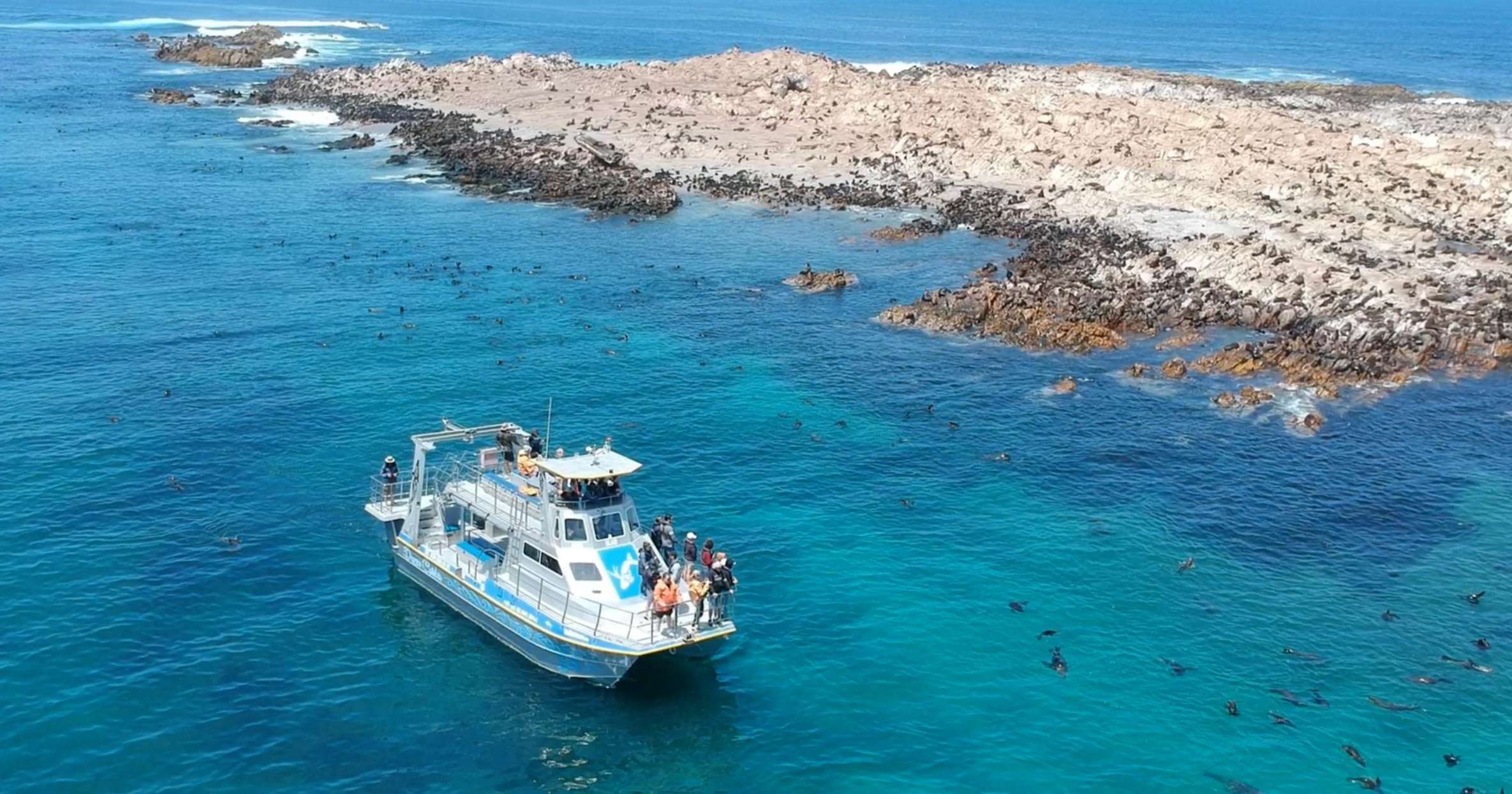
The rules reach every part of the day. Chumming happens only inside five designated sites: Seal Island in False Bay, Dyer Island in Gansbaai, Quoin Rock at Quoin Point, Seal Island in Mossel Bay, and Algoa Bay. Vessels and cages need certification from the maritime safety authority.
Divers may never leave the cage, and no one aboard may touch, tag or harass a shark. Dumping anything into the sea is banned except the permitted chum, and free-diving with white sharks outside the cage is simply not offered.
Contrast that with Guadalupe Island, where mishandled bait, swimmers outside cages and dumped pollutants got the whole industry shut down indefinitely. South Africa took the other path: cap the permits, police the conduct, and keep the industry inside five bays where its effects can be measured.
Which sharks you will actually see, and when
Now the part no ethics guide should skip. Resident orcas have preyed on great whites and pushed them away from False Bay and Gansbaai, and sightings have dropped sharply over the past decade.
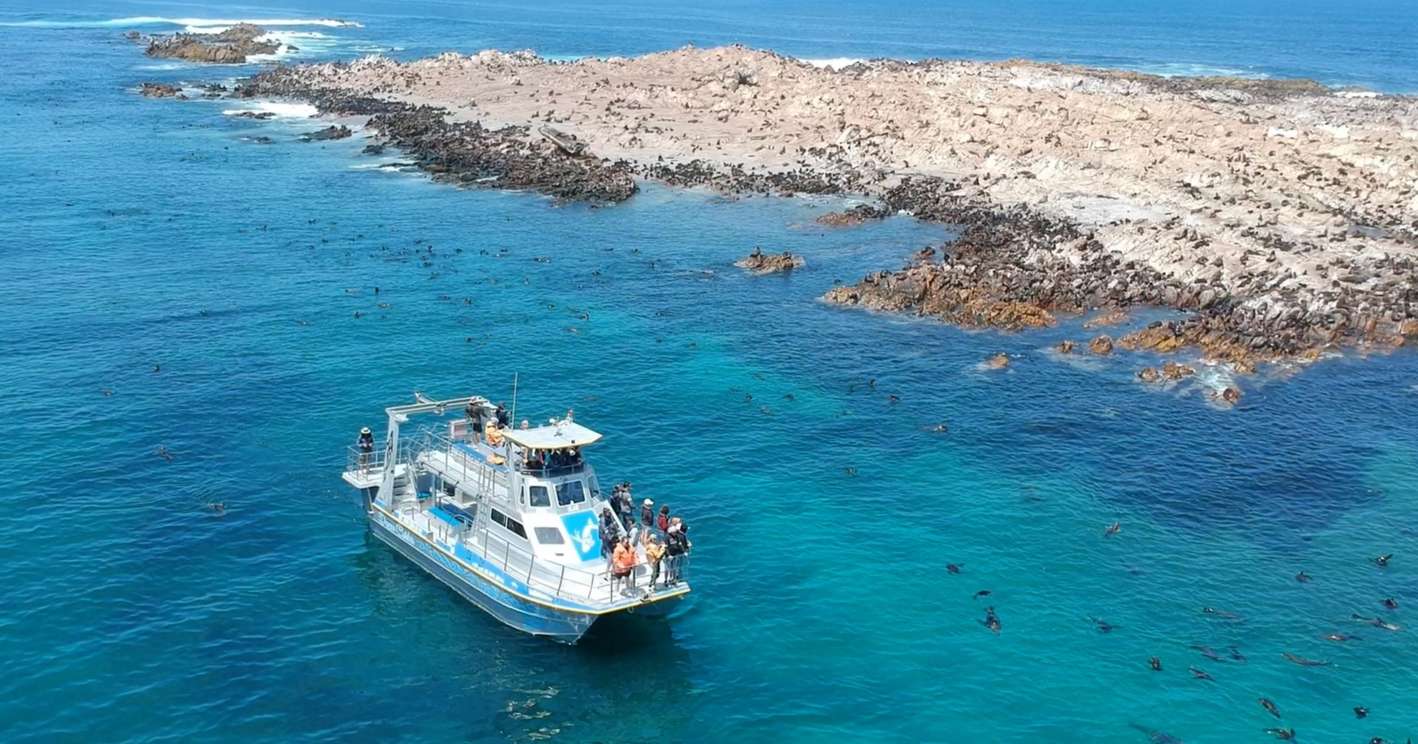
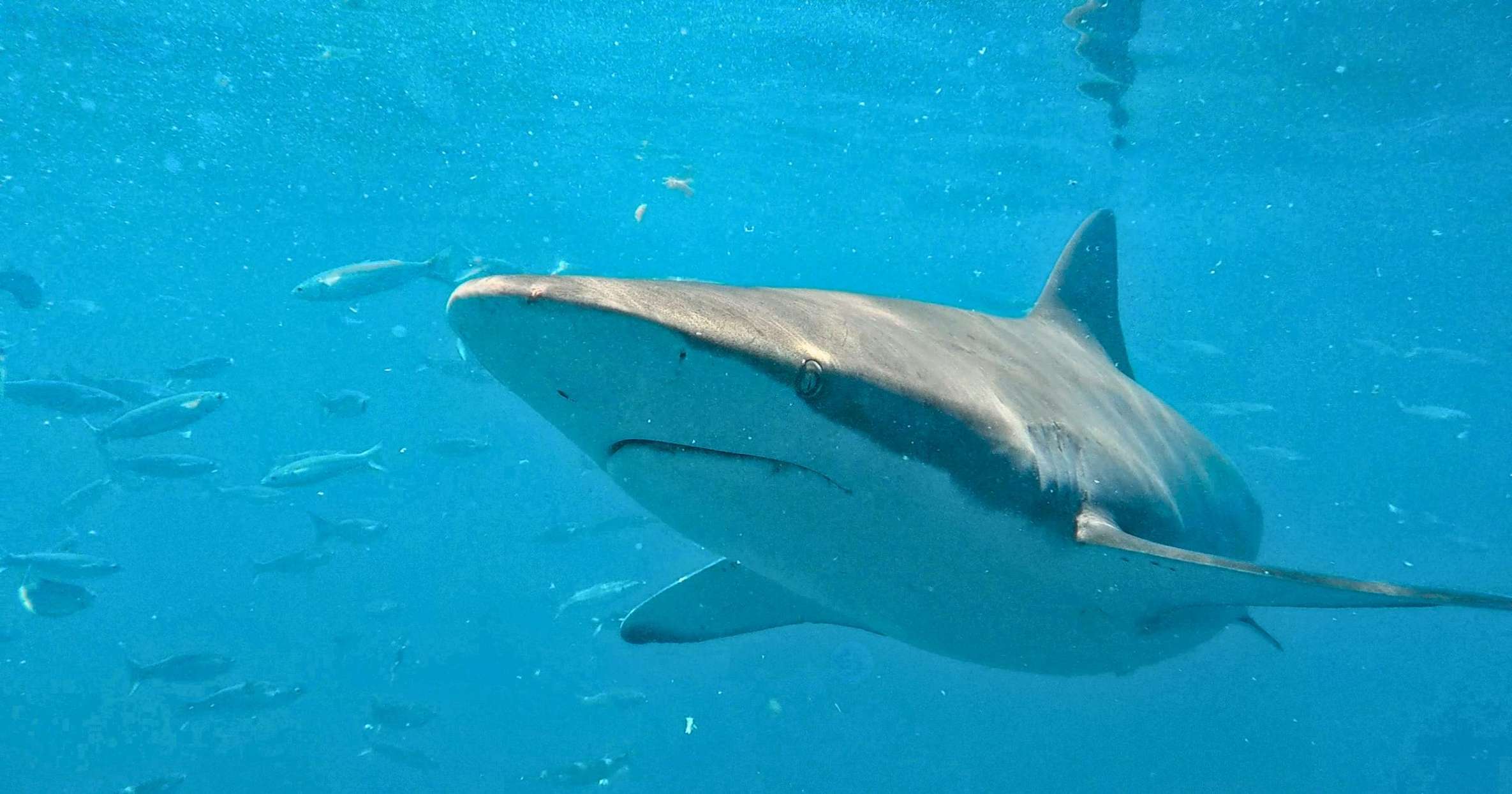
Gaps of a year or more between great white encounters are normal now, with a rare young shark appearing near Seal Island after years of absence. Most trips today meet bronze whaler sharks, also called copper sharks, often alongside sevengill sharks, stingrays, seals and dolphins.
Set that expectation before you book, because it changes how the day feels. A boat full of three-metre bronze whalers is a genuinely good morning, and the tours deliver it reliably.
A guest who arrives wanting only a great white leaves disappointed no matter how well the crew behaved. Anyone who promises you the great white is telling you what the science says they cannot.
Timing helps. White shark sightings in Gansbaai sit lowest in December through February, and the clearer winter water from May to September brings the best odds along with the roughest seas.
September: great white shark seen 16 times. Spring begins with choppy seas, steady bronze whaler encounters, and historically occasional white shark passes.
Tap a month to read it.
August: bronze whaler seen 12 times. Winter winds and high waves persist alongside frequent bronze whaler sightings around the cage.
Tap a month to read it.
January: calm sea on 8% of days. Summer brings warm weather and active bronze whaler sharks, though great white sightings remain rare.
Tap a month to read it.
Read those numbers as a booking tool rather than a guarantee: the winter months carry the best sighting counts and the poorest chance of calm water, so a flexible schedule is worth more than a perfect date. Book the earliest day of your stay so a weather-cancelled trip can move to another morning.
Cage or boat deck - which way to watch sharks
There are two honest ways to spend the same trip, and neither one makes you more of a conservationist than the other.
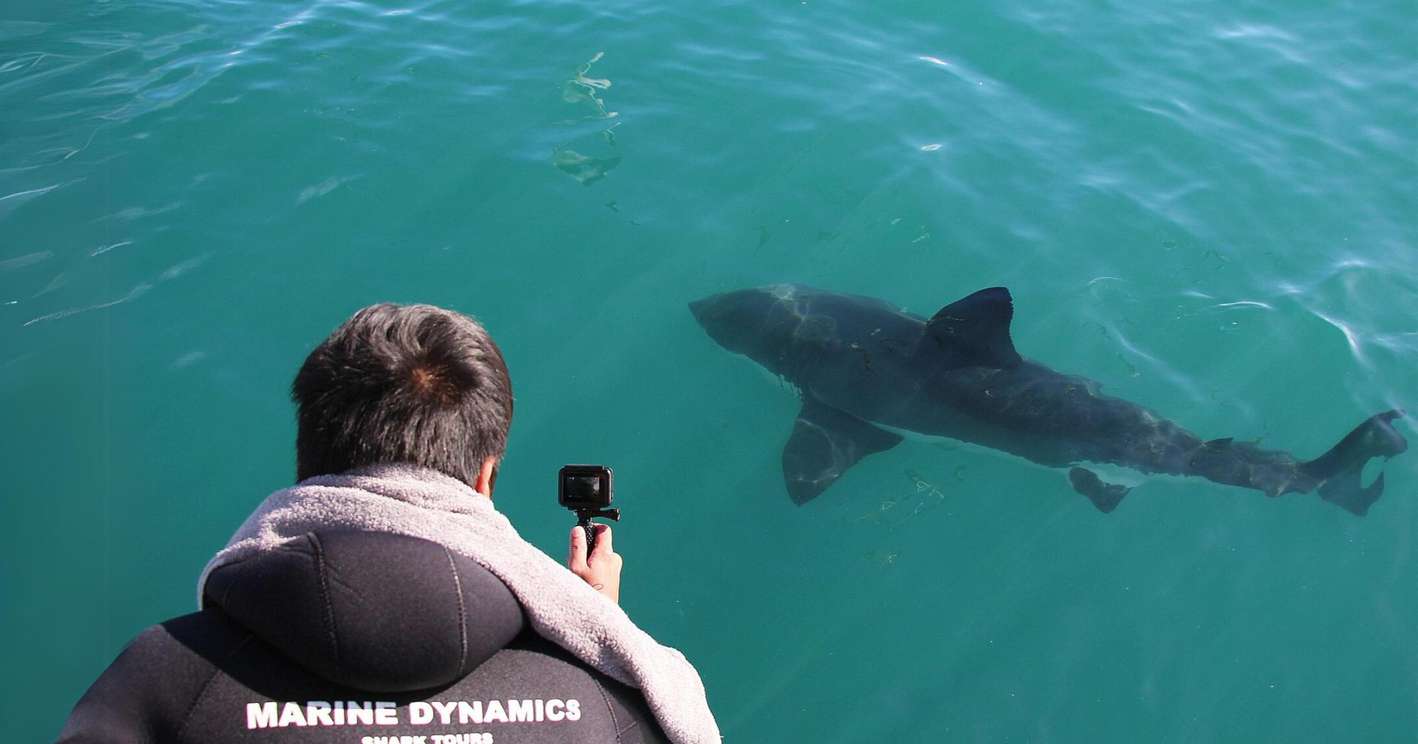
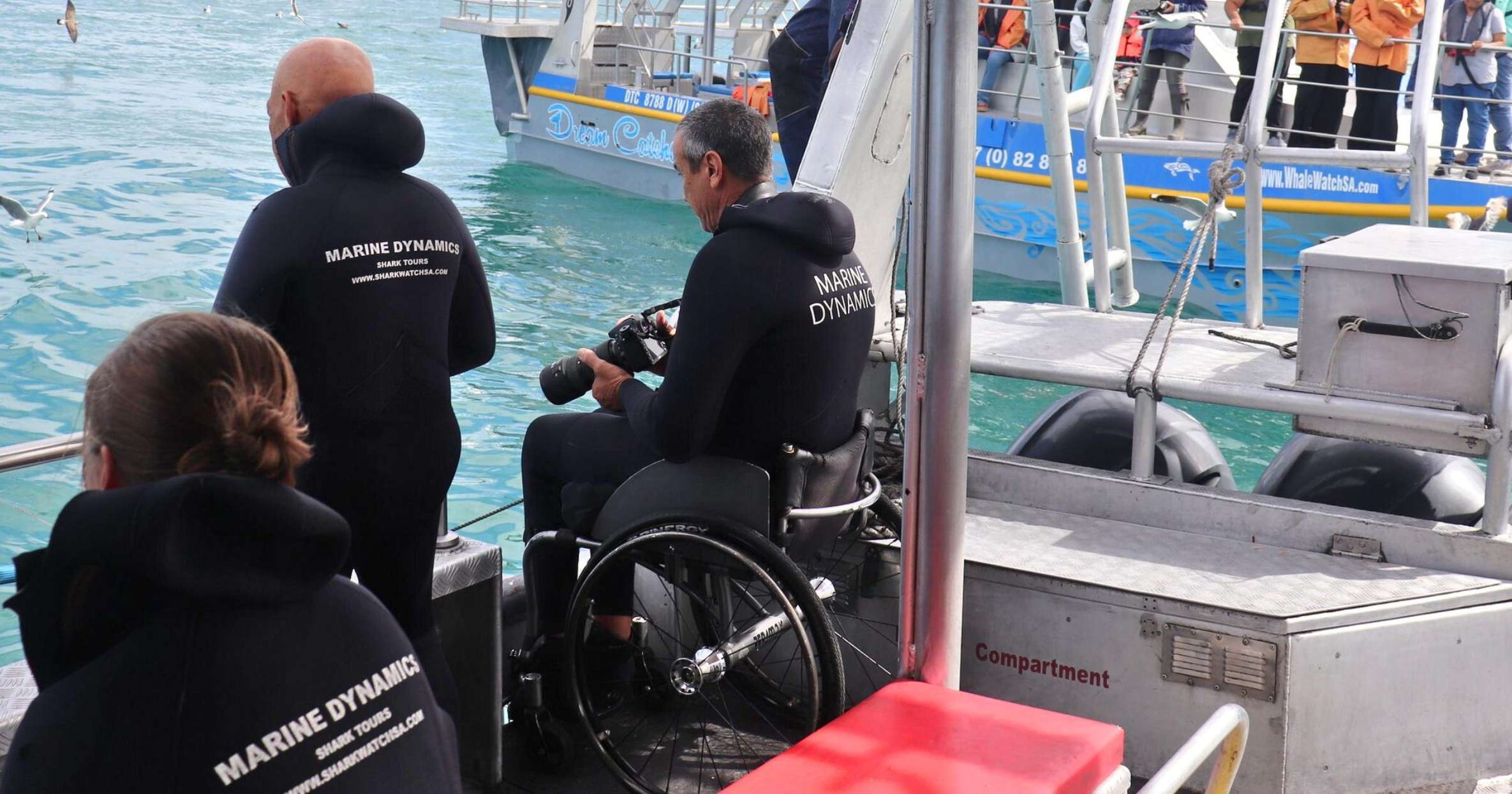
The deck gives you just as clear a view of the sharks, the seals and the sudden appearances around the boat, sometimes a better one, because from above you watch the animals appear and vanish with a stealth the water hides.
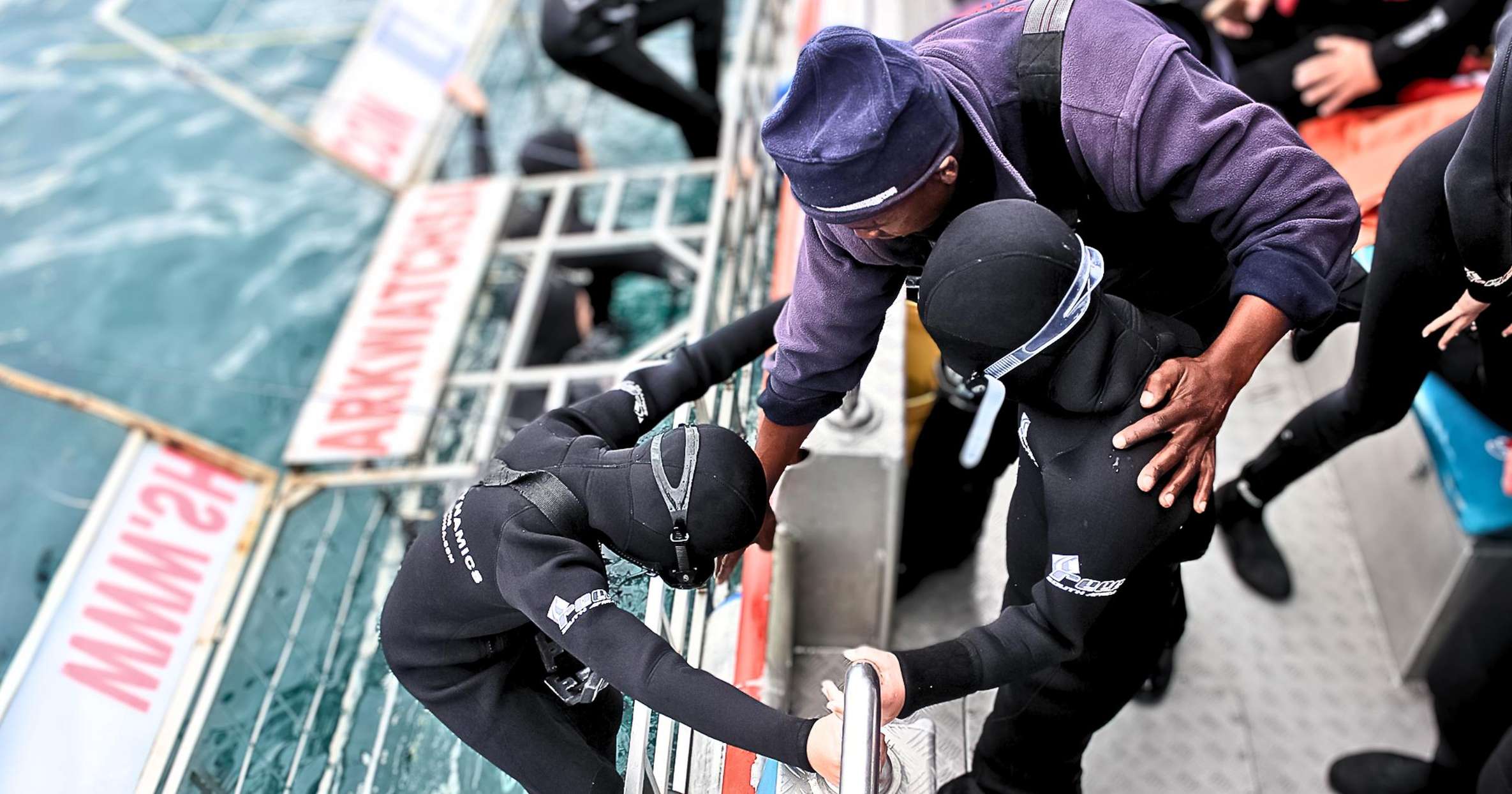
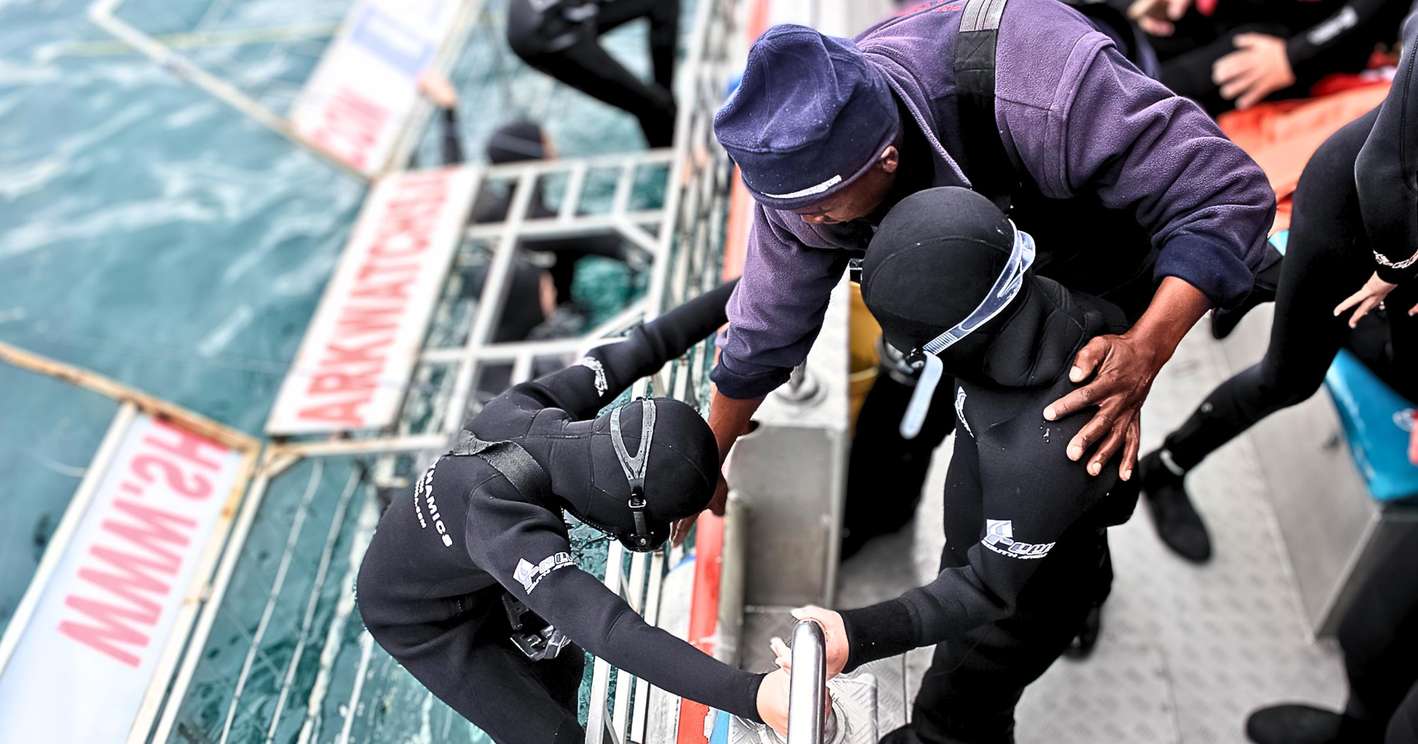
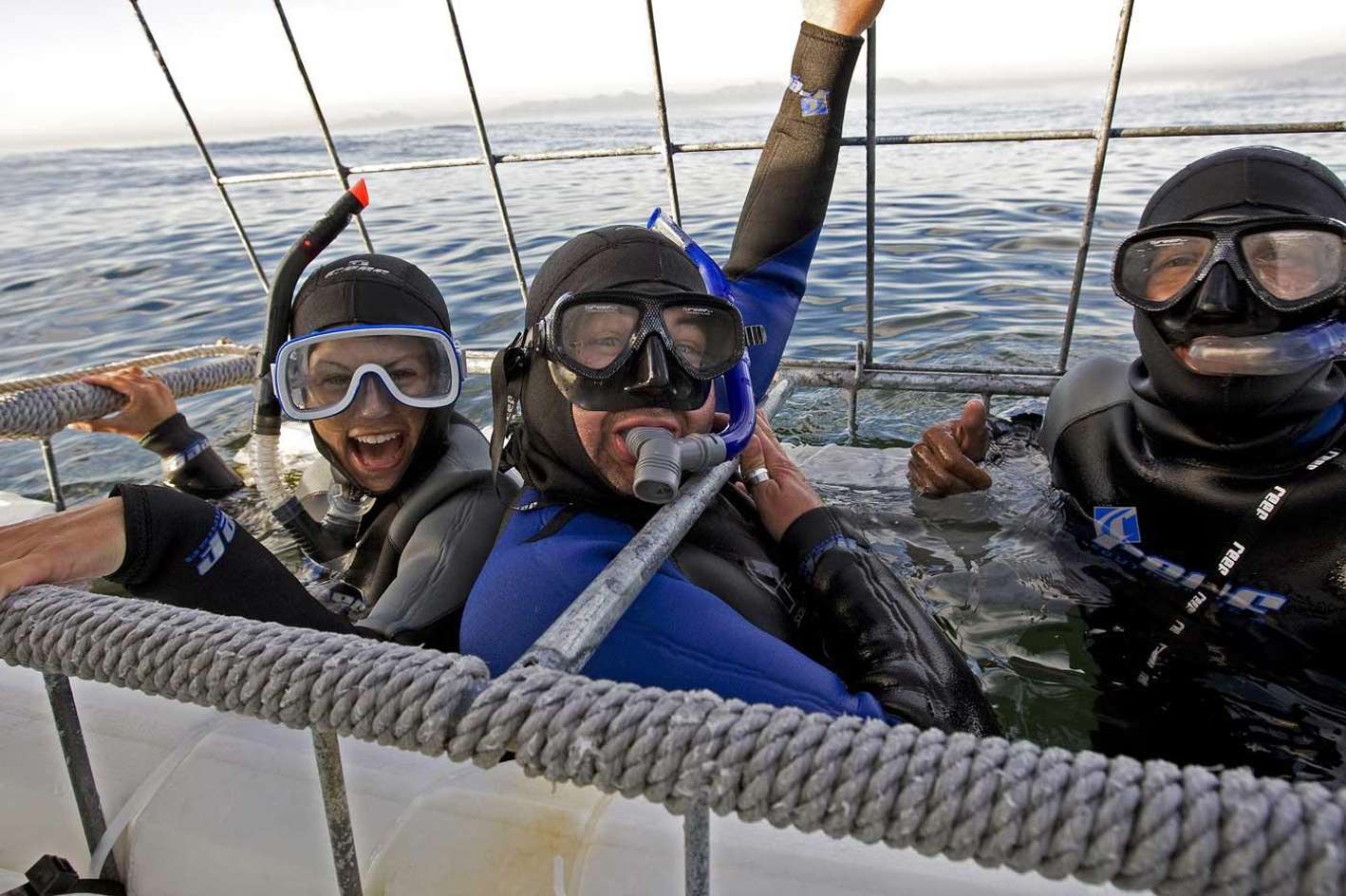
The cage asks less of you than most people expect. No scuba certification, no diving experience, and every operator supplies the wetsuit, mask, boots and hood. You float at the surface, breathe on the surface or through a supplied-air line, and hold the interior handrails as the sharks pass.
The one rule that matters is keeping every hand, foot and camera inside the bars, even when the shot of the morning drifts just out of reach.
Inside the cage often feels calmer than standing on the choppy deck, which surprises first-timers. The rotations run in small groups, about twenty to thirty minutes a turn, so deck time and cage time share the day anyway.
Pick the cage if the water draws you; stay dry and you will still see every shark that comes to the boat.

Our guide Leonard was wonderful - knowledgeable, fun, and kept the long ride entertaining. Well-organized trip, friendly staff at Great White House. Adding seal diving to cage diving is a must.
Worth it, with the right crew
Yes, shark cage diving is ethical when the operator follows South Africa's non-feeding permit rules, and the best boats fund the research that protects sharks.
Book a crew with a permit number, a marine biologist and no sighting guarantees, and your fare becomes conservation funding. The answer changes only for travelers who need a guaranteed great white, because no honest operation can offer one.
What to know before you book an ethical shark cage dive
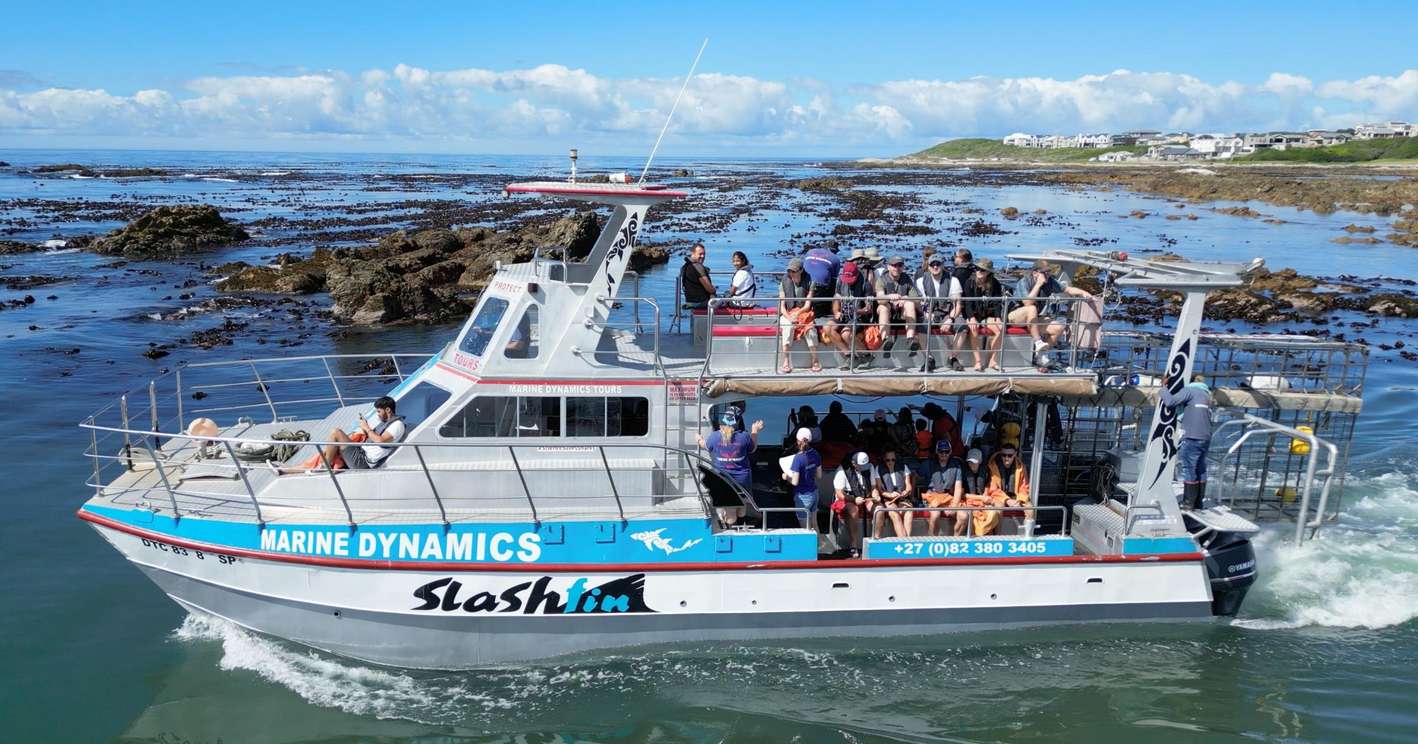
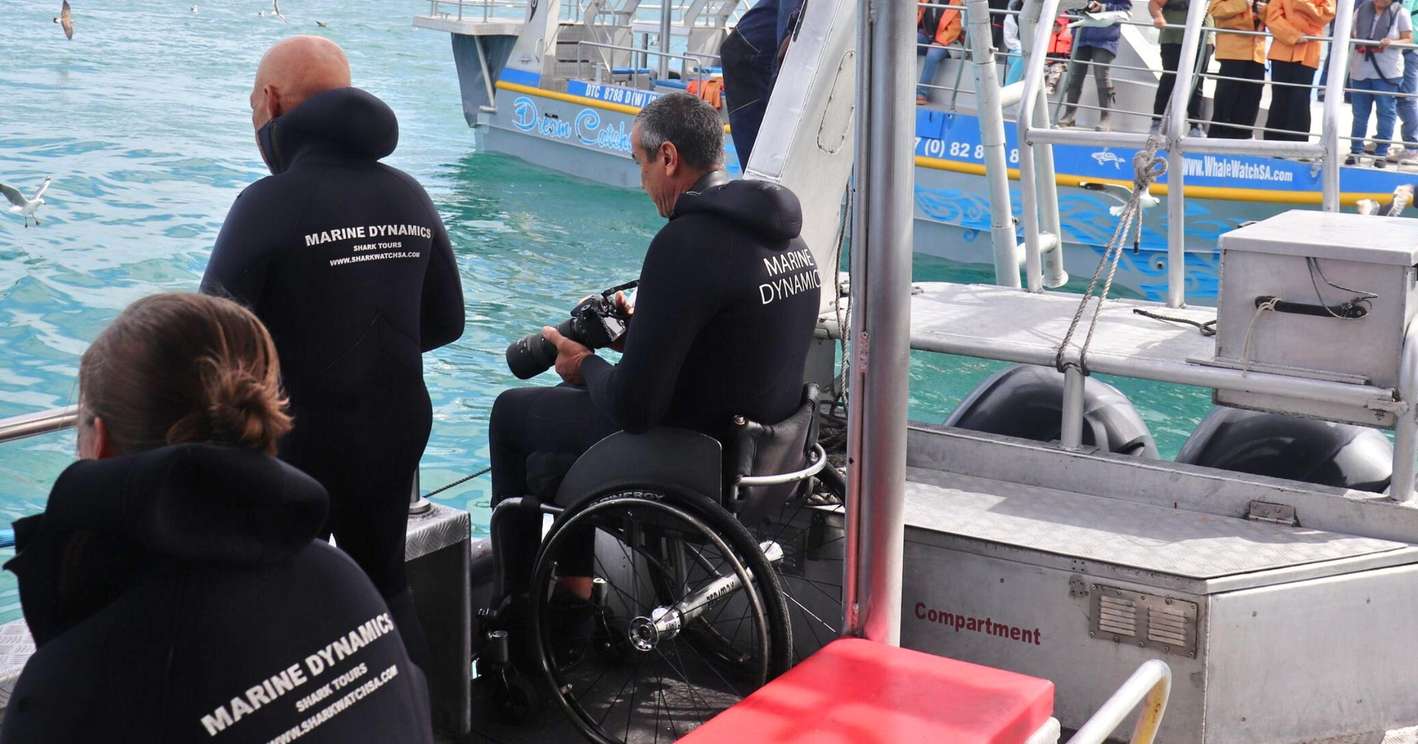
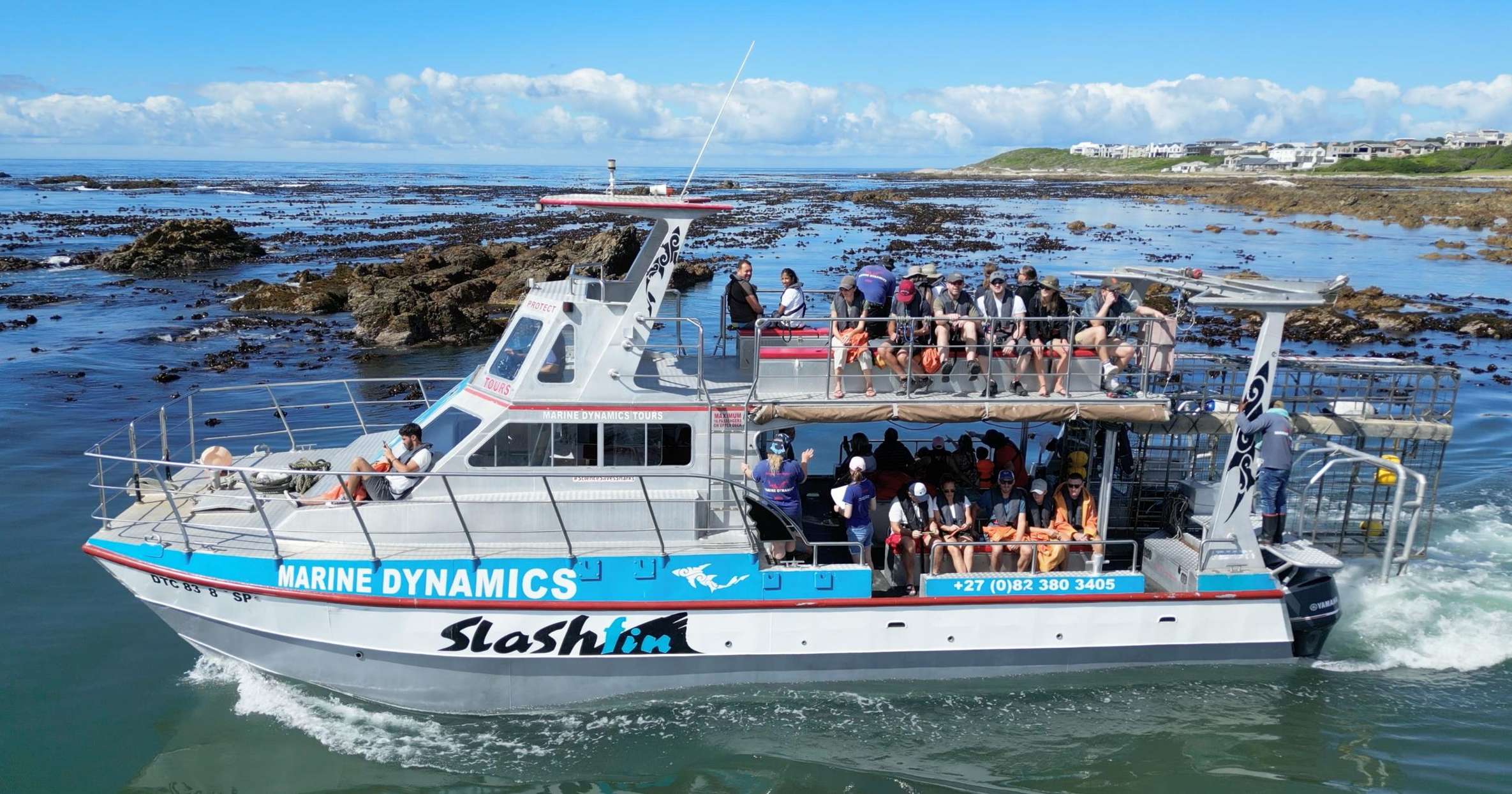
On the eco-focused Gansbaai cruise, a marine biologist leads the safety briefing and stays with you for the whole trip. The Hermanus-based experience works the same way, with expert insight woven through the day. That is the crew structure to look for when you compare operators.
South African permit law forbids feeding great white sharks, and crew must release a bait line the moment a shark takes it. Baits may never be pulled into or in front of the cage. Sharks that approach a boat draw close on scent alone, so their wild foraging stays intact.
The Gansbaai eco cruise includes a compulsory conservation fee on top of the ticket, and the sanctuary visit and research work are funded through it. On some Gansbaai trips the fee supports marine animal rehabilitation and monitoring. Treat it as part of the trip, because every guest pays it.
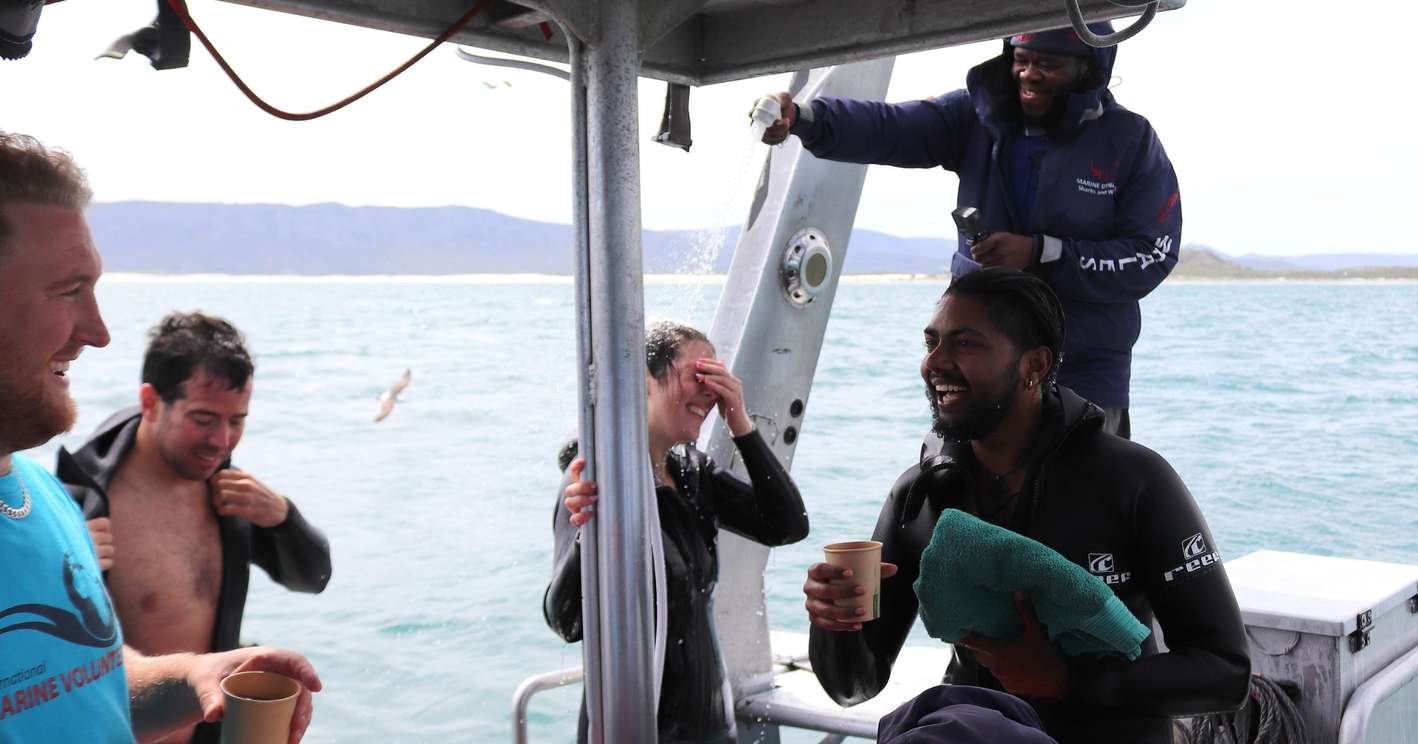
On the featured Gansbaai cruise you get transfers if you choose that option, all dive gear, breakfast or lunch on arrival, snacks and drinks on board, a light lunch after the dive, and a visit to the African Penguin and Seabird Sanctuary. Professional trip footage costs extra. On the Hermanus trip, hot showers, towels, and soup and bread after the dive are included too.
Times for most trips are only confirmed the afternoon before, because the skipper reads the marine weather that day. On one operator's tours, exact collection times come through at 4 pm the day prior. Keep your schedule loose and book the earliest day of your stay so a reschedule is easy.
No operator can promise sharks. Bronze whaler sharks are now the species most trips see, with sevengill sharks, seals, and dolphins often around as well. If a trip runs with no shark activity, some Gansbaai operators hand you a return voucher or a free place on another day.
The trips on this page can be cancelled by you up to 24 hours ahead for a full refund. If the skipper cancels for weather, you get a refund or a new date. Free rescheduling takes the sting out of the Cape's changeable sea.
Staying on deck is a real choice on most boats, and you lose nothing in the water: the sharks are easy to follow from above, and you watch how quietly they come and go. Underwater inside the cage feels calmer and more peaceful than the choppy surface, so try a turn if you feel steady.
“Perfectly organized! Picked up on time, headed to Gansbaai, small breakfast, briefing, then out on.”
Is shark cage diving ethical? your questions answered
Is shark cage diving cruel?
No, when it is done under South Africa's permit rules. The sharks stay completely wild in open water, feeding is banned by law, and research has found little long-term effect on their diet, body condition, or migration. Cage diving is also one of the most closely monitored forms of wildlife tourism in the world.
Is great white shark cage diving ethical in South Africa?
It can be, because the country caps the number of permits and restricts operations to five designated areas, including Dyer Island in Gansbaai and Seal Island in False Bay. Only licensed operators may chum, and every vessel and cage must be certified safe by the maritime authority.
Does chumming teach sharks to associate humans with food?
South African regulations forbid feeding sharks, so operators use scent trails of fish offcuts and oil instead of food rewards. Studies show that when operators follow the rules, sharks lose interest in the boats, and there is no evidence that cage diving raises the risk to swimmers in Cape Town's inshore waters.
Do sharks ever get hurt by the boats or the cages?
Permit conditions exist to prevent exactly that. Bait lines may not be pulled through or over the cage, baits may not drift inside or in front of it, and crew must release a line the moment a shark takes the bait.
Cage openings are capped at 400 mm and corners are finished smooth so sharks cannot be trapped or cut.
Why is shark cage diving sometimes called unethical?
Because some operations elsewhere mishandled bait, let divers swim outside cages, or dumped pollutants, which led to an indefinite ban at Guadalupe Island. South Africa answered with a permit system that controls how many operators work each area and how they may attract sharks, so the bad practices are not tolerated here.
How do I spot an operator that puts thrills above shark welfare?
Be wary of anyone who guarantees sightings, markets feeding frenzies or selfies with sharks, or lets guests touch marine life. A good crew gives you real information on shark behavior and conservation, and its permit number appears in its advertising.
Does my ticket actually support shark conservation?
Some ethical operators fund shark research and conservation programs directly from ticket profits. One eco-friendly cruise from Gansbaai includes a marine biologist on board and a visit to an African penguin and seabird sanctuary, so your booking feeds straight into that work.
Do cage diving boats change how great white sharks hunt?
Sharks spend more energy swimming around boats, but studies found no substantial shift in their overall energy budgets and no change in diet or body condition. A bait that is not eaten does not replace their natural hunting, and the animals are never kept at a site.
Do you think shark cage diving is appropriate for conservation education?
Studies of guests after a cage dive found a positive shift in their understanding of and concern for sharks. The experience works best when the crew includes scientists who explain what you are watching, which is why several Gansbaai boats carry a marine biologist.
Can I avoid touching or disturbing the sharks during my dive?
Yes, and the law requires it. Divers may not leave the cage or touch, tag, or interfere with any shark, and crew will stop you from reaching your hands or cameras past the bars. Stay on the interior handrails and let the sharks come to you.
Is it a problem for the sharks that I stay dry on the deck?
Not at all. Deck viewing is just as rewarding and involves no extra interaction with the animals, since the boat sits at anchor and the sharks approach on their own. Many guests split the trip between the cage and the upper deck.