
3 hours·English, Afrikaans
4.8(54)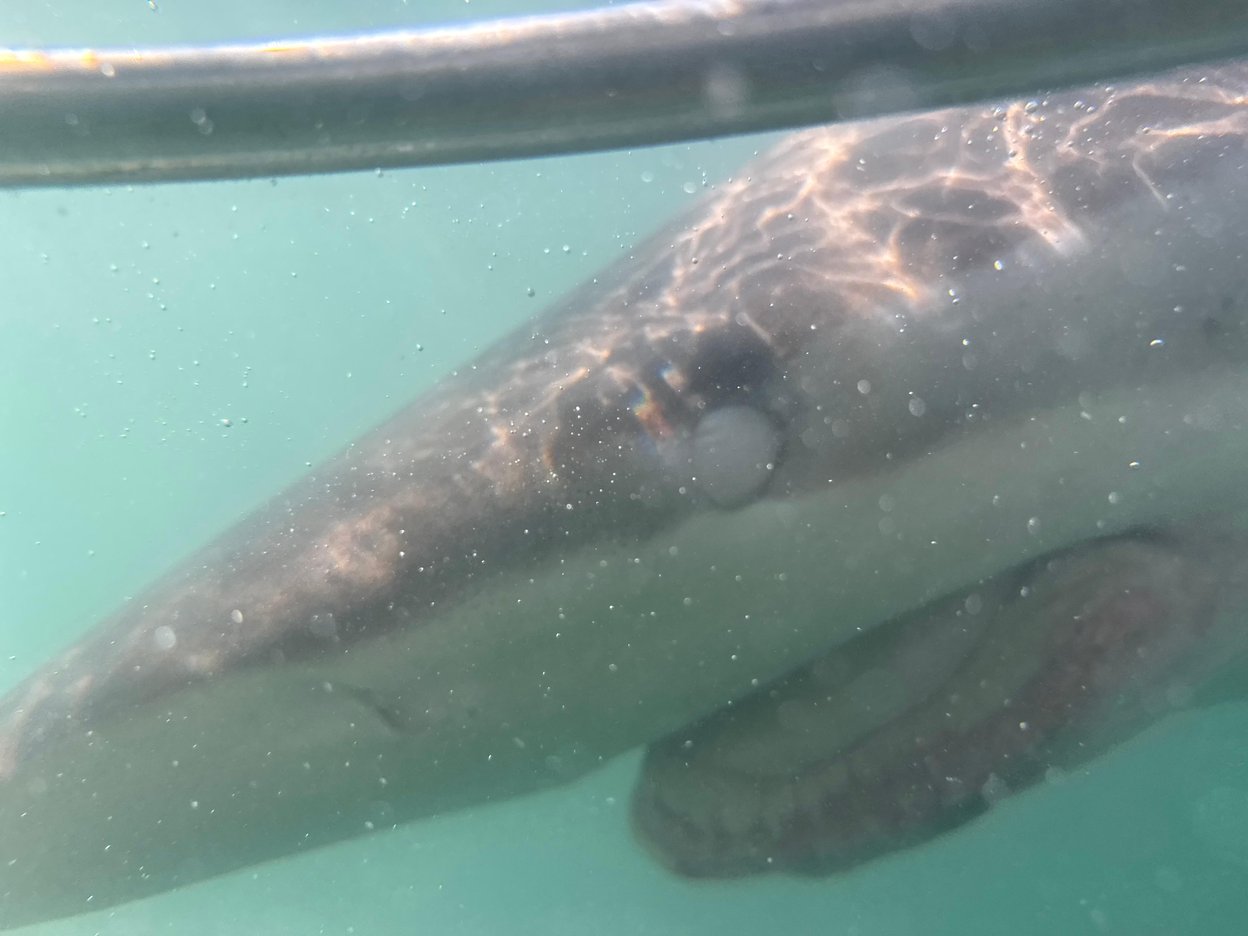
Cape Town: Shark Cage Dive
Free cancellationTea/coffee/biscuits/rusks on arrival.A passionate and knowledgeable crew
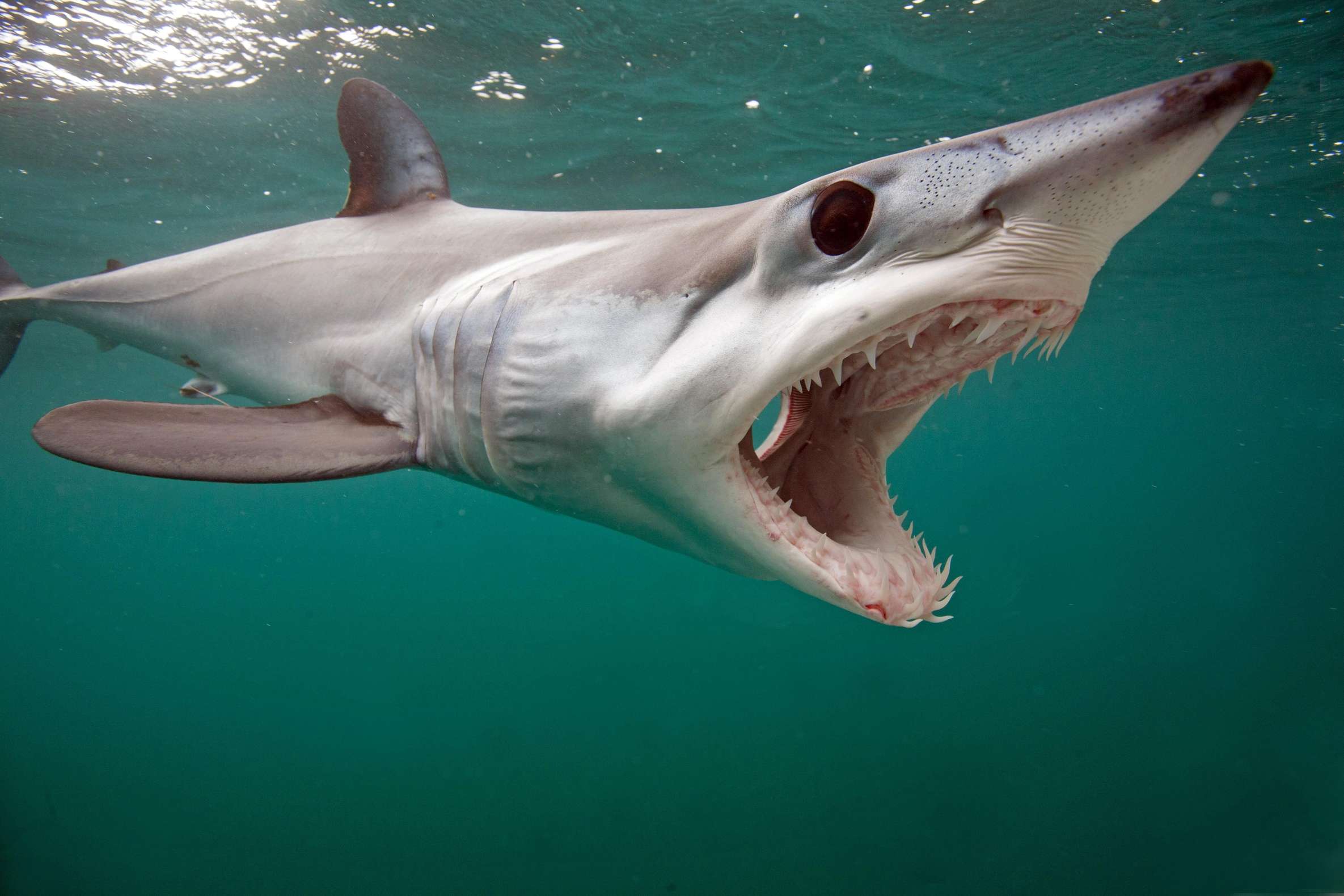
Pick your month and dive with the sharks that are actually there. Choose the clearest water of the year on a guided cage dive from Simon's Town, 45 minutes from Cape Town, with no diving experience needed. Book your trip now.
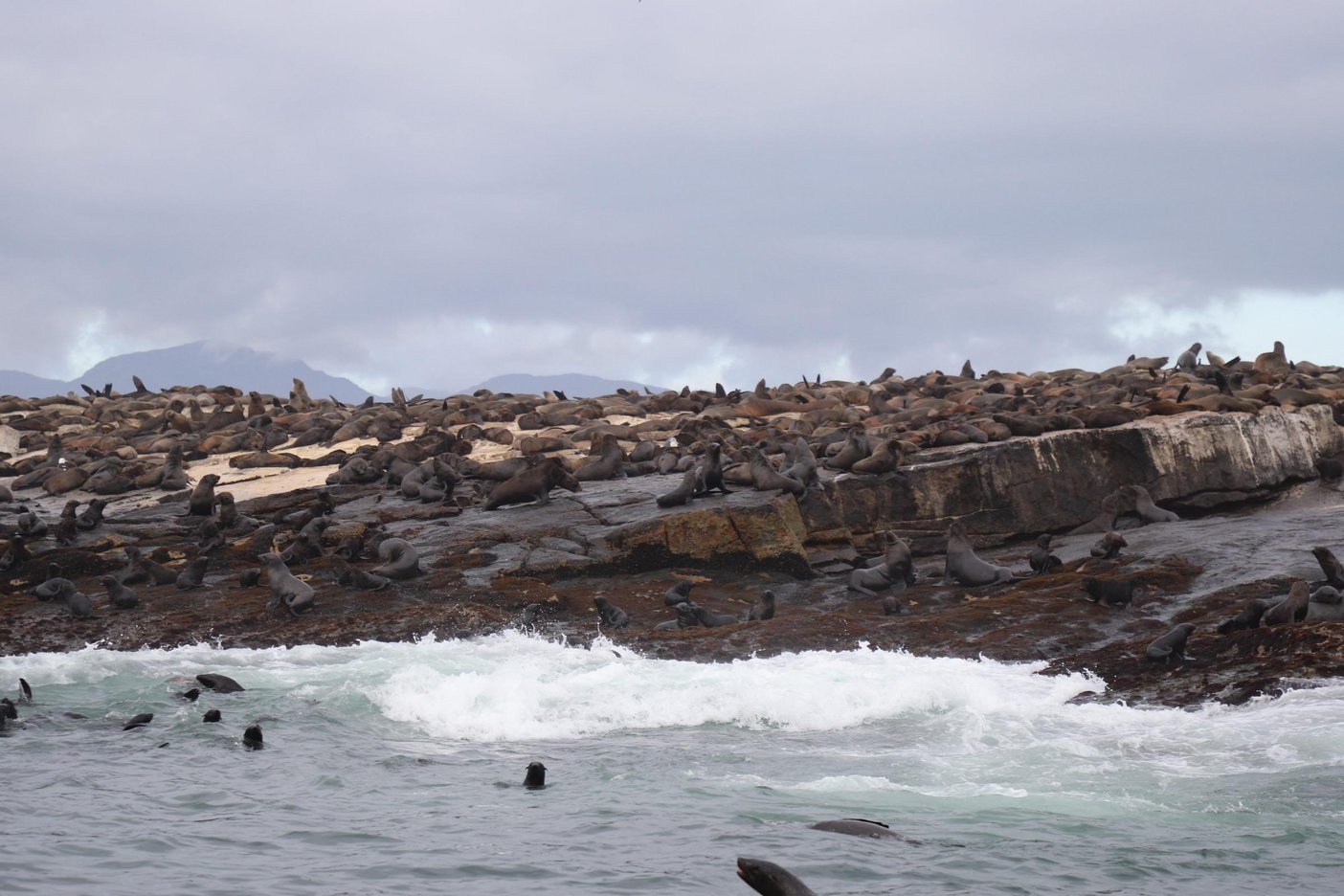
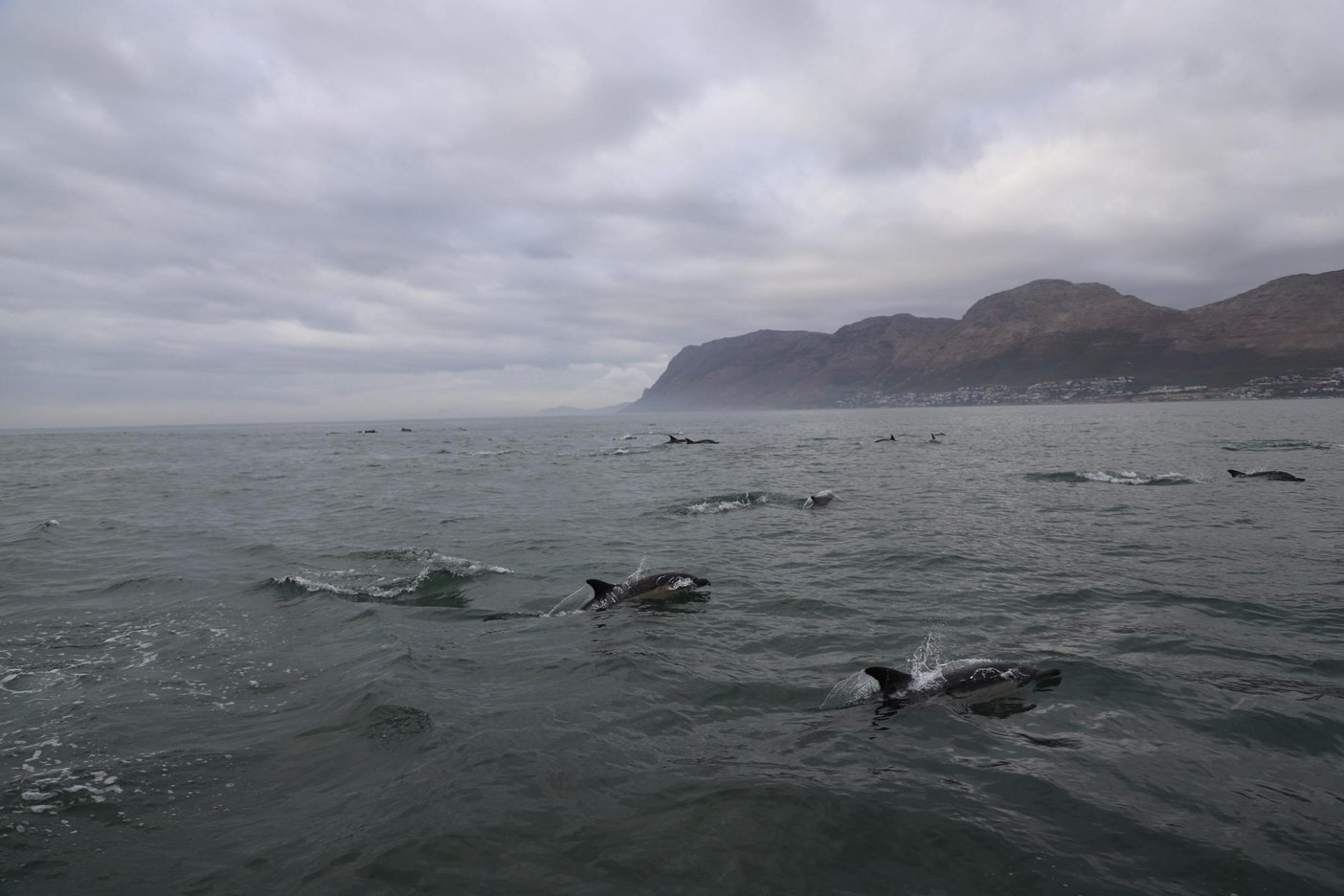
"Saw 2 bronze whaler sharks, around 500 dolphins and thousands of seals. The crew was great and super patient. An unforgettable experience."
january has the calmest seas of the year


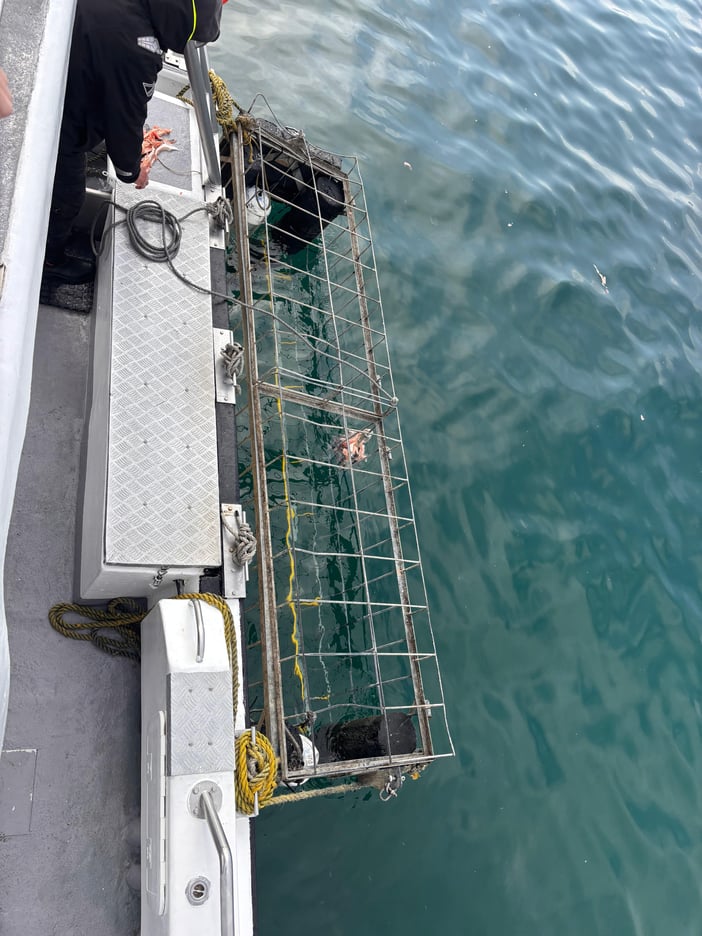
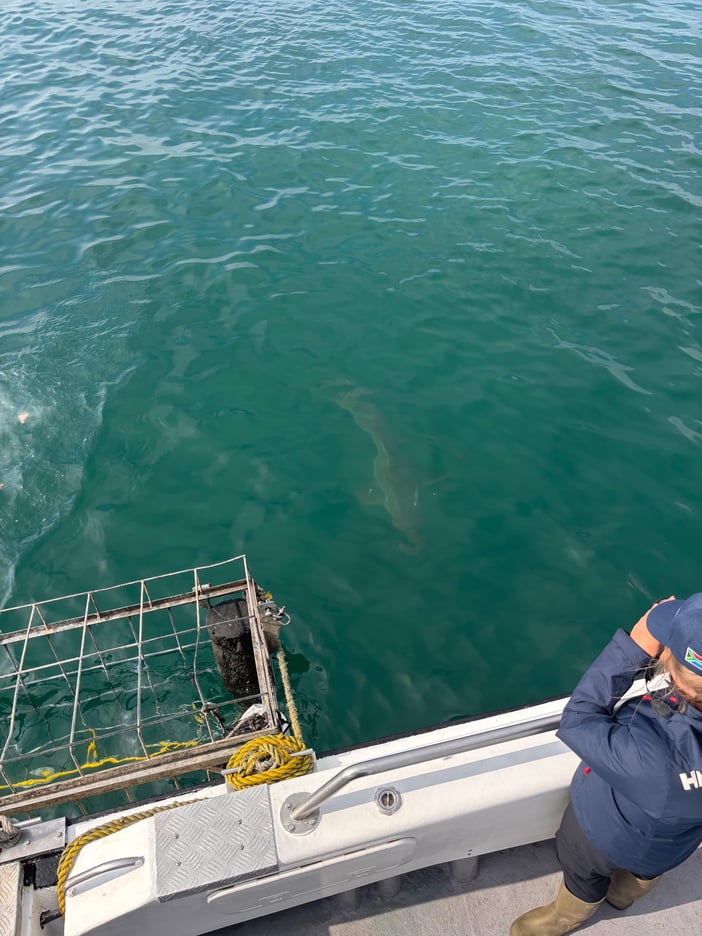
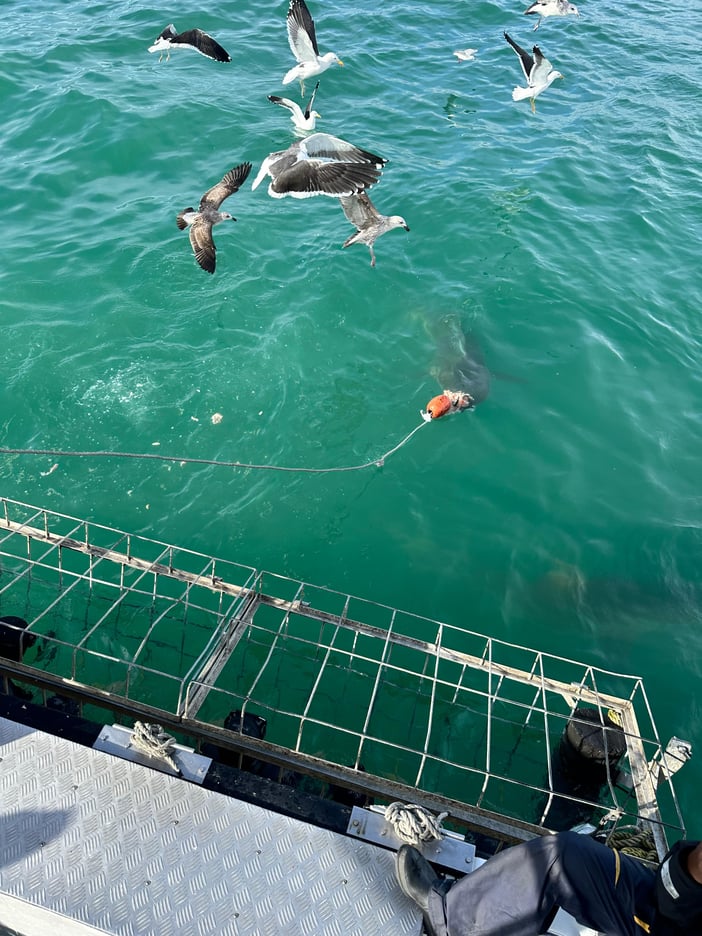
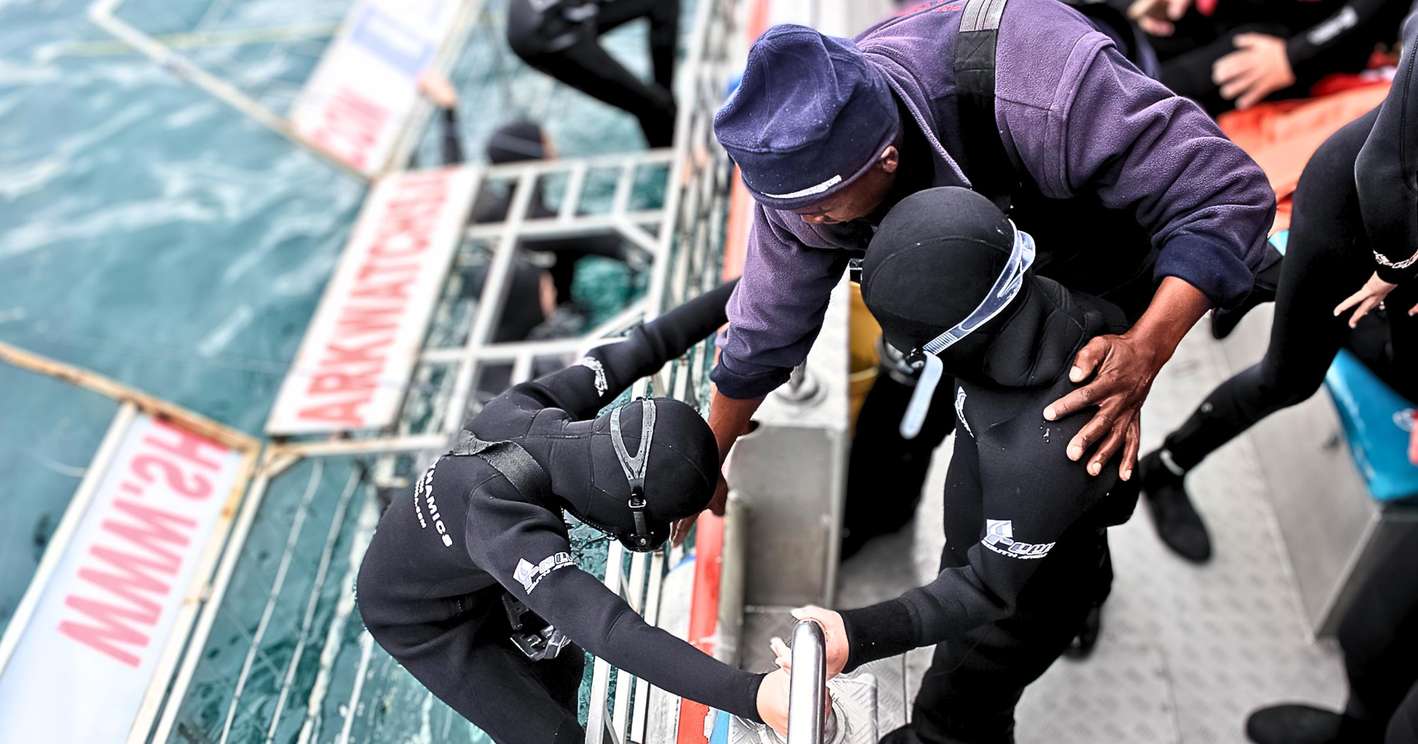
june to august is peak sightings
Winter brings peak sightings and the clearest water, summer brings calm, sunny boat days. The trick is matching your dates to the season and booking around the weather.
Regulars say the southern winter brings the best shark sightings, with June to August the peak month.
Winter also brings the clearest underwater visibility, but summer visibility often drops to 2 metres or less.
January has the calmest seas of the year, yet even then only about 8% of days stay truly calm.
Book the first day of your stay so a storm can cancel and a reschedule can save the trip.
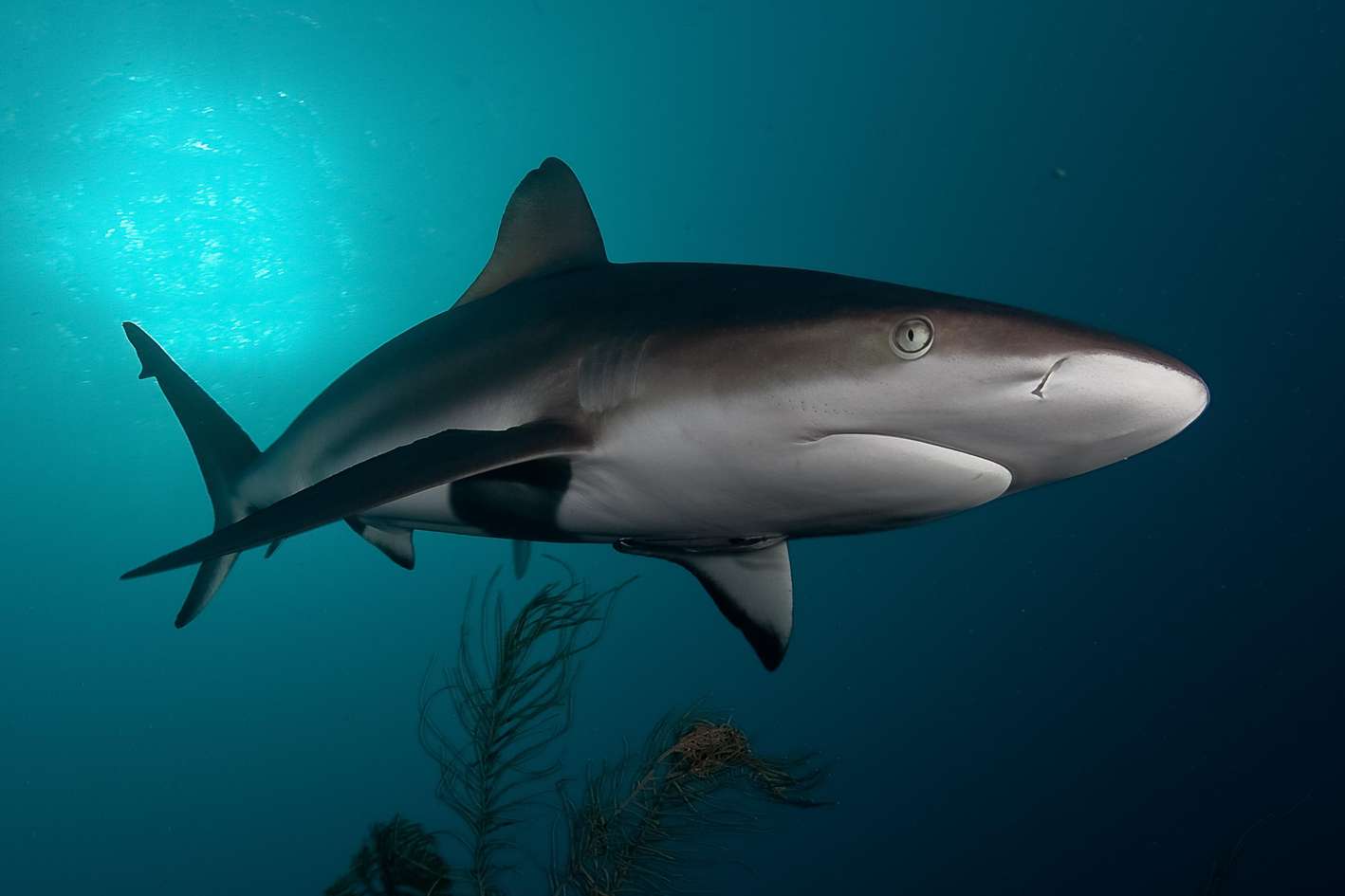
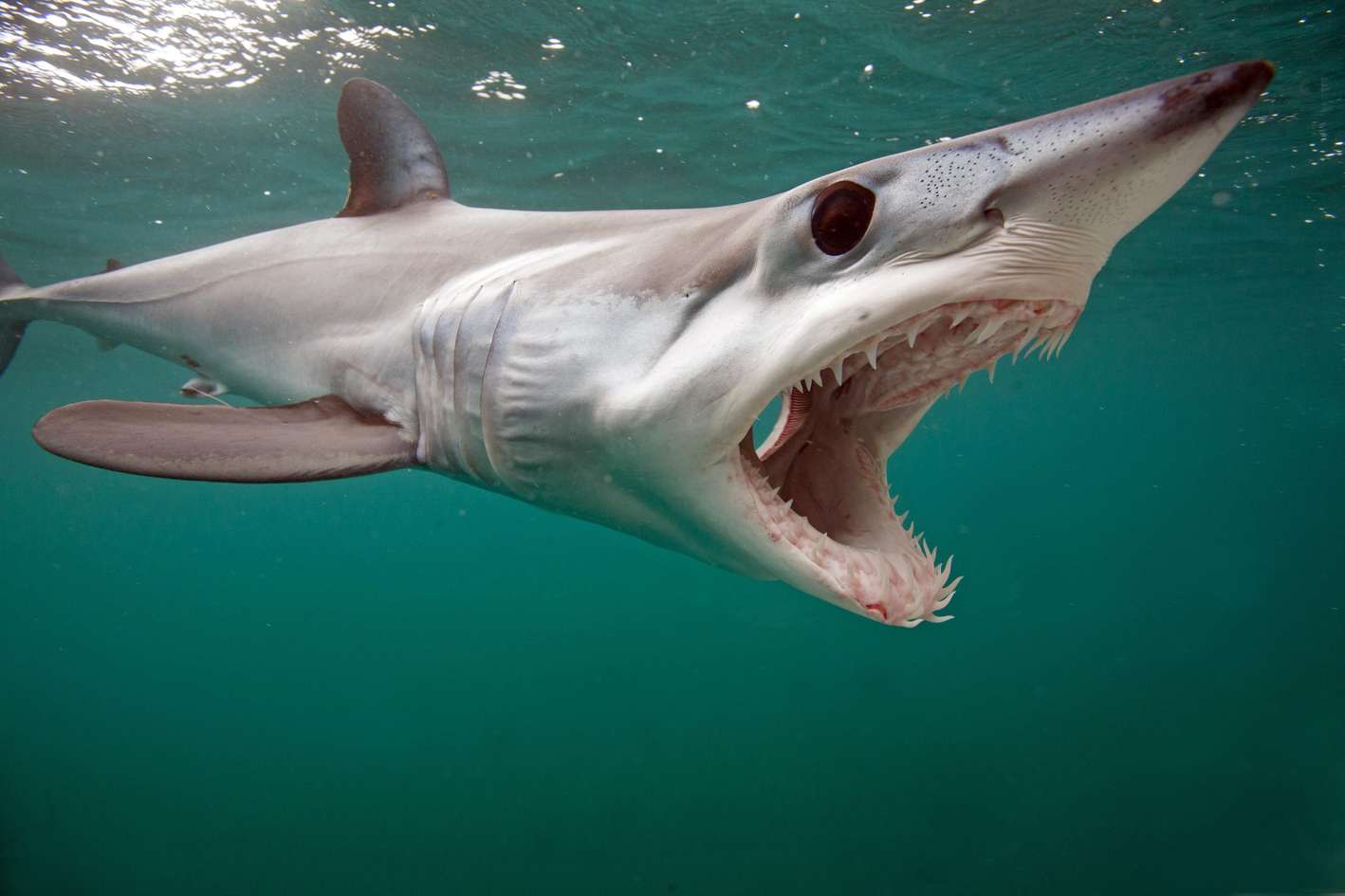
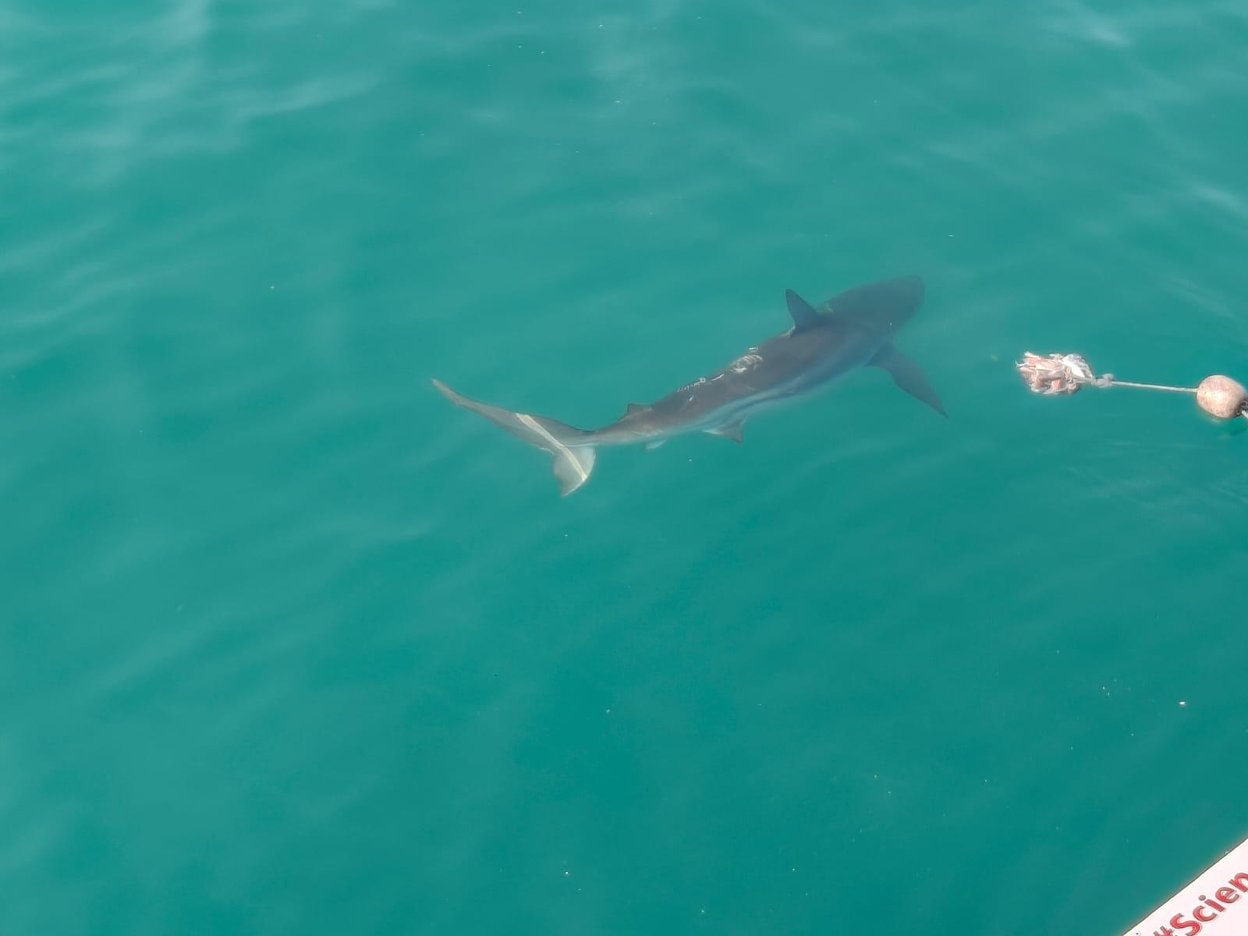
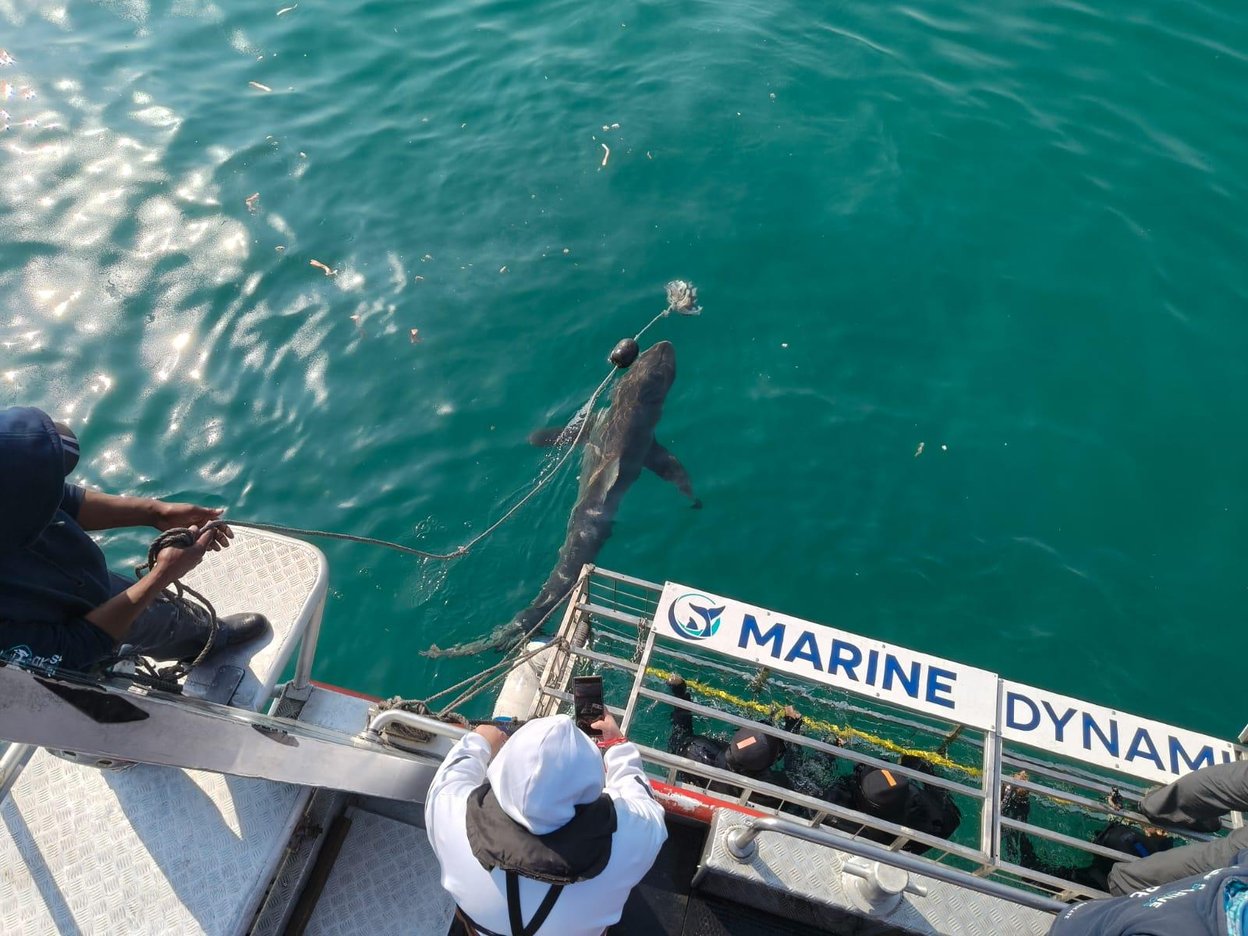
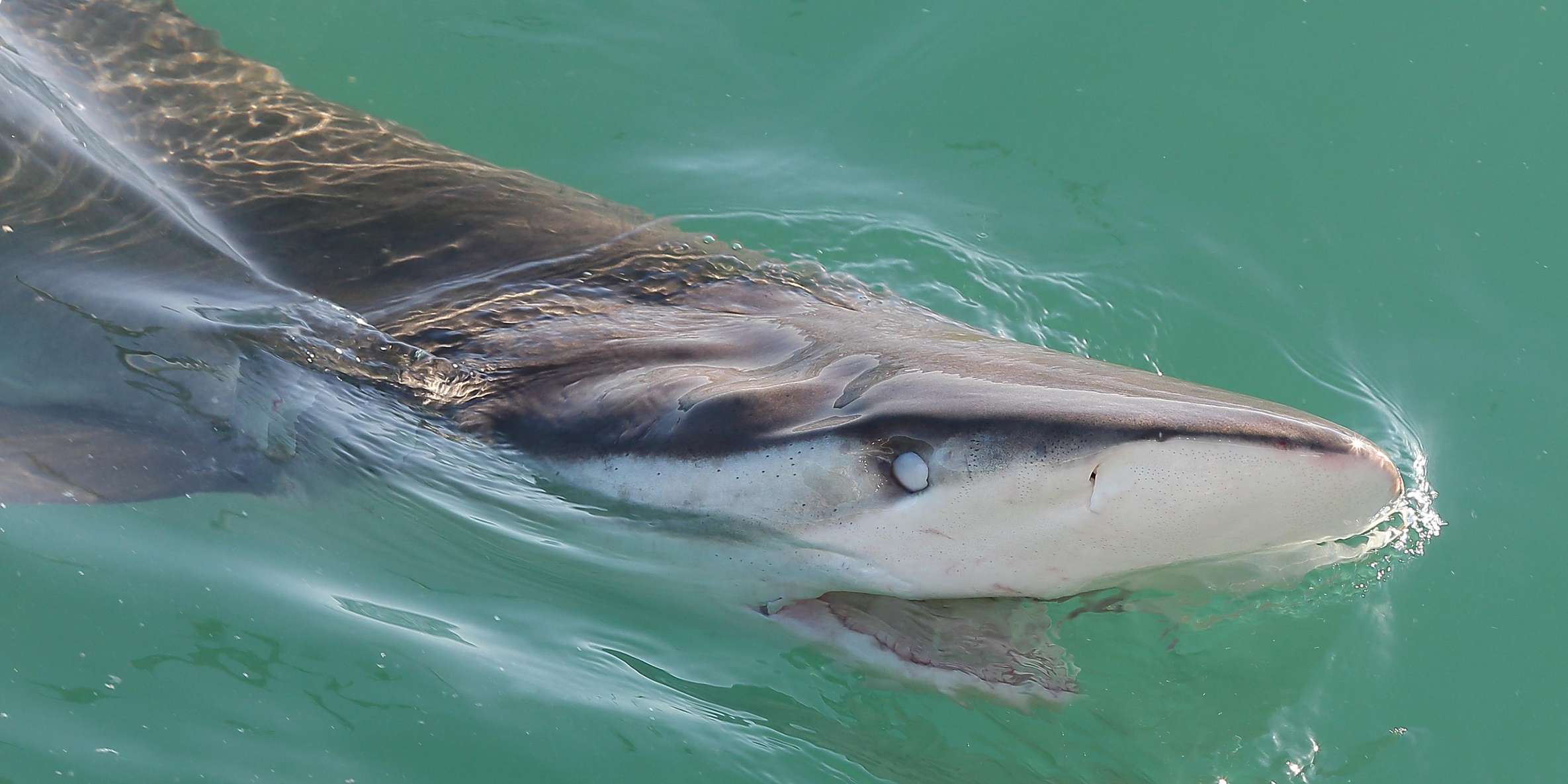
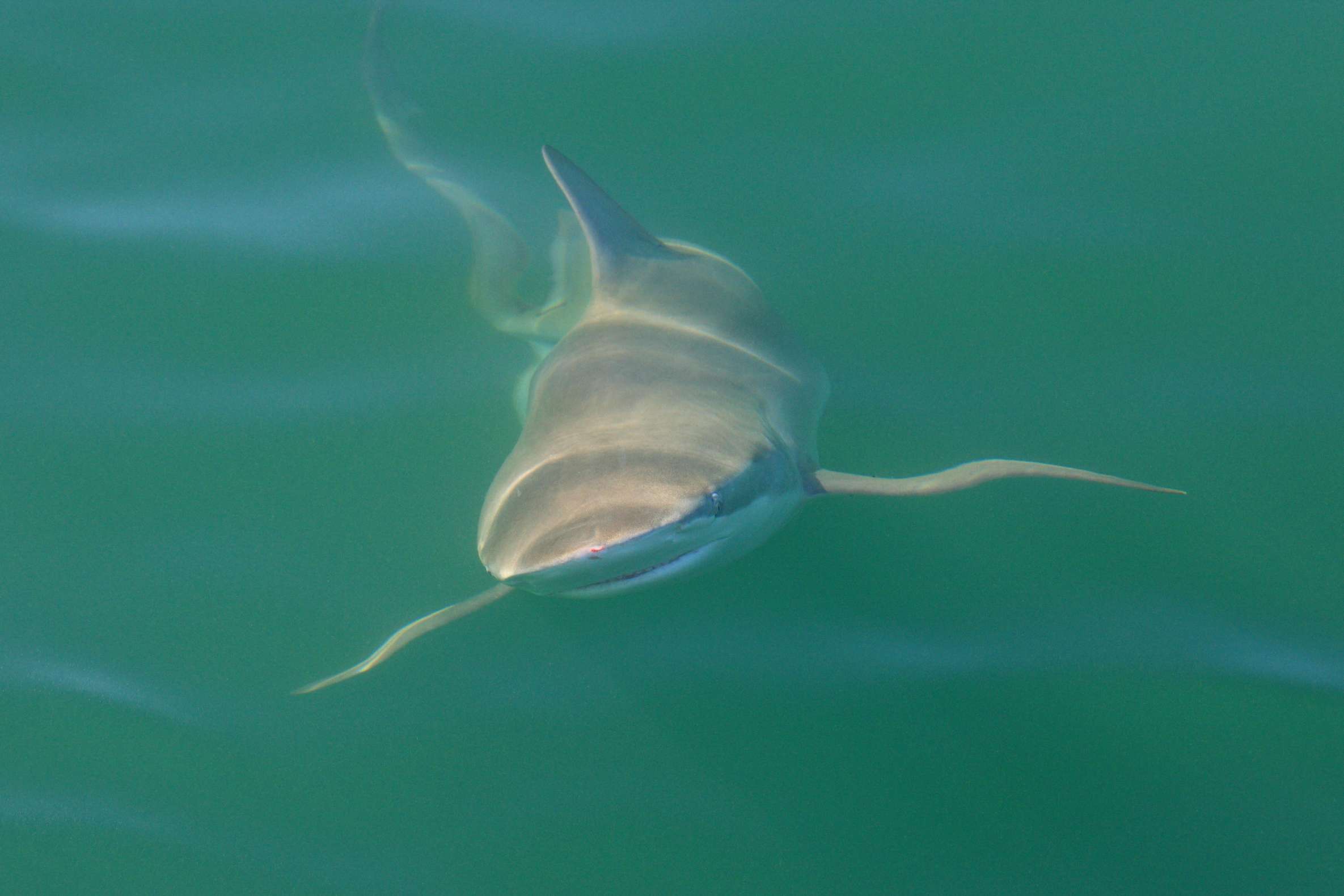
Bronze whaler sharks are now the realistic sighting; great whites are very rarely seen.
Book the earliest day of your stay so a cancelled trip can be rescheduled, and confirm your launch slot the afternoon before, since exact times depend on the sea.
The season decides most of the day before you ever reach the water. The southern winter from June to August is the historical peak for shark sightings, with elevated activity running from May through September.
That same window brings the clearest underwater visibility, and inshore water sits between 15 and 20 degrees, mild by Atlantic standards.
Summer is the opposite trade. The months from September to March bring calmer surface waters and the sunniest boat days, but visibility often drops to 2 metres or less.
Winter storms are the price. The winter swell window brings average highest waves of nearly 3 metres or more, and boats launch far less often than in summer. See the pattern by month here.
October: 5 out of 5 for how busy it gets. Visitor numbers rebound sharply as swells subside to 2.4 metres and dry days climb back to 25.
Tap a month to read it.
January: calm sea on 15% of days. Mid-summer brings busy tour bookings, mild 2.2-metre peak waves, and 28 dry days with rare cancellations.
Tap a month to read it.
July: waves up to 3.5 m on an average day. Mid-winter brings the year's roughest water with 3.5-metre peak swells, 140 mm of rain, and regular weather cancellations.
Tap a month to read it.
January: 27.8 dry days. Mid-summer brings busy tour bookings, mild 2.2-metre peak waves, and 28 dry days with rare cancellations.
Tap a month to read it.
August: 3 windy days. Winter cold fronts produce heavy 3.4-metre average highest swells and wind, frequently keeping boats in harbour.
Tap a month to read it.
What the calendar tells you is simple: winter gives the best sharks and the clearest water, summer gives the calmest boat days. If your holiday dates fall in October or November, expect the water to be middle ground and the tours busy, since those months carry the biggest crowds.
For a Gansbaai trip, the best-supported months for clear water are June to September; one operator calls April to October its clearer-water season. Regulars treat that as the likely reading, and the water can still surprise you either way.
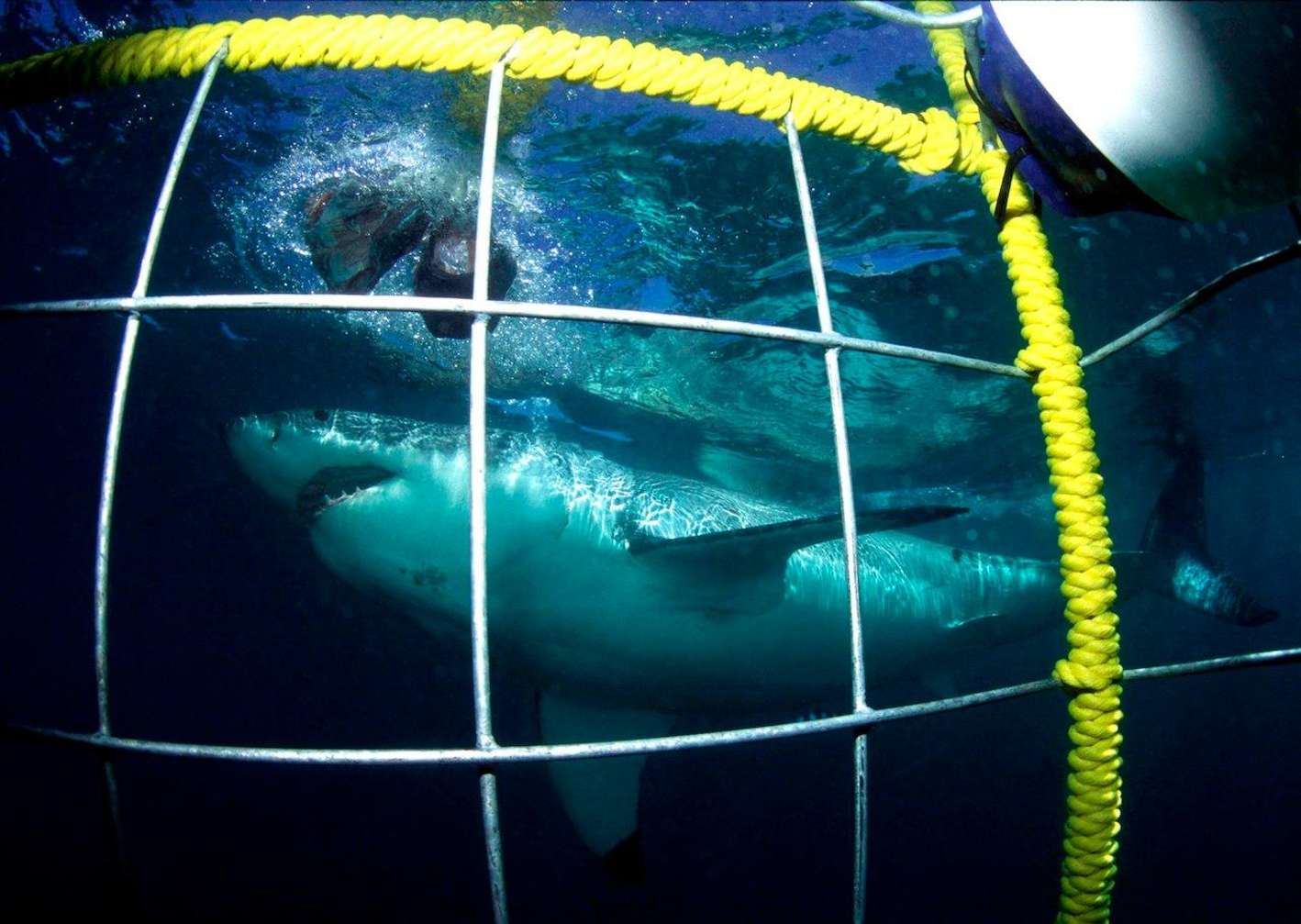
The cage changes with the season. Great whites are no longer the reliable draw they once were: resident orca pairs have driven them away from nearshore launch sites in False Bay and Gansbaai, and sightings there have grown irregular.
A single white shark was recently spotted near Seal Island for the first time in years, which tells you how rare that has become.
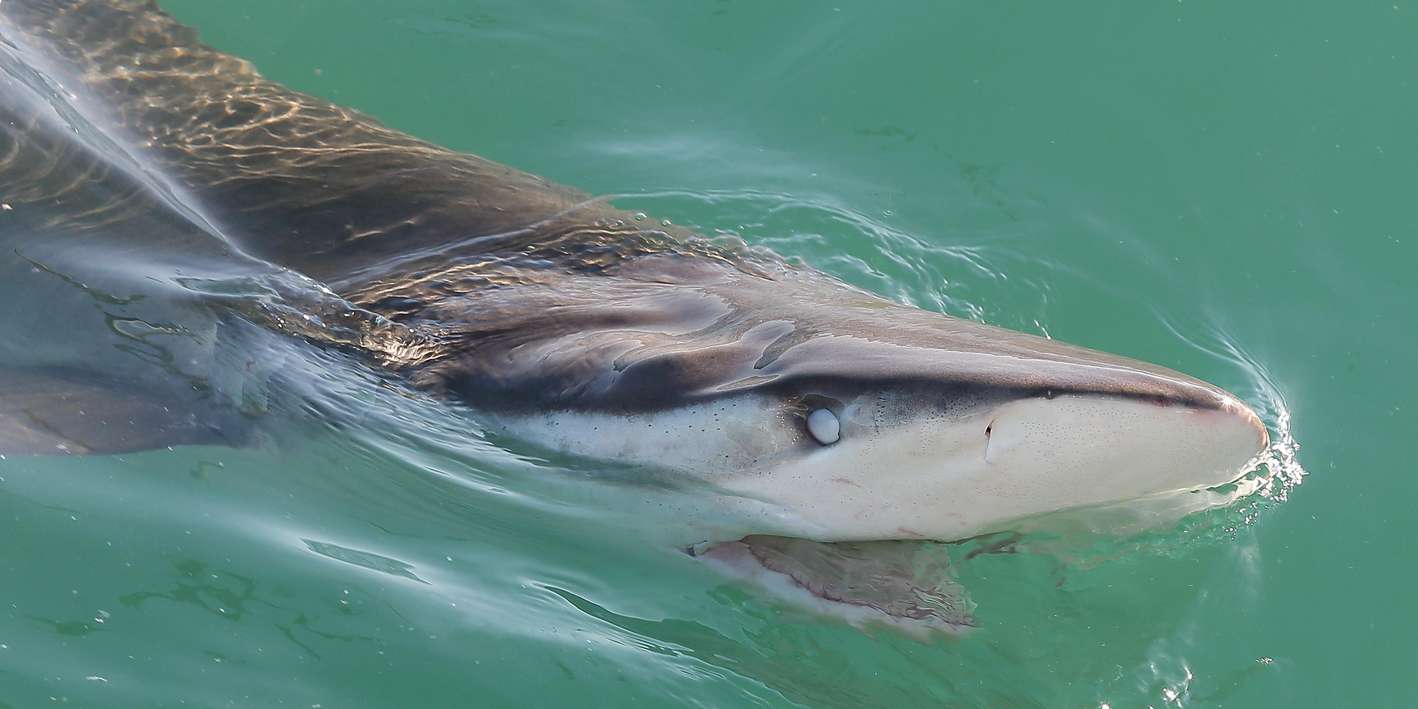
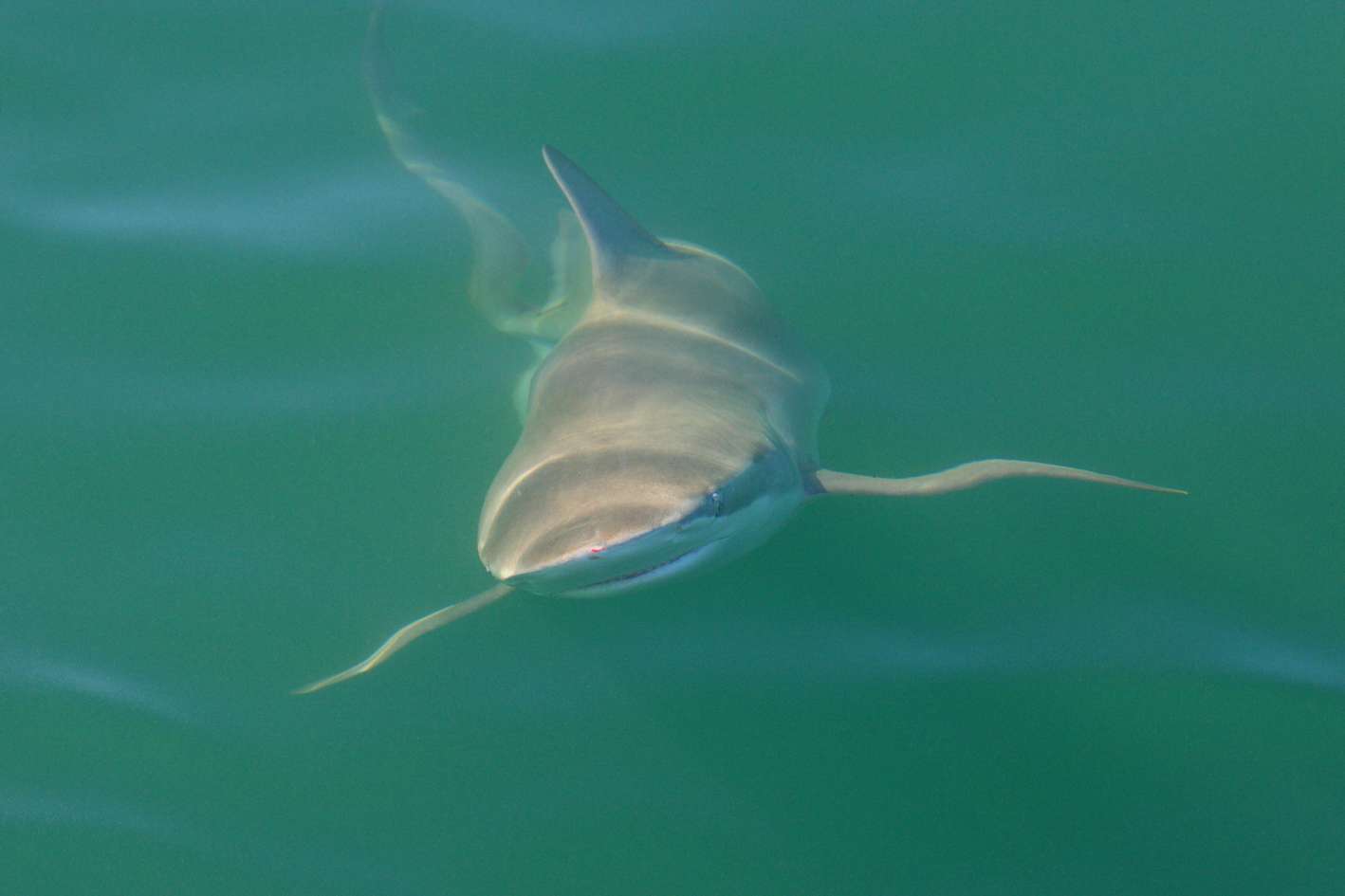
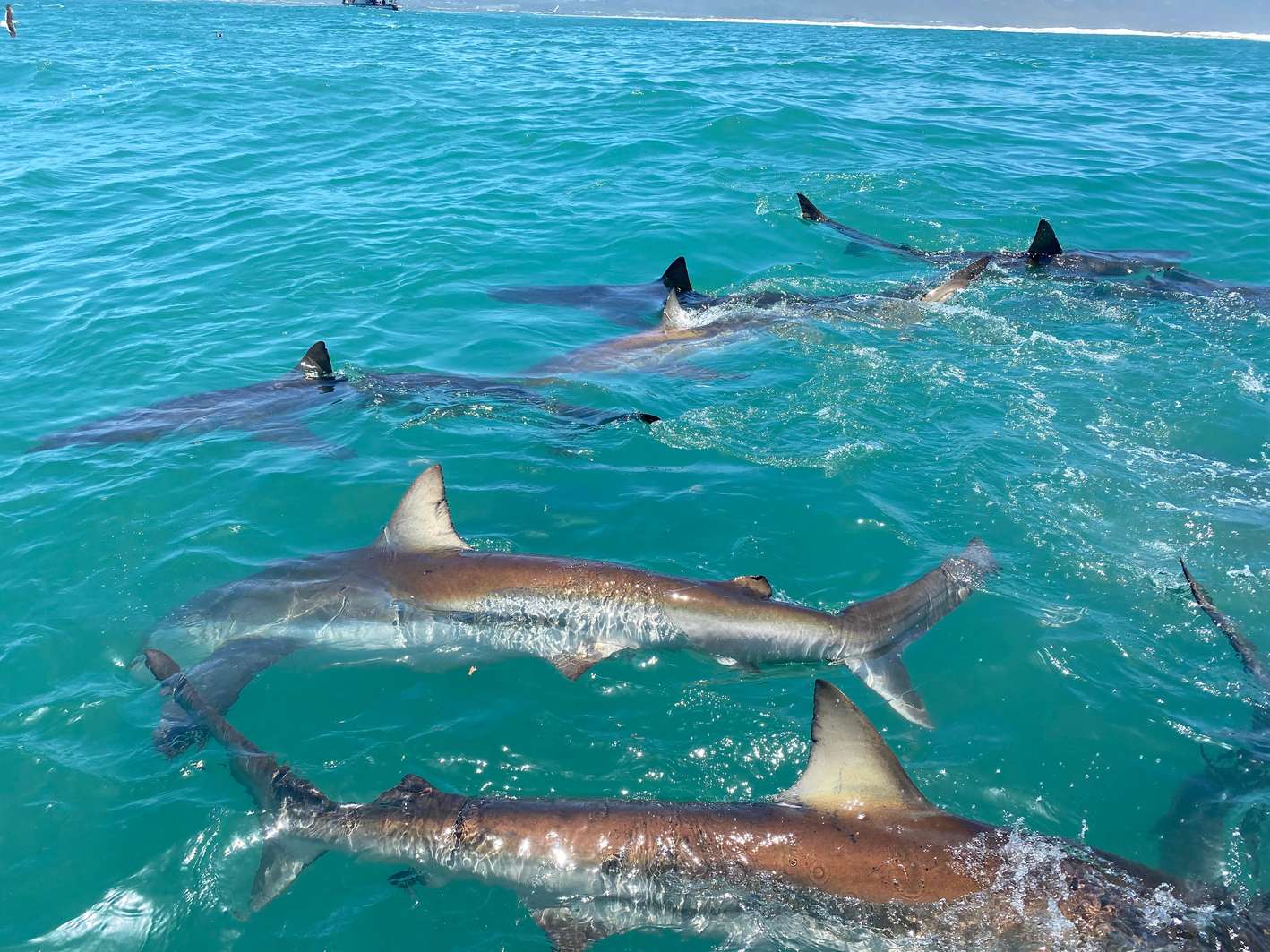
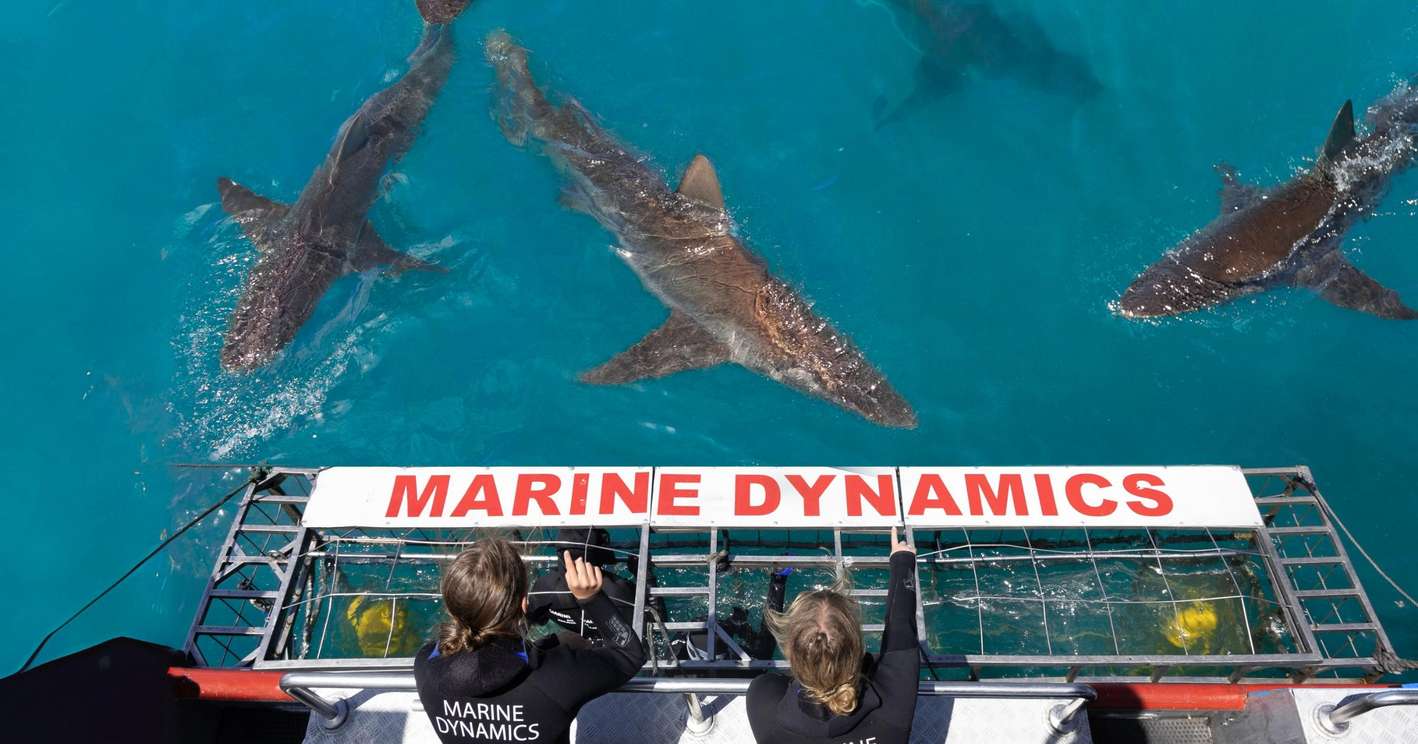
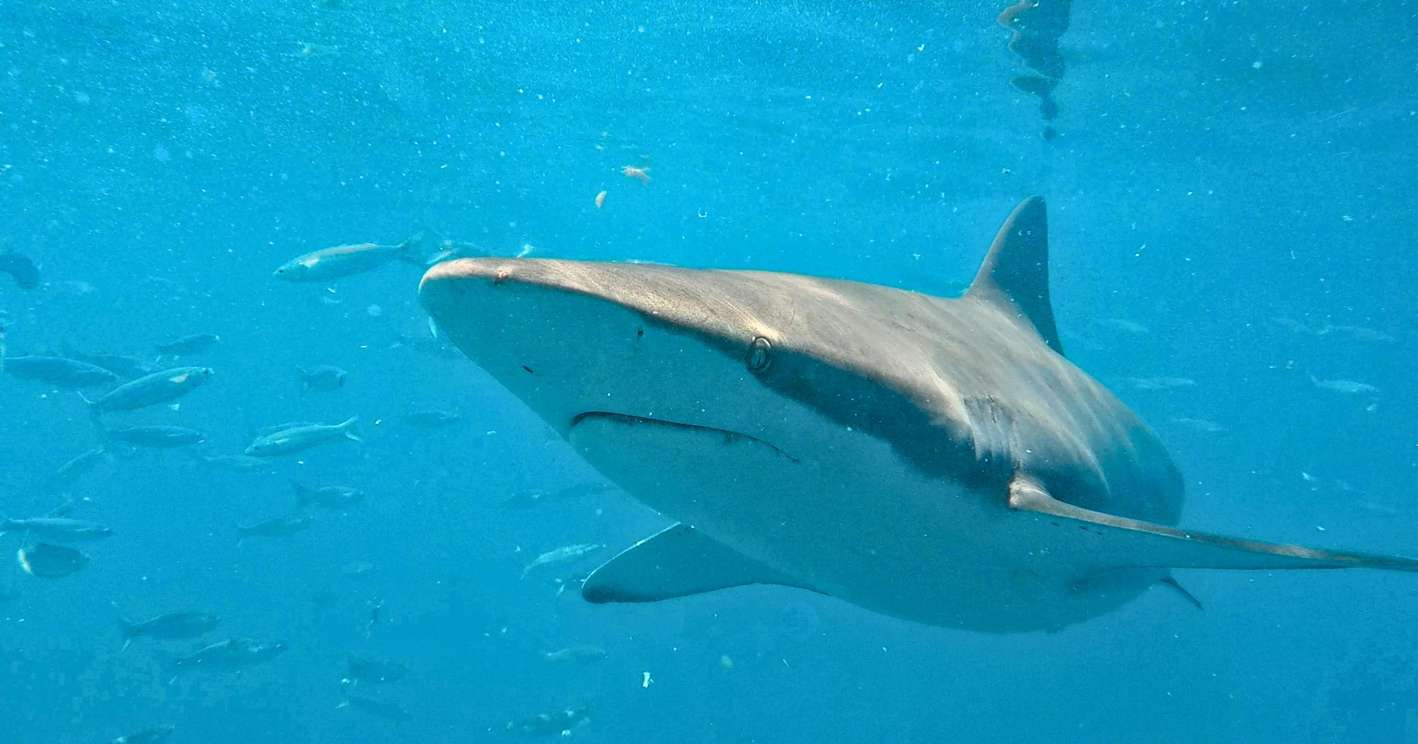
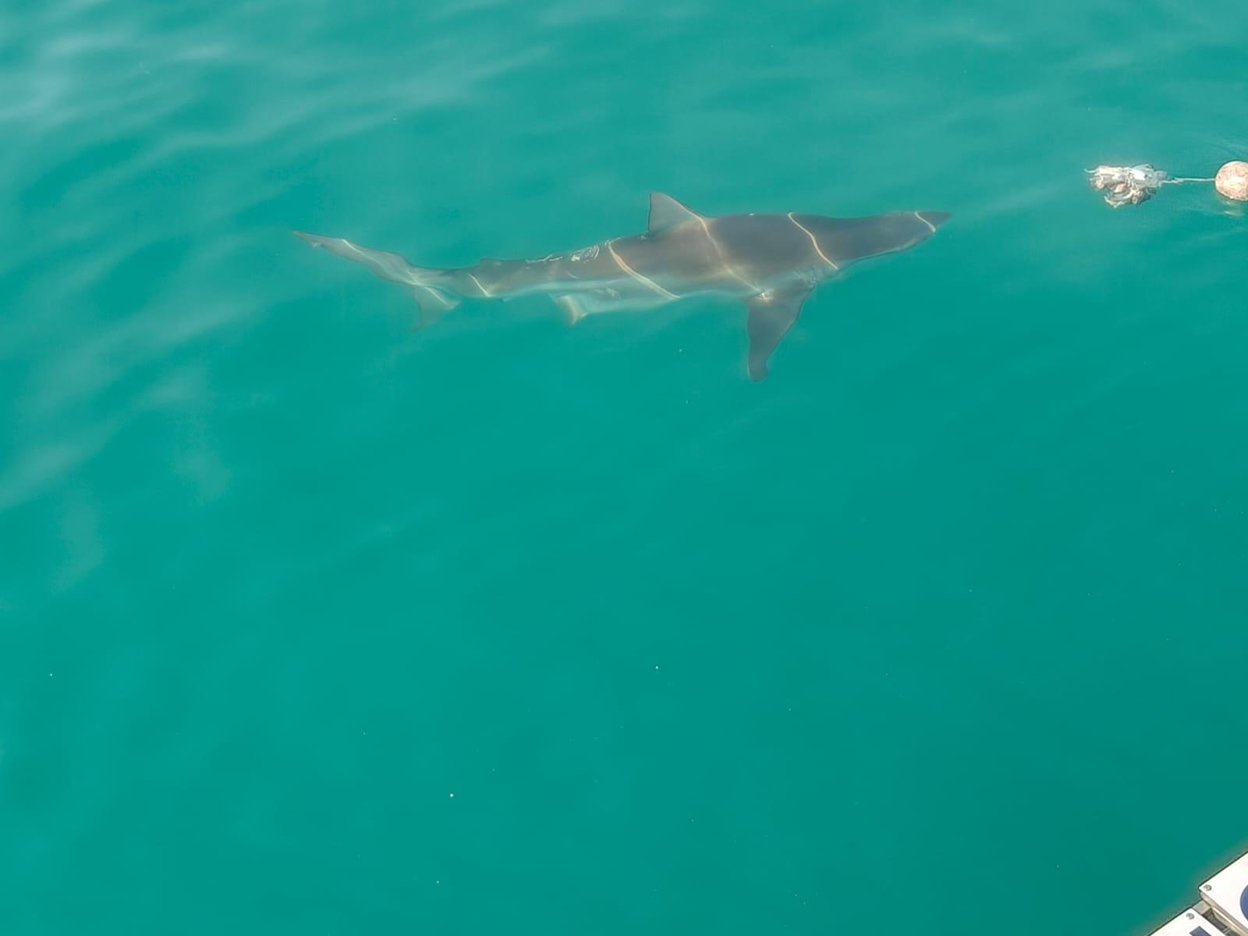
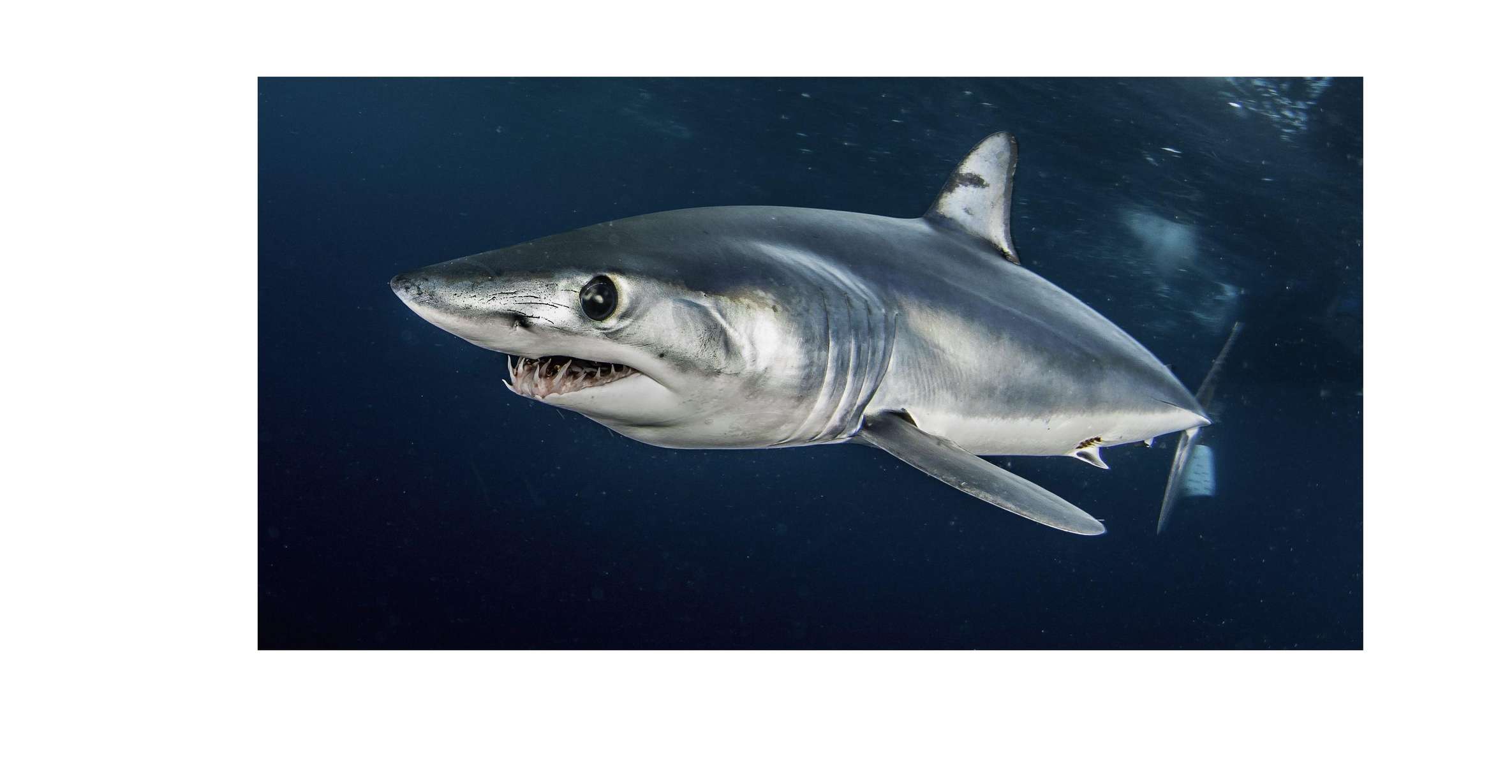
What you almost certainly get instead is the bronze whaler, now the most spotted shark on Cape shark diving tours. Recent travelers describe seeing plenty of bronze whalers, and sevengill sharks as a possible extra. Sevengill records peak between September and February, while bronze whaler records peak in August.
In False Bay, summer brings the strongest odds of all: operators regularly encounter groups of 10 to 20 bronze whalers on a single trip from December through February.
Both figures describe the same water, but they count different things. The August figure is a tally of recorded wildlife sightings in the area, which tells you where the animals are, not what your tour will encounter.
The 10-to-20 figure is what operators report on the water, so it is the one to weigh when you book.
Before you read the rows below, keep one thing in mind: the season shifts species, so check what each month actually delivers.
They are now very rarely seen, and bronze whalers are the realistic encounter on most trips.
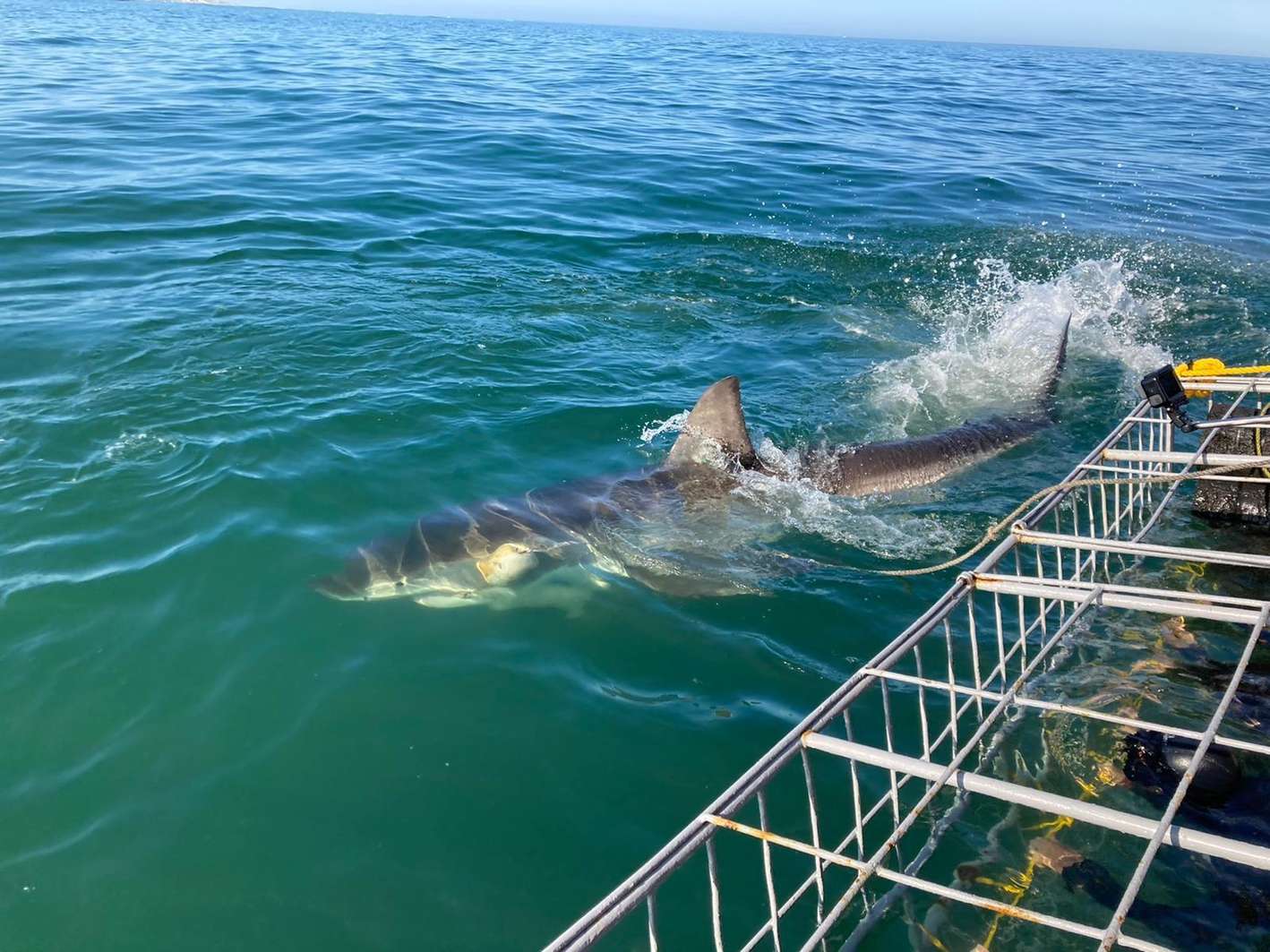
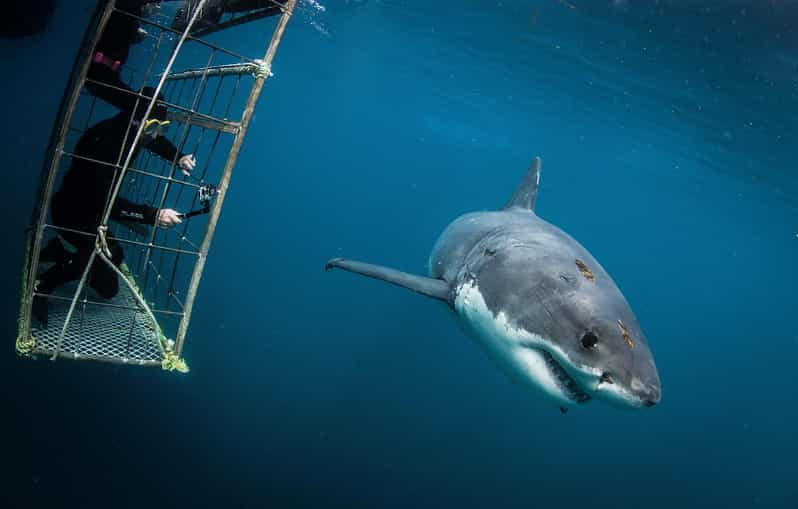
They are investigating sounds and scents; the sharks show no interest in the people inside the cage.
The season matters more than the month; it shifts species and weather together.
The rows above cut the two most common mistakes. If you go expecting bronze whalers and a calm sea, you will almost never feel shortchanged.

The winter swell is a real cost. In the winter months from April through October, one tour operator records boats reaching Shark Alley on only about 12 days out of 30; in summer it is closer to 20. Winter swells are why operators ask you to keep your schedule flexible.
There is no law that cancels a trip at a fixed swell height. The skipper decides, and one operator's typical limits are swells of 3 metres, wave periods above 14 seconds, and winds over 15 to 20 km/h from the southwest.
Here is the detail that matters most: the skipper reads the marine weather report at 2 pm the afternoon before and confirms or cancels the launch then. Rain itself never cancels a trip, because the boats have dry cabins.
The rows below show what happens when the sea wins, and each one changes how you plan your day around the launch.
| If this happens | What happens then |
|---|---|
| The swell cancels the trip before launch | You choose a new date or get a full refund. |
| The launch is cancelled for safety reasons | A full refund is granted. |
| Strong winds pick up while the boat is already at sea | The boat returns for safety, and no refund is given. |
| Sudden winds block the launch after you arrive in Gansbaai | Transport costs stay payable, but transport is free if you reschedule. |
| No sharks appear during the tour | Some operators offer a return voucher or a free place on another trip. |
Read the third row twice: the wind turning mid-trip is the one case where you lose the money. The rest of the terms give you a way back, which is why the buffer day matters.
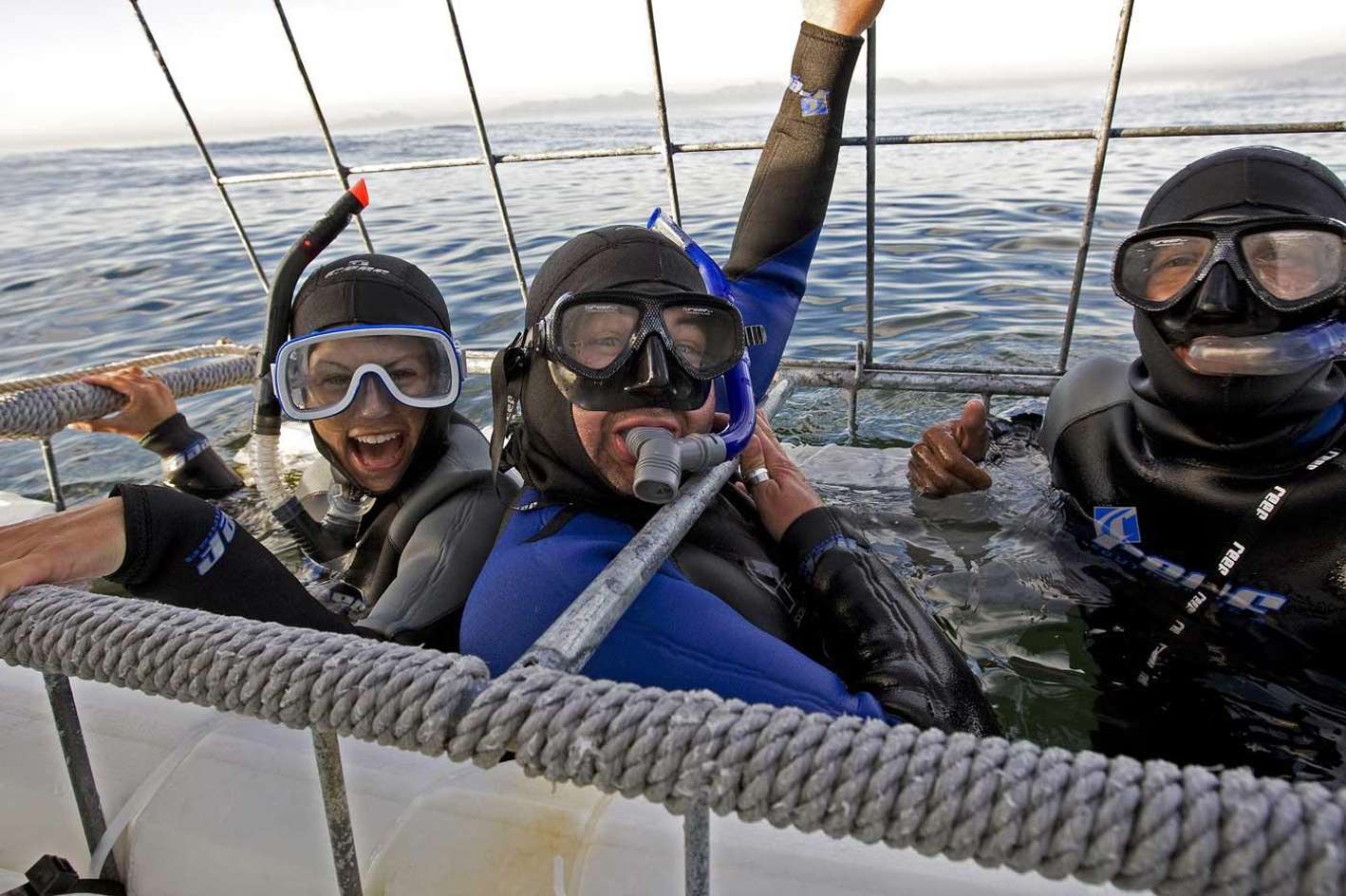
The Atlantic is colder than most people expect, but the kit does the work. Winter inshore water runs 15 to 20 degrees, and you spend 20 to 30 minutes in it.
Operators supply 5 mm full wetsuits as standard, some stock 7 mm suits, and booties and a hood come with the gear. One operator's wetsuits fit all sizes.
Summer is no tropical bath, with 18 to 21 degrees at the warmest between December and March, and the water still feels cold after a while. The suit is the same thickness either way.
For the boat deck, bring a swimsuit and warm layers: a windbreaker or warm jacket, a fleece or jumper, and a beanie. The ride out is wetter than it is cold.
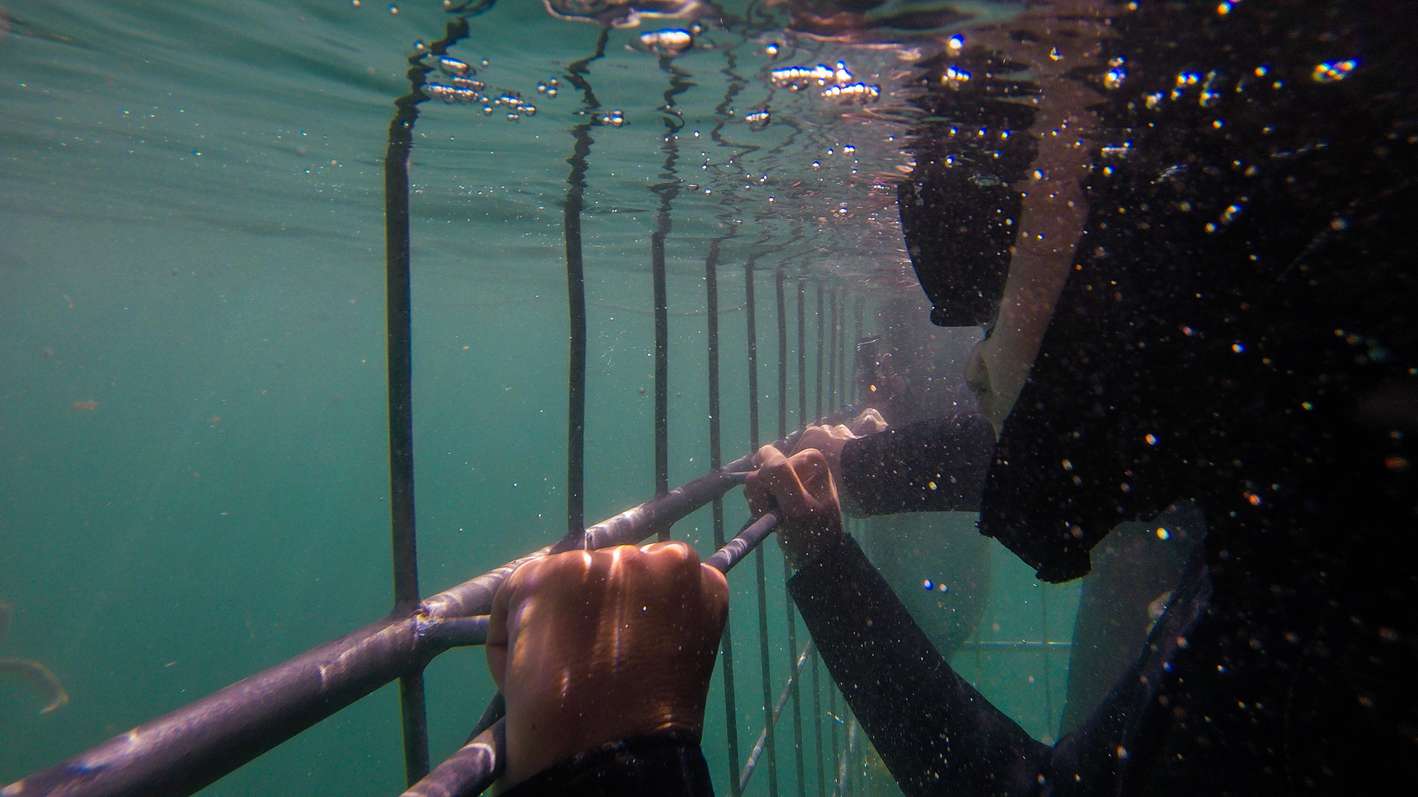
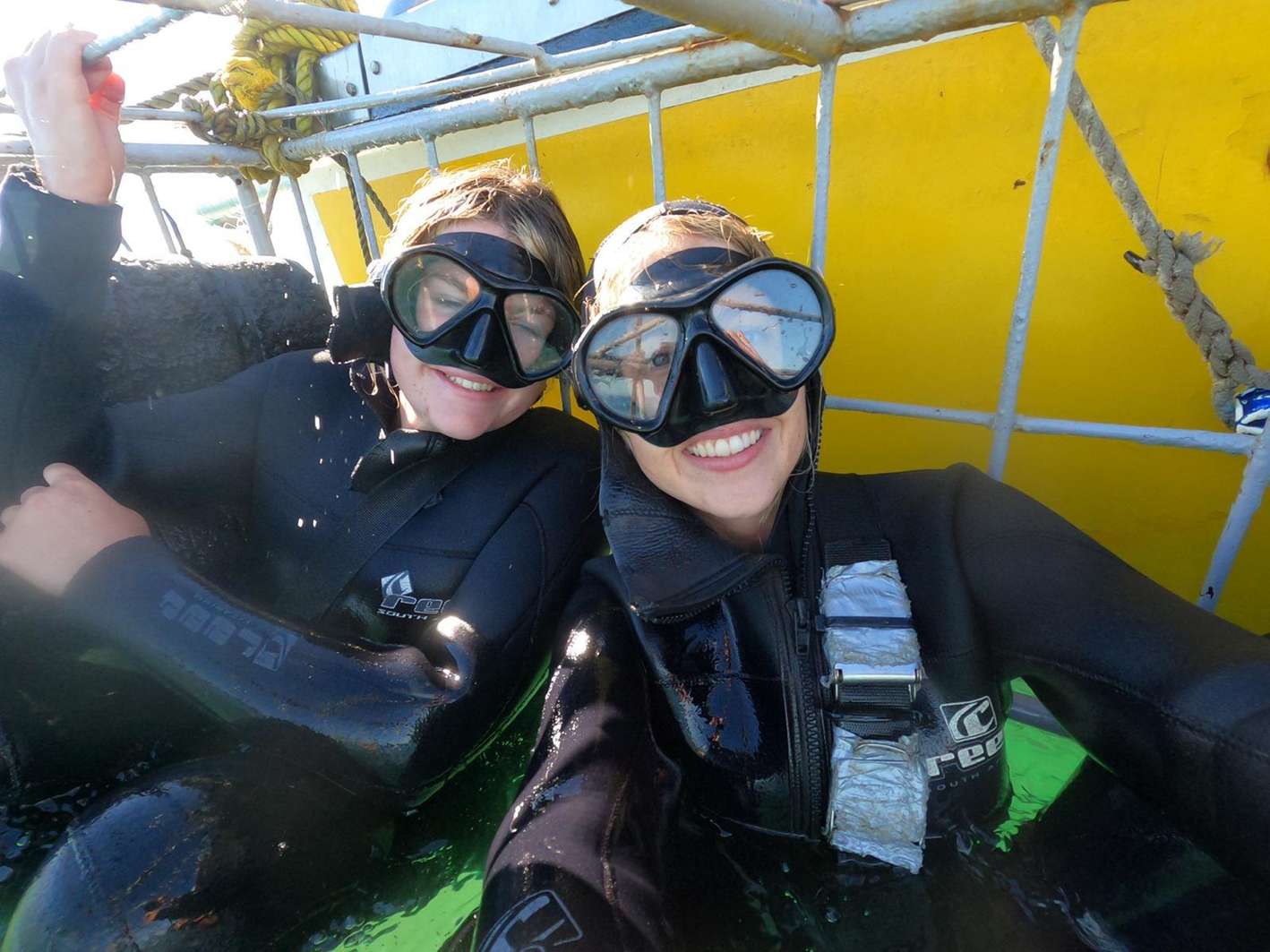
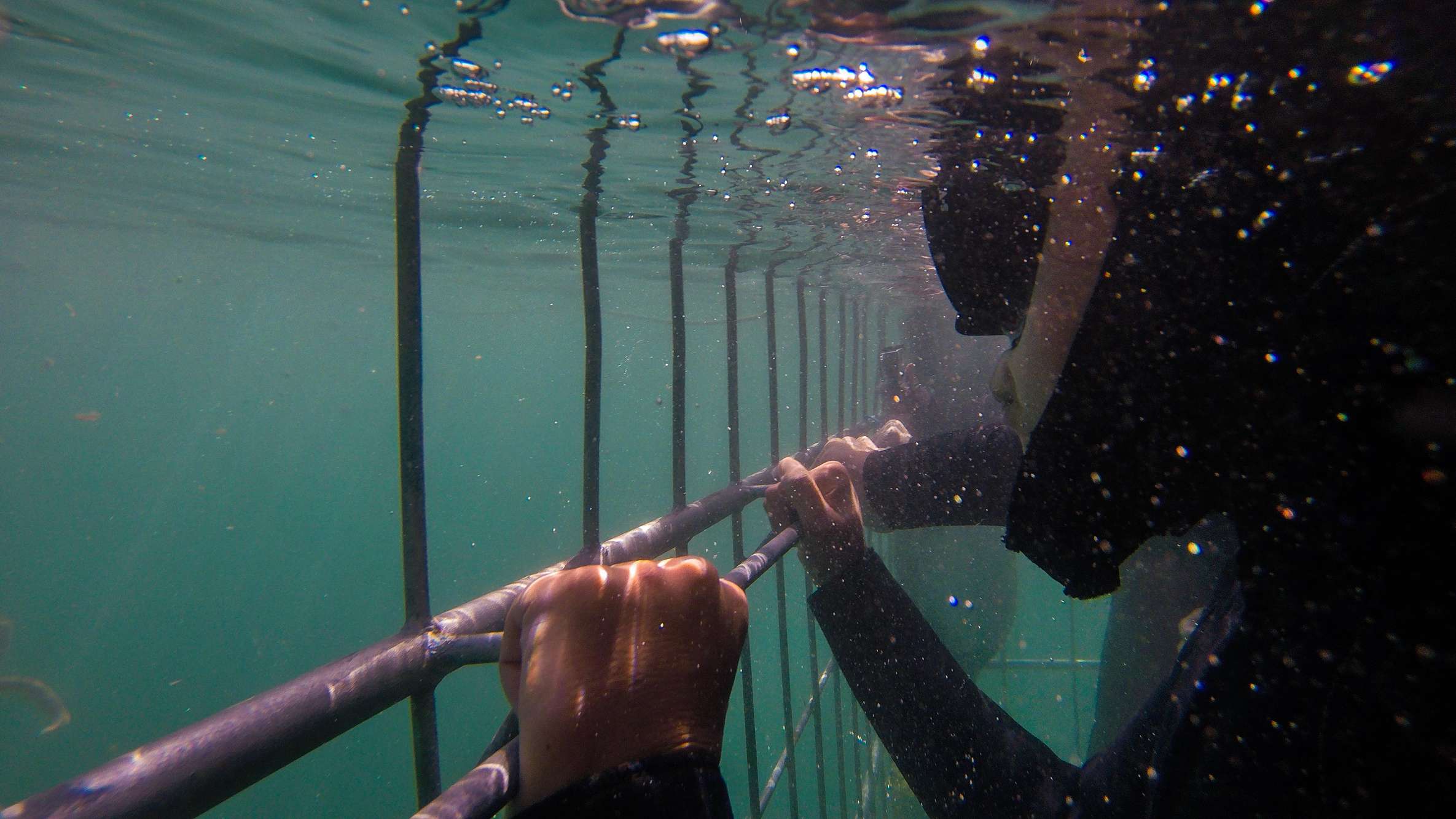
A few honest notes. You can exit the cage at any point if you get cold, and surface viewing from the deck often shows the sharks just as clearly. You also need no scuba certification, because surface cages use breath-hold, snorkel or a hookah line.
It does, mostly for the sea's sake. Shark activity stays steady through the day; daily swell and water temperature set the pace, so the hour of the launch matters less than the sea.
What changes is the water. Coastal waters are typically calmest first thing in the day, before the afternoon winds build choppy surface conditions and increase motion sickness.
Afternoon winds also churn up sand off shallow reefs and reduce water clarity, so a morning launch gives you both the smoother ride and the clearer cage. The difference is enough to make the alarm worth it.
Daily launch times run anywhere between 7 am and midday, based on tides and sea state. Exact departure slots are confirmed the afternoon before, so you cannot lock in a fixed time when booking.
The practical move: take the earliest slot you can wake up for. You will also miss the harsh midday sun glare on the water, and the boat deck goes easier on you in the cool morning.
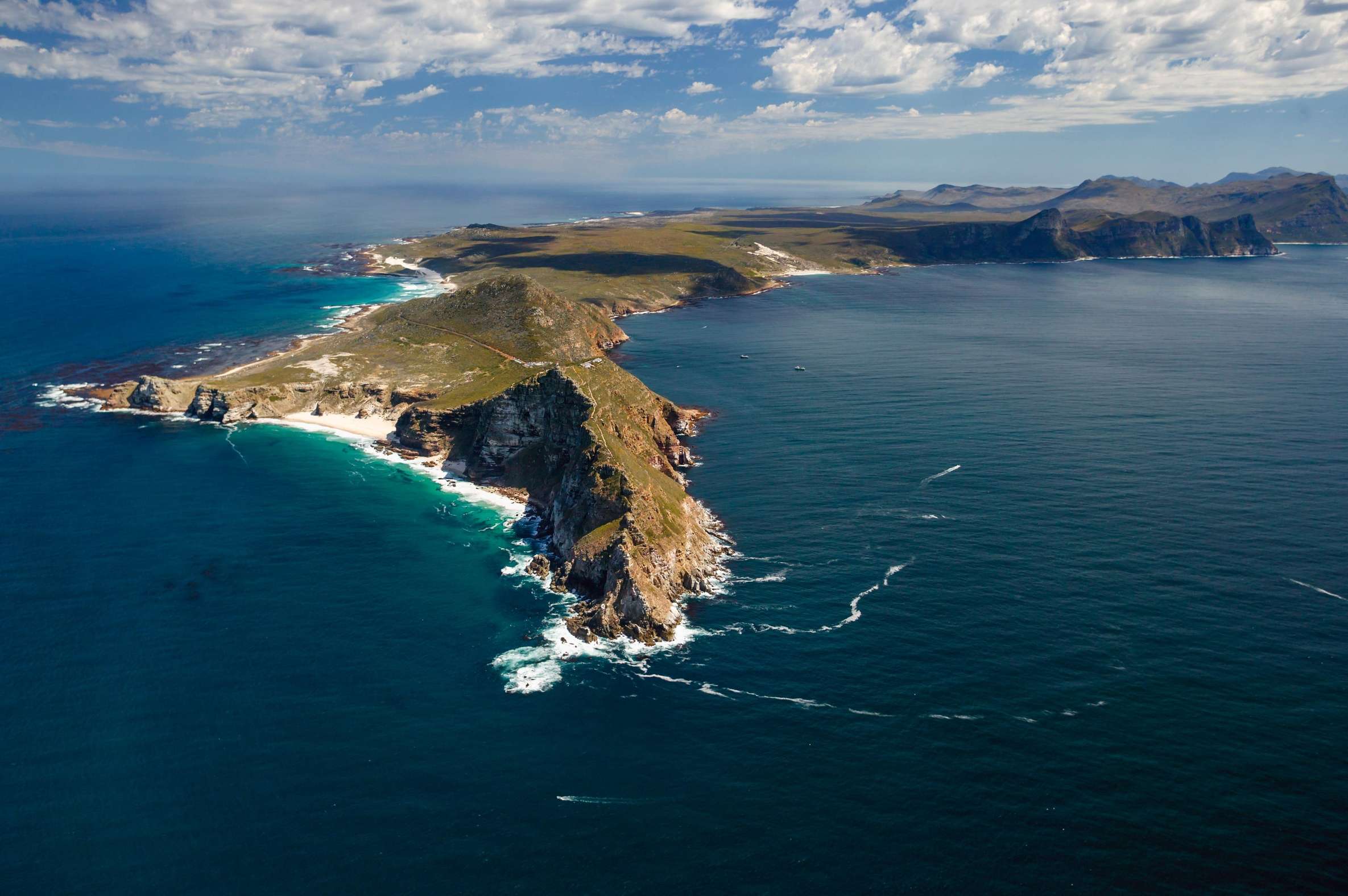
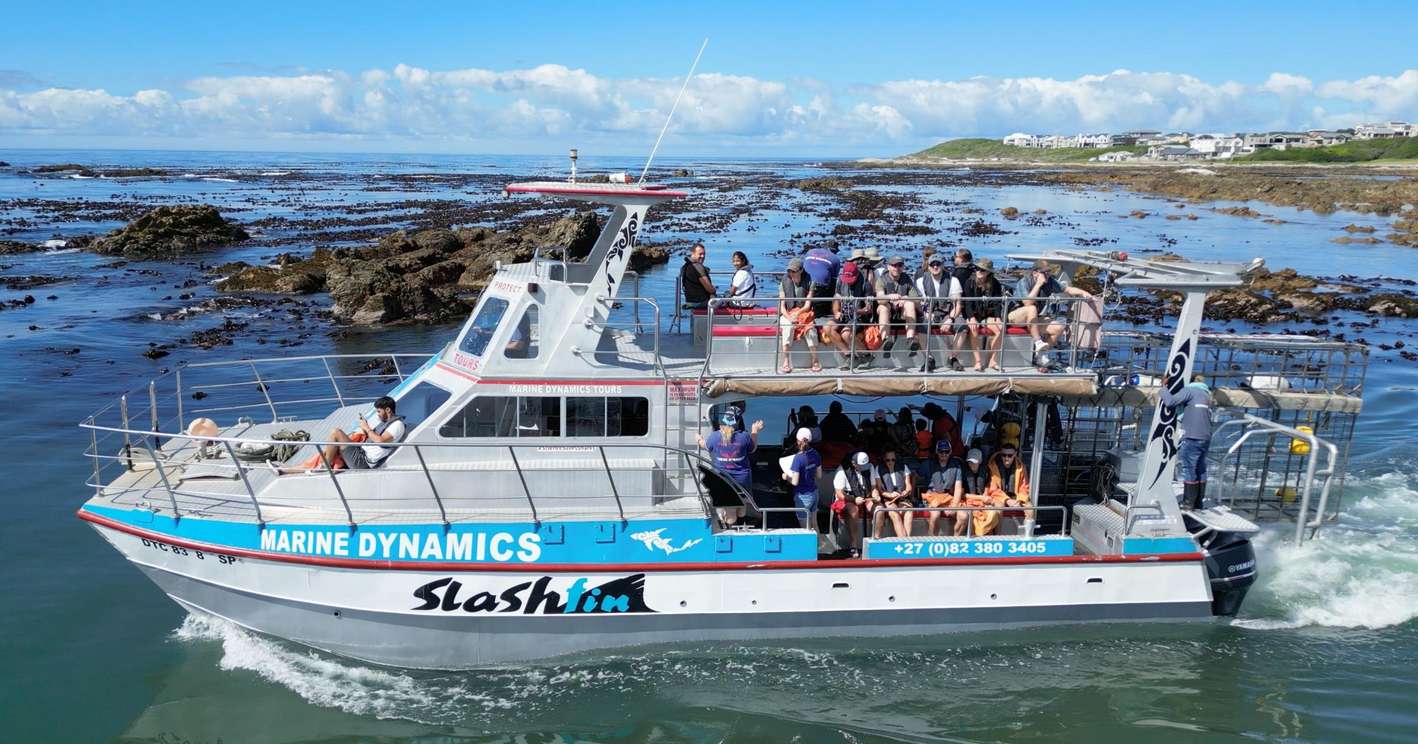
Two launch sites, two different days. Simon's Town sits about 45 minutes from central Cape Town, up to 90 minutes in peak season traffic, and False Bay offers more shelter from winter westerly fronts. Its boats tend to be smaller, with fewer divers in the cage.
Gansbaai is about 2.5 hours each way from Cape Town, but it is considered the better shark cage diving destination overall, with more operators, higher shark concentrations and the Dyer Island seal colony. The trade is the swell: in winter, that same operator launches only about 12 days a month.
For a full-day trip from the city, Cape Town: Shark Cage Diving Tour (with Breakfast & Lunch) covers the Gansbaai option with hotel transfers, breakfast on arrival and a lunch after, so you can book the dive without renting a car.
Mossel Bay is the third route for great white odds, but it sits roughly four hours east of Cape Town, so an overnight stop along the Garden Route makes sense.
The table below is the short version of the decision: drive time, sighting logs, rescheduling terms and how the Gansbaai tour fits your month.
| Check | Why it matters | Our pick |
|---|---|---|
| Drive time and transfers | A 2.5-hour drive each way is a full day, so a transfer saves the rental car | Gansbaai tour with hotel transfers from Cape Town included. |
| Seasonal sighting logs | Operators' daily logs show what is actually swimming past this month | The Gansbaai tour runs year-round, with bronze whaler and sevengill sharks as the main encounters. |
| Rescheduling terms | Winter cancellations are common, so the terms decide the day | Free cancellation up to 24 hours in advance for a full refund. |
| Weather and season fit | Check the launch site against your travel month's swell | The Gansbaai tour adapts to Shark Alley conditions, and in season you may spot southern right whales. |
If the drive time row rules your day out, Simon's Town is the answer; if you want the strongest shark concentration, Gansbaai wins. Match the row to your month and the choice makes itself.
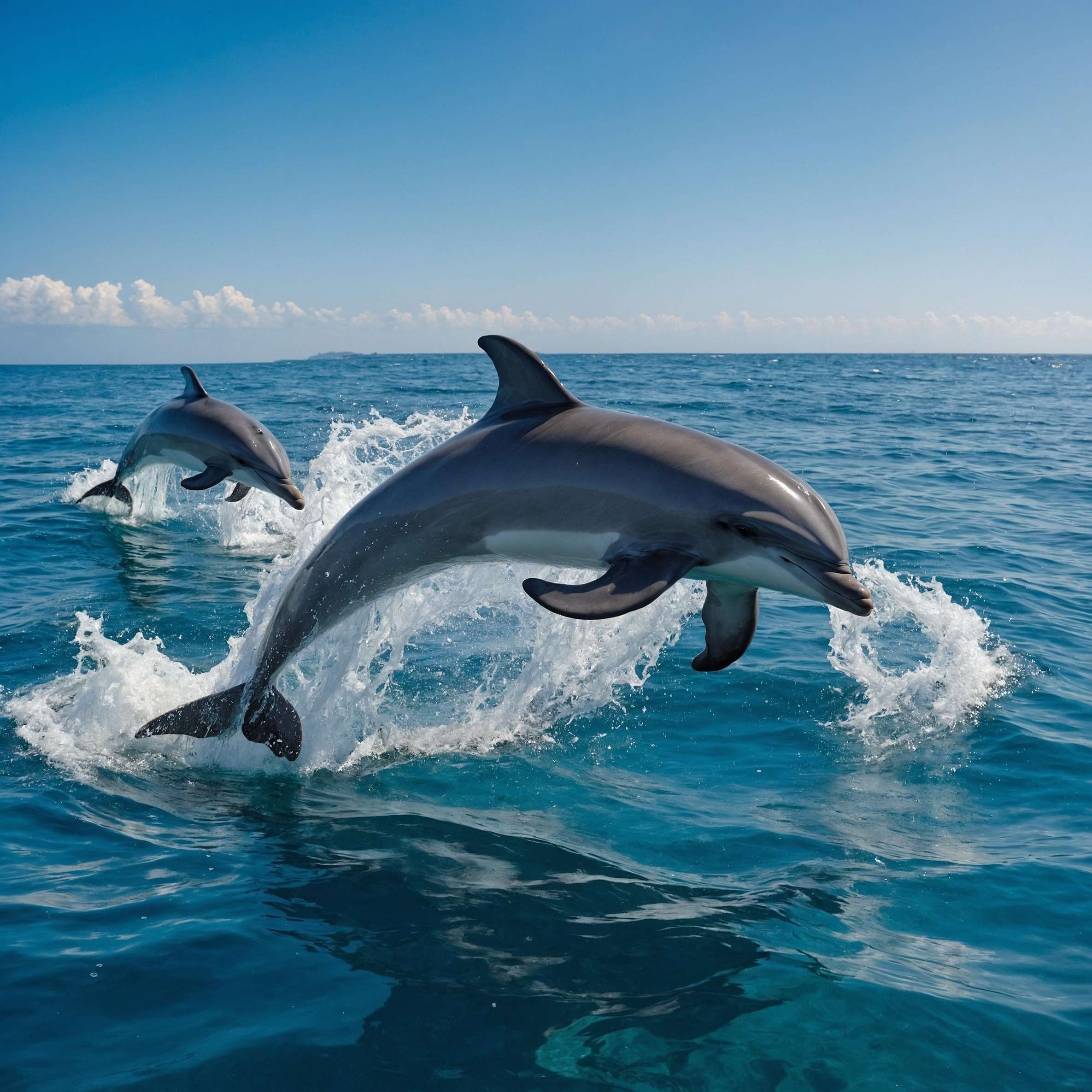
For winter and spring visitors, the day can grow richer. Full-day combination tours run from mid-June to mid-November, pairing a Gansbaai cage dive with boat-based southern right whale watching in Hermanus, a 45-minute drive away.
August and September give the strongest overlap of both in one day, with peak whale sightings while cage diving boats carry quiet to moderate passenger volumes. The crowds then peak in October and November, so shoulder season is where the value sits.
You do not need a boat to see whales. Shore-based whale watching along Kalk Bay and False Bay offers remarkable marine viewing close to Cape Town during the same migration months, and it costs nothing but a morning.
The Gansbaai dive itself also throws in season: boats there spot southern right whales in season, along with seals and various birdlife around the trip.
If you are already heading that far, the southern coast offers more: the region around the dive route pairs with activities like jumping off Bloukrans Bridge, one of the highest bungee spots in the world.
A rental car works fine on this route. From central Cape Town to Gansbaai harbor takes about 2 hours 45 minutes, roughly 163 km, without traffic. The road runs east on the N2 highway over Sir Lowry's Pass and Houwhoek Pass, then branches onto the R43 past Hermanus and Stanford.
The roads are paved and in good condition throughout. Hermanus and Stanford are the most convenient stops for fuel, a cafe or a bathroom, and both make a pleasant break on the way out.
The morning is the tight part. Launches are weather-dependent, so departure times are confirmed the afternoon before, and a self-drive guest has to be at the launch site early. If you book the Gansbaai tour with its own transfers, you meet the tour operator's office in Kleinbaai instead.
For a drive this long, the drive back is the part people forget: about 2.5 hours after a full day at sea, so pace yourself.
If your dates fall in the December holiday season, book the car and the accommodation early, because mid-December to early January is peak holiday season across South Africa and everything books up fast.

June to August is the peak for sightings and clarity, but it is also the season of cancellations, so build a buffer day. Summer trades sharks for calm, sunny boat days and plenty of bronze whalers. Either way, book the first day of your stay and pick the launch site that matches your month.
winter: clearest water, roughest seas
Decide between Gansbaai, Simon's Town, Mossel Bay and Durban by drive time and the sharks each season brings.
Cape Town's nearest launch sites compared, with tours that run summer and winter from Simon's Town.
Gansbaai's seasons explained: clearest water from June to September and bronze whalers year-round.

How Hermanus fits in, with the 45-minute drive to the launch point and whale-watching combos mid-June to mid-November.
Mossel Bay's sheltered bay, 4-hour drive east, and why it holds the most consistent great white sightings.
Where to dive in KwaZulu-Natal, from Aliwal Shoal near Umkomaas, with blacktip, dusky and spinner sharks.
Cage safety standards in South Africa, from SAMSA-certified boats to engineered cages, in plain terms.
How the non-feeding rules work, so your trip supports conservation without changing shark behavior.
What you need to enter the cage: no scuba certification, just a swimsuit and the 5 mm wetsuit they provide.
What a day in the cage actually delivers for the money, and how to set expectations before you book.
Where great white sharks still appear, from Mossel Bay's winter months to rare False Bay sightings.
How cage-free diving differs, from breath-hold surface cages to open-water dives, and what each involves.
january: calmest month, still only 8% calm days
Quick answers on months, water clarity, swells and which sharks show up when.
Cape Town2026Historically the highest sighting rates across False Bay and Gansbaai fall in the southern winter from June to August, with elevated activity spanning May through September. Tours run year-round, so your travel dates matter less than booking the earliest day of your stay.
For Gansbaai cage dives, June to September are the best-supported months for clearer water, and one operator describes April to October as its clearer-water season. Summer often brings visibility of 2 metres or less, because the wind churns up the shallows.
Great whites are rare on current trips everywhere. In False Bay and Gansbaai, resident orca pairs have driven them away from nearshore launch sites, so bronze whaler sharks are now the primary encounter. If you set your heart on a great white, go in winter, but expect bronze whalers and sevengill sharks instead.
Bronze whaler sharks show up reliably in summer, while great whites are very rarely seen. The boat weather is warm and dry, with few windy days, and January has the highest share of calm days of the year, so it is a good month for a first dive.
January is the calmest bet for Gansbaai trips, but even then only 8% of days are truly calm, with average highest waves around 2.3 metres. Calm conditions are uncommon year-round, so bring seasickness tablets whatever the month.
Yes. Take them the night before and again the morning of departure, since they work best before you feel anything. Oral tablets need two hours to absorb, so take them about two hours before boarding.
Seas are typically calmest first thing in the day, before winds build into the afternoon and chop up the surface. Shark sightings do not differ much by time of day, though, so pick morning for comfort, not for more sharks.
Winter, from June to September, gives you the clearest water and the highest historical sighting rates, but it also brings the biggest swells and more cancellations. Summer is calmer and warmer with dependable bronze whalers, so pick the season that matches your priorities.
Book the earliest day during your stay, so the operator has spare days to reschedule you if sea conditions prevent the trip. Skippers confirm departures the afternoon before, so keep the next day free as a backup too.
Yes. Full-day combination tours run from mid-June to mid-November, pairing shark cage diving in Gansbaai with southern right whale watching in Hermanus, a 45-minute drive apart. August and September give the strongest overlap between the two.
Some operators offer a complimentary dive or a return voucher if there is no shark activity, and one lets guests join another trip on an alternate day free of charge. Ask the operator which policy applies when you book.
no experience needed, just a swimsuit
No diving experience needed. Meet in Simon's Town, duck under the surface with the cage, and cancel free up to 24 hours in advance if the sea turns.